dad from day one: How to Get Rid of Those Darned Leg Cramps during Pregnancy

Twenty-five weeks.

Just a few short weeks ago I published dad from day one: Leg Cramp Alarm Clock where I proclaimed,Ultimately, she’s pregnant and leg cramps are part of the deal.  They will probably be replaced by another annoying inconvenience.  And what will I do?  What can I do?”

But now, looking back, I think, “How could I have been so absent-minded to say that?”  In that moment, I must have forgotten my own belief system when it comes to curing ailments- that any kind of developed physical ailment is a symptom and a warning sign of something the human body is either lacking or has too much of.  I believe God gives us those clues to help us figure out how to become healthier, not simply to fix or mask the problem.

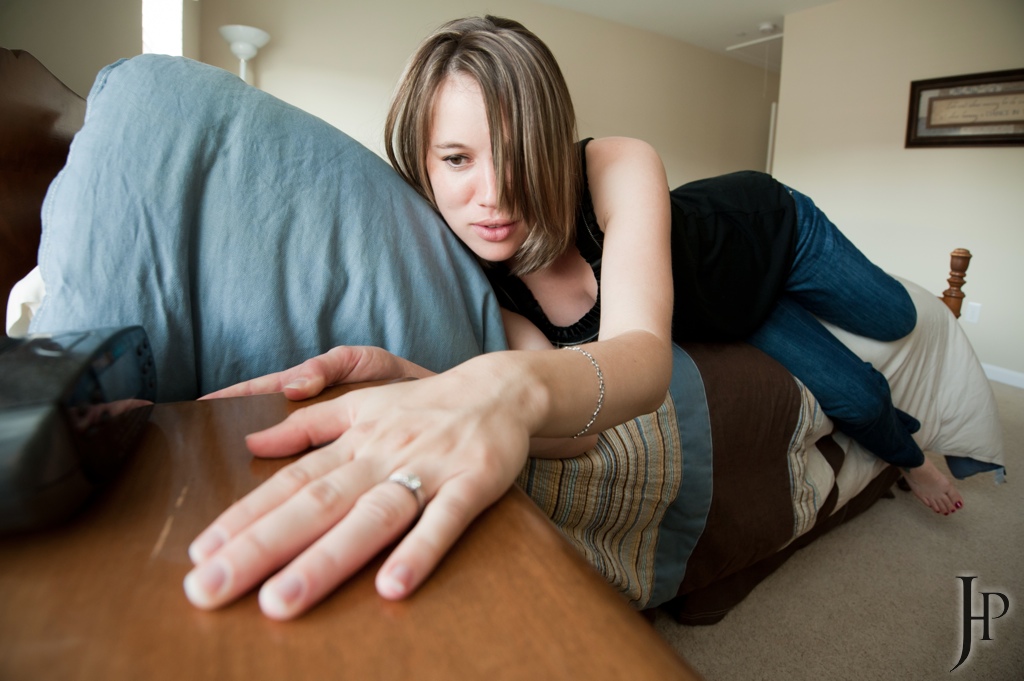
Just like the way I learned the hard way The Cure for Eczema (click title to find out how), my wife had to learn how to prevent/stop  having leg cramps.  And since she has made some slight changes, the cramps not only stopped, but haven’t came back once since then.  These leg cramps weren’t simply another annoying side effect of being pregnant- they were my wife’s body’s way of screaming out for at least four things in particular (because the baby is “taking them from her”): calcium (the baby’s bones are hardening), magnesium, water, and better blood circulation.

She has been faithful to take at least one calcium supplement and one magnesium supplement every morning and constantly drinks from a Voss water bottle (it’s just a cool botttle, since it’s made of glass instead of plastic- it’s not magic Norwegian healing water or anything) she refills several times a day from the fridge (she also drinks water any time she wakes up during the night).  And as much as possible, keeps her legs slightly elevated- she has a papasan rocker chair so her feet don’t touch the ground when we’re just hanging out at home; and often she rests her legs on a pillow when she sleeps.

So far, it’s done the trick.

The leg cramps have not snuck back yet.  And if they do, my first response will be: More water, more calcium, more magnesium, elevate your legs…

All pictures with the “JHP” logo were taken by Joe Hendricks Photography:

Blog- www.photojoeblog.com

Website- www.joehendricks.com

dad from day one: Leg Cramp Alarm Clock

Twenty-two weeks.

Last week, my wife started suffering from leg cramps due to the pregnancy.  About every other day, I wake up to her crying out in sharp pain and moving around in the bed.  Though I should know better by now, in my “just awoken from a dream where I am exploring underground caves in canoes with people I haven’t seen since 3rd grade” state-of-mind, still mostly asleep and only technically awake, I always assume the worst- that she is scared because she saw that someone has broken into the house, so I now I need to pull out the closest weapon available to play Dexter or Chuck Norris.

But no, it’s another leg cramp.  And what can I really do?  Sympathize (which is easy to do) and start massaging her calves.  No matter which one I start with, it’s always the wrong one.  Murphy’s Law.  And I typically start massaging too hard, then too soft, then by the time I get it right, time has ran its course and the Charlie Horse has trotted away.

Eat more bananas for potassium.  Drink more water.  Keep salt by the bed to lick.  Elevate the legs.  Avoid standing flat footed.  She’s trying it all.  And still, the leg cramps still happen.

Ultimately, she’s pregnant and leg cramps are part of the deal.  They will probably be replaced by another annoying inconvenience.  And what will I do?  What can I do?  Be there.

What The Bump says about Baby Jack this week:

Watch what you say — baby is now able to hear outside noise from down in the womb. Studies show that baby finds gentle music and your own voice most soothing. Nipples are starting to sprout, and that little face is fully formed. And, baby’s starting to settle into sleep cycles, snoozing about 12 to 14 hours a day. It shouldn’t be hard to figure out when — just pay attention to those kicks as they start and stop.

http://community.thebump.com/cs/ks/blogs/2ndtrimester/pages/weeks-21-24-month-5-papaya.aspx?r=0&MsdVisit=1

All pictures with the “JHP” logo were taken by Joe Hendricks Photography:

Blog- www.photojoeblog.com

Website- www.joehendricks.com

Adventures in Thailand: Monk Footprints and Bed Bugs

Planes, Trains, and Automobiles.  The Thai version.

After recently revisiting some memories from the summer of 2004 in Thailand, I must have tapped in to some sort of parallel between my life now and my life at age 24, because there is some therapeutic and natural about replaying those stories out loud (or by typing them out and reading them).

It all started a few days ago when my friend and former  college roommate Josh Taylor sent me a text message asking what the best phone number to reach me was.  A few texts later, I was jogging his memory (and mine) with a reference to “monk footprints”…

During our week long vacation from teaching at Bangkok’s Global English School (all schools had a mandatory closing for a week due to the International AIDS Conference being held in Bangkok that year), Josh and I decided to take an excursion to Chiang Mai and Koh Samui by overnight train, motorcycle, and plain.

In our overnight train ride to Chiang Mai (Thailand’s 2nd largest city) up in the North, our seats converted into beds for the night.  Right across isle from us on the train was a middle-aged Buddhist monk, dressed in his drab orange robe, marked with animal tattoos all over his head (to fend off evil spirits).   Despite the loud bangs and rumbles off the tracks throughout the 12 hour ride, the monk’s constant religious chants were a bit distracting (and kinda creepy).

But when in Thailand, you learn just to go with it.

As nighttime approached, the train attendants came through the isles to transform our seats into beds.  The monk headed to the restroom.  When he returned, he used Josh’s bunk bed (which was on the bottom) as a stepping stone to get up on his top bunk.  He wore no shoes.  His bare feet, which were caked with dirt, left “monk footprints” on Josh’s white bed sheets.  Moist, mud-infused footprints.

Therefore, the phrase “monk footprints” will always be a legendary term between Josh and I.

When we arrived in Chiang Mai early the next morning, we rented “motorcycles” (a loose term in Thailand, as it basically often means a glorified moped) by paying $4 a day and handing over our American driver’s licenses as a security deposit (which does seem a bit risky; turns out, a few weeks later I spent two weeks in South Korea with my sister and my passport was stolen).  After a day of exploring (and getting a little lost) the city, getting curious about what the Chiang Dao Cave was as well as what the “live monkey shows” were all about.

Because the school in Bangkok we were teaching at is a Christian school, we were able to have it arranged that we could sleep in a church in Chiang Mai for free.  Can’t argue with a free shower and bed for a few nights.  Of course, the shower water was ice cold (which isn’t a horrible thing in a country with a climate similar to Miami).  And as for the sleeping arrangements: two plastic sleeping bags on a cold, slick cement floor on the second floor in a building with no air conditioning and a garage door as the main entrance.

The best part though, was the fact it was impossible to stay asleep for more than twenty minutes at a time.  Not because of the heat alone, but because of the tiny little biting ants from whom we evidently were invading their space.

And yet I count all of these as fond memories.  Backpacking through Thailand for me was a rite of passage.  An adventure that will always be part of me.  Maybe one day when I become a rich, successful author with a book on the New York Times Best Seller List, I can manage to find the money and time off to go back.

Until then, Thailand remains a magical, mysterious place that sometimes I think of as a dream world in a parallel universe that only exists in my mind.

A billboard we saw at a bus stop there- a Thai clothing company switched the “A” and “E” of Abercrombie to make their “own brand” of clothing.

Josh having a random Thai meal on the train before his seat was converted into his bed.

Josh having a random Thai meal on the train before his seat was converted into his bed.

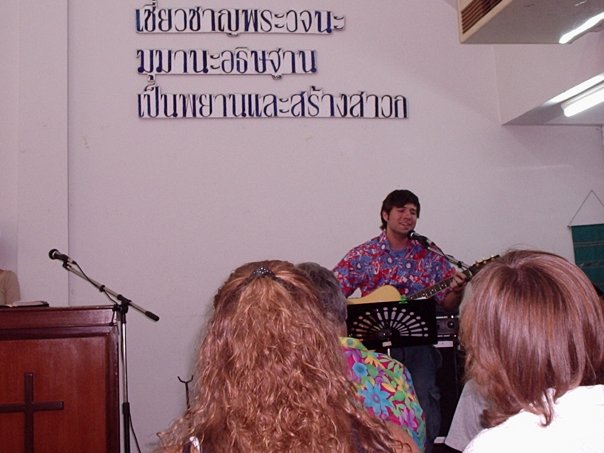
Me playing a song at the Thai church we camped out at.

Open Mouth, Insert Fruit by the Foot: Oral Fixation and How the Mouth is a Pleasure Zone

The psychology behind making mouths happy.

In 1905, Jewish neurologist Sigmund Freud presented his theory on what he called “oral fixation”.  It basically said that if an infant was weaned too early or too late, when they became an adult, they would be “hungry” for activities involving the mouth: smoking, overeating, being extremely talkative, being addicted to sugar, alcoholism, biting, chewing on toothpicks…(http://en.wikipedia.org/wiki/Oral_fixation#Oral_fixation).

However, tests on Freud’s theory have never produced any significant evidence proving it to be valid.  Therefore, if anything, his theory on oral fixation is interesting, but not compelling.

And while I, along with pretty much anyone else in the history of the world who has heard about it, definitely don’t take Freud’s theory of oral fixation seriously, the theory has caused me to dwell a little bit on the human obsession of stimulating our senses by what we put in or near our mouths.

Even people who pretty much have never been around babies all that much (I’d almost say I qualify for that description) recognize that babies explore and test their surroundings by putting objects in their mouths.  Not just food, but toys, live animals, clothes- it doesn’t matter.

I could see how as adults, we fall back on this behavior.  After all, what is so enjoyable about swallowing a delicious food or drink?  Not much.  It’s all about the sensation of bringing that food item up to our mouths, tasting it, and chewing it.  So in theory, the only real difference between eating a piece of red licorice and chewing a piece of bubble gum is that we swallow one, but not the other.

Of course, a piece of candy will “fill us up” more than a 5 calorie piece of gum.  But when we eat sweets, we’re typically not eating to “get full”.  Maybe as a snack to tide us over or as a way to top off a meal.  The reason we eat sugary snacks is because it’s fun.  And having fun makes us happy.

Even contrasting that example to the joy of eating a good juicy, homemade burger- I eat a burger on occasion not only because it tastes good, but also because it fills me up.  Because if I simply wanted to be filled up with food, I could eat an endless list of other things, including a huge salad topped with beans and rice, instead of the burger.  But eating a burger typically is more likely to release more pheromones in my body, causing me to feel happy (http://en.wikipedia.org/wiki/Pheromones).

So what does all this mean to me personally?  What do I walk away learning from this?

Anyone who has ever read a few of my “healthnutshell” posts knows that I think sugar is the devil (unless it is eaten in whole fruit form, not juiced).  But sometimes, I give in to a little bit of sugary awesomeness.  For the next two weeks, Starbucks is doing a happy hour promotion where their Frappuccino’s are half off from 3:00 to 5:00 PM.

So this past Sunday afternoon, at 4:47 PM, my wife and I strolled in the Starbucks right down the road from our house.  Because I had already drank coffee that morning and didn’t want to overdue it on the caffeine, I told the barista, “Make me the manliest drink you sell: a tall Strawberries and Cream Frappuccino”.

As my wife and I sat there enjoying our sugary Frappuccino’s there in the coffee shop, discussing our individual roles in my side of the family (“my dad is the mechanic/carpenter, my brother-in-law is the computer whiz, so what am I?…”) , I consciously focused on the happiness that my Strawberries and Cream Frappuccino was bringing me.

The worst way to drink a sugary drink is to just simply chug it like water.  The best way is to let it roll all over your tongue to the point you don’t really taste the sugar, then slowly swallow it.

Here is the most important thing to remember when choosing the size of any food item:  You are buying the amount of time you will enjoy the product.  You pay more money for a large, so it takes long to consume.  If you order a small size, you have less time to enjoy it.  Unless you eat or drink it slowly.  Like I do.

Slowly enjoying a Strawberries and Cream Frappuccino is most comparable to smoking a sweet cigar.  When smoking a cigar, the smoke isn’t intended to enter the lungs.  The smoke is meant to be tasted and enjoyed in the mouth.  It’s not the same as smoking cigarettes , where the smoke hitting the lungs is the whole point- or so I’ve read, on Wikipedia.

So while I laugh at Freud’s theory on oral fixation (the idea that incorrectly weaned infants become overeating, smoking, habit-forming adults), I do recognize that there is a connection between a person’s physical health and how much they give in to oral stimulation- specifically when it comes to eating, drinking, and smoking.

Each time I deny my mouth its “oral fixation” on juicy burgers and Frappuccino’s and honey berry flavored cigars, it is an absolute fact that I am always doing my body a favor, but not my mind.  I just have to remind myself, those things are for special few-and-far between occasions.  Because the truth is, I can get by most days with green salads, salmon, fruit, oatmeal, water, and chewing gum.  I admit though; it’s not easy trying to fix my oral fixations.

Why Betty White Doesn’t Look 88 Years Old (Yes, She’s a Vegan)

Thank you for being a host.

For me, no episode of SNL could ever be funnier than when Justin Timberlake hosted his first time in 2003.  But finally, thanks to Danish-Greek American actress Betty White, someone has come pretty close.  In fact, her hosting job earned Saturday Night Live its highest number of viewers since November 2008 when John McCain hosted and Tina Fey snuck off the set of 30 Rock to parody Sarah Palin.

It’s not necessarily easy to keep me laughing with TV shows and movies that are supposed to be funny.  But watching sweet little Betty White for nearly 90 minutes was the most consistent “LOLing” I’ve done since the first time I saw I Love You, Man.

Every skit was hilarious: “Delicious Dish”, “MacGruber”, “She’s a Lesbian”, “Scared Straight”, “Thank You for Being a Friend”, “CSI: Sarasota”, “Census”.  Which means all the hype leading up to Betty White’s hosting gig, including the facebook petition and the countless Internet articles speculating her success at hosting, actually were worth it.  Betty White as host of SNL will be right up there with Christopher Walken’s “VH1’s Behind the Music: Blue Oyster Cult” (“more cowbell”) in the SNL Hall of Fame of our minds.

And I was so amazed to find out that Betty White is 88 years old.  It’s natural to say, “But she doesn’t look 88 years old…”

I know that’s what I always think of people I see on TV who are celebrating their 100th birthday.  No one who is 100 looks 100.  But what does 88 years old look like?  What does 100 years old look like?

Eighty-eight looks like a 68 year-old who hasn’t taken very good care of themselves.  For example, perhaps a regular smoker who after their retirement doesn’t continue to live an active lifestyle both physically and mentally, nor do they take deliberate notice of what they eat and drink.

It involves some circular reasoning: People who look young for their age are usually in shape- and because they are in shape, they look healthier and younger than most people their age- and because choose to stay in shape as they get older, they tend to be the ones who live to be the longest- and they tend to become the longest-living and youngest-looking people.

Enter Betty White, a vegan.  While I could never be that disciplined, I do recognize it’s no coincidence that she’s still so full of life.  And spunk.

On top of that, I’ve learned that people who continue to look younger than their actual age in their younger years, continue to look younger in their older age.  Like Dick Clark (80), Chuck Norris (70), Harrison Ford (67), or Johnny Depp (46).  So of course, genetics is a big part of it.

It’s sort of like a man’s receding hairline.  I’ve noticed that by observing the hairline of 21 year-old man, it is easy to predict how much hair he will have at age 40, 60, and 80.

Looking back at pictures of a young James Taylor, he already had a receding hairline going on.  By his 40’s, he was pretty much completely bald on top.

Robin Williams, who I would say best represents the average American man’s rate of hair loss, showed very minimal signs of balding when he made it big with his sitcom Mork and Mindy back in 1978 at age 27.  But by the time he did One Hour Photo in 2002 at age 50 (one of my favorite “scary” movies, though most people I talk to don’t feel the same way), it was clear he was losing some hair, but that he would not be going completely bald in his adulthood.

In other words, whether it’s a general youthful appearance or an extremely slow rate of hair loss, these “signs of youth” are obvious when a person is a young adult and they stay that way throughout the rest of their lives, given they take care physical and mental care of themselves.

So that’s why 88 year-old Betty White looks like she’s 68.  And why so many 68 year-olds we know look 88.  And most 100 year-olds look 70.

But most important isn’t how old or person looks on the outside, or even how young they feel on the inside.  What’s most important is how young a person’s body thinks it is- which is largely controlled by how well they take care of their own body.

Because what good is it too look younger than your actual age your whole life only to die at age 60 (while “feeling 30”) because of heart disease, diabetes, or high blood pressure?  All of which could have been prevented or severely slowed down by carefully limiting sodium (meats and packaged/processed foods), sugar (other than from whole fruits), and saturated fats (animal fats, not fats from nuts and oils).  And replacing them with fresh produce, high fiber, plenty of water, and regular exercise.

I want to be like Betty.

And one more thing… Now that you’ve read my take on Betty White, why not read my perspective on: being a dad.  That’s right- parenting from a dad’s point of view.  I have been documenting my thoughts as a dad since the week we found out my wife was pregnant.  I formally invite you now to read my “dad blog”:

dad from day one