Vegan Recipe Review: Quinoa And Pinto Bean Sloppy Joes

Let me introduce myself. I am Nick Shell. I am a daddy blogger who happens to be a vegan. For years I suffered from dyshidrosis (a rare form of eczema which causes painful blisters to form on the palms of the hands) and severe allergy & sinus issues.

Vegan Sloppy Joes Pinto Beans Quinoa But now that I live 100% plant-based (since April 2013), those problems are now a thing of the past. I am not one of those annoying vegans who tries to show you pictures of animals being slaughtered. Nor am I the kind who wants you to become a vegan- what you eat is none of my business. That changes, however, if you end up visiting my website to learn what our family thinks of Quinoa and Pinto Bean Sloppy Joes. In that case, I’m going to have to tell you how awesome these things are! Quinoa and Pinto Bean Sloppy Joes are one of our family’s favorite recipes. Since discovering them, we pretty much have them once a week. And they even make great leftovers. vegan sloppy joes quinoa pinto beans We base our recipe from VegKitchen:
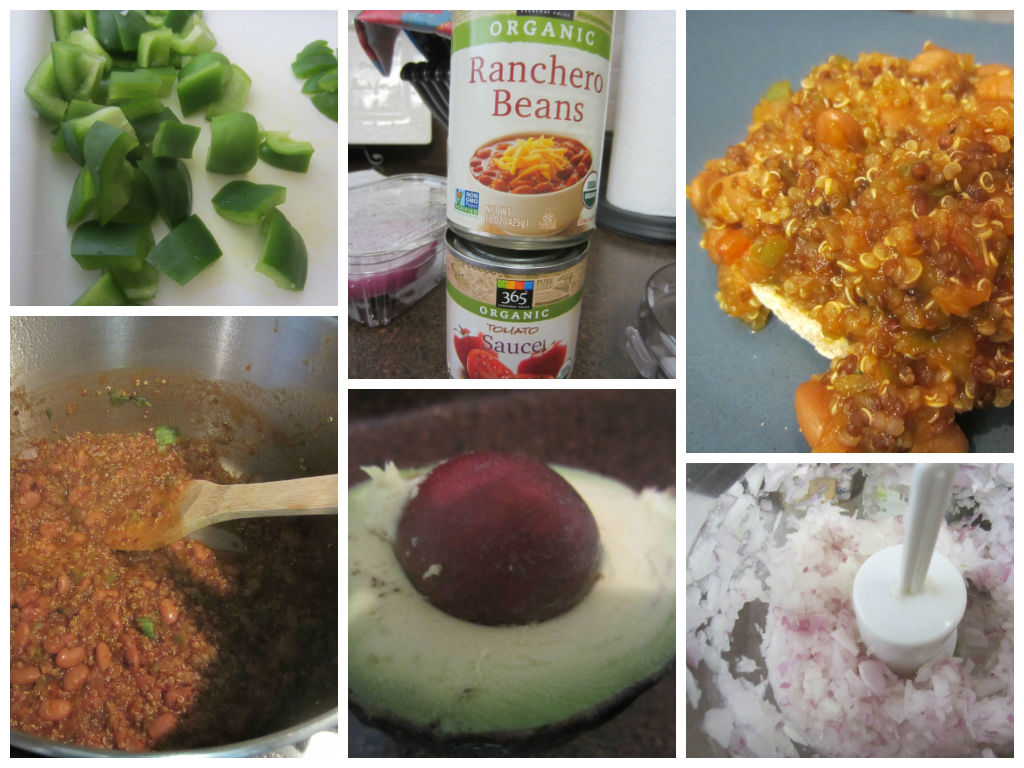
  • 1/2 cup raw quinoa, rinsed
  • 1 tablespoon olive oil
  • 1 medium onion, finely chopped
  • 1/2 medium green bell pepper, finely diced
  • 15- to 16-ounce can pinto, drained, rinsed, and coarsely mashed (or 1 1/2 cups cooked)
  • 1 cup tomato sauce
  • 1 medium tomato, finely diced
  • 1 tablespoon reduced-sodium soy sauce or tamari
  • 1 teaspoon agave nectar
  • 1 teaspoon chili powder
  • 1 teaspoon paprika
  • 1/2 teaspoon dried oregano
  • 1/4 cup minced fresh cilantro, plus more for topping, optional
  • Shredded baby spinach leaves
  • 6 whole grain English muffins

We add avocados though- I highly recommend doing so. They are the secret ingredient that really puts this recipe over the top. These Quinoa and Pinto Bean Sloppy Joes are so filling! Man, I want some right now- seriously. vegan sloppy joes Nick Shell And again, they are made with all plant-based ingredients; meaning you consume less than 1% of your daily cholesterol. Even aside from the technical 0% cholesterol is the fact that by making the sauce yourself, your not feeding your family GMO high fructose corn syrup that the leading sauce brands are full of. Please take my word for it… this is a good recipe. Not to mention, the prep and clean-up is very minimal. Make them, then, please… tell me what you think. I want to know.

Why Do Bad Things Happen to Good People and Good Things Happen to Bad People?

Slight of hand and twist of fate.

One of the most frustrating questions for people who are curious, yet skeptical, about Christianity is the fact that bad things happen to good people and good things happen to bad people.  I can’t claim to have the answer to that impossible question, but I can at least take a stab at it.

Throughout the history of humanization, “man” has struggled to bring glory to himself- if it means conquering and killing, abusing others, taking them as slaves, and any other hellish action that can be filed under the category of “Greed”.  Man has become rich, by taking from others.  Man has become rich, and refused to share with others.  But in the end, it works for man.  Because he gets what he ultimately wants- glory.

Ultimately, being rich and famous isn’t about knowing that you’ll always have all your needs and wants fulfilled.  It’s knowing that you’re above others, in a carnal sense.  That you are special.  That you are envied.  That others want what you have.  That’s the glory of man.

What a waste.

I equate the glory of man with bringing hell to Earth.  Literally raising hell.  Instantly, I can think of three Biblical examples when man tried to bring glory to himself, he ultimately was cursed by God.

Adam eating the fruit from the Tree of Knowledge of Good and Evil, after Satan telling Adam that he could become like God.  Cursed.  The future of man would suffer death, evil, and pain.

Moses using his staff to draw water from the rock for all the people to drink.  Then instead of saying this miracle was by the grace of God, Moses himself took the credit.  Cursed.  He didn’t get to live in the Promised Land.

King David taking a military census with the intention of realizing how powerful and successful he was.  Cursed.  God brought a plague and hundreds and hundreds of people were killed.

In all three instances, God wanted the glory, but man took it from God.

Why do good things happen to bad people? God is blessing them (with power, wisdom, intelligence, money, health, etc.) and they are taking the glory for themselves.  By taking the glory, they are refusing God’s true blessing.  And that may mean that  instead of blessing the people that the bad person influences, the bad person now brings on an earthly curse to them instead.  Of course, in the end, the man who refused to give God the glory will be the one who is cursed in the worst way.

Why do bad things happen to good people?  Because in the end, if that person is willing to glorify God through it, the person will be blessed.  I equate glorifying God with bringing down heaven to Earth.

God wants glory.  And so does man.  Good things happen when God gets it.  Bad things happen when man gets it.  But right now, God is allowing man to do what he likes.  Yes, God may choose to intervene.  But often He does not.  Because it’s possible that through a bad person’s bad actions, God can be glorified through an affected good person’s good actions- those actions include bringing glory to God through it, however they can find a way.

This concept even sheds light on why “you shall not take the name of the Lord your God in vain” is so important that it’s one of the Ten Commandments.  We can chose to use God’s name to sound cool (“Oh my God!”, “Jesus!”, “Lordy, Lordy, Tammy’s forty!” etc.) or we can chose to use God’s name to actually reference Him in a purposeful, postive way (“The only reason the Nashville flood didn’t get my house is because God spared me”).

Because even everyday good people like us still run the risk of taking glory from God.  In our everyday, ordinary events.  I try to keep that in mind at all times.  For me right now, it’s about my wife and I trying to sell our house.

We work hard to keep our ads active on Craig’s List twice a day.  And we keep a good looking “for sale” sign out front with a plastic sleeve containing colorful, creative flyers.  We keep our house in immaculate condition.  Plus, we know for a fact that our asking price is thousands less than everyone else in our neighborhood.

Yet it’s all the other houses that are selling.  All around us.  Because they’re going through realtors and we’re not.

Everyday, throughout the day, together and while we’re apart, my wife and I pray not only for the right person to find our house, but also that God will be glorified through it.  Because as opposed to us saying, “WE sold OUR house!” we can say, “Thank God!  He brought us the right person and they bought our house!”

But even if He doesn’t bring someone to buy our house, if He doesn’t bless our solid efforts to sell our house without a realtor, and we have to throw in the towel and pay thousands to a realtor, God will still be glorified through it.

Our lives ultimately are about one of two things- raising hell (by taking the glory) or bringing heaven to Earth (by giving it to God).

Open Mouth, Insert Fruit by the Foot: Oral Fixation and How the Mouth is a Pleasure Zone

The psychology behind making mouths happy.

In 1905, Jewish neurologist Sigmund Freud presented his theory on what he called “oral fixation”.  It basically said that if an infant was weaned too early or too late, when they became an adult, they would be “hungry” for activities involving the mouth: smoking, overeating, being extremely talkative, being addicted to sugar, alcoholism, biting, chewing on toothpicks…(http://en.wikipedia.org/wiki/Oral_fixation#Oral_fixation).

However, tests on Freud’s theory have never produced any significant evidence proving it to be valid.  Therefore, if anything, his theory on oral fixation is interesting, but not compelling.

And while I, along with pretty much anyone else in the history of the world who has heard about it, definitely don’t take Freud’s theory of oral fixation seriously, the theory has caused me to dwell a little bit on the human obsession of stimulating our senses by what we put in or near our mouths.

Even people who pretty much have never been around babies all that much (I’d almost say I qualify for that description) recognize that babies explore and test their surroundings by putting objects in their mouths.  Not just food, but toys, live animals, clothes- it doesn’t matter.

I could see how as adults, we fall back on this behavior.  After all, what is so enjoyable about swallowing a delicious food or drink?  Not much.  It’s all about the sensation of bringing that food item up to our mouths, tasting it, and chewing it.  So in theory, the only real difference between eating a piece of red licorice and chewing a piece of bubble gum is that we swallow one, but not the other.

Of course, a piece of candy will “fill us up” more than a 5 calorie piece of gum.  But when we eat sweets, we’re typically not eating to “get full”.  Maybe as a snack to tide us over or as a way to top off a meal.  The reason we eat sugary snacks is because it’s fun.  And having fun makes us happy.

Even contrasting that example to the joy of eating a good juicy, homemade burger- I eat a burger on occasion not only because it tastes good, but also because it fills me up.  Because if I simply wanted to be filled up with food, I could eat an endless list of other things, including a huge salad topped with beans and rice, instead of the burger.  But eating a burger typically is more likely to release more pheromones in my body, causing me to feel happy (http://en.wikipedia.org/wiki/Pheromones).

So what does all this mean to me personally?  What do I walk away learning from this?

Anyone who has ever read a few of my “healthnutshell” posts knows that I think sugar is the devil (unless it is eaten in whole fruit form, not juiced).  But sometimes, I give in to a little bit of sugary awesomeness.  For the next two weeks, Starbucks is doing a happy hour promotion where their Frappuccino’s are half off from 3:00 to 5:00 PM.

So this past Sunday afternoon, at 4:47 PM, my wife and I strolled in the Starbucks right down the road from our house.  Because I had already drank coffee that morning and didn’t want to overdue it on the caffeine, I told the barista, “Make me the manliest drink you sell: a tall Strawberries and Cream Frappuccino”.

As my wife and I sat there enjoying our sugary Frappuccino’s there in the coffee shop, discussing our individual roles in my side of the family (“my dad is the mechanic/carpenter, my brother-in-law is the computer whiz, so what am I?…”) , I consciously focused on the happiness that my Strawberries and Cream Frappuccino was bringing me.

The worst way to drink a sugary drink is to just simply chug it like water.  The best way is to let it roll all over your tongue to the point you don’t really taste the sugar, then slowly swallow it.

Here is the most important thing to remember when choosing the size of any food item:  You are buying the amount of time you will enjoy the product.  You pay more money for a large, so it takes long to consume.  If you order a small size, you have less time to enjoy it.  Unless you eat or drink it slowly.  Like I do.

Slowly enjoying a Strawberries and Cream Frappuccino is most comparable to smoking a sweet cigar.  When smoking a cigar, the smoke isn’t intended to enter the lungs.  The smoke is meant to be tasted and enjoyed in the mouth.  It’s not the same as smoking cigarettes , where the smoke hitting the lungs is the whole point- or so I’ve read, on Wikipedia.

So while I laugh at Freud’s theory on oral fixation (the idea that incorrectly weaned infants become overeating, smoking, habit-forming adults), I do recognize that there is a connection between a person’s physical health and how much they give in to oral stimulation- specifically when it comes to eating, drinking, and smoking.

Each time I deny my mouth its “oral fixation” on juicy burgers and Frappuccino’s and honey berry flavored cigars, it is an absolute fact that I am always doing my body a favor, but not my mind.  I just have to remind myself, those things are for special few-and-far between occasions.  Because the truth is, I can get by most days with green salads, salmon, fruit, oatmeal, water, and chewing gum.  I admit though; it’s not easy trying to fix my oral fixations.

healthnutshell: What Exactly is a Doctor, Anyway?

Stupid question, but doctors should outlive their patients, right?

One of my favorite movies of all time is actually a documentary, Super Size Me.  As Morgan Spurlock goes on a 30 day fast food binge, he checks in with the three separate doctors to monitor his health.  But something I always thought about in the back of my mind when I saw one of the doctors in particular was “that doctor needs to go on a diet himself”.

Isn’t there something a bit off about that?  An unhealthy doctor?  A doctor who is in danger of a heart attack?  In my mind, a doctor is an expert on health.  Therefore, he should live out what he knows.

Consider a pastor of a church.  His career is over if he gets caught cheating on his wife (unlike certain celebrities who may lose their marriage over it, but not their careers…).  A pastor is held at a higher standard because of his profession.  Why aren’t doctors live by a higher standard as well?

Just like no one can take seriously a man under the age of 40 with a mustache, I can’t take seriously an unhealthy doctor.

I should find out what exactly a doctor is, according to Wikipedia:

A physician — also known as medical practitioner, doctor of medicine, medical doctor, or simply doctor — practices the ancient profession of medicine, which is concerned with maintaining or restoring human health through the study, diagnosis, and treatment of disease or injury.

What’s interesting in this definition is the lack of the word “prevention”.  So it’s a doctor’s job to maintain or restore human health, but not prevent a healthy person from becoming unhealthy.

According to the Wikipedia definition of a doctor and America’s general concept of them, doctors are there to help fix what is broken.  With medicine.

It’s no secret that doctors make money off of people sitting at home watching commercials targeted at unhealthy people who go to the doctor to buy the legal drugs they saw advertised.  I can remember a time, pre-1995, when I didn’t use to see commercials advertising for prescription drugs.  Doctors sell drugs, legally.  To people who, for the most part, were simply uneducated on how to live healthy in the first place.

If I break my nose, have strep throat, get a pregnant wife, or need to get “snipped”, I will go to the doctor.  If not, I do everything I can to avoid that place.  I definitely won’t go there to buy their new product.  I eat an apple a day, literally.

After suffering for years from a rare case of eczema, I did some research on Wikipedia to find out how to be relieved of the disease.  While no known medical cure exists, I followed the advice on Wikipedia and drastically changed my diet, and now, thank God, my skin cleared up on my hands.  Cost me no money and required no doctor’s visit.  Despite many people urging me to go for a visit.  I saved myself time and money.

Doctors are good.  They do their thing.  I do mine.  We already learned that a doctor’s job, according to Wikipedia, does not involve preventing the problem.  So I take it upon myself to do just that: prevent the problem.  So what do you call a person who does that?  I need a clever word for that.  Whatever it is, I am one.  And anyone can be one.

As if looming Diabetes and heart disease weren’t enough of a reason to live a life of prevention, consider a new study done on doctors in India, which is said to be true in America as well.  Their average lifespan is around 58 years old for doctors, while the general population lives to be closer to 70 yeas old:

“Stress, a sedentary lifestyle and lack of exercise were the main causes of death in these cases. [Doctors] tend to become obese and are under great stress… Most of them are hypertensive and diabetic. These conditions reduce their chances of living longer.”

Read the full article:

http://www.mumbaimirror.com/index.aspx?page=article&sectid=3&contentid=201002092010020901523931154144cbf


Typically, medical doctors have stressful jobs that keep them from spending much time with their families.  They don’t make time for exercise or plan healthy meals.  Doctors have easy access to antibiotics and other medical quick fixes.  And of course it’s not uncommon for a doctor to smoke.  Not that any of those traits are unique to just doctors; they actually all sound pretty familiar.

And that’s another reason why I choose to live like a nutritionist, not a doctor.  My role models?  Jillian Michaels, Bob Harper, and Dr. Huizenga (“Dr. H.” from The Biggest Loser.  Seventh Day Adventists.  Kosher diet abiding Jews.  My dad.

They are my doctors, with or without the M.D.

healthnutshell: A Tablespoon of Sugar or a Cigarette?

A new way to view the worth of the happiness that sugar brings us.

I have never understood the addiction a person encounters who is dependant on alcohol or nicotine. Half-jokingly I have even said that I should take up smoking to prove that I have the will-power to stop. And while my body knows no enticement to the addictive qualities of alcohol or nicotine, I have been fighting a physical addiction my own life.

In high school, when I was “using” the most, I quickly became aware that I had symptoms of an unhealthy person. I had a lot of difficulty breathing, to the point it took hours to fall asleep at night. Not to mention my abundant allergies. So what was my addiction? Refined Sugar. (Sugar that is added to a food or processed in any way.)

Back in those days I ate a king size Little Debbie fudge round for breakfast every morning and another for an afternoon snack. And that was just the tip of the iceberg lettuce.

Evidently, men aren’t supposed to admit to loving sugary things. But I openly acknowledge my love and addiction. Chocolate. Ice cream. Cookies. Milk shakes. Peanut butter brittle. Candy. Sweet tea. Dr. Pepper.

Since childhood, I could never finish a meal without having some kind of sweets. My worst vice was Reese’s Peanut Butter Cups. I even overdosed on them one time back in 2003, eating 36 of them in a 16 hour period. From that day I developed a rash that lasted 6 years. Six years, not days.

In October 2008, I “hit rock candy bottom” after my hand eczema (dyshidrosis) got “out of hand”. Take a look at the pictures on this Wikipedia entry to see what I was suffering from: http://en.wikipedia.org/wiki/Dyshidrosis.

I stopped eating shellfish and realized that it helped tremendously, because I learned by wearing my metal wedding ring that my hand eczema is triggered half by contact with heavy metals, which shellfish are full of. The other 50% is the consumption of refined sugar.

It has taken me since October 2008 to get to the point where I am now.  Which is basically a 0% tolerance policy on refined sugar. I couldn’t quit cold turkey. I needed my sugar too much.  Like any threatening drug, I was addicted.  Mentally and physically.

It’s been a long process. The only sugar I eat now comes from 100% fruit juice, fruit, and whole grain bread. Sweets are out of my life.

Aside from the hell that resided on both of my hands for most of last decade, something else helped inspired me to stop my sugar addiction. A realization. A new mindset:

Consuming a tablespoon of sugar is equal to smoking one cigarette.

That may seem like a broad claim since I am not a doctor nor has there ever been a clinical study to prove it. All we really have to go on is the following research I have done, along with the fact my hand eczema is currently 95% cured (thank God).

But consider this: It wasn’t until people began adding sugar into their diets that they began getting cavities. Toothbrushes and toothpaste came about because people starting eating sugar.

Even today, people from tribes in the world that do not have access to Coca-Cola and do not have a concept of adding sugar to their diet coincidently do not suffer from tooth decay. Nor do they suffer from the rate of cancers and diseases that the rest of us do.

I’m not the first to say it: There is a definite link between the health of a person’s teeth and how prone they are to developing health problems in the rest of their body:
http://www.hc-sc.gc.ca/hl-vs/pubs/oral-bucco/2009-smile-sourire/index-eng.php

No one needs to be told of all the horrific things smoking does to the human body. Just in case, here’s an overview:
http://quitsmoking.about.com/od/tobaccorelateddiseases/a/smokingrisks.htm

However, most of us truly don’t realize that arguably, the presence of sugar in our diets causes all kinds of cancers and diseases as well.  Most notably, the consumption of refined sugar leads to diabetes, obesity, and tooth decay.  Plus:
http://answers.yahoo.com/question/index?qid=20060818171925AA5czDQ
http://www.rheumatic.org/sugar.htm

This isn’t to say that consumption of refined sugar causes lung cancer and the same exact health problems that tobacco causes. But eating foods that are processed with refined sugar leads to just as many health problems.


I am confident that a person who smokes a pack of cigarettes a day (20 cigarettes), compared to a person who consumes 20 tablespoons of sugar a day, will be just as affected with an unhealthy body. Whether it’s for 5 years or 30 years.

The more sugar in a person’s daily diet now, the unhealthier they will be later in life. Like cigarettes, the damage isn’t instantly obvious. It can take decades before the person’s body begins to scream for help, like mine did.

To find out how much sugar is in a product, take a look at the nutrition facts. Look under “Total Carbohydrate”. Then scroll down to “sugars”. Divide that number by 12. That is how many tablespoons (not teaspoons) of sugar is in one serving of that product.

The average can of soda contains around 3 ½ to 4 tablespoons of sugar, or according to my analogy, has the same health dangers as smoking 3 ½ to 4 cigarettes.

Therefore, a person who drinks a 2 liter of soda (or the sugar equivalent of it through other sweets) a day will have the comparable health risks of a person who smokes one pack of cigarettes a day.

(For some great visuals, click here: http://www.sugarstacks.com/ )

But as we know, it doesn’t take smoking an entire pack of cigarettes day for a person’s health to be affected by it. So it’s important to check out those forgettable smaller amounts of sugars we consume as well.

Let’s a take a look at a classy favorite, Starbucks. Just a tall (the smallest size) Caramel Frappaccino has 53 grams of sugar, which is 4 ½ tablespoons of sugar, or 4 ½ cigarettes. A tall iced white mocha has 41 grams of sugar, which is 3 ½ tablespoons of sugar, or 3 ½ cigarettes. http://www.starbucks.com/retail/nutrition_info.asp


A Snickers bar has 28 grams, or nearly 2 ½ tablespoons of sugar, or cigarettes.

Ten years ago, the Atkins diet surged with popularity, and suddenly everyone was avoiding carbs. But we need carbs. It’s the sugar in them that’s bad.

Whole grain bread is an important part of our diet, since it contains a good amount of fiber that we need to our food to push through our intestines. But even whole grain, whole wheat fiber has some sugar in it. It’s a matter of finding bread with the most fiber and the least sugar. And dividing that sugar content by 12 to find out how many tablespoons of sugar it contains in a serving.

From all my research, it’s difficult to find a nutritionist who will give a solid number for the amount added sugar we are allowed in a day. Because many that I talked to said ideally, none. But for the ones would give me an answer: 37.5 grams of added sugar per day. About 3 tablespoons.

In other words, a king size Snickers bar or a Starbucks tall iced white mocha will meet this limit 100%. (Though a can of soda would be over the limit.) So we have a fun snack like that and think we’re okay. But, what about the rest of the added sugar we are going to eat that day too?

Like bread? Fruit juice? Whole grain cereal? Yogurt? Milk?

By simply eating the healthy foods we should be eating already, we are naturally going to get close to that those 37.5 grams (or 3 tablespoons) of sugar. So it leaves out room for any sugary snacks.

Because even if we eat completely healthy balanced meals, once we add a bag of M&M’s, we exceeding our daily allowance. And keeping in my unproven theory that a tablespoon of sugar is equal to a cigarette, just one sugary snack on top of an already healthy diet would be like smoking a few cigarettes.

But the truth is this: Most people don’t already eat healthy, balanced meals. So that’s even more “cigarettes” in a day.


The good new is, we don’t have to count all sugars against our 37.5 gram allowance:  Like whole foods such as bananas or blueberries. Or really any food that has not all been processed and has had some kind of sugar added to it.

Because even healthy bread and yogurt have added sugar, even if its organic evaporated cane juice. For example, I just finished a serving of Stonyfield strawberry yogurt which contained 34 grams of sugar. They added organic sugar and strawberry juice to sweeten the yogurt. That’s my full allowance of added sugar, and that was an attempt to be healthy. Not to mention the grape juice I drank earlier today. Lesson learned. Next time I’ll go with cottage cheese and strawberries I slice myself.

And even 100% fruit juice is processed- juice is only a part of the whole fruit. So it must count against the 37.5 gram allowance.

But somehow if the fruit is eaten whole, with the fruit flesh, it counteracts the negative elements of the sugar it contains.

And of course, there’s no cheating the system. Artificial sweeteners are not a safe alternative, with links to potential cancer risks, negative effects on the liver, kidneys, and other organs, gastrointestinal problems, developmental problems in children and fetuses and headaches, to name a few:
http://www.truthaboutabs.com/artificial-sweeteners-natural-stevia.html

I think the most motivating element for me in all this is not so much a fear of getting cancer, but more about getting diabetes. Multiple sources continue to report that 1 out of 3 American children will become diabetics as adults if their current lifestyle continues:
http://www.truthaboutabs.com/artificial-sweeteners-natural-stevia.html

I have lived the first 28 years of my life in favor of becoming a diabetic. After seeing a few photographs of people who had to have their legs removed because of the disease, I decided that I don’t mind getting old, but I do mind getting old and unhealthy and account of my carefree lifestyle in my young adulthood.

So which is worse? A tablespoon of sugar or a cigarette?

At best, they’re the same. They both have enough potential to give us cancer and diseases. I’m not willing to risk my life for either one. I want to be the next Juice Man. Out of control eyebrows and all.


Related posts by the same author:

Barley into Beer  http://wp.me/pxqBU-2L

1.2 Billion People Can’t Be Wrong  http://wp.me/pxqBU-43

 Beauty and Self-Worth aren’t the Real Issues  http://wp.me/pxqBU-2c