Vegan Recipe Review: Quinoa And Pinto Bean Sloppy Joes

Let me introduce myself. I am Nick Shell. I am a daddy blogger who happens to be a vegan. For years I suffered from dyshidrosis (a rare form of eczema which causes painful blisters to form on the palms of the hands) and severe allergy & sinus issues.

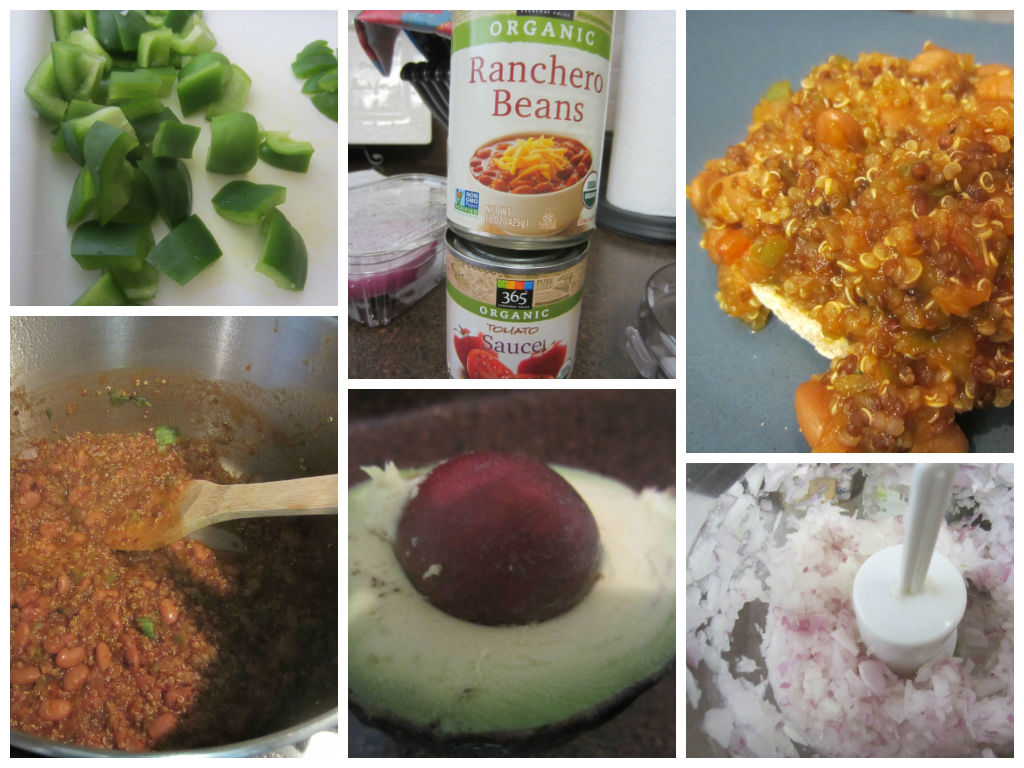
Vegan Sloppy Joes Pinto Beans Quinoa But now that I live 100% plant-based (since April 2013), those problems are now a thing of the past. I am not one of those annoying vegans who tries to show you pictures of animals being slaughtered. Nor am I the kind who wants you to become a vegan- what you eat is none of my business. That changes, however, if you end up visiting my website to learn what our family thinks of Quinoa and Pinto Bean Sloppy Joes. In that case, I’m going to have to tell you how awesome these things are! Quinoa and Pinto Bean Sloppy Joes are one of our family’s favorite recipes. Since discovering them, we pretty much have them once a week. And they even make great leftovers. vegan sloppy joes quinoa pinto beans We base our recipe from VegKitchen:
  • 1/2 cup raw quinoa, rinsed
  • 1 tablespoon olive oil
  • 1 medium onion, finely chopped
  • 1/2 medium green bell pepper, finely diced
  • 15- to 16-ounce can pinto, drained, rinsed, and coarsely mashed (or 1 1/2 cups cooked)
  • 1 cup tomato sauce
  • 1 medium tomato, finely diced
  • 1 tablespoon reduced-sodium soy sauce or tamari
  • 1 teaspoon agave nectar
  • 1 teaspoon chili powder
  • 1 teaspoon paprika
  • 1/2 teaspoon dried oregano
  • 1/4 cup minced fresh cilantro, plus more for topping, optional
  • Shredded baby spinach leaves
  • 6 whole grain English muffins

We add avocados though- I highly recommend doing so. They are the secret ingredient that really puts this recipe over the top. These Quinoa and Pinto Bean Sloppy Joes are so filling! Man, I want some right now- seriously. vegan sloppy joes Nick Shell And again, they are made with all plant-based ingredients; meaning you consume less than 1% of your daily cholesterol. Even aside from the technical 0% cholesterol is the fact that by making the sauce yourself, your not feeding your family GMO high fructose corn syrup that the leading sauce brands are full of. Please take my word for it… this is a good recipe. Not to mention, the prep and clean-up is very minimal. Make them, then, please… tell me what you think. I want to know.
The Model Paradox: Ken and Barbie Vs. Homer and Marge

Truthfully, do we prefer to see perfect airbrushed models or just reminders of our own bodies?  Is beauty really in the eye of the beholder or does how we spend money on magazines what we actually believe?

America has always had a love/hate relationship with Barbie and Ken. Unsurprisingly, it exactly reflects the way we both worship and curse the models we see everyday on TV and in movies and magazines. During the Fall season of 2009, there was a lot of Internet buzz about a model named Lizzie Miller who was featured in the September issue of Glamour magazine. The picture showed her proudly smiling, displaying her nude yet self-censored body, seeming both unaware and apathetic about the fact she has a “belly”, stretch marks, and thick legs.  The letters and emails poured in by the masses, praising the magazine for showing the beauty of a “normal” woman. While Glamour has been known to feature plus size women on the cover, like Queen Latifah in May 2004, the magazine mainly uses thinner models instead on a regular basis.

But, if normal sized and average looking people are what the general public really wants to see and even the magazine editors know this, why consistently do we continue to see models with perfect abs and bodies with less than 2% body fat? Because when it really comes down to it, we don’t truly want to see a model who reminds us of what our own bodies look like. The proof? Lean models sell more magazines. Bottom line. And we the average people are the ones buying.

In 2006 Dove soap began their Self-Esteem Fund campaign, featuring “real women” in their TV and Internet ads.  While the ad campaign is still active as of today, according to their website it will be ending after 2010, for whatever reason.  But even if these ads with “realistic models” help sell more soap, why are there still skinny, muscular, sexually provocative models on the covers of fashion, beauty, and even health magazines?  Because despite increased sales of soap, the image of the person on the cover of a magazine is largely what sells it. And on a regular basis, I continue to see the real life equivalent of Ken and Barbie on fashion, beauty, and health mags, not Homer and Marge Simpson.

The physical ideal self is what so many consumers are looking to become. It’s a nearly impossible image that we may be able to get close to, but never actually permanently attain for ourselves, unless we own a gym.  And that perceived void in our lives to feel beautiful or sexy (or maybe simply to feel worthy of being in a healthy relationship) largely helps to magazines to sell, by feeding into our subconscious. It’s the image that some people keep stuck in the front of their minds when they work out or when make a conscious decision to eat grilled salmon and a salad instead of a bucket of fried chicken and a 48 ounce soda.

We blame the magazines and media for bombarding us with unrealistic models. And it makes us feel good when magazines do display people that remind us of ourselves. For about five minutes. Then a flash of a shirtless Ryan Reynolds or Jennifer Aniston wearing nothing but a men’s tie on the cover of GQ changes that. We can say we want to see imperfection, but how we spend our money directly affects what images continue to show up on magazines covers and retail ads.  Tired of seeing unrealistic models?  Stop reading and buying those kind of magazines until they only feature people who look like you and me.

But that obviously will never happen.  Because our love/hate relationship with models is somehwat like a kid who goes to Disney World for the first time but is old enough to know that Mickey Mouse is not actually a 6 foot tall mutant mouse, but instead a college student in a really expensive costume.  Even so, this child is no less excited even though he or she knows it is just a fantasy.  And that’s just what models are- a fantasy, both equally demotivating and inspiring.

dad from day one: Parenting a Tongue Tied Baby

Week 5.

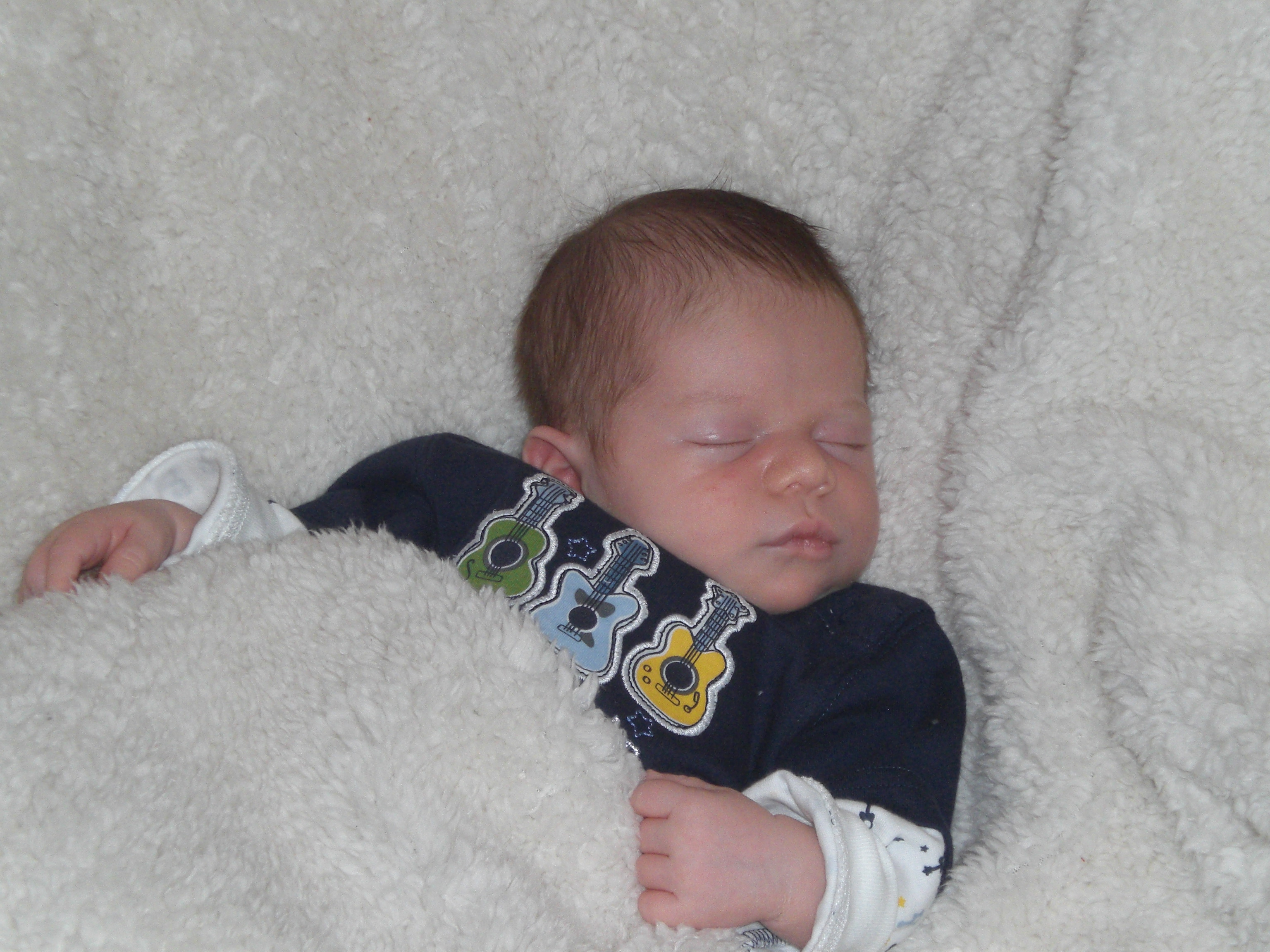
I chose not to go public about Jack being tongue tied, maybe in a subconscious attempt to avoid being overwhelmed with polarizing schools of advice before my wife and I had time to assess the situation ourselves and learn what would truly be best for him.  We realized after just the first couple of days after Jack was born that he wasn’t able to feed like other babies.  He could never get a good latch nor could he take more than a few sips of milk before crying and making a gurgling sound.  Actually, I never knew that being tongue tied was a real thing.  I just thought it was a phrase people used to describe momentarily not being able to successfully speak.  In case you haven’t already clicked on the Wikipedia link in the first sentence or already know this, some babies are born with that “skin bridge” attached too closely for them to stick out their tongues very far.

In Jack’s case, it meant extreme difficulty in feeding.  For more extreme cases, a tongue tied baby may grow up to become a child or adult with a speech impediment.  So last Thursday, we drove back to Vanderbilt in Nashville and had Jack’s tongue clipped.  I consider it a 2nd circumcision of sorts.  In fact, I was offered the chance to watch the procedure, so I did.  It was everything you would imagine. Just a few quick cuts.  I highly recommend it if your infant or child is tongue tied.

Since Thursday, the silver coating the doctor sprayed on the lacerations has been slowly peeling off.  So in a few more days, he should be out of pain and be able to begin learning to feed normally, with a tongue that can reach past his lips.  So if you have a tongue tied baby, and you’re asking for my opinion, just get it clipped. It’s no big deal and it sure beats having to wonder how much easier feeding could have been and whether your child will have difficulty speaking.

So Maybe I’m Allergic to Peanut Butter… in Large, Consistant Amounts

But not allergic to peanuts themselves.  Noted, I’m no doctor.

One of the darkest places in life for me is when I am throwing up- which only happens a few times each decade.  It’s that feeling of inescapable depression, like being a notches away from a sickly death- a hellish gravity so overwhelming that I tend to wonder if I will wake up as a ghost like Bruce Willis and not realize I’ve been dead the entire movie.  Usually I try to keep things a bit classier when I write, but in this case there is really no way around the fact that over the weekend I spent the hours from midnight until 4:30 AM constantly vomiting, only interrupted with sporadic periods of rest on the bathroom rug.  I understand that some people have never gotten food poisoning.  As for myself, I can easily think of my three worst occasions: The Central Park drive-thru in 1990, the shady Chinese buffet restaurant in 2007 (back when I still ate pork and shellfish), and the apple & peanut butter incident of 2010.

I don’t know; maybe getting food poisoning every couple of years is like getting stuck by lightening more than once in a lifetime.  Or maybe my digestive track is just ultra-sensitive to any food that is slightly less than proper and sanity.  But what I do know is that I am unable to digest slightly massive amounts of anything- even if it hasn’t been setting out in a Chinese buffet for three hours unattended. What clued me into my possible allergy to large, consistent amounts of peanut butter was my Reese’s Peanut Butter Cup overdose of 2003, when I consumed 36 of them in less than 24 hours: I had just came back from spending a summer in Thailand where both peanut butter and rich, American chocolate are rare finds.  I experienced a major depression for the following two days along with a mild rash on my left wrist for the next six months.

Last week my choice snack every day was an apple with three tablespoons of peanut butter. So good- and seemingly healthy.  But I guess by Day 6 of this treat, which I made my lazy dinner Friday night, was just enough peanut butter in a week’s amount of digestion to throw my digestive track into shock.  Because this was the first time that after I puked up all my food from that evening, I puked up a thick yellow substance, then a thick green substance, then blood- and that pattern repeated a few times before I finally fell asleep until late morning. Eventually though, every single trace of peanut butter was erased from my body. Now, a few days later, I was able to eat my first meal with meat (tilapia, okra, and salad), though my voice is raspy from all the ralphing and my ribs hurt any time I cough or sneeze.

To my understanding and according to my self-diagnosis, I have survived yet another case of food poisoning- and surprisingly this time it didn’t involve a restaurant, but instead a good snack.  I’ve eaten a lot of peanuts in a week’s time and never had anything like this happen.  There must be something about the simple process of smashing the peanuts to turn them into butter than makes them slightly toxic to me.  Sure, I didn’t experience any of the typical symptoms of peanut butter allergies like swelling, but I just think it that peanut butter is smart enough of a food to hurt people in its own sneaky ways.

Lesson learned: From now on I’ll go light on the PB.

How to Purposely Prepare to Not Feel Miserable during the Holidays

While it is indeed important, I’m not talking about truly remembering the real meaning of Christmas – I’m just talking about avoiding a headache, along with possible mild depression and constipation.

Thanksgiving Day wasn’t that long ago, so there’s a good chance you have fresh memories of sitting around the house all weekend, eating too much food, and ultimately feeling miserable.  That was my story for so many years.  Until last year when I decided I didn’t want to feel that way anymore during my days off from work.  So today I share with you two easy tips so that you may truly enjoy my holidays with friends and family.

Bring a case of bottled water and fresh salad to the meal.  Part of the reason it’s so common to feel yuckified during the holidays is because it’s way too easy to become dehydrated (there is such an easy access to both soda and alcohol at these holiday meal gatherings both of which dehydrate the body).  Also, holiday meals are very similar to a Chinese buffet in that they mainly consist of carbs and sodium.  Not only is it too easy to eat too much, but it’s too easy to also eat virtually nothing nutritious in the process.  When the freshest vegetable dish available is green bean casserole, you’re bound to feel down.  Drink plenty of water and make sure there are fresh vegetables available, if it means that you are responsible for bringing it.

Get out of the house and out into the cold. As much time as you will spend watching the 1983 classic A Christmas Story on TBS repeatedly and playing Wii with your nephews and nieces, there’s a good chance that your idea of “getting out” simply means going shopping for good deals or running to the convenience store to buy more milk.  You need real exercise and fresh air during the holidays.  So in addition to bringing the salad and bottled water, your responsibility is to stand up and say, “I’m going for walk outside- who’s with me?”  (Don’t forget your coat, of course.)  You’ll be the hero.  And you’ll be surprised at what interesting conversations can arise from a (30 minute minimum) walk in the cold: Certain conversations just can’t be born while lying in a coma-like state on the couch.

I guarantee you will have a better holiday experience if you try abiding by these two tips.  Cabin fever can be prevented.  And you can be the Holiday Armadillo that changes things in your household.  No matter what you believe the winter holidays are actually about, the importance of giving to others is ultimately attached to your religious or cultural traditions.  So give to the needy.  Care for the orphans and widows.  Love the unloved.  And lastly, give the gift of “not feeling miserable” to others.