The Art and Irony of Trendsetting: Featuring Crocs, Hawaiian Shirts, Voss Water, and WWJD Bracelets

Trends are only truly cool when they’re not quite cool yet.  And by the time they are in style, they’re pretty much going out of style.

Recognizing the hilariousness of how in many offices in America, it is standard that everyone dresses professionally Monday through Thursday, but on Friday, everyone goes casual with jeans and often t-shirts, at the beginning of the summer I decided to start making Thursday a “buffer” day for how I dress in the office, encouraging everyone else to participate.  How do you transition from khakis and dress shirts to jeans and t-shirts?  Hawaiian shirts.

They are button-down shirts with collars.  Perfect, tacky transition.  At first, only one other coworker would join me in Hawaiian Shirt Thursday.  But then, if for no other reason they felt like they were missing out on something cool, one by one, others began joining us.  By the end of the summer, I had half of the office on my side.  Some people dug through their closets to find the shirt; some actually went out and bought one.  And now, even in autumn, many of us are keeping the tradition going.

Of course, this isn’t the first trend I’ve started at work.  In an effort to make sure I was drinking enough water everyday, I went to Whole Foods and bought a glass Voss water bottle that I refill several times throughout the day.  At first, coworkers joked with me, “Isn’t it a little early in the day for vodka?”  By now though, several of them have privately approached me to ask where they could get a water bottle like that.  And sure enough, the glass Voss water bottle is no longer weird in my office, but instead it’s the norm.

But the irony with trendsetting is that by successfully coming up with an original and unpopular idea, it eventually becomes unoriginal and popular.  Prime example: Crocs.  For the last couple of years, I’ve looked on from a distance at the weird plastic rainbow colored Birkenstock rip-offs.  They were so trendy.  You’d see moms and their kids out at the mall, all wearing Crocs.  Even though I wanted some, I refused to buy them.  Because they were too cool at the time.

However, this week I came to a realization.  The Birkenstocks I have been wearing were given to me by my parents Christmas 1999.  I had already paid $35 five years ago to have them resoled.  It was time for me to either have them repaired again, or pay $110 for new ones.  Or… pay $30 for some brown Crocs.

To entertain the idea of buying Crocs, I checked around Cool Springs during my lunch breaks while riding my mountain bike instead of driving (another office trend I’ve been trying to start since April), but sure enough, I had trouble finding any Crocs for sale.  Eventually, some girls behind the counter at a Hallmark told me to check out the Croc stand across from Fossil in the mall.


Needless to say, with yesterday being Thursday, I wore my Hawaiian shirt, with Crocs, while drinking water from a Voss water bottle.  And boy was I cool.  Yet I wouldn’t have been caught wearing Crocs if they were still trendy.  The trend of wearing Crocs is over; which is why it was more difficult than I had imagined to find them.  I’m not saying that Crocs aren’t cool anymore; they’re just no longer a fad.


And so an important rule for a trendsetter is to not get involved in a trend that is overly popular.  But once a trend is over, then it’s “game on” to participate.  Some fads, after their prime, become an outdated, yet timeless classic.  Like Hawaiian shirts.  And Chuck Taylor’s.  And the wondrous Rubik’s Cube.  WWWD bracelets?  Not so much.


dad from day one: Passing on the Family Name

Thirty-six weeks.

It wasn’t until this weekend while visiting my parents in Alabama that I fully realized something: When Baby Jack is born, he will be the only male Shell (beyond me) to pass on the name, unless I eventually have another son.  My mom was telling me how we will need to get a “generational picture” taken, including my grandfather (John Shell), my dad (Jack Shell), myself (Nick Shell), and Baby Jack.  My dad only has one brother (Johnny Shell) and he only had daughters.  And I have no brothers.  So Baby Jack will carry on the Shell name, which translates in German as “loud and noisy”.

While the namesake is just that, a name, it still carries on an idea of the people with that name.  Not only their bloodline and physical characteristics, but also a reputation of that name.  When I think of what the Shell name stands for, I think of my grandfather (who I call “Paw Paw Shell”), my Uncle Johnny, and of course, my dad, because they are the three male Shell’s most closely related to me.  They all work very hard, will do anything for the family, will not tolerate any b.s. or drama, are extremely down to Earth, have a passion for classic cars, prefer The History Channel over watching sports on TV, and will always choose the great outdoors over the city life because they all live in the wooded mountains (which is different than living out in the country, by the way).

Physically, male Shell’s are between 5’ 7” and 5’ 11” (no shorter, no taller), have dark brown or black hair, have a thin frame, have a fairly prominent nose (not noticeably huge, but never smaller than average), are known to show up at each other’s houses unannounced, and have a weak spot for Moon Pies.  For me, there is just something about being “a Shell” that is distinguished.  Not in a classy way like the Vanderbilt name, or Presidential like the Kennedy name, but it’s the idea that when you meet someone with the Shell name, you’ll never forget them.  Shell’s stand out from the crowd.  Not in a “loud and noisy” aspect like the name actually implies, but set apart in a sense that if you know one of us, you know all of us.  And really, that’s how I imagine most families are.

It’s in a man’s heart to want to pass on the family name.  Not just for the sake of legacy, but also because of pride.  And while pride is typically a bad thing, when it comes to family, pride is a necessary staple.  I am proud to be a Shell, and proud to bring another one into this world.

All pictures with the “JHP” logo were taken by Joe Hendricks Photography:

Blog- www.photojoeblog.com

Website- www.joehendricks.com


The Token Bad Guy: Osama bin Laden is Dead

From Ben Linus to bin Laden, evil has a name.

Now that President Obama announced that Osama bin Laden is officially dead, it makes me think about how there always how to be a “bad guy”, both locally and world-wide.

In Judd Apatow’s Jewish comedy (a franchise he has specialized in for the past decade, based on a strategic formula including Seth Rogen and/or Paul Rudd, a good dose of bromance, a classic soft rock soundtrack, mostly ad-lib dialogue, a heavy and almost dark dramatic element somewhere in the plot line, a running time of at least 2 hours and 15 minutes, an unpredictable ending but no “twist”, and constant references to reproductive organs) Funny People, there is a scene where Adam Sandler’s character is babysitting his ex-girlfriend’s two young daughters. As they play, one of the girls takes him captive like he’s a dragon, while the other has come to rescue him. He looks up at them and says to each one, “Are YOU the good guy or are YOU the good guy?”

While in cartoons and children’s own made-up playtime storylines the antagonist often takes pride in knowingly being evil, in real life the Bad Guy usually doesn’t realize that he’s the Bad Guy. It amazes me that there always has to be a handful of countries in the world that serve as a current Bad Country. It’s been England (watch the movie The Patriot about the Revolutionary War). It’s been Germany (the Nazi’s). It’s been Russia (watch Rocky IV) and still kinda is.

Why can’t the evil leader of a country think to himself: “Oh no! I’m ‘that guy’. I’m the bad person that’s causing problems with the rest of the world. I need to start with the man in the mirror and change my ways”. From what I’ve read about Adolph Hitler, in his own mind he simply was carrying out an ultimate version of Charles Darwin’s concept of “survival of the fittest”. He was only advancing what he saw as in the inevitable. He wasn’t a sadistic tyrant, not the way he saw it. He didn’t see himself as the Bad Guy.

From each holy war ever fought in history, down to the elementary school bully, the true villain is doing what is right according to his own view. The Bad Guy is dead wrong, yes. But he doesn’t see it that way.  While obviously I don’t have the potential to become a radical tyrannical leader of threatening foreign country, I still can find myself in a similar scenario as North Korean leader Kim Jong-Il, by simply being the Bad Guy on a much lesser scale in everyday situations and not realizing it. If only Bad Guys always realized they’re the Bad Guy… well, it might help a little.

“We’re never gonna win the world, we’re never gonna stop the war. We’re never gonna beat this if belief is what we’re fighting for.” -John Mayer (“Belief”)

*Some bad guys, like this one, may or may not repent of their evil ways in the end.

A Snapshot’s Worth a Thousand Words: At My Parents’ House in Alabama

Here are 17 snapshots.  Plus the 301 words in the body of this post, not including this heading.  You’re dealing with around 2001 words, my friends.

Today I’m taking a break from writing to share some random items in my parents’ house in Alabama, where my wife and I spent the weekend.  It’s true that every picture has a story.  And these little stories make up our lives- they make up who we are.  So by looking through these snapshots of the house I grew up in, you’re taking a look into my memory pool- the same one I use to write from.

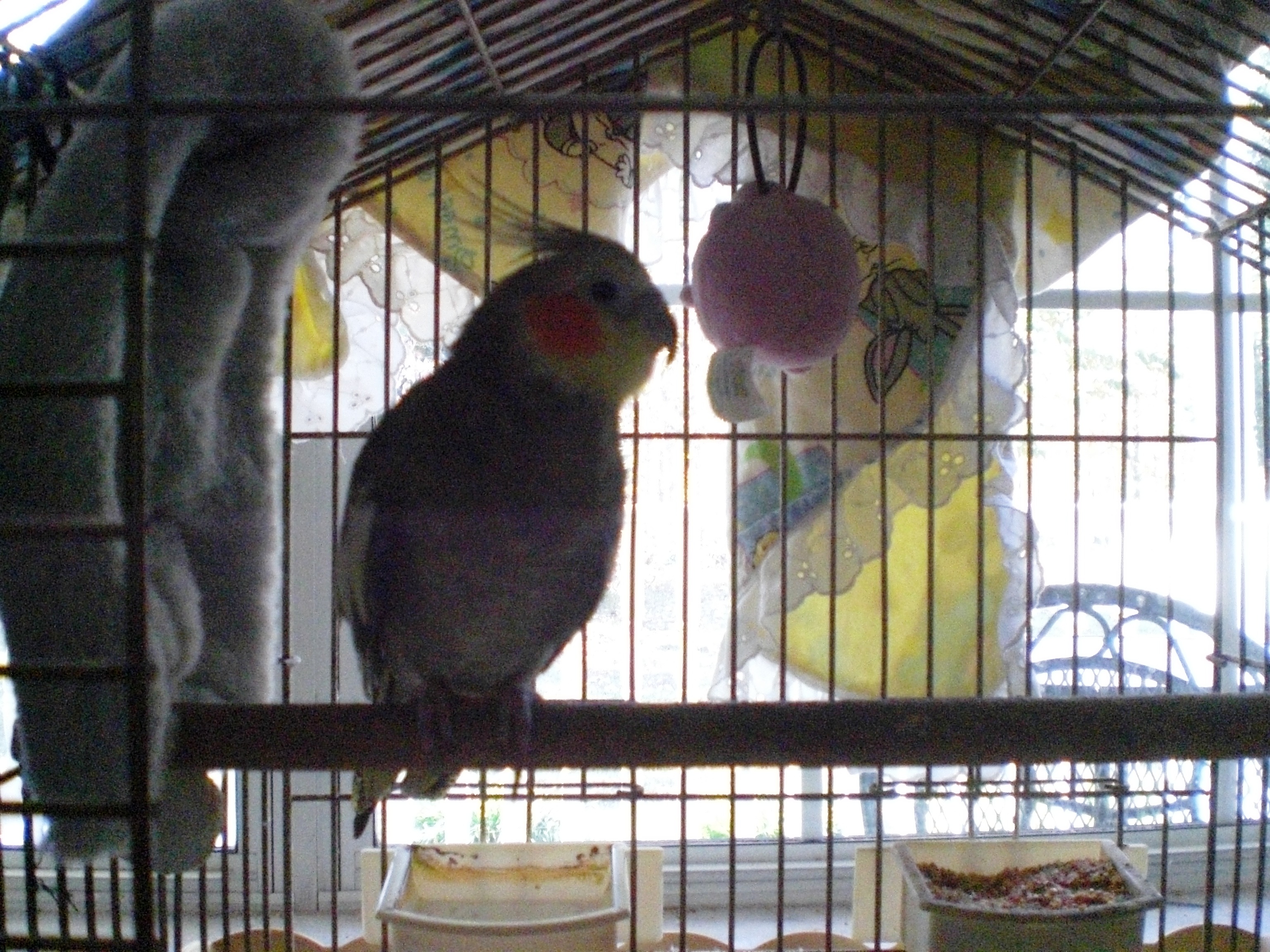
This is Samantha Shell.  In September, she turned 20 years old.  Samantha is a Cockatiel.

This is one of two windows in my bedroom.  My parents bought that little guitar for me when they went to The Philippines in 1995.

This is my sister’s bedroom, which has recently been transformed into a guest nursery for Baby Jack.

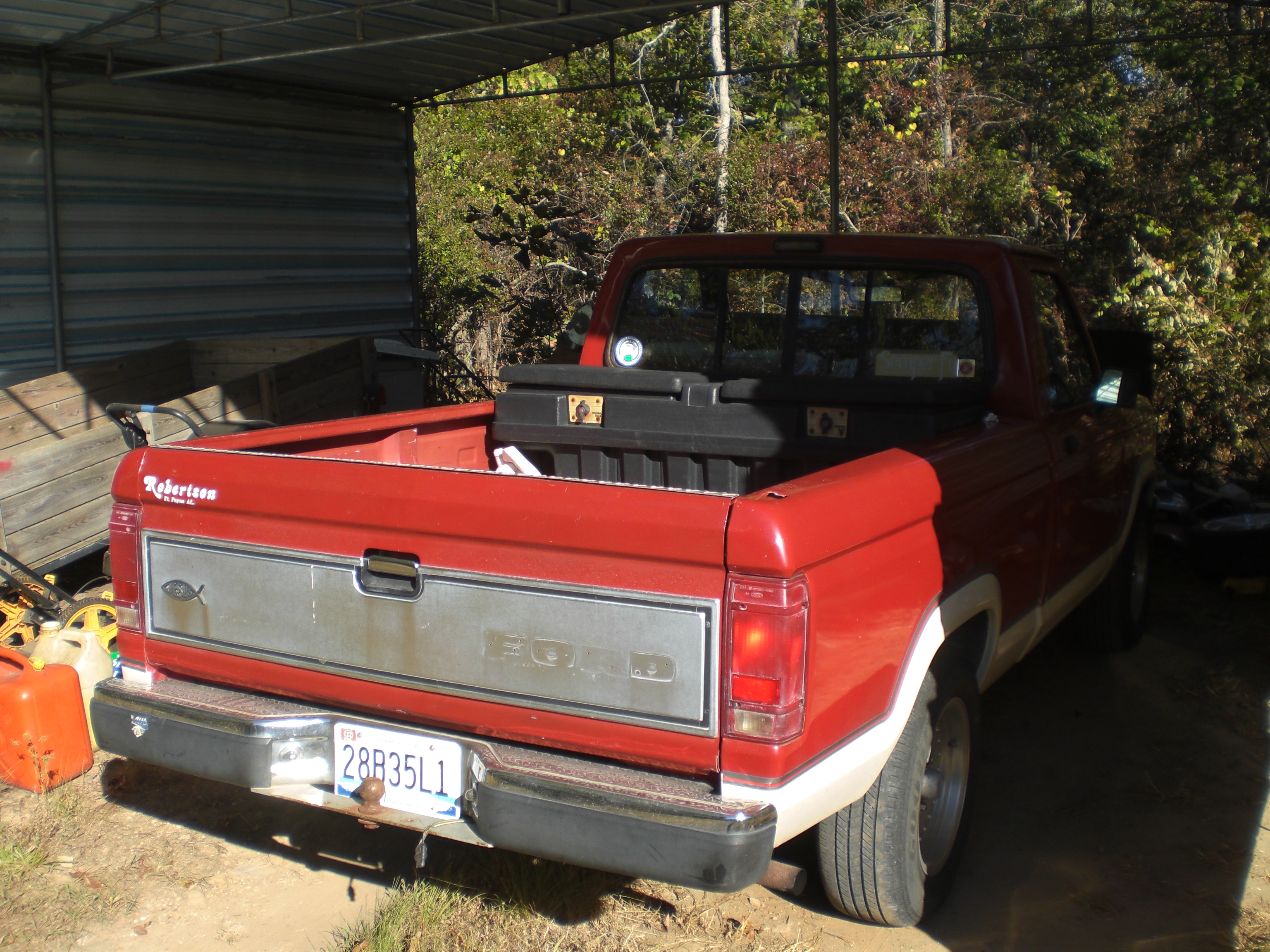
Here is my dad’s 1988 Ford Ranger he bought nearly new.  It’s still his main vehicle.

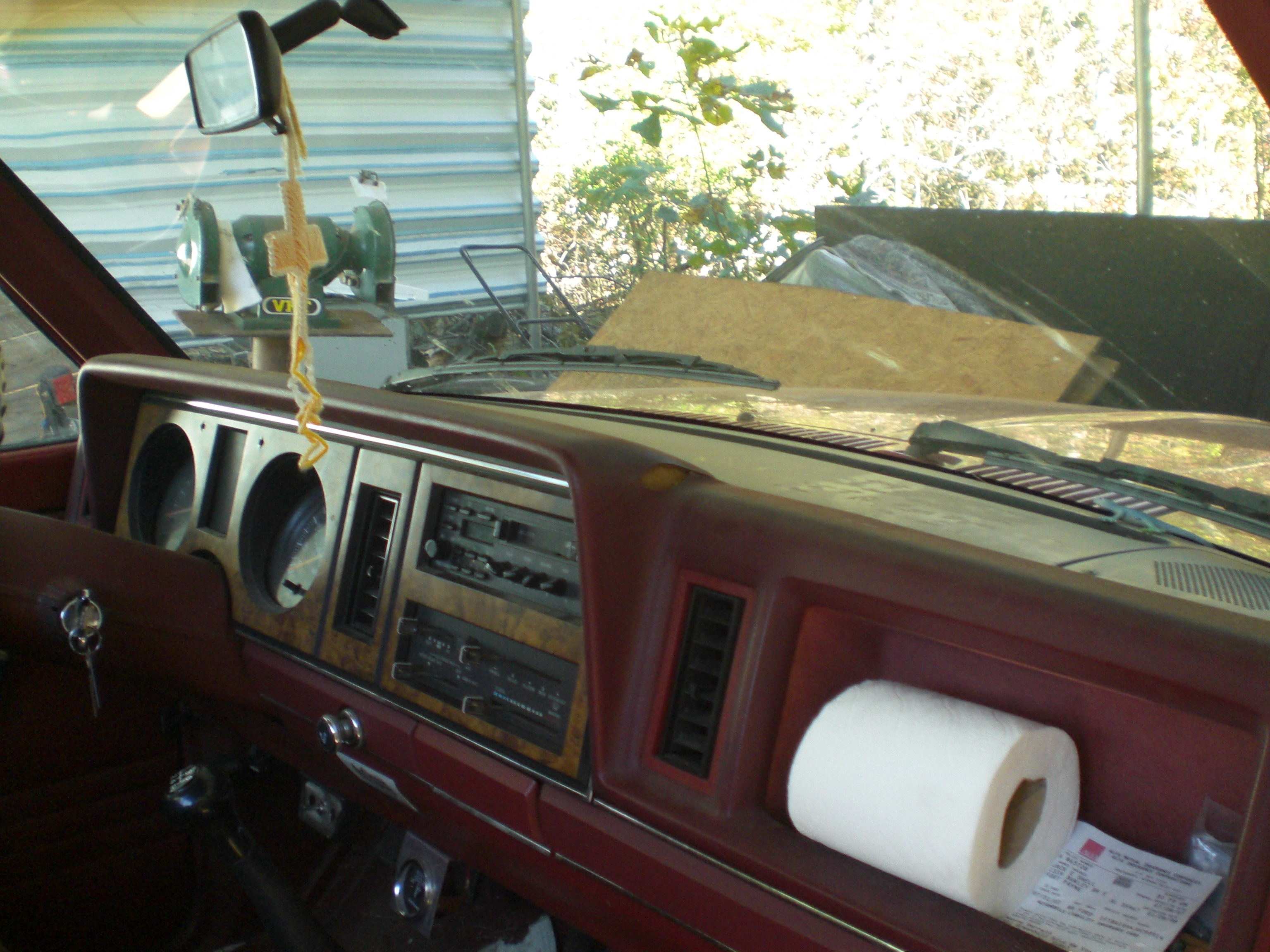
You never know when you might have to blow your nose while driving to work; less than a 10 minute drive for him.

He put these plastic lizard in the dashboard several years ago.  He says it successfully scares away flies.

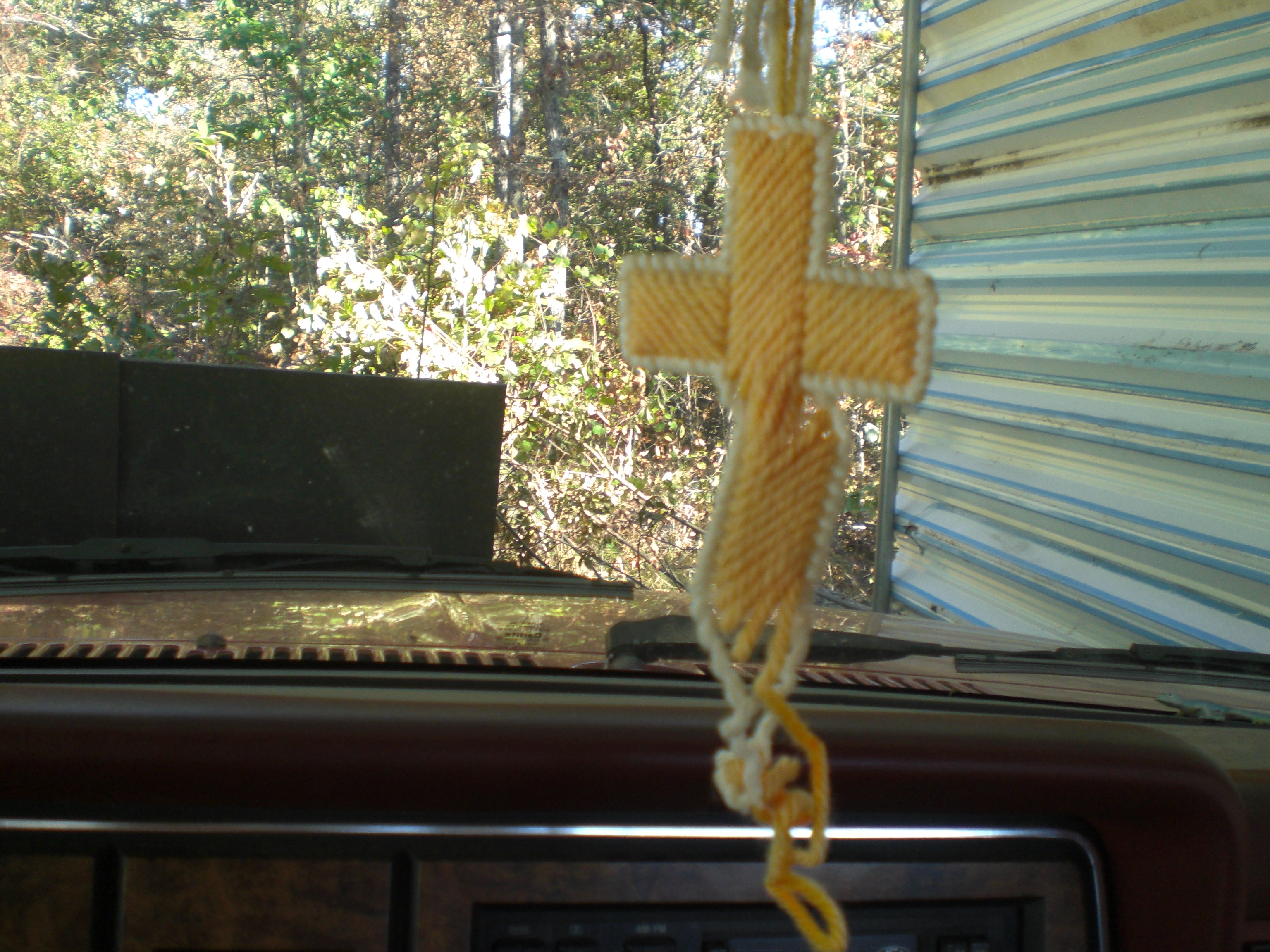
This cross used to be dark red and white.  It was crocheted circa 1993 and has been hanging on his mirror since then.

This cross is my Italian grandfather’s.

And it opens up, as my mom demonstrates.

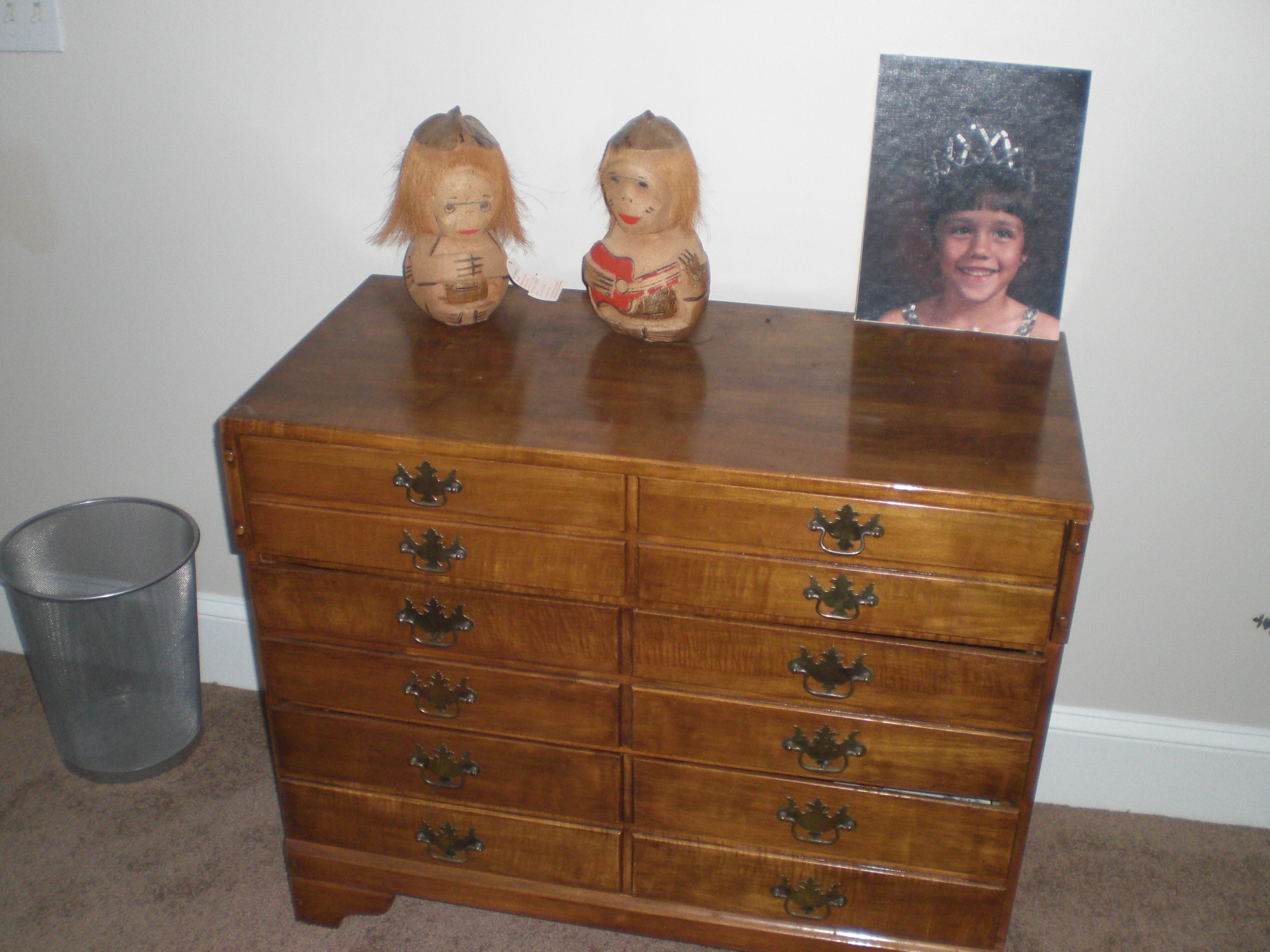
Two monkeys and my sister the ballerina.

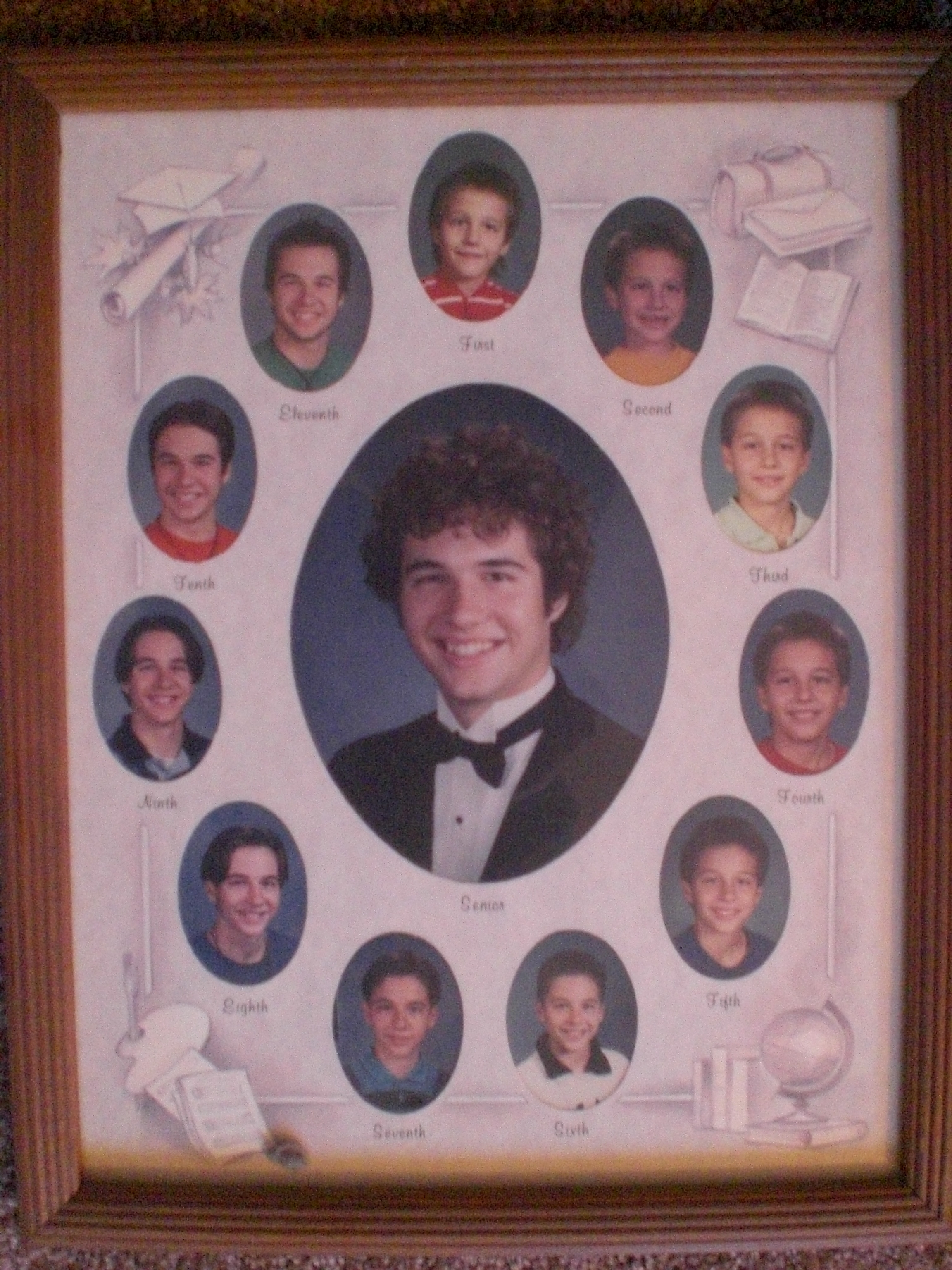
Yours truly, from 1986 to 1999.

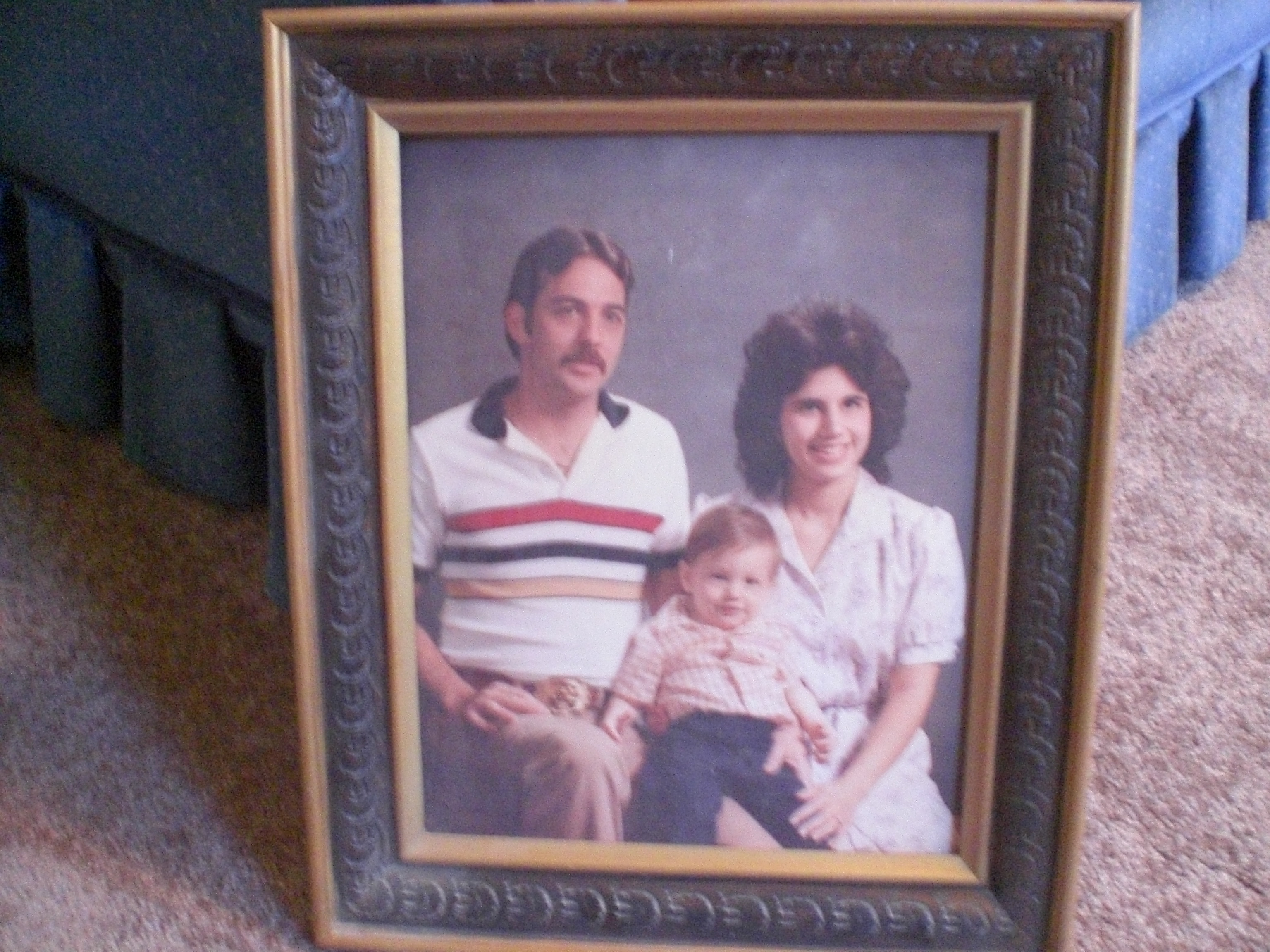
My parents and I in 1982.

My friend David Smith and I broke this Nashville mug that my dad bought for my mom when he went on a business trip.  We stayed up until after 1 AM to superglue it back together.  I’m not sure that it actually still holds liquid.

Classic frog and shroom.

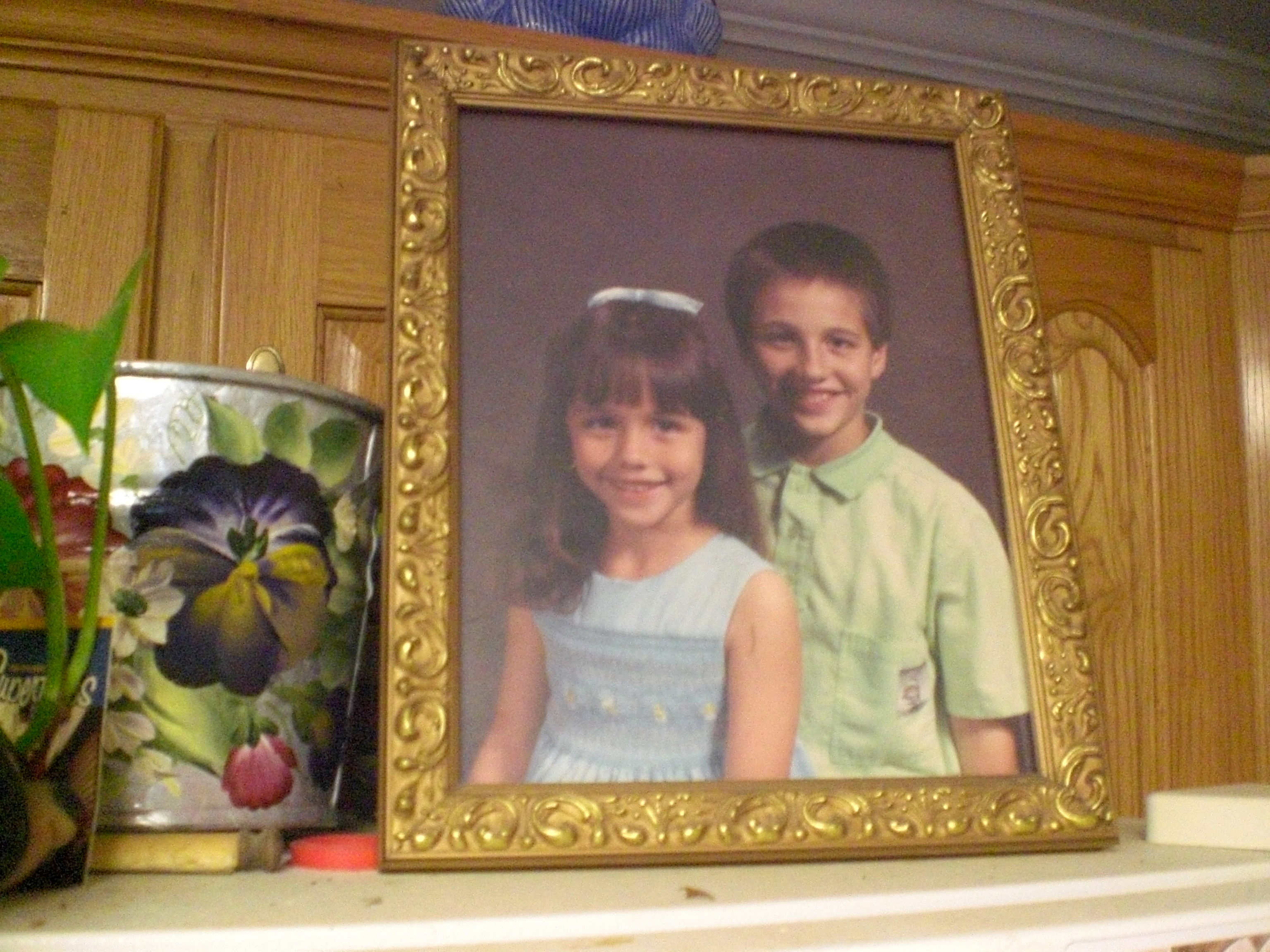
My sister and I in 1991.

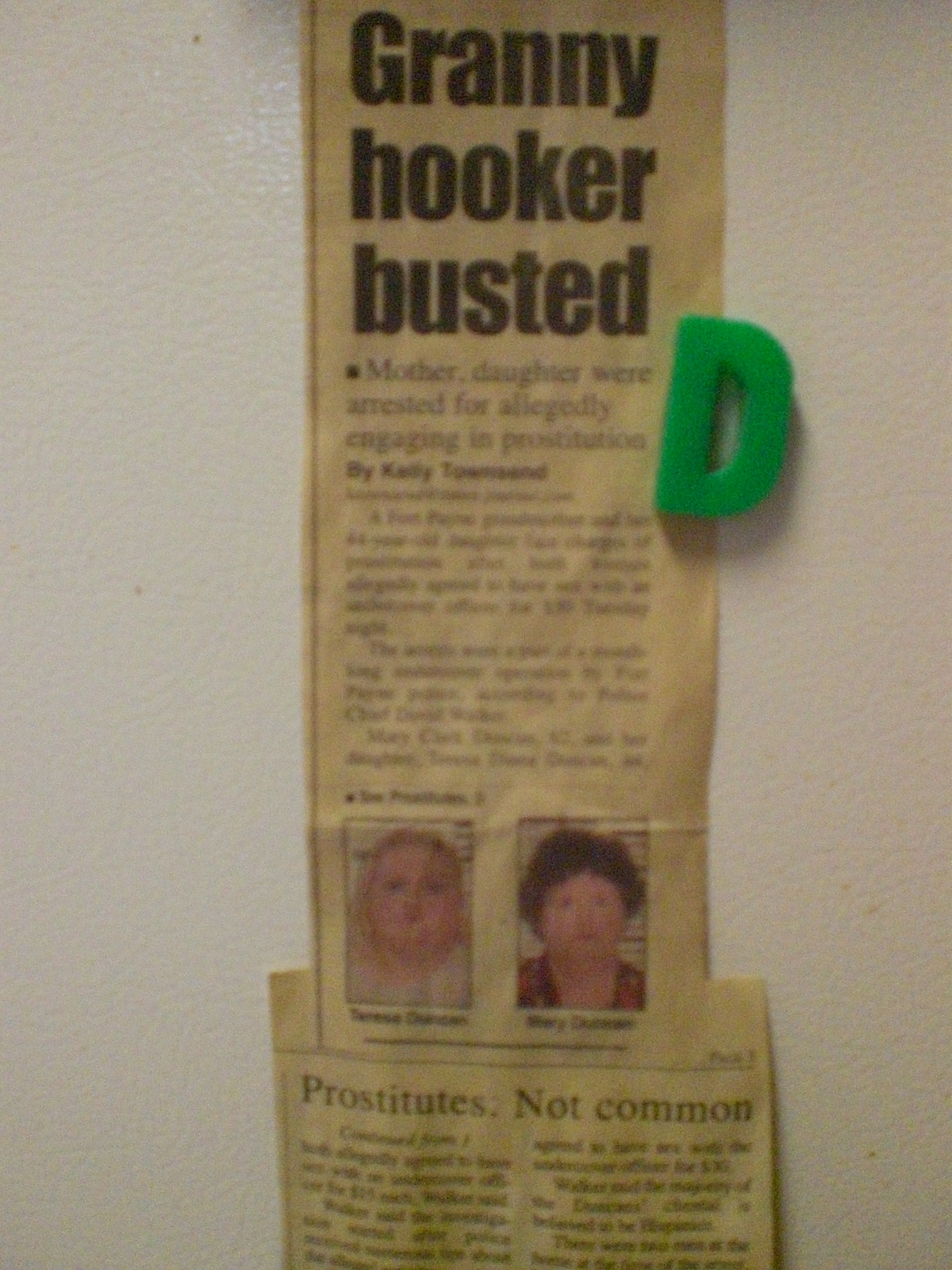
Local newspaper clips on the fridge. Busted!

Double busted!

Why Money is Funny, Honey

The numbers are real… only because we believe in them.

Antique dealers and E-Bay auctioneers are quite familiar with the fact that the value of an item is simply based on what a person is willing to pay for it. It had to have been confusing when the Native American Indians learned of the Europeans’ obsession with gold, which to them was just another type of metal. There was nothing special about it. But because gold still has value in our economy, we can relate to our European ancestors. Not only have we been trained to associate gold with prosperity, but gold literally does equal monetary wealth.

If only ancient civilization decided that dinosaur fossils should have been the currency, we would put our faith in a completely different rare, inanimate object. It is truly eye-opening, amazing, and disappointing to realize that money itself is simply just a touchable version of the invisible system set in place. Money isn’t real. Our government can print millions more in a just a few minutes, when they choose to. Our faith in the system is what gives money its worth.

A dollar is worth a dollar because we believe it. Same thing with a million. And while each decade inflation alters the value to a degree, we keep enough faith for the system to stay legitimate.

What made this “invisible money” concept even more real for me is when I got a debit card a few years ago. No longer having to go to the bank every Friday during my lunch break to withdraw cash, I could just simply swipe my card to make a purchase, then later check online to see the numbers get a little smaller. The Numbers.

Money is invisible numbers. But while money isn’t real, these numbers still completely affect our lifestyles. So they are real.

Faith makes an invisible economy real.