dad from day one: The Due Date

Forty weeks.

Don’t ask me how, but all week my wife and I have had the theme song to the ‘80’s sitcom Mr. Belvedere stuck in our heads.  In the mindset of “if you can’t beat ‘em, join ‘em”, we downloaded the song as our ringtones for when we call each other.  That has caused me to revisit some of my most favorite theme songs from these sitcoms that served as the backdrop of my childhood.  A very interesting trait that many of these TV shows had in common with each other (and accordingly, the lyrics to their theme songs) is that premise was that an outsider moved into the household, therefore throwing normalcy out of whack.  Which totally relates to what’s going through my head right now about our upcoming new addition, a baby boy. (In order to qualify, the sitcom had to actually start in the 1980’s; Diff’rent Strokes, Mork and Mindy, and The Facts of Life don’t qualify since since they premiered in the ’70’s.)

For example, here’s a sitcom that had it all, yet could have only existed in the 1980’s: An all-American family, laugh tracks, and an Alien puppet. Of course, I’m referring to Alf. While the song had no words (instead it sounded like what would happen if you pressed the “demo” button on a $200 Casio keyboard in 1988), the thought of a little creature running around the floor chasing cats loosely translates having a baby boy. For Family Matters, the intended outsider was Estelle Winslow who moved in with her son Carl’s family, though unexpectedly the true outsider instead became Steve Urkle (intended only as a guest star) instead a few episodes into the first season.


In Mr. Belvedere, a British butler moves in with an American family living in Philadelphia: “Sometimes things get turned around and no one’s spared… There’s a change in the status quo.  Preparing for our new arrival.  We might just live the good life yet…”


Another prime example is from one of my favorite sitcoms ever, which happens to have my favorite TV show theme song ever.  In Perfect Strangers, city slicker Larry Appleton is thrown for a curve when his distant cousin Balki moves from his mysterious Mediterranean village to live with Larry in Chicago: “Sometimes the world looks perfect- nothing to rearrange.  Sometimes you just get a feeling that you need some kind of change…”


In Full House, it was  Joey and Uncle Jesse who mixed things up by moving in with the Tanner family: “What ever happened to predictability?”

There was CBS’s version of Diff’rent Strokes: Webster.  As a kid, I actually liked Webster more than Arnold: “Til there was you…”


The next two sitcoms both premiered in 1984 and featured an Italian-American who moved into the household as a “manny”. Who’s the Boss? contains my 2nd favorite theme song ever and often caused me to believe that Tony Danza was my uncle: “You might awaken to a brand new life around the bend…”


Even though I never watched it, I know it was a big deal to a lot of people- Charles in Charge: “New boy in the neighborhood…”


You’re welcome… for being led into a world of nostalgia.  It’s pretty much a fact that you’ll be struggling to get one of those songs out of your head for the rest of the day.  So being such a sentimental guy as I am, I’ve been thinking about the current events that are going on right now.  That way I can tell Jack what was going on around the time he was born:

Interestingly, on November 5th, the movie Due Date hit theatres.  Daylight Savings was two days later; meaning that when it’s that time again to set back the clocks every year, it will almost be time for Jack’s birthday.  Conan O’Brien’s new show premiered this week (November 8th) and sure enough on last night’s episode during the monologue Conan pointed out that it was exactly nine months ago that his gig at The Tonight Show ended; so if because two people felt sad for Conan losing his job they decided to “get frisky” to be happy again, their child would be born this week.  Good call.


It will also be pretty neat that I will be able to show Jack the November 2010 issue of American Baby, in which in his birth was anticipated.  He is not making his debut unannounced; that’s for sure.  Today, November 11th, is not only Jack’s due date but it’s also my dad’s birthday, whose name is also Jack.  So even though he won’t have the same exact birthday as my dad, their birthdays will always be close.

Of all the pregnancy advice I’ve been given, the one thing no one warned me about is this: For first time moms, it’s normal and expected to not delivery until a full week after the due date.  So if you or your wife are approaching your due date, don’t do like I did and get all psyched, thinking the water is going to break at any moment.  Because then everyone is constantly asking for and expecting baby news, but sure enough, the baby is unaware of his due date.  He’s coming out when he’s good and ready.

I have to remind myself that my baby is not a Hot Pocket, with an exact predetermined time of two minutes in the microwave.  In fact, that would be pretty weird if he truly was born right near the due date.  We went to the doctor today.  Thank God, Baby Jack has still got a strong heartbeat and is in a good position.  He’s turned the correct way and everything.  But as far as when he gets here, I’m sure it will be the moment that I (and everyone else) least expects it.  He’s a sneaky little guy.

All pictures with the “JHP” logo were taken by Joe Hendricks Photography:

Blog- www.photojoeblog.com

Website- www.joehendricks.com

 

A Snapshot’s Worth a Thousand Words: At My Parents’ House in Alabama

Here are 17 snapshots.  Plus the 301 words in the body of this post, not including this heading.  You’re dealing with around 2001 words, my friends.

Today I’m taking a break from writing to share some random items in my parents’ house in Alabama, where my wife and I spent the weekend.  It’s true that every picture has a story.  And these little stories make up our lives- they make up who we are.  So by looking through these snapshots of the house I grew up in, you’re taking a look into my memory pool- the same one I use to write from.

This is Samantha Shell.  In September, she turned 20 years old.  Samantha is a Cockatiel.

This is one of two windows in my bedroom.  My parents bought that little guitar for me when they went to The Philippines in 1995.

This is my sister’s bedroom, which has recently been transformed into a guest nursery for Baby Jack.

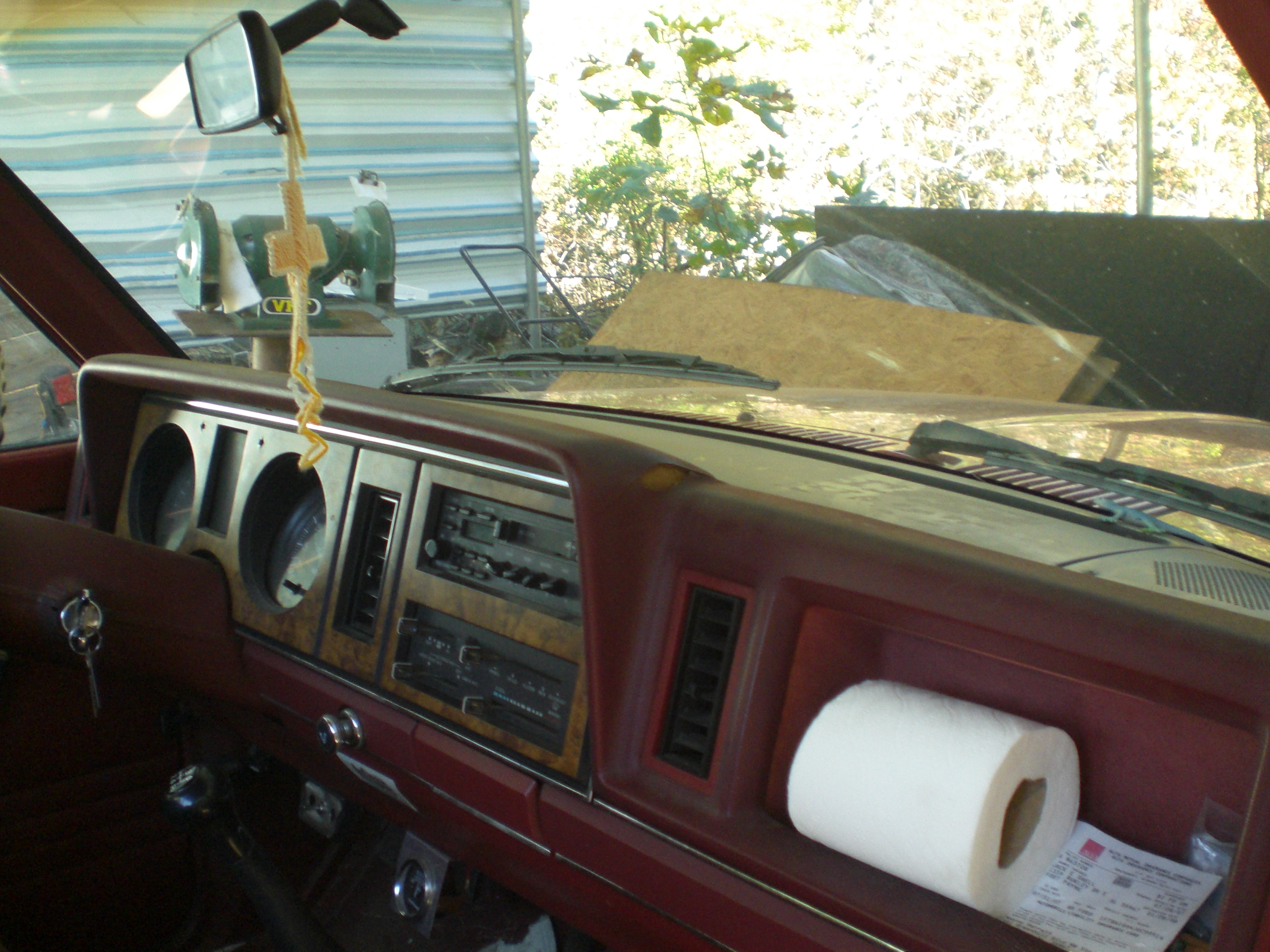
Here is my dad’s 1988 Ford Ranger he bought nearly new.  It’s still his main vehicle.

You never know when you might have to blow your nose while driving to work; less than a 10 minute drive for him.

He put these plastic lizard in the dashboard several years ago.  He says it successfully scares away flies.

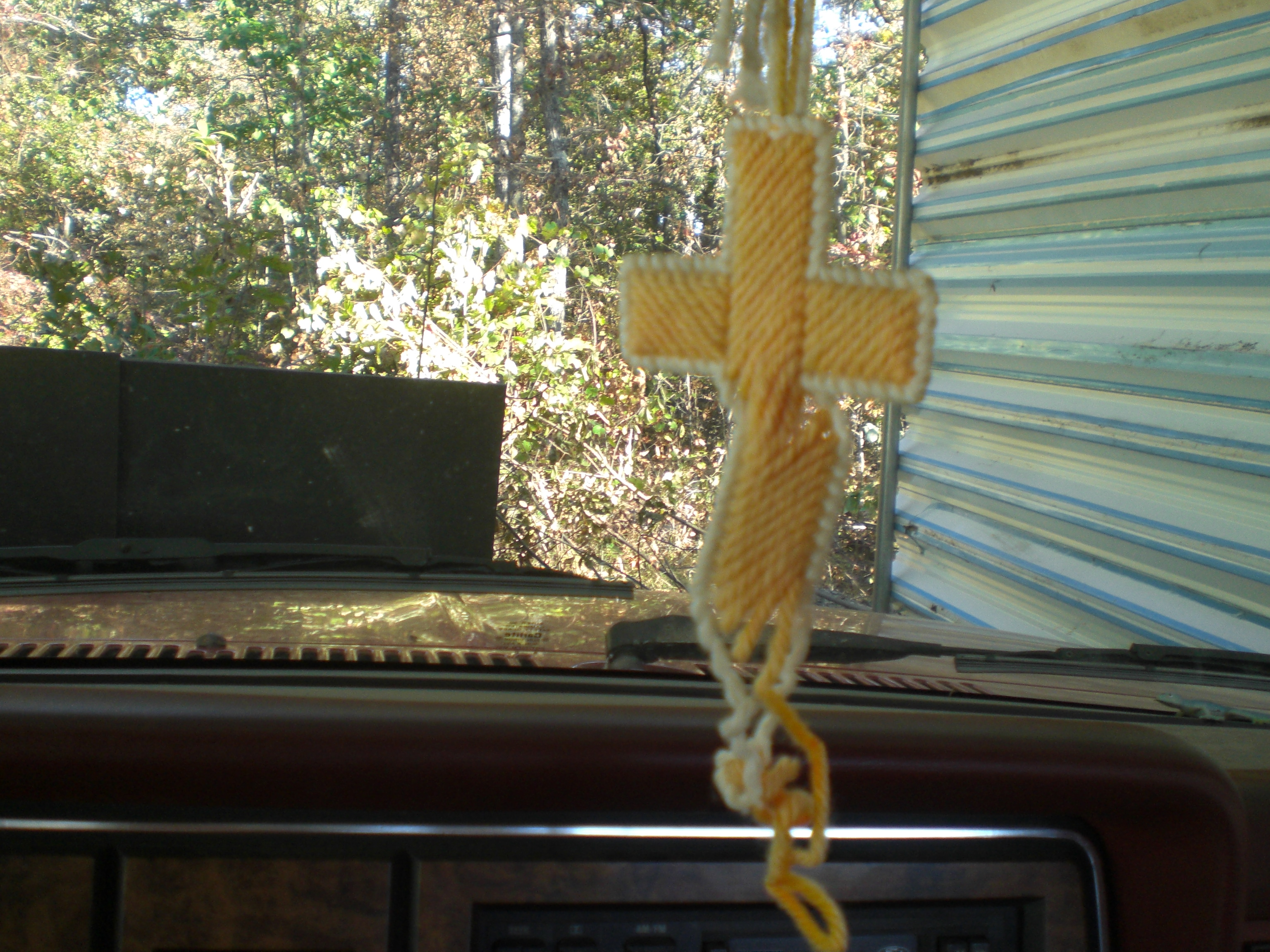
This cross used to be dark red and white.  It was crocheted circa 1993 and has been hanging on his mirror since then.

This cross is my Italian grandfather’s.

And it opens up, as my mom demonstrates.

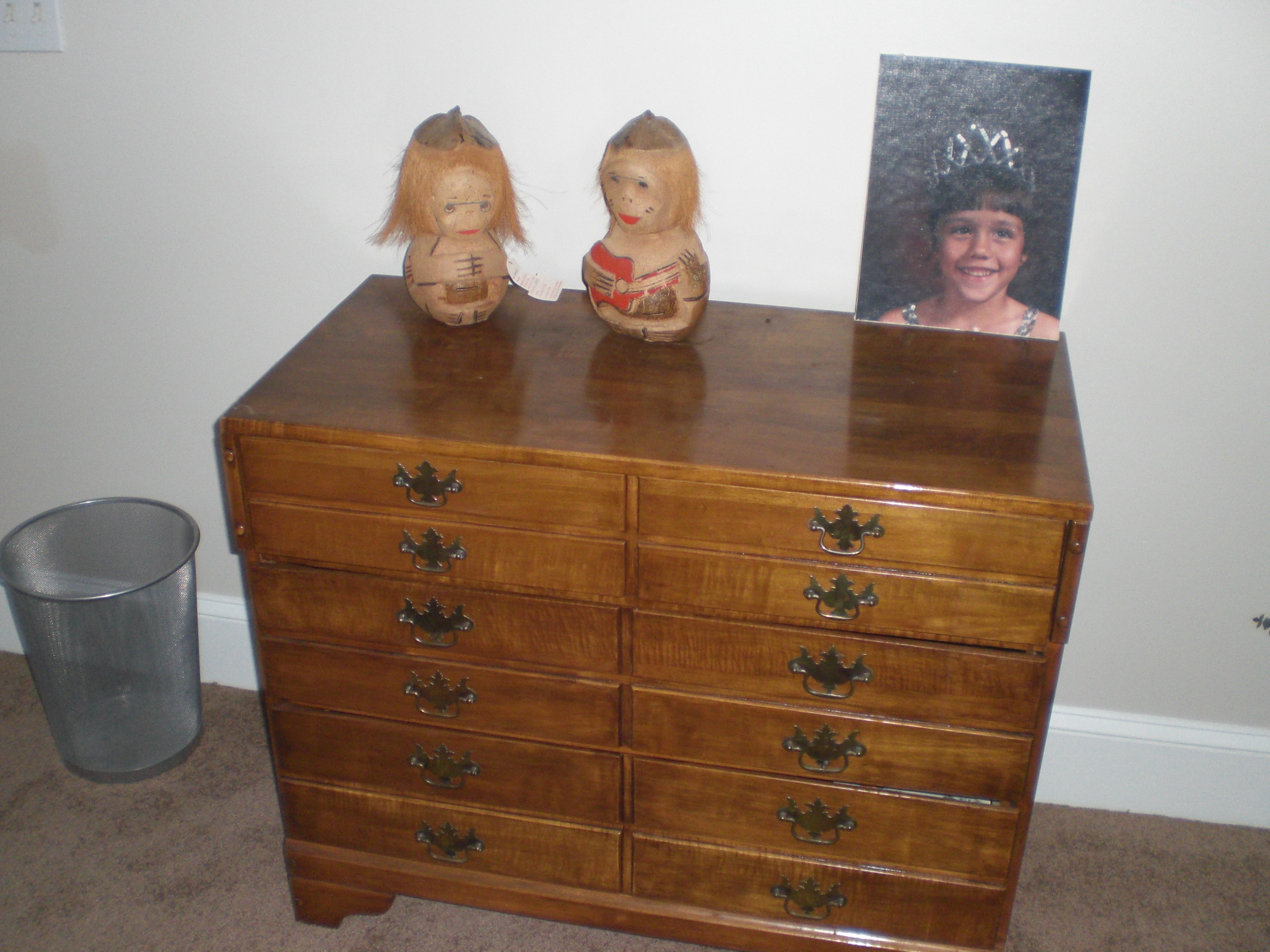
Two monkeys and my sister the ballerina.

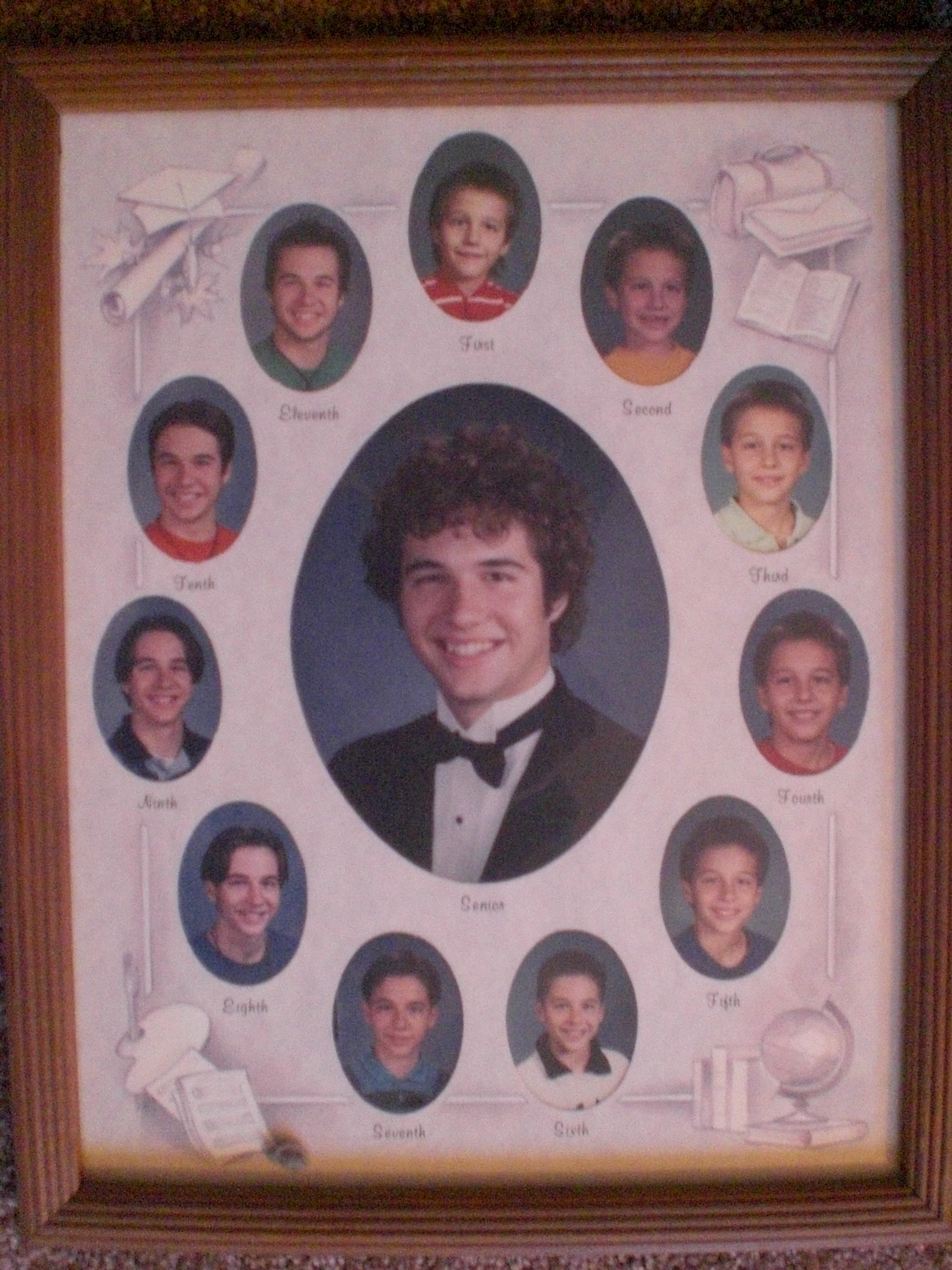
Yours truly, from 1986 to 1999.

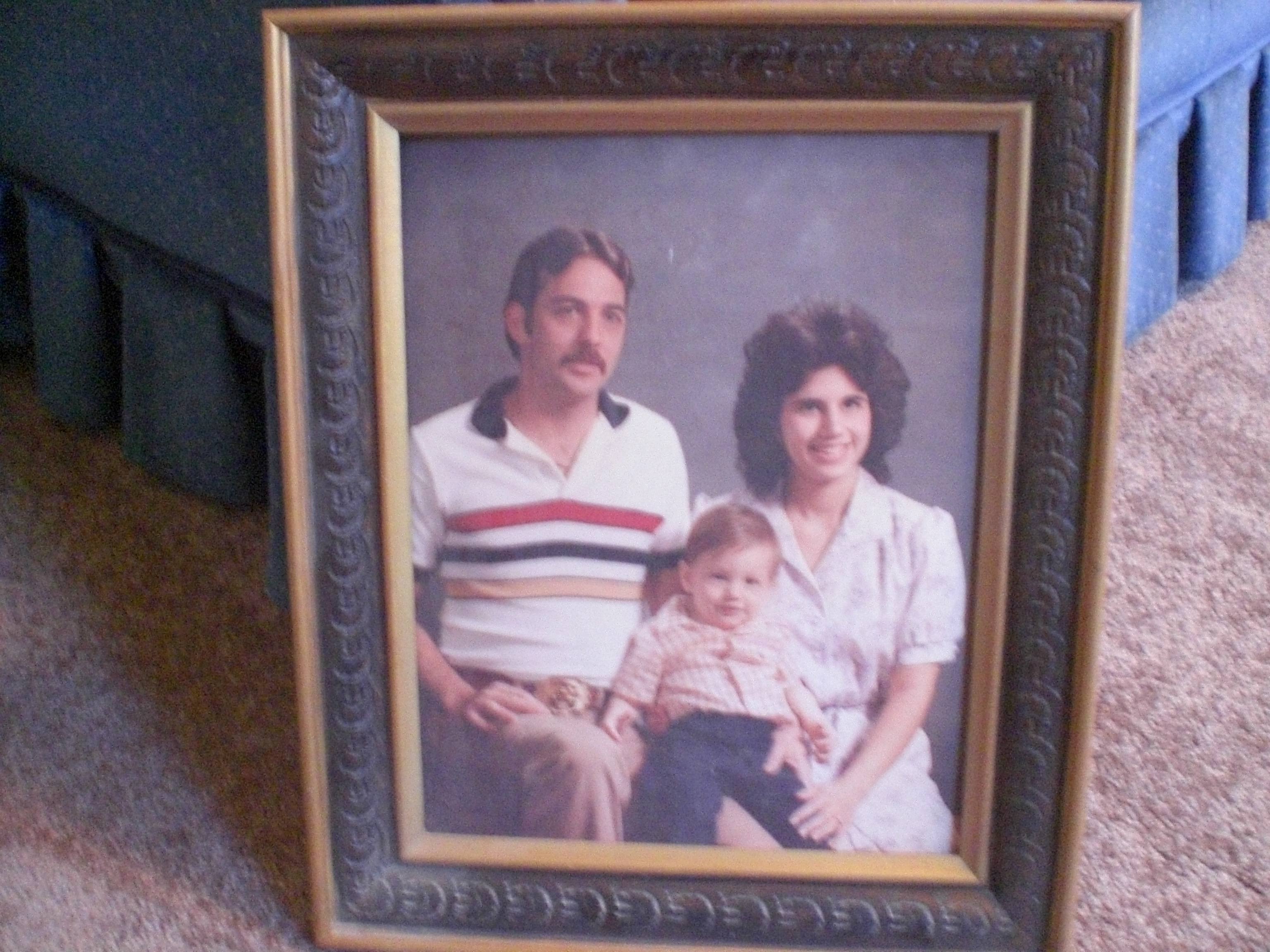
My parents and I in 1982.

My friend David Smith and I broke this Nashville mug that my dad bought for my mom when he went on a business trip.  We stayed up until after 1 AM to superglue it back together.  I’m not sure that it actually still holds liquid.

Classic frog and shroom.

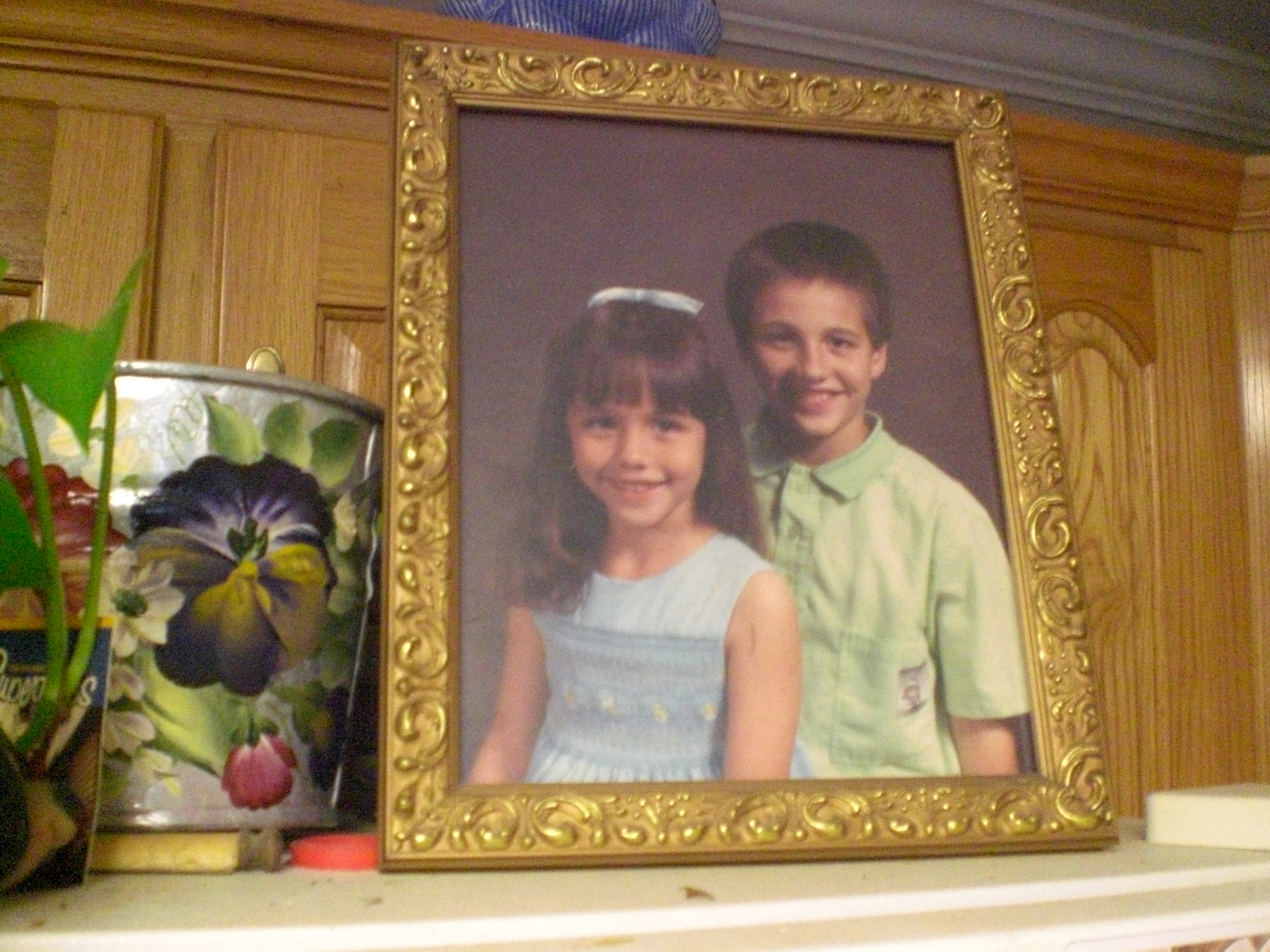
My sister and I in 1991.

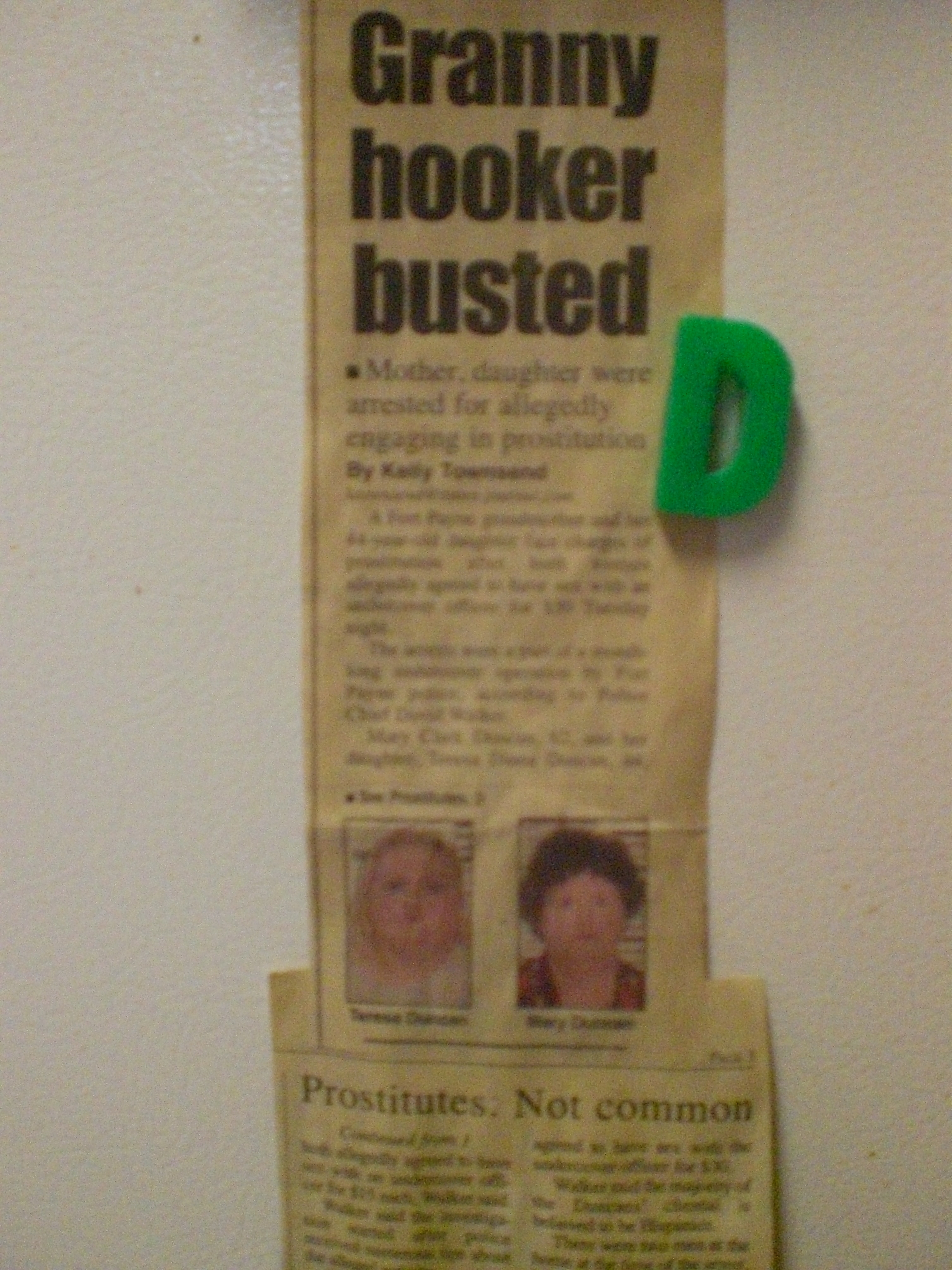
Local newspaper clips on the fridge. Busted!

Double busted!

Why Tap Dancing is Officially Masculine (And Most Other Kinds of Dancing are Feminine)

Le tap dance; la clog.

Unlike the French and Spanish languages, English doesn’t have masculine and feminine nouns.  Yet still, there are subtle gender clues and accents if we look closely enough for them.  Like the way that Coldplay is masculine, while The Fray is feminine (because they got famous by having their songs featured on Grey’s Anatomy). And the way a Dodge Dakota is masculine; while a Nissan X-Terra is feminine (this was referenced in an episode of The Office).

During dinner a few weeks ago I happened to catch 20 minutes of So You Think You Can Dance.  It was a results episode so they were mainly filling the air time with professional tap dancers, all of which were male.  Mainly dancing solo, but there were a few duos.  Interestingly, after each of them danced, they were briefly interviewed.  I couldn’t help but notice that none of these male tap dancers were the least bit effeminate or sexually questionable in any way- they were ordinary, straight dudes.

I’m okay with being politically incorrect in stating this fact that we already know and recognize: It’s common for professional male dancers (especially on reality TV shows) to not be straight.  Which is ironic because as we watch these couples dance, the male is being represented by a man who in reality may not be sexually attracted to women.  Typically, straight men are not the ones representing the guy in the relationship in these dances.

Why are straight men typically inclined not to be good dancers?  Because group dancing and dancing in pairs, as a whole, are more of feminine acts.  Dancing as we know it today is free-spirited and emotionally expressive.  It often shows the ups and downs of relationships and/or life in general.  That doesn’t work for most men, because a man’s mind is wired to be formulaic and often emotionally repressive.  Most men have to “learn to dance”.  Tell me what to do so I can get this right. It’s more about straight memorization for a straight guy to learn to dance.  He’s learning to dance to make his girlfriend or wife happy- not to express himself in a new exciting way.

When I think of famous tap dancers throughout American history, I think of classy Italian, Jewish, and African-American men wearing black suits like Fred Astaire, Frank Sinatra, Sammy Davis, Jr., Gregory Hines, and of course, the legendary Tony Danza.  Although, this isn’t to say that all or even most tap-dancing men are straight.  But what I do recognize is 1) that because tap dancing is simply based on rhythm and formula (which are masculine elements- famous female drummers are a rare thing), and 2) that tap dancing only really evokes one basic emotional feel, which is always positive and upbeat.  I never remember seeing a tap dancing routine which went from happy, to sad, to angry, back to happy, to a feeling of loss, to happy, to acceptance of grief, to contentment, the way a typical 2 minute dance song on Dancing with the Stars or So You Think You Can Dance typically does.

Clogging, on the other hand, though similar to tap-dancing, is not masculine.  It often involves groups, costumes, and festive music- therefore making it a feminine art form, since there is room for “artistic expression”.  But square dancing is masculine because, like in tap-dancing, the mood is always the same (upbeat) and there is no guesswork on how to do it, since the instructions are typically spoken to music.

So how could a man and a woman dance to music and it realistically represent them and their relationship?  I’m picturing a guy tap dancing in his own little world while the woman ballet dances around him, and the guy is seemingly oblivious to what is going on.

How Race and Religion are Connected and Why Isaac and Ishmael are behind It All

This is me in a video I made for you, which explains all this in a 5 and a half minute video, in case you prefer that over reading the 1378 word blog post below it, which I wrote 7 years ago.

Meet your great-grandfather Isaac.  Or Ishmael.  Or maybe even both…

How do you determine who ethnically is a “white person” and who is not?  Are Jews considered to be white?  What about Greeks and Italians?  And though Central and South Americans typically have tan skin, why is it there something about them still seems sort of white, as opposed to a person from India or China? These are some of the “side effect” questions that will be answered as I explain my theory on the origin of race and religion.

No, this theory doesn’t start with Adam and Eve.  Nor does it start with Noah and his family repopulating the world after the Great Flood.  It starts 20 generations after Adam, and 10 generations after Noah, with Abraham (the father of the Jewish and the Arab people), being promised by God that he would have a son in his old age.  After waiting and having no sign of this coming true, Abraham’s wife Sarah convinced him to sleep with their Egyptian maidservant Hagar, in order to have a son to carry on the family lineage.  At age 86, Abraham goes with his wife’s plan (like the way Adam ate the fruit after Eve convinced him to) and has a son with his maidservant- the son is named Ishmael.  However, 13 years later Abraham’s wife Sarah gets pregnant with a son, as God promised, and this son is named Isaac.

Hey, like this snazzy Dharma Initiative t-shirt? Click here to get it for the best price on Amazon!

Abraham eventually sends away his maidservant Hagar and his son Ishmael into the wilderness (Genesis 21:14), and raises Isaac his as true first-born son.  Today, thousands of years later, it is through Ishmael that Arabs and Muslims link their heritage through.  Accordingly, Jews and Christians trace through heritage back to Isaac.  Now we are in the meat of my theory.

As generations passed and both families migrated from their Middle Eastern homelands, the descendants of Ishmael moved south and east- to Africa, Asia, and America (becoming the Native American Indians in North America and the Aztec Indians in Central and South America).  In fact, the angel of the Lord told Hagar that Ishmael “will live east of all his brothers” (Genesis 16:12).  Meanwhile the descendants of Isaac moved north and west- to Europe, Russia, and eventually to America (killing off, running off, or marrying the Native American Indians).

Notice how today the countries that are represented by the descendants of Ishmael are generally practice religions that do not involve the Judeo-Christian God (worshipped by Christians, Catholics, and Jews) but instead are tied Hinduism, Animism, Taoism, Buddhism, Communism (Atheism) and Islam.  And of course the descendants of Isaac are matched to the Christianized nations: For example, Scotland is mainly Protestant, Ireland is mainly Catholic, and England is mainly Anglican (Presbyterian).

Almost 2,000 years ago thanks the Apostle Paul’s missionary journeys to preach Christ where the Jews had already settled (in Europe, specifically the Mediterranean areas) and also the birth of Christianity as a whole, the countries that were already familiar with the Judeo-Christian God were basically the first to get introduced to Jesus as the Messiah.  As far as all the Ishmael-descended areas, like modern day Africa and Asia that were less familiar or not familiar at all with Christianity, they were not and have not typically been as generally open and accepting to “our God” as Isaac’s descendants.

I do believe that whether or not a nation (or individual person) is a descendent of Isaac has much to do with their religion, race, and culture.  However, there are obviously exceptions.  One of them is Russia, which had been mainly Christian up until the point of its embrace of Communism.  Another exception is African-Americans, whom most identify with Christianity, as opposed to most Africans living in Africa.

And then there’s the “half breed” nations that make up Central and South America.  For the most part, their blood is mixed of Indigenous Americans (Native American, Aztec, etc.) who migrated from Asia through modern day Alaska, and European lineage from those who “discovered” America.  So in essence, the inhabitants of modern day Central and South America are half Isaackian, half-Ishmaelese; though they have accepted the religious beliefs of Isaac’s descendants (largely Catholic).  Read more about this here: http://en.wikipedia.org/wiki/Indigenous_peoples_of_the_Americas

Yes, I did just now make up and use the words Isaackian (to describe the descendants of Isaac who are prone to believe in the Judeo-Christian God) and Ishmaelese (to describe the descendants of Ishmael who typically do not).  And now that you hopefully understand what those terms represent, I will begin using them frequently.

What started much of this thought process was when I recently began “Climbing the Family Tree” and realized that so many of my ancestors had last names that are Jewish (Schell, Klaar, Ullman, Wiseman, Vite) yet there is no solid proof that I actually am- only family rumors and tradition.  If I assume that none of the people in my family tree were Jewish, well, still, I have Jewish names in my family tree.  So that got me thinking, Jewish people and “white people” are essentially the same thing, coming from the same common ancestors.  Whereas someone who is Japanese (Ishmaelese) wouldn’t have last names in their family tree that would resemble a Jewish last name.

So going back to one of the questions I asked in the beginning, are Jewish people considered to be white?  Yes.  Though their homeland is Israel and though they are a Middle Eastern people group, they blend in with us Americans so well.  And that’s part of my fascination with pointing out which celebrities are Jewish.  Half the casts of Friends and Seinfeld are Jewish (The Ethnic Backgrounds of the Cast of Friends and Seinfeld) as well as The Wonder Years (The Ethnicity of the Cast of The Wonder Years), but the fact that most of us don’t know which ones are or aren’t shows that despite most of us being a mix of European blood, those Middle Eastern descended Jews are still our cousins.

Of course ultimately, it doesn’t matter which of us descended from Isaac or Ishmael or how much blood we have of either (I’m around 12.5% Ishmaelese); it just predicts the tone of our skin and our traditional religion, according to my theory.  By no means do I see the Isaackians as superior to Ishmaelese for the fact that I myself worship the Judeo-Christian God.  But what I do recognize is what God himself proclaimed to Abraham regarding Isaac and Ishmael:

But God said, “No, but Sarah your wife will bear you a son and you shall call his name Isaac, and I will establish my everlasting covenant for his descendants after him,” (Genesis 17:19).

“As for Ishmael, I have heard you; behold I will bless him, and make him fruitful and multiply him exceedingly.  He shall become the father of 12 princes, and I will make him a great nation,” (Genesis 17:20).

What’s most important from those verses I just quoted is that God promised to establish his covenant through the line of Isaac.  In other words, the savior of the world would come in the form of a Jew.  Not to mention that the Isaackians coincidently would hold the responsibility of sharing their God with the Ismaelese- that’s why Christian missionaries exist.  That’s why Christianity is now the largest religion of the Ishmaelese country of South Korea, for example: http://en.wikipedia.org/wiki/South_Korea#Religion

We all have the same great-grandparents at the tops of our family trees.  I try to imagine how different the world would be if Abraham wouldn’t have had a son with Hagar, if he just would have waited another 13 years for his own wife to become pregnant.  But he jumped the gun and changed the course of history (for him, it was the future) forever.  Though if he didn’t, I wouldn’t exist, being that my grandmother is Mexican.  Not only would I have not written this and you wouldn’t have read it, but there wouldn’t have been any of this to write about.

Climbing the Family Tree

At some point, it starts to become irrelevant.  Which part of your family tree actually matters?

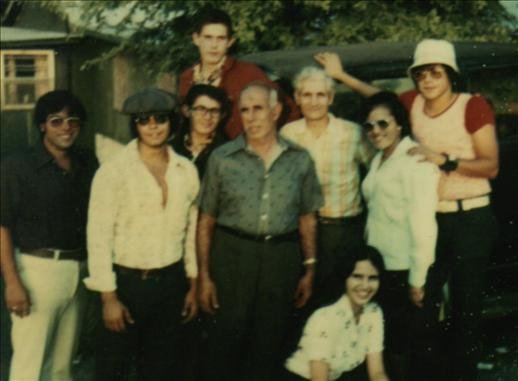
Fort Payne, AL in 1976- my mom (bottom), her Italian dad and Mexican mother above her

Every family’s got one- the “family tree enthusiast”.  It’s ultimately the person with the most natural motivation to find out where the family came from- not the people who simply say, “I’d love to know more about our heritage…” but instead, the one who actually gets to work on it.  And after I found myself spending hours sometimes researching the origins of last names I had heard of in our family, I soon realized I was appointed by destiny to be the “family tree enthusiast.”

Since last May, my grandmother on my dad’s side has been helping me with the research.  Her last name is Clowers; which last year when I looked it up was an English name and meant “people from the hills”.  But this weekend after sitting down with my grandmother again, I discovered that “Clowers” was changed from “Klauer”, and that was changed from “Clore”, which was changed from “Klaar”, which was not English at all, but instead Dutch.

Chattanooga, TN in 1946- my great-grandparents on my dad's side: Francis Clowers & Madelee Wiseman

The highest I could climb up my family tree was to a Dutch Lutheran named Hans Michael Klaar (born in 1630) who married a Greek woman named Ursula Sybella (born in 1635).  When I Googled the last name “Klaar”, I found more Jewish ties to it than anything else.  It’s possible that further up the family tree the Klaar’s were Dutch Jews, but that would be near impossible to confirm.

Climbing back down the family tree, the next woman being married into the family was another Greek woman, Anna Barbara Maria.  Then Dorothy Kaifer (German), then two more presumed German women (no last names given but I’m assuming they were German since the family had by that point moved to Germany), then surprisingly a Jewish woman named Nancy Ullman (it translates as “rich man”), then Mary Harris (English), then Emmaline Lunsford (English), then Polly Katherine Green (English, Jewish, or Irish), then finally, my great-grandmother Madelee Wiseman (typically a Jewish-German last name which translates “white man”).

same great-grandparents 37 years later

Then my grandmother (maiden name, Clowers) married my grandfather, John David Shell.  All I know so far about his family tree are of Scottish (Scrimsher and Johnston), Cherokee Indian (name unknown), and German (Miller) origin.  But the last name Shell has a potentially interesting origin:  The Jews living in Germany were often given their last names by the Germans, who would insult them with last names translating to things like “stinky” and “ugly”.  Shell used to be “Schell” and literally translates “loud, noisy, and clamorous”- which I would say is an insult.  Plus, by Googling “Schell”, it’s Jewish people that pop up.

So what am I on my dad’s side of the family?  Dutch-Greek-German-Jewish-Cherokee-Scottish-English.  But I’m starting to come to the conclusion; what does really it matter anyway?  At the top of both sides of my dad’s family tree are Dutch, Greek, and German.  In the middle are Jewish and Cherokee.  At the bottom of the trees are English and Scottish.

The Clowers-Wiseman family in 1953- my great-grandparents in the middle, my grandmother on the far right in the black dress

Which is more relevant?  Am I more English and Scottish because those are the most recent?  Am I less Dutch and Greek because those are at the top?  Am I equally all of those things?

And that’s not to mention my mom’s side- she’s half Mexican and half Italian.  But because of the rumors that my great-grandmother Mary Vite was Jewish (there are Jews with the last name Vite), I may not be ¼ Italian after all, but instead 1/8.  Or what if she wasn’t half Jewish, but instead half Greek?

I will always be fascinated by ethnic backgrounds of people, but in a way, I am satisfied with what I know now about my own mysterious ancestors.  Because what is most relevant in a family tree is not found by looking up, but instead by looking down and all around; it’s the people that still influence you, that love you, that care for you, and vice versa.  That’s the part of your family tree that matters.  And to be honest with you, I’m pretty dizzy after spending all that time so high up the family tree.  It’s good to be back on the ground, with family members who are just as alive as I am.

Under the family tree: my Italian (and possibly Greek or Jewish?) grandfather Metallo; my mom's dad