Humble and Embarrassing Beginnings: Five Years of the Writings of Nick Shell

An autobiographic look at the Scenic Route Snapshots franchise.
 

Scenic Route Snapshots: Est. August 2005.

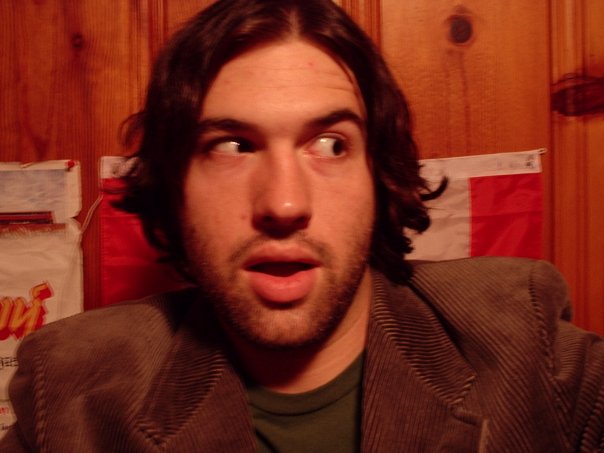
When people show you a picture of themselves from five or more years ago, the tendency is often to laugh at their longer/froey hair and outdated clothing and say, “That was you?” Because ultimately that younger, less experienced version of a person was more naïve and goofier than the version of that person we know today.  Of course, it’s no different for each of us.  We too have many laughable aspects about ourselves when we look back on them, five or more years later.

This month makes exactly five years that I’ve been writing online.  In August 2005 I was in the process of moving from Fort Payne, AL (having just graduated from Liberty University a few months before) to Nashville, TN to start my career in music (which I decided wasn’t what I really wanted to do, after a year of being here).  I starting writing MySpace blogs as a way to document new life pursuing a career in music.  It’s not that my writings were all horrible those first couple of years; looking back, I can actually see some jewels in the gravels.  But for the most part, they were pretty cheesy, not to mention they were all about me and “making my dreams a reality”.

Obviously it was those early years in particular that helped me realize ways to improve my writing, eventually giving birth to The Code.  That means my older writings consistently violated The Code and I’m sure that’s part of the main reason it’s so difficult for me to go back and read them.  But anyone who has ever been successful in any kind of enterprise surely endured the same sort of sloppy early years as well.

Yes, that generic version of what we know as good and relevant was probably not always good and relevant.  Like the episodes of Saved by the Bell with Miss Bliss or the Tracey Ullman version of The Simpsons or the British version of The Office.  Sure, hardcore fans will always approve, but the rest of us know to stay away, lest we become disappointed and somehow allow our idea of a pure thing to become tainted.

And the still, the irony of this whole concept will surely prove itself that much more five years from now, when I use this post as a point of reference to show the place in time where Scenic Route Snapshots really started taking off.  The point where 1,934 were my highest views in one day (happened this week) instead of that being a slow day.  The point where I could admit that humble beginnings were over for Scenic Route Snapshots, yet the big break had not happened yet.

What started in August of 2005 as a goofy blog that just a handful of my friends read has evolved into an actual website that currently receives around 1,000 hits per day.  I sure don’t know where the future of Scenic Route Snapshots is going, but as long as I can still claim to be a writer who never experiences writer’s block, the posts will keep being born.

Bonus!

Read my very first “blog” from August 16, 2005, entitled “I Choose to Be a Fatalist” at the bottom of the page at this link:

http://www.myspace.com/nickshell1983/blog?page=13
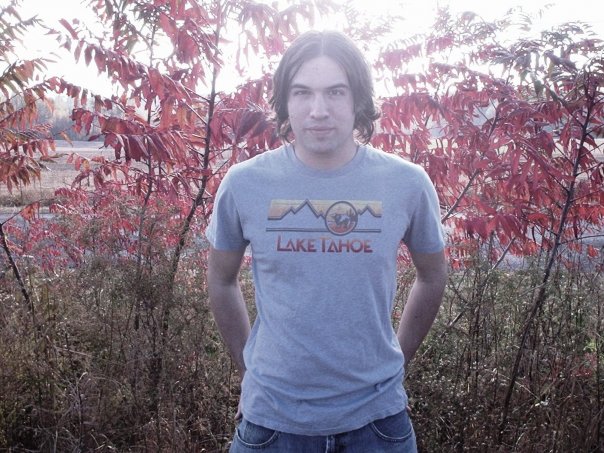
It was this 2005 version of me that laid the ground work to get me where I am today.

The Honorary Pack Leader

Who’s the boss?  The one whose example people actually follow.

As my wife has been finishing up her Master’s program in Childhood Education, she recently opened my eyes to a simple concept I never realized before: Children crave structure.  And when there is no structure, no outlined expectations, no explained behavior guidelines for them, chaos proceeds.  Kids look for the “pack leader” (as Dog Whisperer, Cesar Millan explains regarding the dog world) to help instruct them on how to be productive and helpful in their society.

This “aim to please” mentality doesn’t disappear once we enter the adult world.  Though it may be easier to complain about a superior or an authority figure behind their back than it is to praise them in person for keeping us the security they provide, we still recognize them as the pack leader.  There’s still an understood respect we hold for them, because after all, we still crave structure and the pack leader is the main supplier.  And we all have a personal need to be needed.

But in addition to the established leader and teacher of the group, there is the honorary leader, who may have no official important title, but still guides others by his or her actions and attitude.  And in my opinion, this “honorary pack leader” has more impact that the established pack leader: For all practical purposes, the honorary pack leader is the actual pack leader.

In all social circles (clubs, churches, sports, work environments, etc.), it’s the person who establishes what being “on time” means, who sets the work pace for the group because his or her peers mimic the honorary pack leader’s own level of activity, and who has an overall calm-assertive attitude.  In other words, this person knows how to respect the establishment’s own politics (a major key to survival); and yet how to stay out of them as well.

It’s the person who the general population follows by example, not necessarily because he or she is the most outspoken or demands the most attention, but because the honorary pack leader naturally takes the most productive, logical, and sincere path to success (or at least the path of safety from being picked out as the slacker or weakest link).  And others notice.  There are always established leaders in a group, and sure, they make the rules.  But the honorary pack leader makes the rules that the rest of the group actually follows.

dad from day one: Monkey See, Monkey Do

Twenty-six weeks.

It’s not so much that I will relive vicariously through him as it will be that I will raise him according to what I know boyhood to be; therefore, Jack’s youth will in certain ways resemble mine.  And not only will I influence him regarding what it means to be a boy, but also by what it means to have a dad, based on how my own dad influenced my life.  Looking back, I can see that my dad was extremely patient with me and willing to spend his free time with me doing whatever goofy thing it was that I was into.

Whether it was helping me make the perfect Pine Wood Derby car for Cub Scouts, going exploring out in the woods, playing “Ninja Turtles” with me (I still have  an impressive collection of those action figures at my parents’ house), or playing Nintendo for hours at a time.

Being a dad to a son also means confronting potentially dangerous situations and keeping him safe through it; whether because he has to, or for fun.  And in the process, the son learns to trust his dad to take care of him, knowing his dad wouldn’t allow him to get hurt.

Like when he was leading our family in a 5 mile hike in Mentone, AL and he encountered a Copperhead snake- he killed it by throwing a huge rock on it.  Then when we got back home he skinned it and displayed it for all of us Cub Scouts.

And like when I was really young, my dad would put me in a pillow case, hold on to the open end, and sling me around the living room.  And because I was a boy, I loved it.

I also would sit up on his shoulders while he stood under the ceiling fan, in front of the mirror, so I could see that my head was just inches away from the spinning blades.  He called the event “The Head Chopper-Offer”.  And because I was a boy, I loved it.

And I always liked to wrestle my dad.  Obviously, it was impossible to beat him.  He was way too strong and way too big for me; not to mention he had a black belt in karate.  And because I was a boy, I loved it.

It was about testing those limits of danger with someone whose job it was to keep me safe.  Ironic, yet necessary.  My dad and I wrestling on the brown shag carpet represents what being a dad to a boy is all about.  The typical “play fighting” allows a boy to test his own strength and power against his own protector and guardian.  And it’s a very natural way for a father and son to be physically close- without even realizing it.

Dads and sons are close in their own unspoken ways.  And as a dad, part of my job will be to initiate some of these weird ancient rituals.  Even if it means confronting danger- it’s part of the journey of becoming a man. And these types of adventures are a rite of passage meant to be passed down from father to son.

Here’s what The Bump says about Week 26:

Let your spouse put an ear to your belly — he might be able to pick up baby’s heartbeat (no stethoscope required). Inside the womb, the formation of tiny capillaries is giving baby a healthy pink glow. Baby’s also soaking up your antibodies, getting the immune system ready for life outside the womb. Eyes are forming, and baby will soon perfect the blink — perfect for batting those freshly grown lashes.

http://community.thebump.com/cs/ks/blogs/2ndtrimester/pages/weeks-25-28-month-6-eggplant.aspx?r=0

All pictures with the “JHP” logo were taken by Joe Hendricks Photography:

Blog- www.photojoeblog.com

Website- www.joehendricks.com

Metaphors in Super Mario Bros. that Taught Us about Real Life

How many lives do you have left before it’s “game over”?

Something that Super Mario Bros. taught us first, more so than any other video game, was the concept of having “lives”.  If you fell in a hole (which means you instantly died; no chance that the hole wasn’t really that deep or that you could have grabbed on to a branch while falling), you lost a life.  If you touched an enemy, you lost a life (which is completely irrational; I wonder what would happen if Mario touched a “frenemy”?…). If you ran out of time, you lost a life (okay, I admit, that concept is somewhat lifelike).

However, if you accomplished certain goals to better yourself, like ate a healthy mushroom(this promoted organic a lifestyle), saved 100 coins (which causes the game to most likely be endorsed by Dave Ramsey), kicked a turtle shell that slid into 10 enemies (illogical and scientifically impossible on so many levels), or jumped to the top of a flagpole (because that’s normal in real life), you actually would get a “1 Up”, which means that you gained an extra life.

But the whole point of this game, despite collecting gold coins (which instantly disappeared when you touched them- could that be a metaphor symbolizing how money is meaningless?) and muddling through everyday distractions (like busting bricks with your fist because you thought there was a steel box with an “invincibility star” inside- choose your own metaphor for life on that one…) was to save the princess from the evil mutant dragon named Koopa.

If you could run under the dragon in the final castle when he jumped up while breathing fire and hammers at you, you instantly touched an axe that caused the bridge to collapse, therefore sending the dragon into the fiery lava pit (poor architectural planning, if you ask me…). In the next room, the famous princess was waiting to be saved from captivity.  In other words, despite being responsible by saving money, despite gaining power, despite becoming a hero to anyone, it’s all really about helping other people.

Cool Retro Sunday School Bonus!

And for those from a Protestant background, the Mushroom Kingdom represents the Heavenly Kingdom, the dragon symbolizes Satan who will be hurled into the lake of fire in the end, and saving the princess symbolizes sharing Christ’s message of salvation and loving others as ourselves, which is the summary of Ephesians 2:8-10, and in my opinion, the meaning of life and the whole point of Christianity.

What Percentage of Your Day is Spent on Entertainment?

It’s not as simple as logging your TV and movie time: Entertainment is much more complicated, subtle, and encompassing than that.

When my sister was born in January of 1984 (I was about 2 ½) she gave me a Garfield stuffed animal as present.  I realize that the idea of a newborn baby giving her older brother a gift the day she is born may seem illogical, but my parents’ idea to keep me feeling special that day worked.  Because I didn’t question the rationale of my sister’s gift until high school.  That Garfield doll ended up being one of my favorite childhood toys.  I dressed him up in my dad’s whitey-tighties; they were Garfield’s diaper.

A major part of being a kid is being strung along by your parents.  It’s a constant, endless series of countless waiting rooms, strange places, and unfamiliar people.  But all I could really think of was eating, drinking, and peeing.  And when I checked all those activities off the list, that meant I must be bored.

So I needed something to entertain myself.  During the younger years, Garfield in my dad’s underwear did the trick.  I eventually graduated from the stuffed animal circuit to video games and action figures.  Then to playing guitar by the time I started junior high.  Evidently the worst thing in the world was to be bored.  So I always had someway to entertain myself.

*This explains the psychology behind Swiss Army SUV (Nick Shell’s Turtle Shell). Click that title to read more about it.

But I have to imagine that most people, like me, carry this idea of constantly entertaining themselves into adulthood, for the rest of their lives.  And as Ive learned by now, a tangible object isn’t necessary for entertainment- though something as subtle as checking for new text messages 33 times a day is a popular form of fighting subconscious boredom.

I learned as a child to use my imagination to daydream; while I still do that on an hourly basis, I’ve also made a habit of planning my future and coming up with ideas for my life.  And I figure I’m not the only one.  I figure that most people find some way to entertain themselves throughout the day, despite the busyness of life.  In between the busyness of life.  And during the busyness of life.  Even if it’s just while waiting in line, sitting at a red light, or zoning out at work (and often even not realizing we’re doing it).

Heckler-reader yells out: “Bahahaha…You just wait ‘til you have a baby, that’ll all change!”

Yes, life will change and my time will be spent in different ways and I will be functioning on less sleep.  But no matter how preoccupied I am with life and all its responsibilities and distractions, there are still moments throughout any day, even if it’s while I’m falling asleep, that I fill in those moments of fading consciousness with random thoughts like, “What was Grimace supposed to be, anyway?”

So how what percentage of my day is spent on entertainment?  It’s pretty much a trick question.  Because at least for me, my mind is constantly in entertainment mode.  Even when I’m asleep, dreaming.