As I was updating my paperwork for the dentist recently, I had to decide whether or not I felt like technically lying.
It’s always something I hesitate on, more than I probably should.
My grandmother is full Mexican. I’m therefore only a quarter Mexican.
So I’m white; but 25% of my genes, and I suppose to some degree, my heritage and culture, is Mexican.
But if I could honestly describe myself to the Census Bureau, which apparently is the organization that most cares about my cultural and ethnic identity, it would simply be this:
Mostly white.
I’m not 100% white, so to proclaim, “white, not Hispanic or Latino” is inaccurate; because I’m absolutely part Hispanic.
The first time I remember having to answer that question was in 1st grade, for a standardized test. I remember how my mom, who is half Mexican and half Italian, told me that she always questioned that herself when she had to answer that question as well.
I think it muddies the waters even more than Italians typically are “more ethnic looking” than most Europeans. I have always thought the same thing about Jews (who are actually considered Middle Eastern) and Greeks (who, like Italians, are Mediterranean).
“White” is a funny term to me, when it references people.
I would love to take one of those ethnic DNA tests where they draw some of your blood and tell you exactly what percentage you are of each people group.
Mainly just because it would be fun to know… exactly. But really, none of that really matters.
What I learned in my HR training course is that ultimately, a person can claim whatever race they most identify with, even if it’s simply cultural.
If you are Chinese but adopted by white parents, you can identify as “white” if you choose to; or Chinese. It’s up to the individual.
As for me, I’m mostly white, based on the last names in my family tree: German (“Shell”), Italian (“Metallo”), Dutch (“Clowers”, derived from “Klaar”), Scottish (“Johnston” and “King”), and English (“Taylor” and “Wiseman”).
And of course I’m also Mexican (“Mendez”). That’s a little confusing as well because ethnically, Mexicans are a mixed race called Mestizos: ultimately, they are around half European (largely including Spanish) and around half Native (or indigenous) Mexican; just like how the United States originally was occupied by Native Americans before the Europeans came over.
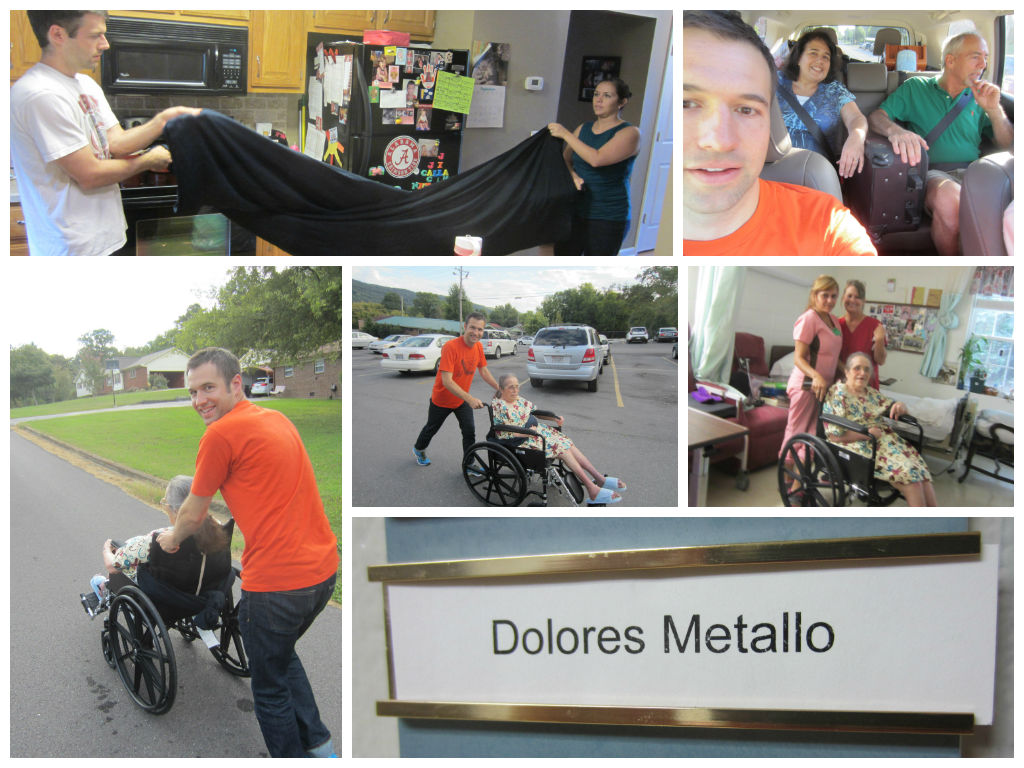
So last weekend I broke my Grandma out of the nursing home without anyone knowing it, then I pushed her in her wheelchair a mile down the road while she wore a “seatbelt” we made from a rolled up blanket…
Wait, actually, that’s probably not the best way to start this story. Let me try again.
The last time my Grandma had seen her younger brother Bob was back in the summer of 1987, back when I was six years old, when we took a family vacation road trip to Buffalo, New York where my Grandma and my mom are from.
That was 27 years ago…
But then randomly this year, my great-Uncle Bob decided that he wanted to visit my Grandma (his sister) by train with his girlfriend (he’s never been in a plane and he’s only left the state of New York once).
So I decided it would definitely be worth the 2 and a half hour drive from Nashville where we live, to my hometown in Alabama; taking my own family (my wife Jill and my son Jack) to witness this great reunion- 27 years in the making!
And to make things even more fun, we were able to review the 2014 Lexus GX 460 in the process. Which, for the record, was my personal favorite out of all the many Lexus vehicles I have reviewed within the past year.
The way it drove reminded me of the Toyota Tacoma, my favorite Toyota vehicle, which I reviewed on my 33rd birthday back in April.
My wife Jill appreciated was how spacious the 2014 Lexus GX 460 is. We had to transport some of our son’s toys to my parents’ house; as we are in the process of building a new house (as I recently wrote about when I reviewed the 2014 Lexus GS 450h) and needed a place to store some things.
Meanwhile, my son Jack loved the stadium seating in the back because he could see everything that I could from the driver’s seat. Also, it has a 3rdrow seat from can fold up from the very back.
He convinced us to let him sit in the very back for the entire round trip! Not to mention, to and from school a few days as well.
I was surprised at how easy it was to hear Jack and Jill all the way back there. (I’m sure many educated people at Lexus have labored countless hours over making sure the sound carries that well!)
The visibility from the driver’s seat also greatly impressed me as well. I can’t remember the last time I drove a vehicle with better visibility than the 2014 Lexus GX 460.
So we arrived at my Grandma’s nursing home and along with my dad’s help, were able to lift my Grandma from her wheelchair to the car.
In the process, I also “re-met” my great-Uncle Bob while there, who of course didn’t recognize me as a grown adult. As we talked, I learned from him that it was nearly 100 years ago, in 1923, that his own parents moved to New York from Michoacán, in southern Mexico; though he nor my Grandma ever really spoke Spanish.
The whole family met as a whole back at my sister’s house, just a mile away from the nursing home.
First, we celebrated by brother-in-law (who apparently happens to look a lot like me) turning 30 years old.
Then we headed outside to the “jumpy castle” as Jack and his cousin Calla burned off extra energy they mysteriously gained from not having to take a nap that day.
And of course, we checked out the storm shelter, which has sort of become the routine when we visit.
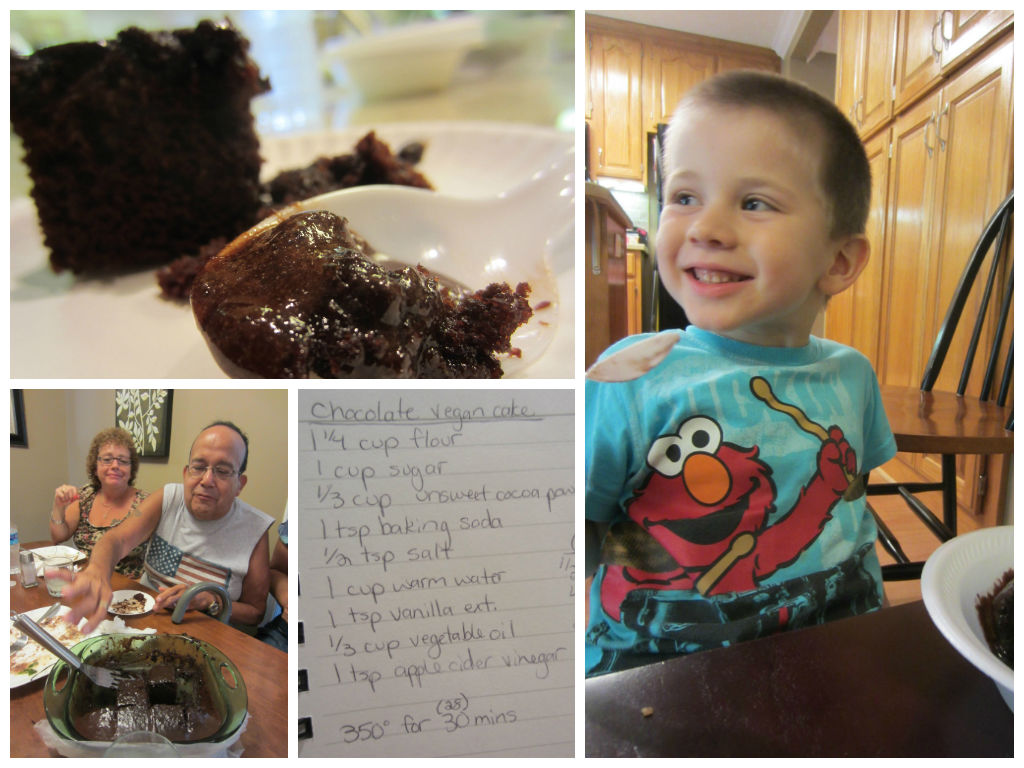
Next we had a plant-based (vegan) lunch, prepared by my sister…
Followed by an instantly made-up game of “bean bag bumper cars”…
That’s about the time we got a call from the nursing home. Turns out, none of us even thought to actually sign my grandma out. And coincidentally, no one working there noticed us wheeling her out the front door!
The workers were so glad to hear that we had Grandma with us instead of, I guess, her somehow escaping (?) on her own.
However, by that time she was ready to get back to her home. The thing was, she was afraid to be lifted back up into a vehicle for the 0.925 miles back.
We did what every all-American family would have done in the same situation:
My sister and her husband rolled up a large blanket, then I MacGyvered it into a home-made seatbelt. And now this particular photo collage begins to make more sense…
After all, despite it only being about a mile away, the journey was all hills.
Fortunately, my daily routine of mountain biking during my lunch break had conditioned my body to be able to get my Grandma to her destination in less than 15 minutes. She even got to catch a glimpse of the County Fair a few blocks away.
Before we left the next morning, we made sure to snap a few pictures of our family.
Since my brother-in-law/look-alike turned 30 recently, and until Jack turns 4 next month, it means that we are living in a time when my wife and I are both 33, my sister and her husband are both 30, and their daughter Calla and our son Jack are both 3.
So we figured we should take an official picture of this cool “3-30-33” moment.
And that just goes to show that anytime my family gets together, it’s never “normal.”
But it is fun.
If you were entertained by this story, then be on the look-out what happened after we drove back to Nashville to see a Dierks Bentley concert that my wife won tickets for!
Car Review Stats:
2014 Lexus 9700A GX 460 5-DR SUV
4.6 liter V8, 301 horsepower
17 mpg average, 15 city, 20 highway
as shown: $55,505.00
See all 4 posts on the 2014 Lexus 9700A GX 460 5-DR SUV:
Were you interested in what you just read? Was this post a strangely pleasant distraction to other things popping up on your Facebook or Twitter feed? Ya know… you could always like me on Facebook, follow me on Twitter, or even subscribe to Family Friendly Daddy Blog by clicking on the appropriate icon on the left side of this page. No pressure though…
Jack may have been born as a Mexican baby, but he has gradually morphed into a little Norwegian boy. The supreme irony is that when Jack was born, he almost looked too dark to be my son. Six months later, it’s the opposite situation.
If you grew up in the late 1980′s and early 1990′s, then by default one of your favorite sitcoms was Full House. And whenever you think of Uncle Jesse, you think of his awesome video for “Forever” where he is wearing a black leather vest while in a bathtub surrounded by candles. Also featured in the music video were Jesse and Rebecca’s twin sons, Nicky and Alex.
For me, I was always distracted by the fact that a dark featured Greek guy and a normal complected woman with reddish brown hair would have sons that had blonde hair, blue eyes, and light skin. I already had enough trouble believing that Danny Tanner would have three daughters with blondish hair when he himself had black hair (Bob Saget is Jewish in real life) with their mother who was also Greek; she was Jesse’s sister. But light featured kids don’t come from dark featured parents, especially when there is a Mediterranean bloodline… I thought to myself for 20 years.
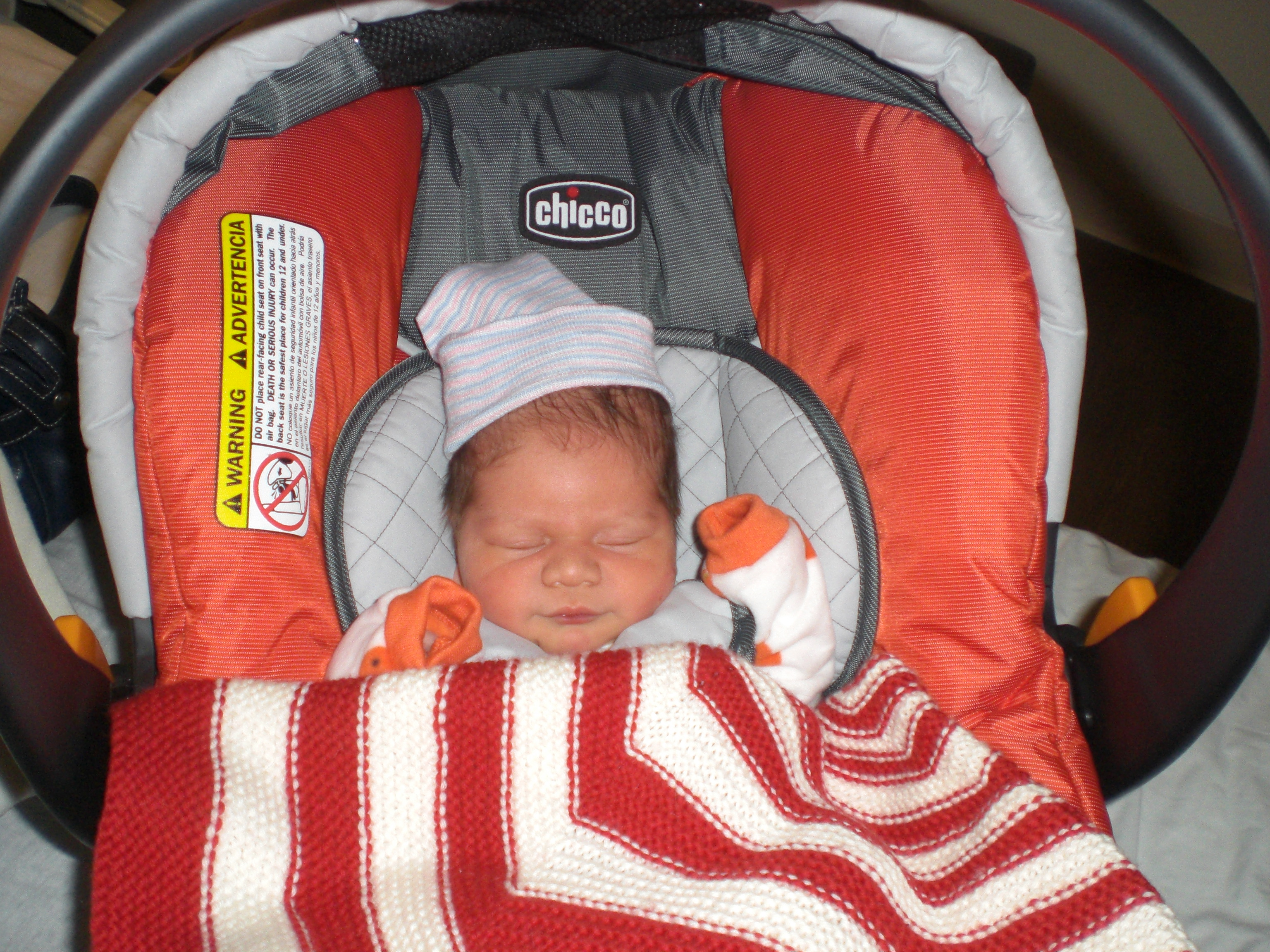
When Jack was born, and in the month or so to follow, he was a Mexican. His skin was darker than mine, his hair was jet black, and his general features just simply looked Hispanic, or at least Italian. That’s because my maternal grandmother, Delores “Lola” Mendez is a dark-featured Mexican from Buffalo, New York and my Italian grandfather, Albert Metallo, was a dark featured Italian from Kenosha, Wisconsin.
In fact, when you climb both sides of the family tree (both my wife’s and mine) you continually find dark haired people with dark eyes. But there is the fact that my wife’s paternal grandfather was a Norwegian orphan adopted by an American family, who married an indentured servant from Ireland. In other words, despite the influx of “dark genes”, Jack evidently adopted the underdog “lighter” genes.
My wife and I have a blonde haired, blue eyed son with porcelain skin. He’s sort of the “white sheep” in the family. And now that he’s officially six months old, the age at which a baby’s eye color remains permanent (based on what I’ve read), we now know it’s official. Granted, I realize there’s a good chance that the older Jack gets, the darker his hair will get. He may not always be blonde, but he will always have lighter skin than his parents who have a subtle olive complexion (skin with yellow and green undertones). And people will always ask us, “Where’d that boy of yours get those pretty, deep blue eyes?”
Knowing me, I’ll probably reference Nicky and Alex from Full House every time I answer that question.
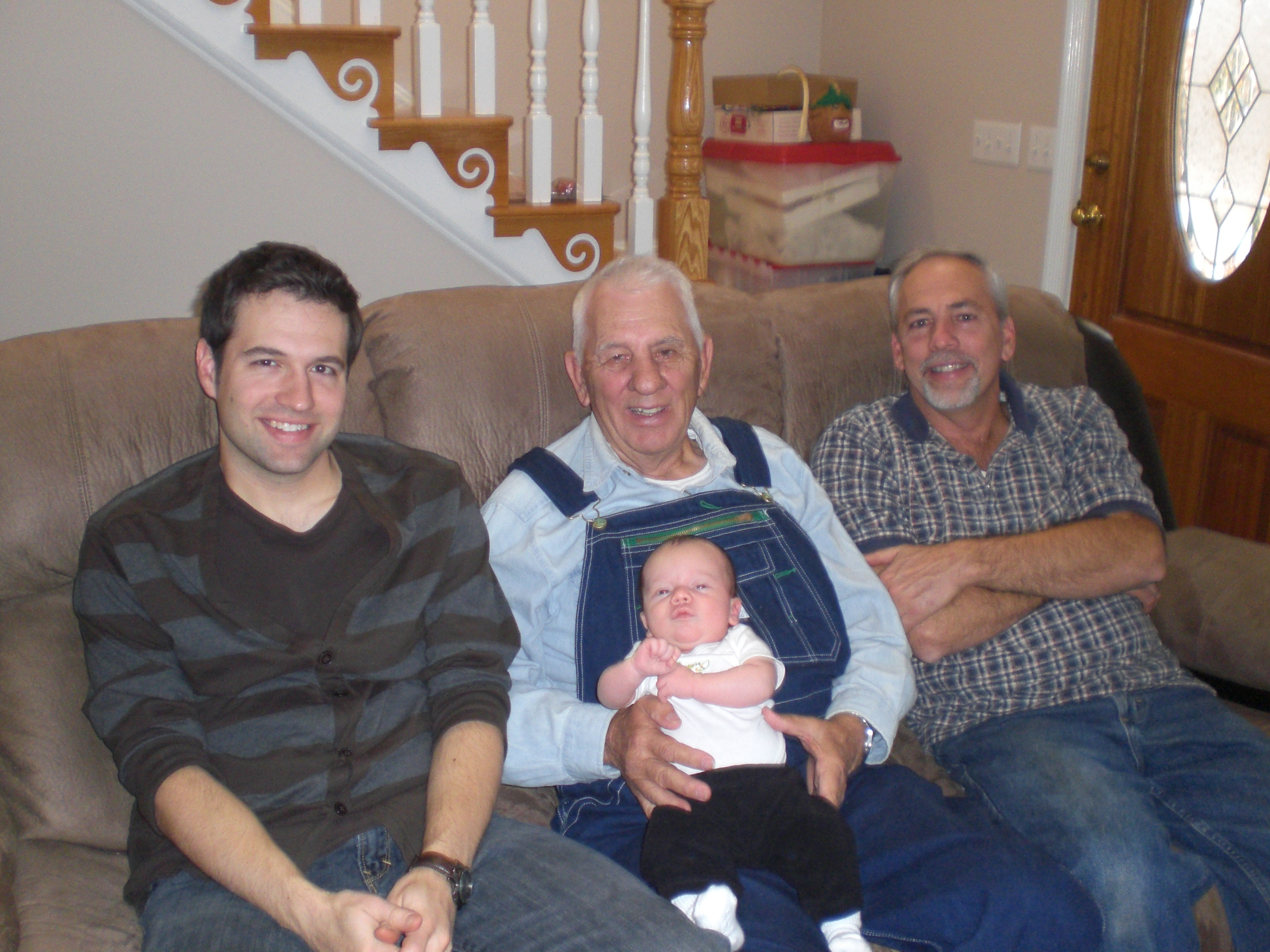
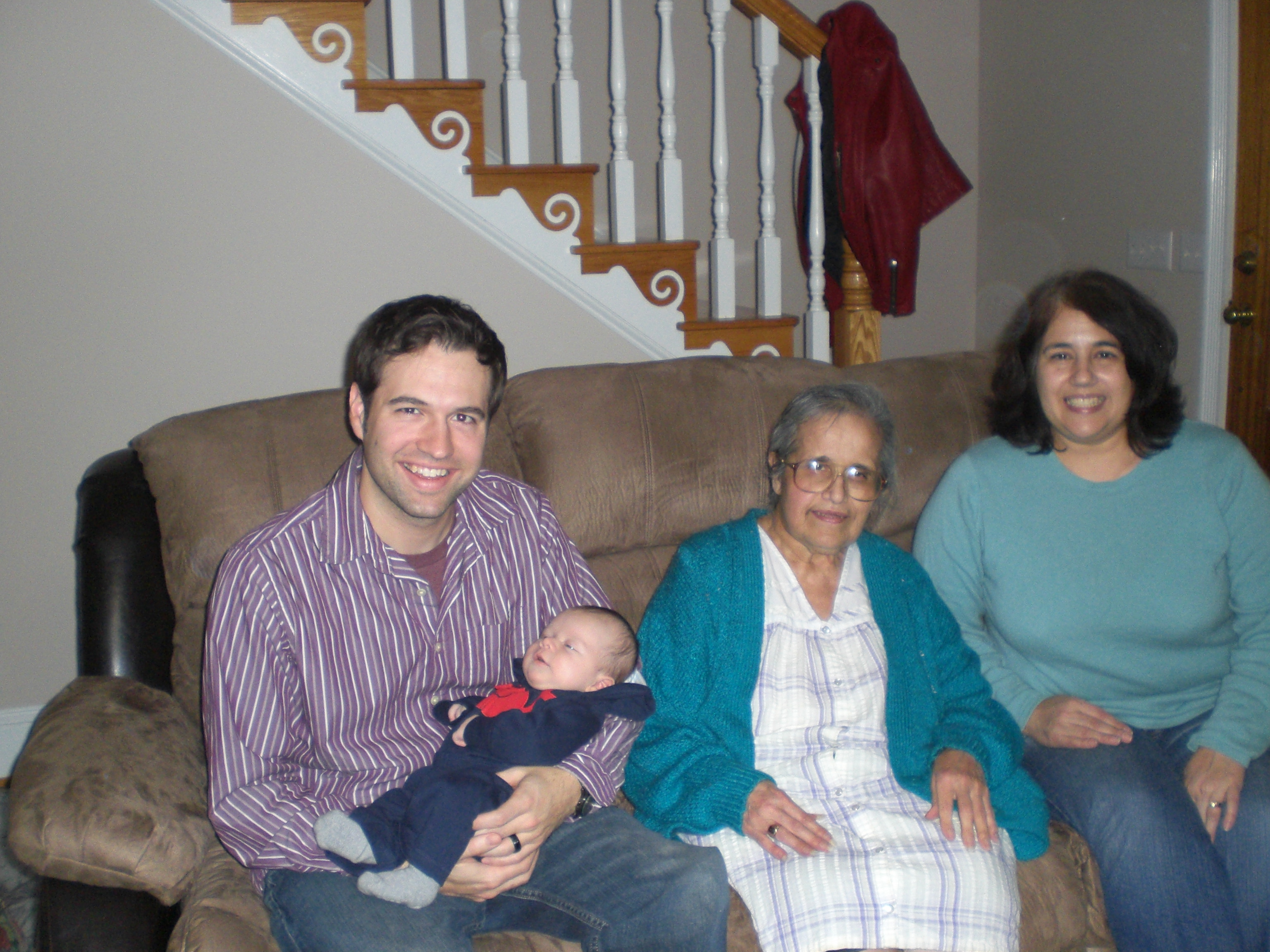
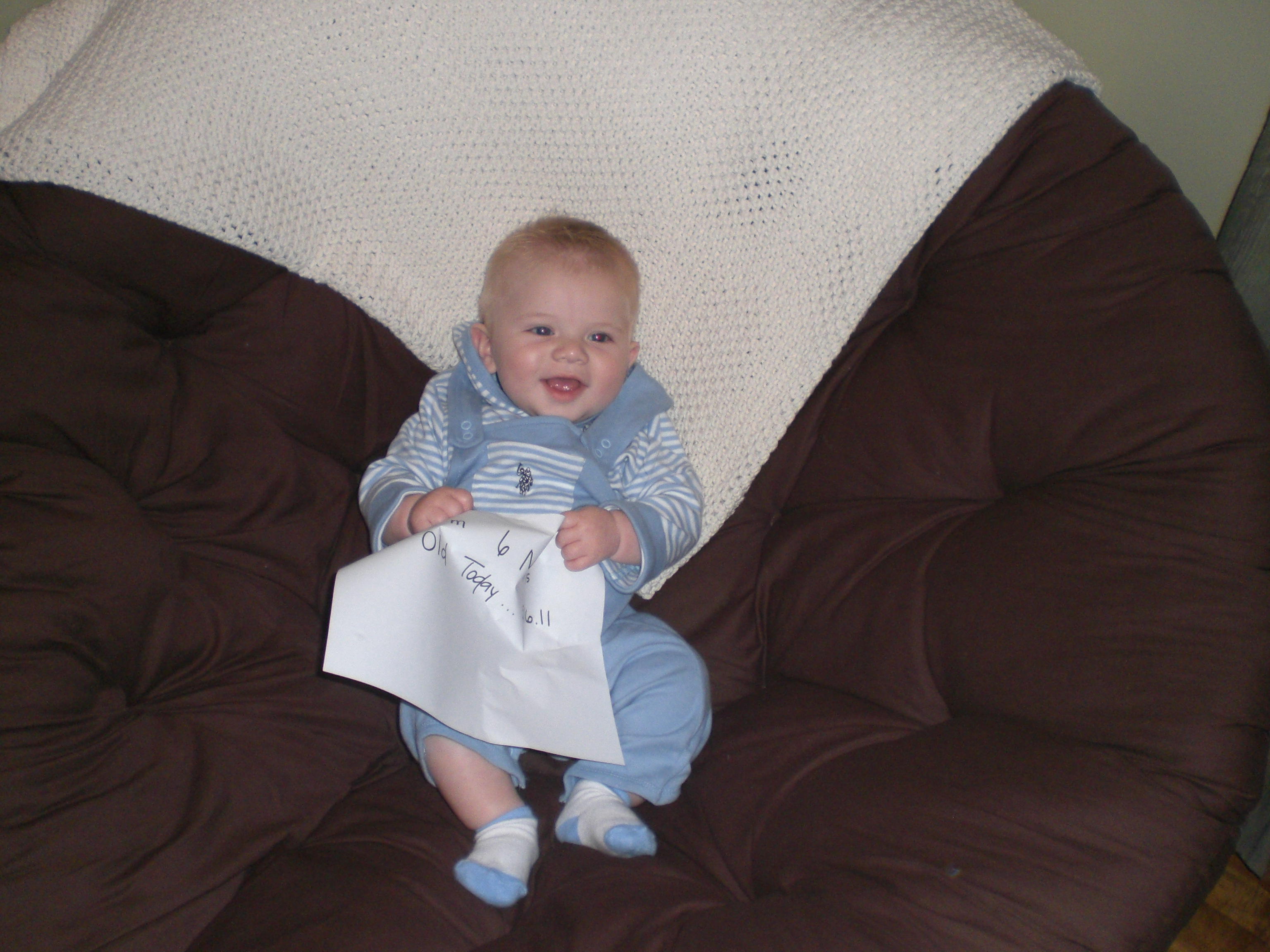
Pictured below:
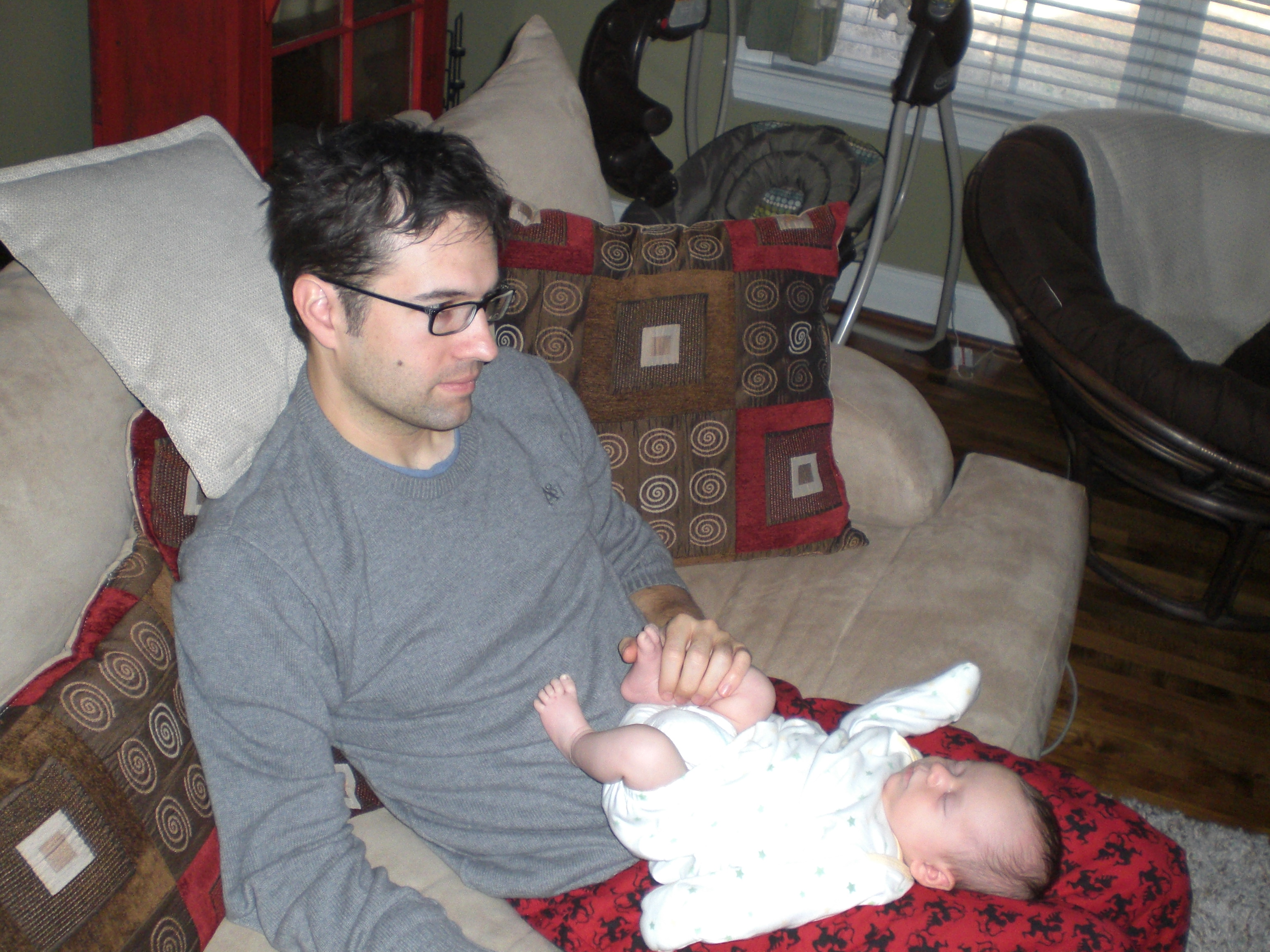
1) The Four Generations of Shell in December 2010; my grandfather Shell is sitting in the middle, holding my son Jack, in between my dad and me.
2) The Four Generations of Metallo/Mendez in January 2011; my grandmother Metallo is sitting in the middle, in between my mom and me.
3) In May 2011, Jack is holding a sign that reads, “I am 6 months old today.”
*To get a better idea of just how different Jack used to look, look on the right side of the screen and click on the archives. Start at November 2010, the month he was born.
This is me in a video I made for you, which explains all this in a 5 and a half minute video, in case you prefer that over reading the 1378 word blog post below it, which I wrote 7 years ago.
Meet your great-grandfather Isaac. Or Ishmael. Or maybe even both…
How do you determine who ethnically is a “white person” and who is not? Are Jews considered to be white? What about Greeks and Italians? And though Central and South Americans typically have tan skin, why is it there something about them still seems sort of white, as opposed to a person from India or China? These are some of the “side effect” questions that will be answered as I explain my theory on the origin of race and religion.
No, this theory doesn’t start with Adam and Eve. Nor does it start with Noah and his family repopulating the world after the Great Flood. It starts 20 generations after Adam, and 10 generations after Noah, with Abraham (the father of the Jewish and the Arab people), being promised by God that he would have a son in his old age. After waiting and having no sign of this coming true, Abraham’s wife Sarah convinced him to sleep with their Egyptian maidservant Hagar, in order to have a son to carry on the family lineage. At age 86, Abraham goes with his wife’s plan (like the way Adam ate the fruit after Eve convinced him to) and has a son with his maidservant- the son is named Ishmael. However, 13 years later Abraham’s wife Sarah gets pregnant with a son, as God promised, and this son is named Isaac.
Abraham eventually sends away his maidservant Hagar and his son Ishmael into the wilderness (Genesis 21:14), and raises Isaac his as true first-born son. Today, thousands of years later, it is through Ishmael that Arabs and Muslims link their heritage through. Accordingly, Jews and Christians trace through heritage back to Isaac. Now we are in the meat of my theory.
As generations passed and both families migrated from their Middle Eastern homelands, the descendants of Ishmael moved south and east- to Africa, Asia, and America (becoming the Native American Indians in North America and the Aztec Indians in Central and South America). In fact, the angel of the Lord told Hagar that Ishmael “will live east of all his brothers” (Genesis 16:12). Meanwhile the descendants of Isaac moved north and west- to Europe, Russia, and eventually to America (killing off, running off, or marrying the Native American Indians).
Notice how today the countries that are represented by the descendants of Ishmael are generally practice religions that do not involve the Judeo-Christian God (worshipped by Christians, Catholics, and Jews) but instead are tied Hinduism, Animism, Taoism, Buddhism, Communism (Atheism) and Islam. And of course the descendants of Isaac are matched to the Christianized nations: For example, Scotland is mainly Protestant, Ireland is mainly Catholic, and England is mainly Anglican (Presbyterian).
Almost 2,000 years ago thanks the Apostle Paul’s missionary journeys to preach Christ where the Jews had already settled (in Europe, specifically the Mediterranean areas) and also the birth of Christianity as a whole, the countries that were already familiar with the Judeo-Christian God were basically the first to get introduced to Jesus as the Messiah. As far as all the Ishmael-descended areas, like modern day Africa and Asia that were less familiar or not familiar at all with Christianity, they were not and have not typically been as generally open and accepting to “our God” as Isaac’s descendants.
I do believe that whether or not a nation (or individual person) is a descendent of Isaac has much to do with their religion, race, and culture. However, there are obviously exceptions. One of them is Russia, which had been mainly Christian up until the point of its embrace of Communism. Another exception is African-Americans, whom most identify with Christianity, as opposed to most Africans living in Africa.
And then there’s the “half breed” nations that make up Central and South America. For the most part, their blood is mixed of Indigenous Americans (Native American, Aztec, etc.) who migrated from Asia through modern day Alaska, and European lineage from those who “discovered” America. So in essence, the inhabitants of modern day Central and South America are half Isaackian, half-Ishmaelese; though they have accepted the religious beliefs of Isaac’s descendants (largely Catholic). Read more about this here: http://en.wikipedia.org/wiki/Indigenous_peoples_of_the_Americas
Yes, I did just now make up and use the words Isaackian (to describe the descendants of Isaac who are prone to believe in the Judeo-Christian God) and Ishmaelese (to describe the descendants of Ishmael who typically do not). And now that you hopefully understand what those terms represent, I will begin using them frequently.
What started much of this thought process was when I recently began “Climbing the Family Tree” and realized that so many of my ancestors had last names that are Jewish (Schell, Klaar, Ullman, Wiseman, Vite) yet there is no solid proof that I actually am- only family rumors and tradition. If I assume that none of the people in my family tree were Jewish, well, still, I have Jewish names in my family tree. So that got me thinking, Jewish people and “white people” are essentially the same thing, coming from the same common ancestors. Whereas someone who is Japanese (Ishmaelese) wouldn’t have last names in their family tree that would resemble a Jewish last name.
So going back to one of the questions I asked in the beginning, are Jewish people considered to be white? Yes. Though their homeland is Israel and though they are a Middle Eastern people group, they blend in with us Americans so well. And that’s part of my fascination with pointing out which celebrities are Jewish. Half the casts of Friends and Seinfeld are Jewish (The Ethnic Backgrounds of the Cast of Friends and Seinfeld) as well as The Wonder Years (The Ethnicity of the Cast of The Wonder Years), but the fact that most of us don’t know which ones are or aren’t shows that despite most of us being a mix of European blood, those Middle Eastern descended Jews are still our cousins.
Of course ultimately, it doesn’t matter which of us descended from Isaac or Ishmael or how much blood we have of either (I’m around 12.5% Ishmaelese); it just predicts the tone of our skin and our traditional religion, according to my theory. By no means do I see the Isaackians as superior to Ishmaelese for the fact that I myself worship the Judeo-Christian God. But what I do recognize is what God himself proclaimed to Abraham regarding Isaac and Ishmael:
But God said, “No, but Sarah your wife will bear you a son and you shall call his name Isaac, and I will establish my everlasting covenant for his descendants after him,” (Genesis 17:19).
“As for Ishmael, I have heard you; behold I will bless him, and make him fruitful and multiply him exceedingly. He shall become the father of 12 princes, and I will make him a great nation,” (Genesis 17:20).
What’s most important from those verses I just quoted is that God promised to establish his covenant through the line of Isaac. In other words, the savior of the world would come in the form of a Jew. Not to mention that the Isaackians coincidently would hold the responsibility of sharing their God with the Ismaelese- that’s why Christian missionaries exist. That’s why Christianity is now the largest religion of the Ishmaelese country of South Korea, for example: http://en.wikipedia.org/wiki/South_Korea#Religion
We all have the same great-grandparents at the tops of our family trees. I try to imagine how different the world would be if Abraham wouldn’t have had a son with Hagar, if he just would have waited another 13 years for his own wife to become pregnant. But he jumped the gun and changed the course of history (for him, it was the future) forever. Though if he didn’t, I wouldn’t exist, being that my grandmother is Mexican. Not only would I have not written this and you wouldn’t have read it, but there wouldn’t have been any of this to write about.
At some point, it starts to become irrelevant. Which part of your family tree actually matters?
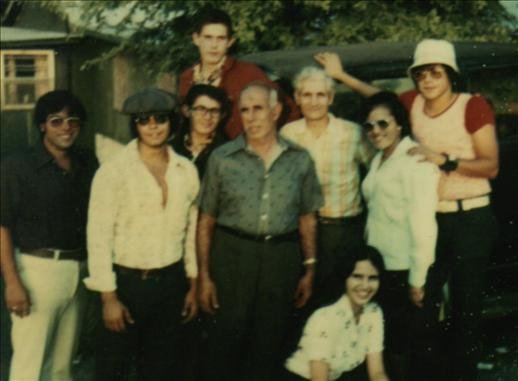
Fort Payne, AL in 1976- my mom (bottom), her Italian dad and Mexican mother above her
Every family’s got one- the “family tree enthusiast”. It’s ultimately the person with the most natural motivation to find out where the family came from- not the people who simply say, “I’d love to know more about our heritage…” but instead, the one who actually gets to work on it. And after I found myself spending hours sometimes researching the origins of last names I had heard of in our family, I soon realized I was appointed by destiny to be the “family tree enthusiast.”
Since last May, my grandmother on my dad’s side has been helping me with the research. Her last name is Clowers; which last year when I looked it up was an English name and meant “people from the hills”. But this weekend after sitting down with my grandmother again, I discovered that “Clowers” was changed from “Klauer”, and that was changed from “Clore”, which was changed from “Klaar”, which was not English at all, but instead Dutch.
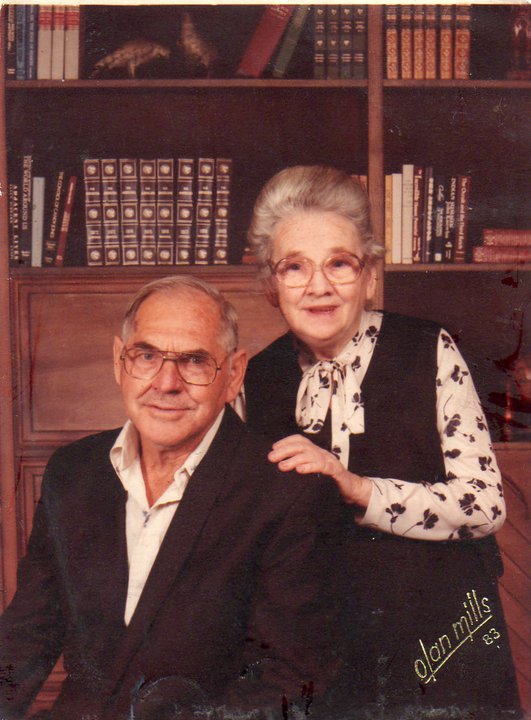
Chattanooga, TN in 1946- my great-grandparents on my dad's side: Francis Clowers & Madelee Wiseman
The highest I could climb up my family tree was to a Dutch Lutheran named Hans Michael Klaar (born in 1630) who married a Greek woman named Ursula Sybella (born in 1635). When I Googled the last name “Klaar”, I found more Jewish ties to it than anything else. It’s possible that further up the family tree the Klaar’s were Dutch Jews, but that would be near impossible to confirm.
Climbing back down the family tree, the next woman being married into the family was another Greek woman, Anna Barbara Maria. Then Dorothy Kaifer (German), then two more presumed German women (no last names given but I’m assuming they were German since the family had by that point moved to Germany), then surprisingly a Jewish woman named Nancy Ullman (it translates as “rich man”), then Mary Harris (English), then Emmaline Lunsford (English), then Polly Katherine Green (English, Jewish, or Irish), then finally, my great-grandmother Madelee Wiseman (typically a Jewish-German last name which translates “white man”).
same great-grandparents 37 years later
Then my grandmother (maiden name, Clowers) married my grandfather, John David Shell. All I know so far about his family tree are of Scottish (Scrimsher and Johnston), Cherokee Indian (name unknown), and German (Miller) origin. But the last name Shell has a potentially interesting origin: The Jews living in Germany were often given their last names by the Germans, who would insult them with last names translating to things like “stinky” and “ugly”. Shell used to be “Schell” and literally translates “loud, noisy, and clamorous”- which I would say is an insult. Plus, by Googling “Schell”, it’s Jewish people that pop up.
So what am I on my dad’s side of the family? Dutch-Greek-German-Jewish-Cherokee-Scottish-English. But I’m starting to come to the conclusion; what does really it matter anyway? At the top of both sides of my dad’s family tree are Dutch, Greek, and German. In the middle are Jewish and Cherokee. At the bottom of the trees are English and Scottish.
The Clowers-Wiseman family in 1953- my great-grandparents in the middle, my grandmother on the far right in the black dress
Which is more relevant? Am I more English and Scottish because those are the most recent? Am I less Dutch and Greek because those are at the top? Am I equally all of those things?
And that’s not to mention my mom’s side- she’s half Mexican and half Italian. But because of the rumors that my great-grandmother Mary Vite was Jewish (there are Jews with the last name Vite), I may not be ¼ Italian after all, but instead 1/8. Or what if she wasn’t half Jewish, but instead half Greek?
I will always be fascinated by ethnic backgrounds of people, but in a way, I am satisfied with what I know now about my own mysterious ancestors. Because what is most relevant in a family tree is not found by looking up, but instead by looking down and all around; it’s the people that still influence you, that love you, that care for you, and vice versa. That’s the part of your family tree that matters. And to be honest with you, I’m pretty dizzy after spending all that time so high up the family tree. It’s good to be back on the ground, with family members who are just as alive as I am.
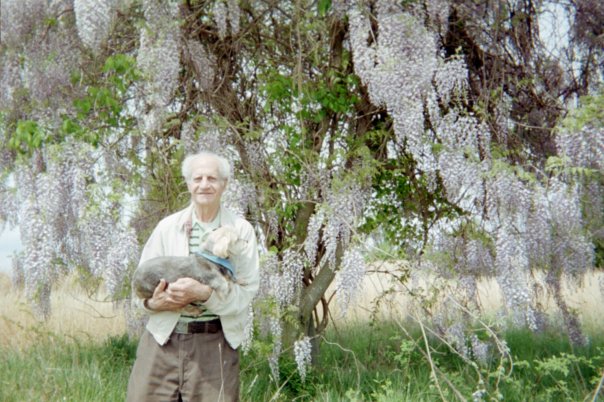
Under the family tree: my Italian (and possibly Greek or Jewish?) grandfather Metallo; my mom's dad


















 Family Friendly Daddy Blog