Icebreaker for Conversation: Would You Forever Trade All Home Cooked Meals for Infinite Free Meals at Restaurants?

Pickles Make for Good Reading Material- Episode 4

Something strange happens when a guy realizes he has married a wonderful cook: the desire to eat at restaurants starts going away. I began noticing that I was having trouble deciding what to order from the menu when we went out. Not necessarily because the items weren’t presented well or because there were too many things to choose from, but simply because what I would want to order was something my wife made perfectly a few days before, and it just didn’t make sense to overpay for too much of something I can get at home anyway.

In the likeness of Brewster’s Millions and Super Size Me, I had a thought. What would happen if I was made this offer by a magical Eastern European man: For the rest of my life, I would have completely free access to any restaurant in the world, but that was the only way I could get food for the rest of my life.

It would be pretty awesome, no longer having to pay for groceries. No more cooking, no more doing dishes, no more trips to the grocery store. Whatever I was in the mood for, I would simply go to that restaurant and order it. Every meal. Free. At my command. And I wouldn’t have to tip. In fact, the restaurants wouldn’t let me if I tried.

All that money saved on food.

But most restaurants aren’t open 24 hours. So for holidays I would have to order food to-go to plan for future meals. And part of the stipulation is this: If the restaurant doesn’t sell it, I can’t eat it or drink it. No more trail mix. No more Cliff Bars. No more homemade cookies.

If I wanted 4 pickles at once, I would have to go to a place that gave me a pickle spear on the side of the sandwich like McAllister’s Deli does, then specially ask for 3 more. But those pickles are the bland kind.  I like my pickles so spicy that it clears my sinuses.

Or I’d have to order fried pickles from a German restaurant. But I don’t always feel like eating fried pickles. There’s something unmatchable about the sensory involvement of reaching down into the cold yellow vinegar water of a pickle jar.

I would kindly tell the magical Eastern European man “thanks, but no thanks”. Then he would disappear instantly. But I would immediately feel a brief, cold breeze rush past my shoulder. That was the magical Eastern European man, symbolizing both the rejection he felt and the depravity that a “restaurant only” lifestyle would have brought me. No more “covered dish dinners” at family reunions in the basement of my grandmother’s house at Thanksgiving means no more deviled eggs. Bogus.

Missed Episode 3?  It’s right here…

https://nickshell1983.wordpress.com/2009/09/09/pickles-make-for-good-reading-material-episode-3/

Would You Define Your Life as a Comedy or a Tragedy?

The same question goes for the movie Garden State.

I have struggled for a solid ten years trying to figure out what makes things funny. Universally, seeing someone fall down (who doesn’t get hurt) is always funny, but I don’t know why. Defining what humor is, is almost impossible to simply and briefly put into words. What I can do is make a judgment call on whether something as a whole is a comedy or a drama.

One of my college professors taught me there is a clear way to distinguish between the two: Comedy involves a protagonist who in the beginning of the story is standing outside the borders of his society and by the end of the story is accepted into it. Therefore a tragedy is when the protagonist in the beginning is accepted as part of the society but by the end is expelled from it.

To test this theory on comedies, I will take Adam Sandler for example: Billy Madison, Happy Gilmore, The Water Boy, The Wedding Singer, and Big Daddy all involve a character who starts out as one or more of the following: incompetent, poor, lonely, selfish. By the end of the movie, Adam Sandler’s character is accepted into the fold as these previous attributes are resolved. So I can see how the definition of a comedy works here.

For tragedies, I will take some horror movies for example: The Blair Witch Project, Skeleton Key, The Strangers, Quarantine, and Carrie. The protagonists end up either dead or in a really bad situation by the time the credits roll. So I can see how the definition of a tragedy works here, as death or loss of freedom is a way of being ousted from a society that the protagonists were once a part of.

The end of a movie ultimately defines it as a comedy or tragedy. Garden State, which is more a drama than anything, ends with Zach Braff’s character being able to overcome his dependence on his doctor’s/father’s misdiagnosed prescription of anti-depressants and feel alive for the first time as he moves back home to New Jersey, making new friends and finding love: That’s a comedy.

Using this theory, these other genre-vague movies would also be considered comedy: Fight Club, Forrest Gump, and Elizabethtown. And these would be tragedy: Into the Wild, Vanilla Sky, and One Hour Photo.

Life is comprised of rotating moments of comedy and tragedy. Times where I’m on the outside looking in and I get in (comedy) and times where I’m inside but am pushed out (tragedy). In ways big and small. But a person’s general perspective will cause him or her to see it ultimately as one or the other:


If life is comedy-in-progress, then life is me trying to figure out how to be normal enough to succeed in being accepted by my immediate society, eventually dying satisfied, knowing I’m surrounded by those who love me.

If life is tragedy-in-progress, then life is me already having everything I need and want in life but having it all taken away from me in the end, eventually dying sad and alone.

Big decisions, big decisions. I’ll go with comedy-in-progress.


Quad Cities Proximity Initiative: Pretending You Know Where a City Is

Most Americans don’t know the capitol of Vermont or which states border Colorado, without cheating and looking at a map. Because like taking French or Spanish in high school, if what is learned is not applied on a semi-regular basis, then that knowledge disappears. Especially when it was just rogue memorization for a test we took a long time ago.

Since we don’t really know much about American geography, we use a system that gets us by. It gives the illusion that we are experts, when really we are just BS-ing our way through the conversation. I call it the “Quad Cities Proximity Initiative”. Most states consist of a minimum of four cities that we’ve at least heard of that pretty much cover the 4 corners of the state, even if we’ve never been to that state before; here are a few examples:


Ohio (Columbus, Dayton, Cincinnati, Cleveland).
New York (New York City, Buffalo, Syracuse, Albany).
Florida (Jacksonville, Orlando, Tallahassee, Miami).
Georgia (Atlanta, Macon, Augusta, Savannah).

Here is an example of how this system works. The other day at work a guy from Indiana was trying to tell me where his hometown is. He said, “It’s about 50 miles south of Indianapolis…” Immediately I started shaking my head with an enthusiastic “oh yeah, yeah” which unabridged, it literally conveyed this message, “I am very familiar with the city you are talking about. I’ve been through there several times. Of course I know that place…” All because I have obviously heard of the state’s capitol, Indianapolis.


There are exceptions to the Quad Cities Proximity Initiative. Texas is huge and has more than 4 familiar cities; it has about 7. And there are those bite-size states like Delaware, where it doesn’t matter what city the person says, because the state only has 3 counties anyway.

When a person names a city I’ve heard of (even if I have no clue where in the state that city is) I give them confidence in me that I am following their lead in the conversation. It’s that simple. No need to stall a conversation because I can’t visualize where the city is. Ultimately, it doesn’t matter. Unless I’m driving there.


I Was Born in a Small Town

While movies we watch tend to portray life in the “big city” because it’s more practical to film in larger cities, I would say that the settings of Country songs portray what life was like for most of us while growing up, whether the hometown is in the South or not. In fact, I can’t really think of anyone I personally know who grew up in the heart of a big city. Small towns and suburbs seem to be much more relevant to America as I know it, compared to the city life I grew up seeing on John Hughes’ movies set in Chicago (like The Breakfast Club and Ferris Bueller’s Day Off) and Saved by the Bell which was set near Los Angeles. Somewhere between Seinfeld and Little House on the Prairie is the setting of my real life.

Spending my first 18 years in Fort Payne, Alabama, it seemed everyone I knew pretty much knew everything about me. Actually, I should say that everyone knew everything about everyone. There was no avoiding it. I graduated in a class of 183 students, most of whom I knew from at least Kindergarten. Their parents had seen me grow up. We pretty much all went to one of four main churches (either Baptist or Methodist).

Just saying the name “Fort Payne” has the same connotation to me as the word “cousin” or “aunt” or “1st grade teacher”- people who knew me as a kid that cried when E.T. had to leave Elliot to go back to his home planet. People who I could never try to act too cool around- they simply know me too well. That’s what my hometown is to me.

And that’s not a bad thing, at all. There definitely is a unique comfort in a home town. Hence the word “home”.

Back in February, my wife and I had a free weekend so we decided to spend it at a free bed-and-breakfast in Fort Payne (my parents’ house). We noticed how quiet and peaceful the city is. The opposite of the life we often know in Nashville. My wife wanted to take a driving tour of the place, so since I had already shown her the tourist spots (the canyon and the waterfall) I decided to drive her around the neighborhoods I spent time in.

As I drove up the big hill where we as Cub Scouts had a box car race, I saw my friend Alex Igou’s dad working in the yard. My wife was amazed that he knew who I was right away and that we talked a good 10 minutes before we went on our way to get some coffee at the local coffee shop. Which is owned and ran by my other friend Alex Pate’s mom. While there, the other customers who came in also greeted me by name. That caused my wife to say, “Do you know EVERYBODY in this town?!”

Pretty much. Nearly all 13,000 of them. Or I would least be recognized as “Jack Shell’s boy”. I learned that the same reasons an 18-year old kid was ready to leave his small hometown on Graduation Day became the same reasons I found the town endearing today, ten years later.

The town that for a brief time in 1989 held the record for the world’s largest cake. The town that the Country music super-group Alabama put on the map. The town with the self-proclaimed title “Sock Capitol of the World”, which is proudly displayed on the green Fort Payne City Limits sign with the word “capitol” being misspelled. Maybe one day they’ll finally fix that sign.


http://en.wikipedia.org/wiki/Fort_Payne

This article was posted in The Franklin News of Franklin, TX in July 2009.

Manspeak, Volume 7: Bromance

It’s not simply a fad. It’s much more complex than that. It’s not simply a gimmick to make more money in the theatres. It’s a clue that we as Americans have missing been out on something. The newfound popularity and acceptance of bromance is simply a realization that men were meant love each other, not just women.

America is good at teaching men masculinity: Rocky, Rambo, The Terminator, He-Man, GI Joe. It’s been ingrained in us our whole lives. We don’t have a problem accepting the fact that men are meant to be tough. Men are born to protect and defend. I think we do that pretty well. But while the bald eagle holds 13 arrows in one claw, he also holds 13 olive branches in the other.

Living overseas in Asia taught me a lot about American men. Though I was told that there were a lot of transvestites in Thailand, it wasn’t until my second summer over there that I was able to recognize them. I then came to the conclusion that the reason there are so many men living their lives as women there is because it is not culturally acceptable to be gay in Thailand, at all.

So when it’s not acceptable in a country at all to be gay (as compared to America where it’s not popular but there’s a growing level of acceptance), to take out the possibly of any men around being gay, it affects the cultural behavior of a nation. Men can be close without any possible thought of the other thinking he is sexually attracted to him. And even more relevant, there is not so much a possibly of awkwardness because of that. In the Philippine’s, it is common for men show their friendship publicly by holding hands.

But before there was Jackie Chan & Chris Tucker, before there was Owen Wilson & Ben Stiller, before there was Joey & Chandler, there was a time when men truly weren’t afraid to hug and be close. It simply symbolized their friendship but was nothing more.

My eyes were opened when I read Moby Dick in college. The 1851 novel was written in the American-Romanticism period, and while the theme of Christianity is more obvious than Season 5 of LOST, something else that really captured my attention and even became the topic of my final paper for that class was the bromantic relationship between the protagonist Ishmael (a 5’ 9” New England native) and his ship mate Queequeg (a 6’ 7” South Seas tribesman of mixed race).

The two men quickly become best friends and the narrator, Ishmael, is not reluctant to elaborate regarding his friendship. They simply slept in the same quarters and were close friends, but reading it with today’s mindset can make it easily be interpreted differently:

“How it is I know not; but there is no place like a bed for confidential disclosures between friends. Man and wife, they say, there open the very bottom of their souls to each other; and some old couples often lie and chat over old times till nearly morning. Thus, then, in our hearts’ honeymoon, lay I and Queequeg—a cosy, loving pair.”  -Herman Melville (Moby Dick)

Something else that really opened by eyes to bromance was when I started paying close attention to Jesus and His disciples in the New Testament. They were not hesitant to show physical affection for each other. At the Last Supper, look at Peter’s physical closeness to Jesus during dinner.

“Then, leaning back on Jesus’ breast, Peter said to Him, “Lord, who is it?”  -John 13:25

Imagine 12 dudes eating dinner in today’s society and one leans back on the other’s chest to ask him a question. Completely not acceptable.

Even this week I ran across something odd in the Old Testament as I was finishing up Genesis. This is where Jacob is blessing his sons before he dies:

“He called his son Joseph and said to him, ‘Now if I have found favor in your sight, please put your hand under my thigh, and deal kindly and truly with me. Please do not bury me in Egypt.”  -Genesis 47:29

In their culture, a son could make a vow to his father by placing his hand under his father’s thigh, or as my Bible’s study notes explain, it was a gentler way of saying his “procreative organ”. Think of how not acceptable that is today.

We’ve obviously come a long way since Biblical times regarding same-sex friendship and closeness. But even the culture that was present 158 years ago in Moby Dick paints a completely different picture compared to what is acceptable in American same-sex friendship today. The title of Moby Dick itself serves a perfect example of how far we’ve come. Add to that the fact that the story involves the close friendship of shipmates. That’s a lot of joke material for a 15 year-old boy to work with.

In fact, in recent decades there have been critics of Moby Dick claim that the book has homosexual undertones. Key phrase: “in recent decades”. For its time, the behavior found in the novel was not seen at all as a curious thing. It was normal back then.

I say it’s no wonder that today’s culture loves bromance. Men were made for close friendship with other men but are taught to hide their feelings because it’s not masculine to show them. When I think about it, several of my top favorite movies of all time have a heavy dose of bromance: Rocky 3, Plains Trains and Automobiles, Zoolander, Pineapple Express, Band of Brothers. And Hollywood knows it’s a winning formula.

The truth is, compare the box office sales of pretty much any Judd Apatow and/or Seth Rogan movie (bromantic comedies) to any romantic comedy made since 2005. Bromance wins every time. Romance, on the other hand, can be an unpredictable thing.

The best 3 minutes of recorded bromance, courtesy of 1982:
http://www.youtube.com/watch?v=h0qVUn4797g

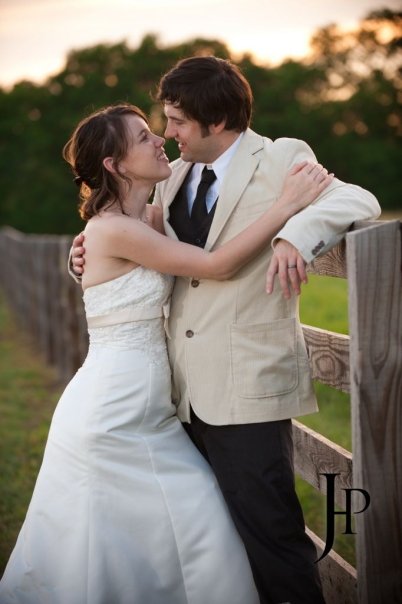
All pictures with the “JHP” logo were taken by Joe Hendricks Photography:

Blog- www.photojoeblog.com

Website- www.joehendricks.com


Originally posted in April 2009 on facebook as “The History of Bromance”, which helped inspire the Manspeak series.