Look No Further


I can’t think of anything I want. I can’t think of anything I need. I can’t think of what would make my life complete that I don’t have already here in front of me. And I look no further.
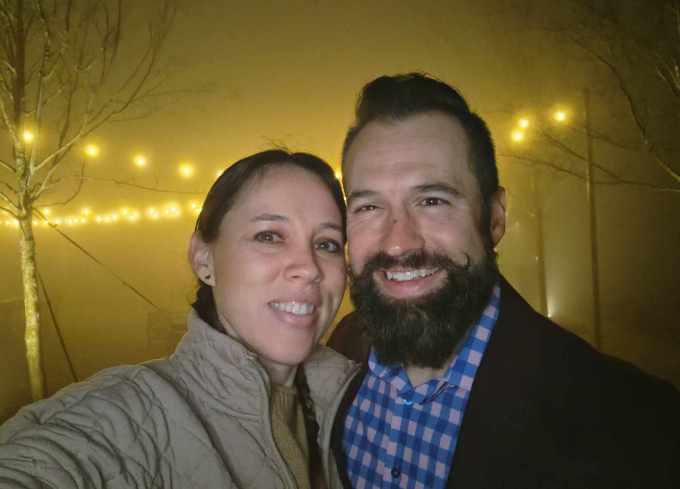
That is the point I have reached in life. To be fair, it’s more than a simply accurate assessment of my life, that I suddenly have an awareness of. Just as important, it is an acknowledgement of an arrival to a destination; decades into a journey.

The first four decades of my life were mainly punctuated by questions marks:

“What will it be like when I’m not a kid anymore? Where will I go to college? What should I major in? Where should I move after college? What will my actual career be? Who will I marry? How do I be a good husband? How do I be a good father? What is the meaning of life, anyway?”

But now, my life is punctuated with periods. I don’t really have any questions anymore. And the questions I do have about life… well, no human can honestly know the answer to.

I am not famous. I am not a millionaire. Yet I have more than so many famous millionaires do. If for no other reason, simply because I am not under the belief I that I need to finish the sentence:

“I’ll be happy when…”

Instead, I recognize that if I can’t be happy in the present, I can never truly be happy in the future.

It makes me think of a movie that my wife and I watch at least once every year: This is 40.

Paul Rudd’s wife’s character sets up the premise of the movie as she explains to him:

“The happiest period in people’s lives is from age 40 to 60… So this is it. We’re in it right now. We have everything we need right now to be completely happy. We’re gonna blink and be 90. So let’s just choose to be happy.”

I also am thinking of Jewish comedian Marc Maron as he explains his understanding of Christianity, in his HBO special, From Bleak to Dark:

“Everything will be amazing… when you’re dead.”

I can appreciate his perspective. Perhaps there is too much emphasis on all of our problems going away when either A) Jesus saves us from all of our annoying problems by showing up in the Rapture, or B) we ideally die in our sleep and get to live in the eternal bliss of Heaven.

While I have definitely placed in my faith in the Christian hope that there is a much better life after this one, I have also challenged my belief system by asking myself the question:

“But what if this is all there is?”

In the event that I just die and that’s it… no further consciousness nor accountability, no memories of this life nor connection to the people I knew in it… I would certainly consider that to be a confusing, cosmic tragedy- that life was nothing more grandiose.

But if that were indeed the case, the question becomes this:

“What about my life would change right now, as I am still alive? What would I do differently?”

My answer: Nothing.

As sad of a thought it would be to never see my loved ones again, the greater sorrow would be to live this gift of a human life on Earth while not making the most of every moment and not appreciating what I do have with the people I share it with.

I think of how my daughter has a microwavable baby doll that she places in our bed to keep safe while she is away at school during the day: “Daddy, Gracie is basically a real baby.” I love it.

I think of how my wife and I set up a reservation for Valentine’s Day last week at a fancy restaurant with an amazing view off the side of Lookout Mountain… but then it was so foggy we were not able to even see anything anyway. I love it.

I think of how this past Sunday I walked into the living room to see my son wearing a monkey jumpsuit while throwing his sister onto a giant beanbag. I love it.

I think of how every morning before work and school, I see my wife and daughter having “coffee time” before the day begins. I love it.

But what I can’t think of…

I can’t think of what would make my life complete that I don’t have already here in front of me.

And I look no further.

Our Final 90 Days Living in Tennessee

We are now at the point where this is pretty much our family’s final 90 days remaining of our time here in Tennessee, before we make the move to Alabama.

This week served as a milestone, as the deconstruction process began for some of the renovations that we are hiring contractors for.

Throughout this nesting process, my wife is basically Joanna Gaines… while I am basically Paul Rudd.

By the time we move in around Memorial Day, we will hopefully have brand-new bathrooms, kitchen cabinets, and floors throughout the entire house.

I was dreading having to drive a huge U-Haul for 3 hours across Monteagle for the official moving day.

Fortunately, it shouldn’t be that bad now, as we are microdosing the move each time we visit Fort Payne and when my parents come to Tennessee to visit us.

Last weekend, we fully loaded my dad’s huge F-150 for my parents’ trip back to Alabama. Every little bit helps.

I’m sure there will be a U-Haul involved for the final move, but I am confident the truck we rent will not have to be one of the bigger ones they rent.

Another milestone this week was that this made the first “double payment”: One for the house we bought in Alabama and the other for our house in Tennessee, which will be going on the market next month!


Humor with Laugh Tracks Vs. Subtle Comedy: Why Jokes Don’t Make Me Laugh

What makes a person funny?

Recently at the place I used to work, they hired a motivational speaker.  His whole two hour bit was infused with “jokes”.  I guess a few people noticed that I wasn’t laughing at every joke along with them, for the most part.  It’s because very seldom does a joke make me laugh.  The way I process jokes, they are either for kids (“Why was six afraid of seven?”), for people without a good sense of humor (fans of Larry the Cable Guy and Dane Cook), and/or for the dirty-minded (more extreme than “that’s what she said…).  I think “jokes” are cheesy.  When a person tells me, “Oh, I got a joke for you,” I just wait for my cue and give them a courtesy laugh.

So what is funny?  For the most part, when something is subtle and isn’t necessarily supposed to be funny is often when it’s the funniest to me. I used to work in an office 9 hours every weekday and in the midst of the afternoon lulls, I found little things to amuse me. I would start laughing out loud and no one would know why I was laughing. And the truth is, these things probably weren’t funny to anyone else.

Here’s one example: A cliché phrase I had to hear a lot around the office was “crunch numbers”. So I thought to myself, “What if they made a cereal for adults called ‘Number Crunch'”? It will be made with whole-grain and would be in the shapes of the numbers 1 through 9. That way, accountants and other professionals who work with numbers all day would have the appropriate cereal to eat in the morning.

Here’s another: One day one of my co-workers came back from lunch with a jar of candy from Cracker Barrel. They were Atomic Fireballs- the kind we had when we were kids. She offered me one. I explained to her that I only like candy that has protein in it. (Example: Reese’s Peanut Butter Cups, Snickers, etc., but not Skittles, Starburst, etc.)

Then she said, “I wonder what Fireballs are made out of…probably just sugar and water.” I immediately started laughing when she said that because I got this image in my head of someone biting down on a fireball and all this water gushing out of their mouth.  That, to me, is hilarious.  Maybe because it’s absurd.

My theory that “jokes aren’t funny” can be tested by the fact that funny stand-up comedians don’t tell really tell jokes anymore. Mainly they talk about awkward and annoying social situations.  Though some comics, like the late Rodney Dangerfield, can be funny mainly because of all of just one-liners. So I guess one-liners are funny. Like Chris Tucker having a career simply based on one line: “Do you understand the words that are coming out of my mouth?!” But delivery and composure ultimately land or crash the comedic aspect.

And I guess another thing that is funny is when people do stupid things and get hurt. People falling down is always funny. It works for Johnny Knoxville. Okay, so here’s what is funny to me: random observations, awkward social situations, one-liners, and people hurting themselves. That, my friends, is comedy.  Not some lame fake-story that ends with a pun or a curse word, prompting me to laugh: If I have to be reminded it’s funny, then… it ain’t funny.  I’m just not a “laugh tracks” kind of guy.

*If you liked this post, you may want to try reading “The Art of Being Funny” by Ben Wilder and also “What is Funny?” by Jessica Muto

Predetermined and Preconceived Expectations (My Take on Encores, Bartering, and Who Pays for Dinner)

Yes, the title is redundant.  But there isn’t a more appropriate way to describe how ridiculous some of our modern traditions are.

Since the 7th grade, I have been to more concerts than I can count; starting from  when Christian rock music was still awesome (from 1992 to 1998) with now defunct bands like dc talk and Audio Adrenaline, to current favorites like Guster and John Mayer, to class acts like Michael Buble.  I love music and I love concerts.  (Yes, there are people who don’t actually like music at all.  They are the ones who say they like all music, including both rap and Country equally.)

After you’ve been to a few concerts, you become overaware of how virtually every concert will end:  After the “last song” is finished, the band hurries off the stage while saying “Good night (enter name of city where the concert is), you’ve been great!”  But the lights stay off in the auditorium or arena.  This gives the necessary opportunity for the audience to cheer “Encore!” or “We want more!” until the band predictably returns to the stage to perform a few more songs- where they typically include at least one acoustic version of one of their songs and also one of the band’s most notable songs they conveniently left out of the main set.

Fact: Encores are lame.  I say either [crap] or got off the pot.

In my mind, this concept clearly relates to the mostly un-American tradition of bartering.  During my first summer teaching English in Thailand, I paid full price for souvenirs.  If a price tag had said that an imposter Hard Rock Café: Bangkok t-shirt would cost me 7 or even 10 bucks, I paid it.  Because that sounded pretty reasonable to me.  But by the end of that first summer, as Thai friends starting accompanying me, I learned that the asking price was not meant to be taken seriously.  If the asking price was $10, the after-barter price was typically as low as $5 or even $3.50.

As an American, I had been used to finding my own way to negotiate prices in America: With coupons or Internet specials, or simply just “price shopping” until I found the store with the cheapest price.  I pride myself in never paying full price for anything if I can help it.  But in Thailand and in so many Third World and developing countries, there are no coupons or Internet specials.  Instead, you barter with the merchant.  Otherwise, you get hosed.

Granted, bartering does indeed exist in America.  Like when you buy a car, go to a garage sale, or buy something off of Craig’s List.  But typically it’s not worth my time to do business that way.  I’d rather spend my time finding the product somewhere else where the price is firm and already low.  Otherwise, I will not be an active consumer.

Fact: Bartering is lame.  Instead of getting involved with the predictable “buyer asks too low a price, seller asks too high a price” banter, I will simply find another way to buy the product.

Lastly in my trilogy of examples is the awkward game of “who’s paying for dinner?”  If I am going to buy someone’s dinner, I am very clear with them up front before we arrive at the restaurant: “I am taking you to dinner.  I really appreciate how you (I name the reason I am buying their meal, even if it’s as simple as thanking them for their general kindness and friendship).”  There is no guessing to be done.  I am buying their meal.

That means when the waiter comes by the table when it’s time to pay up and asks, “Will this be together or separate?” there is no grabbing for the bill by both me and the other person.  I don’t like the feeling that I owe someone for anything unless there’s a good reason for it.  So this whole idea that “you bought my meal this time, so I’ll buy yours next time”, it doesn’t work for me.  Because then I have that “IOU” hanging over my head.  Let’s make it simple.  If you want to buy my meal, tell me up front.  As I will do the same.  Otherwise, it’s assumed that we’re paying separately and the only bill anyone grabs for at the end is their own.

Fact: I can’t truly enjoy a meal if I think there’s a chance that I am expected in the least to grab the other person’s bill.

I live a simple life where clear-cut expectations make me happy.  This is my version of reality.


The Token Bad Guy: Osama bin Laden is Dead

From Ben Linus to bin Laden, evil has a name.

Now that President Obama announced that Osama bin Laden is officially dead, it makes me think about how there always how to be a “bad guy”, both locally and world-wide.

In Judd Apatow’s Jewish comedy (a franchise he has specialized in for the past decade, based on a strategic formula including Seth Rogen and/or Paul Rudd, a good dose of bromance, a classic soft rock soundtrack, mostly ad-lib dialogue, a heavy and almost dark dramatic element somewhere in the plot line, a running time of at least 2 hours and 15 minutes, an unpredictable ending but no “twist”, and constant references to reproductive organs) Funny People, there is a scene where Adam Sandler’s character is babysitting his ex-girlfriend’s two young daughters. As they play, one of the girls takes him captive like he’s a dragon, while the other has come to rescue him. He looks up at them and says to each one, “Are YOU the good guy or are YOU the good guy?”

While in cartoons and children’s own made-up playtime storylines the antagonist often takes pride in knowingly being evil, in real life the Bad Guy usually doesn’t realize that he’s the Bad Guy. It amazes me that there always has to be a handful of countries in the world that serve as a current Bad Country. It’s been England (watch the movie The Patriot about the Revolutionary War). It’s been Germany (the Nazi’s). It’s been Russia (watch Rocky IV) and still kinda is.

Why can’t the evil leader of a country think to himself: “Oh no! I’m ‘that guy’. I’m the bad person that’s causing problems with the rest of the world. I need to start with the man in the mirror and change my ways”. From what I’ve read about Adolph Hitler, in his own mind he simply was carrying out an ultimate version of Charles Darwin’s concept of “survival of the fittest”. He was only advancing what he saw as in the inevitable. He wasn’t a sadistic tyrant, not the way he saw it. He didn’t see himself as the Bad Guy.

From each holy war ever fought in history, down to the elementary school bully, the true villain is doing what is right according to his own view. The Bad Guy is dead wrong, yes. But he doesn’t see it that way.  While obviously I don’t have the potential to become a radical tyrannical leader of threatening foreign country, I still can find myself in a similar scenario as North Korean leader Kim Jong-Il, by simply being the Bad Guy on a much lesser scale in everyday situations and not realizing it. If only Bad Guys always realized they’re the Bad Guy… well, it might help a little.

“We’re never gonna win the world, we’re never gonna stop the war. We’re never gonna beat this if belief is what we’re fighting for.” -John Mayer (“Belief”)

*Some bad guys, like this one, may or may not repent of their evil ways in the end.