Playground Safety Checklist (By Guest Blogger, Ken Allen)

Most parents will tell you that raising kids is very different today than it was when they were growing up. In many ways, that’s true. Consider how kids spend their free time:

Children today have so much of their time outside of school occupied by structured activities that parents need a separate datebook just to keep up with their kids’ daily schedules.

Even though a lot of aspects about raising kids have changed, a lot of parts are just as parents remember them. One of those aspects is the importance of the playground. Even with competition from video games and streaming video, the playground remains one place kids are sure to congregate.

That’s a good thing, too, because playgrounds offer children the opportunity to get some much-needed exercise as well as kick-start other areas of their intellectual and social development.

Although playgrounds remain as popular with kids today as they did in generations past, playgrounds themselves have changed somewhat over the years, particularly when it comes to safety. Whereas playgrounds of the past featured concrete or asphalt underneath many of them, today’s versions are far more likely to feature soft wood chips or recycled rubber to cushion falls. Metal slides have given way to plastic ones that don’t heat up to dangerous levels under the sun. Swing sets often include special swings that will safely hold toddlers without allowing them to slip off the seat. However, just because playgrounds have become safer over the years doesn’t mean parents don’t have to worry about playground safety at all.

Teaching kids how to use playgrounds safely and inspecting equipment to look for potential hazards are responsibilities parents should take seriously, even as playgrounds become safer, in general. In doing so, parents can help ensure that their kids gain the full benefit of everything playgrounds offer them. Consult the following checklist the next time you take your kids to the playground, and you can make sure they’ll have a fun day with their friends, just the way you did when you were a kid.

“Playground Safety Checklist courtesy of Merrillville Personal Injury Lawyer Keneth J. Allen Law Group”

How to Prepare Your Toddler for His First Dentist Visit (By Guest Blogger, Jack Kennedy)


Can you imagine your toddler sitting perfectly still in the dentist’s chair with their mouth obediently stretched wide open? You are not alone if you think this picture resembles a far-flung fantasy. However, a little preparation goes a long way in making the first dental check-up go as smoothly and as painlessly (we hope) as possible.

Preparing yourself

The early years are anexciting time and full of firsts. When the first tooth erupts, or at about one year of age, is the general recommendation of when your child’s first trip to the dentist should occur.

The first step is to choose your dentist. This may not be your own dentist unless they have experience in dealing with potentially squirming, crying kids. Choosing a paediatric dentist – one who specialises in these yowling youngsters – can be worthwhile. Do your research to see which trustworthy and kid-friendly dental practices are in your area.

Prepare yourself so you can answer any questions your child may have confidently and accurately. Often dental practices will provide you with information about the first dental visit. If not, it pays to ask exactly what to expect. Make a list of any concerns or questions you may have, such as how to choose the right toothbrush. Remember to inform the clinic of any allergies, medical conditions and medications beforehand.

Children look directly to us as experienced adults for guidance and support about how to behave and respond to new situations. Children are excellent at picking up on cues and can sense when we are happy and relaxed or are worried and scared. As their attitude and temperament are likely to reflect your own feelings,continue striving to be a positive role model, laying aside any fear or trepidation you may have. Your child has not yet been given any reason to dislike the dentist, so try to keep it this way.

Talking to your child

Children often learn by mimicking the things we say and do, even if it can get a little tiresome at times. Brushing your teeth together demonstrates good habits at home and is a great way to teach your toddler about oral health. This is an easy lead-in to talking about “going toa special kind of doctor that looks after your teeth”.

Like any new experience, visiting the dentist can be daunting the first time around and can be associated with feelings of anxiety. Knowing what to expect removes some of the trepidation associated with the unknown, as does constant reassurance that you will be with them throughout the entire visit. With young children, use simple and positive language. Tell them exactly what to expect, such as “the dentist will count your teeth” and “the dentist helps us keep our teeth strong and healthy.”

There are many entertaining resources at your disposal to help begin these discussions and introduce your child to proper dental care. Picture books with colorful illustrations about going to the dentist can be read together. Educational toys and models show exactly what their teeth look like and you can practice counting them, just like the dentist will do. Computer animations and other online resources can be both entertaining and informative, ultimately helping your toddler cope with their first trip to the dentist.

Role playing games can be used to great effect to show what will happen at the dentist. A stuffed toy or doll makes for a willing patient to practice on, and your child can act out the roles of both dentist and patient, helping to overcome their fears.

Even trips to the museum and zoo or watching the nature channel is a prime opportunity to promote curiosity and discussion. For instance, compare their teeth to the massive teeth of lions. They will be fascinated!

While at the Dentist

When at the dentist, take toys and books to keep your kid occupied while you wait. Consider bringing a special “going to the dentist book” or (if you are brave enough)having a “going to the dentist song”.Formally introduce your child to the dentist and any nurses so that they become a familiar and friendly face. Finally, planning a reward for afterwards will give your toddler something to look forward to, such as a trip to the playground. That said, try to avoid the use of bribery. Instead, promote the dentist visit as a healthy and positive experience. With these strategies, the next visit will be even easier, so there’s no reason to be down in the mouth!

Jack Kennedy works for Corson Dental, a New Zealand based dental practice specializing in cosmetic and general procedures.

Photo Credit: pixabay.com

Dear Holly: Wearing Mommy’s Shoes, but Not in an Ironic Way

1 year, 4 months.

Dear Holly,

As I was working on the dishes in the kitchen, I heard Mommy calling me over from the bathtub in our bathroom, “Nick, come quick! And can you bring your camera?”

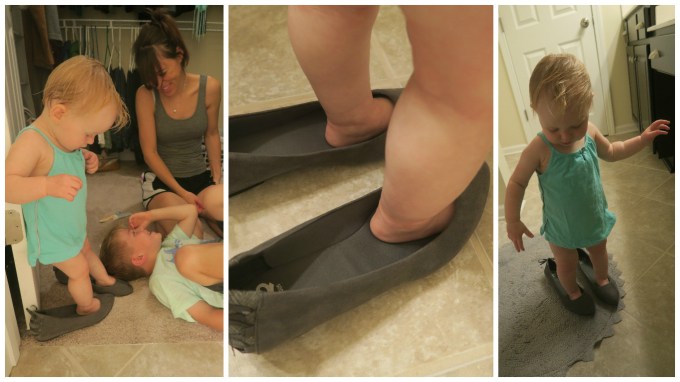
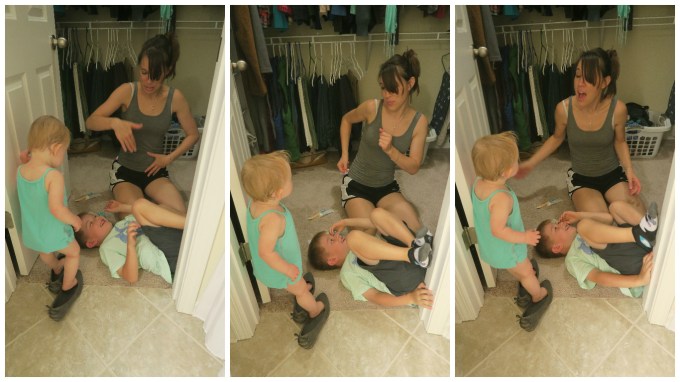
I entered our bathroom to find you stepping out of our walk-in closet, with a serious look on your face, as you carefully took each step while wearing a pair of Mommy’s shoes.

To be clear, you weren’t doing this to try to be funny in an ironic way. No; instead, you had simply taken it upon yourself to be like Mommy. Why shouldn’t you be able to wear Mommy’s shoes and walk around just like she does?

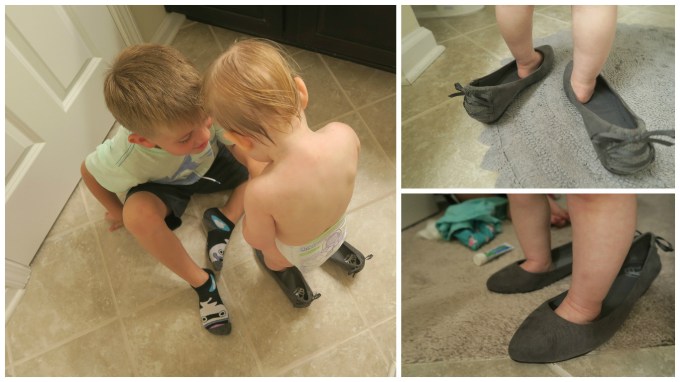
It never crossed your mind that her shoes are a much larger size than yours are. Nor did it matter.

You just kept strutting back and forth across the bathroom floor, while your family watched in amazement.

Yes, I have to say, it was quite impressive seeing you move in those shoes!

I don’t remember you falling, even once. Nor did you smile or laugh, even once.

Please know that Mommy, your brother Jack, and I were all laughing the entire time. You were unfazed.

Shoes are a big deal to you. It’s actually part of our daily routine that you walk to the shoe closet in the living room each morning and tap on the door, then you do a signature grunt which translates as, “Daddy, aren’t you going to open the door? I have to put my shoes on.”

Without fail, you always attempt to put the shoes on yourself, first. You sincerely struggle to figure out why they won’t just magically slip on, as you place them upside down on the soles of your feet.

Yeah, you love shoes. Who cares if they’re really Mommy’s? You’ve now proven that won’t hold you back.

Love,

Daddy

Dear Jack: You Lost Your 2nd Tooth by Eating a Croissant?!

6 years, 9 months.

Dear Jack,

Saturday morning your breakfast mostly consisted of your favorite croissants from Kroger. I was on the carpet, playing with Holly, when you proclaimed from the kitchen table, “Hey, I think this croissant is going to make me lose my tooth.”

Obviously, I immediately thought that was a strange statement. However, I did recall brushing your teeth earlier that week and you pointing out that your other bottom middle tooth was getting pretty loose.

To my surprise, when I walked over to the kitchen table and took a close look at your tooth, it was undeniable. I explained to Mommy, “Yeah, actually… it’s sticking out like a drawbridge.”

From there, I was assigned to helping you try to pull the tooth. Mommy wet a paper towel for me and I brought it over to you. “Don’t pull it too hard, Daddy…” you warned.

I assured you all I would do was just barely tug at it.

And that’s all I did. I pulled no harder I would pull a Kleenex from the box.

But the tooth immediately popped out with just that easy, tame, and thoughtless little tug.

“What?! It’s already out!” I yelled over to Mommy, who was holding your sister at the kitchen counter.

So that’s how it happened. I can truly say that was the easiest tooth that I have ever seen pulled.

A croissant! Not an apple. Not anything crunchy.

But instead, one of the softest textured foods a person can eat; maybe only second to cotton candy.

That tooth must have been really loose before you ever ate that croissant… obviously. But still, there wasn’t an ongoing conversation about your tooth being loose, like there was for your first tooth you lost back in April.

Still such a strange surprise.

Oh well, at least you also made a quick 3 bucks off the deal too.

Love,

Daddy

Guide to Choosing Age Appropriate Toys for Babies to 9 Year-Olds (By Guest Blogger, Katie Santos)

In addition to getting safe toys for kids, it’s also important that kids have toys that can help with their developmental and motor skills as well. Whether they are a few months old, or a few years old, children’s brains are constantly progressing and we must recognize which toys fit which stage of growth.

Although kids develop at different stages, it’s essential to help them stimulate their mind as they continue to grow. To help you find the perfect gift for a child, Gifts.com put together a comprehensive list of toys and activities for babies and kids up to nine years old. In order to provide children with the proper gift, it’s essential to learn the developmental stages.

From birth to five months old, babies are beginning to grasp objects and show emotion. Everything is new to them, so soft toys and textures are ideal.  

By six to eleven months, babies can now use their fingers and hands at the same time. They enjoy banging things together and throwing objects, and also need to be introduced to constructive play.

A one-year-old can stand by themselves and might be able to eat on their own. They are at the point where they want to investigate everything, and imitate sounds you create. Any toys that can stimulate motor skills and memorization skills are great for this age, such as non-toxic markers or shape sorters. 

Two-year-olds grow quickly! They want to run away, play hide and seek and enjoy interacting with others. Focus on toys that require physical strength for your two-year-old, to give them both language and social skills.

When it comes to a three to six year old, they have more strength and coordination skills. Since they have control over movements, get toys that strengthen muscles and stimulate their brains.

By seven to eight years old, your child knows the concept of cause and effect, and can write full sentences. Since they are willing to learn, introduce science toys and educational board games for this age range.

For nine years and older kids, they are becoming more independent than ever, and are beginning to face academic hurdles. Encourage your child to read, as it stimulates imagination, communication skills and vocabulary.