Adventures in Thailand: Man Cave Time Machine

What’s the difference between 1) our memories of actually events and 2) our memories of old dreams?  In theory, not a lot.

The events that have taken place in real life can actually change the course of history and can produce tangible souvenirs such as photographs which can be taken to prove them in the future, whereas the events that occur in a dream do not really have the ability to do those things (though sometimes dreams do predict the future or inspire a person to “be a better person”).

Whether it’s a remembered actual event or a remembered dream, either way, it’s in the past now and it’s just a memory.

If we could take away the two exceptions, that actual events change the course of history and can produce tangible souvenirs whereas dreams don’t, how is a six year-old memory different than a six year-old dream?

In the summer of 2004, my friend Josh and I rode “motorcycles” (they were more like mopeds) 40 miles outside of the mountain city of Chiang Mai in Thailand, in order to find an ancient cave where few tourists ever bothered to visit.  There were no signs in English once we got there.  No English-speaking guides.  All we knew it that it cost non-Thai people $4 to go into the cave and another dollar for a lantern to actually see around inside the place.

As we got to the back of the cave, our guide pointed behind him to what appeared to be a bottomless pit.  I picked up a rock on the cave floor and tossed it into the abyss and finally after about ten seconds, I faintly heard it hit the bottom.  I immediately imagined that centuries ago, prisoners were thrown down to the bottom only to be met by hungry lions.

There’s no doubt, Josh and I are some of the few American people to have visited the forsaken Chiang Dao Cave in Thailand.  Let’s assume that I don’t embed pictures of that event into this post and that nothing happened that day that changed the course of history (and it in deed, didn’t).

In theory, the events I told about in that Thai cave memory only actually happened because I said they did, a theory that I brought to life in Snail Trails.  Especially if Josh forgot about us going to that cave.  No souvenirs.  No life-changing actions.

So what if I only dreamed that event happened?  What if while I stayed in Chiang Mai I only drove by the signs for Chiang Dao Cave, but never took the time to visit it?  What if all I did was just dream that Josh and I actually went there?

How would that dream be any different than it really happening?

For another related post, here’s The Interstate to Memory Lane

my roommate Josh from Liberty University
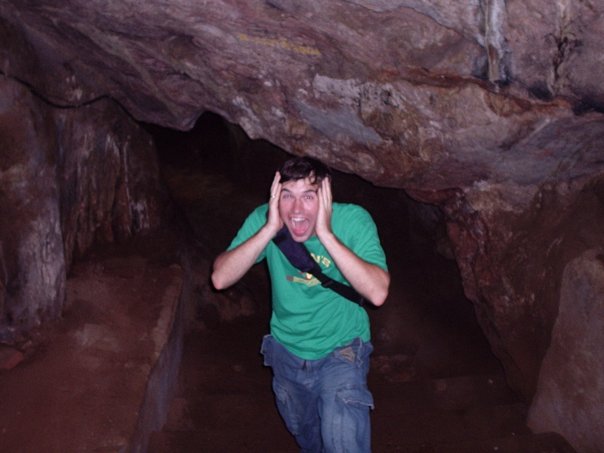
the 2004 version of me either trapped in the actual Chiang Dao Cave or in a dream


The Ethnic Backgrounds of the Cast of LOST

Italians?  Check.  French?  Check.  Koreans?  Check.  Jews?  Oddly, not so much.

When the creators of LOST were in the casting process, they knew they wanted an “international cast”.  Well done.  Who wants to see another show with a bunch of white people and one African-American thrown in for good measure?

The ethnic diversity on the show adds so much to the characterization and even their storylines.  I have gone through the painstaking process (for most, but for me was a lot of fun!) of searching and studying the ethnicity of the entire cast of LOST.  While I won’t bombard my fellow Losties with every single cast member ever, I will feature most of them.  The phrase in (parenthesis) tells where the actor was raised.

Matthew Fox as “Jack Shephard”: Italian-English (America)

Evangeline Lilly as “Kate Austen”: English (Canada)

Josh Holloway as “James ‘Sawyer’ Ford”: Scottish (America); rare in that he is one of the few Southerners on the show- from Georgia in real life, on the show he was born in Jasper, Alabama

Jorge Garcia as “Hugo ‘Hurley” Reyes”: Chilean-Cuban (America)

Naveen Andrews as “Sayid Jarrah”: Indian (England)

Daniel Dae Kim as “Jin-Soo Kwon”: Korean (America)

Yunjin Kim as “Sun-Hwa Kwon”: Korean (America)

Terry O’Quinn as “John Locke”: Irish (America)

Dominic Monaghan as “Charlie Pace”: English-Irish (Germany); he speaks both  English and German

Michael Emerson as “Benjamin Linus”: English (America)

Emilie de Ravin as “Claire Litteton”: French (Australia)

Henry Ian Cusick as “Desmond Hume”: Scottish-Peruvian (both Scotland and Peru)

Sonya Walger as “Penny Widmore”: Argentinean-English (England)

*oddly, married couple “Desmond and Penny” are both in real life half British, half South American

Alan Dale as “Charles Widmore”: New Zealander (New Zealand)

Ken Leung as “Miles Straume”: Chinese (America)

Francois Chau as “Dr. Pierre Chang”: Cambodian-American-Chinese-Vietnamese (America); random fact- he played “Shredder” in the movie Teenage Mutant Ninja Turtles II: Secret of the Ooze

Andewale Akinnuoye-Agbaje as “Mr. Eko”: Nigerian (England)

Nestor Carbonell as “Richard Alpert”: Cuban-Spanish (America)

Elizabeth Mitchell as “Dr. Juliet Burke”: English (America); another rare Southerner (from Dallas, TX)

Jeff Fahey as “Frank Lapidus”: Irish (America); though his character his Greek-American

Cynthia Watros as “Libby Smith”: Greek or Czech (America)

Michelle Rodriguez as “Ana Lucia Cortez”: Puerto Rican-Dominican Republican (America)

Tania Raymonde (Katz) as “Alex”: Jewish (America)

Mira Fulan as “Danielle Rousseau”: Jewish (Croatia)

Katy Sagal as “Helen Norwood”: Jewish (America); played Locke’s love interest, also known as “Peg” on Married with Children

Titus Welliver as “Man in Black (Esau): Irish  (America);  though he looks like Billy Joel, who is Jewish

Mark Pellegrino as “Jacob”: Italian (America)

Since Jews only make up 1.7% of the American population, the three confirmed Jewish actors on LOST accurately and proportionately represent themselves in the large number of actors on the show.  And that’s rare.

Of course, as usual, in the strange case there are no Jews or hardly any Jews on a show or movie (like Family Matters or Family Ties), the producers and/or writers are Jewish.  So it goes without saying, that in fact, LOST creators J.J. Abrams and Damon Lindelof are both Jewish.  Along with Jeffrey Lieber (who most likely is based on his name and physical appearance).  Same thing with LOST writer Adam Horowitz.

It’s safe to say that LOST truly has the most international, most diverse cast of any show in American history.  We as Losties have invested years of our lives in these characters.  They’ve become like real people to us.  I’m so glad this show is made up of such a randomly planned cast of characters and actors.

Read more about the astonishing number of Jewish actors in American film: The Funny Thing about Jews

And one more thing… Now that you’ve read my take on this, why not read my perspective on being a dad?  That’s right- parenting from a dad’s point of view.  I have been documenting my thoughts as a dad since the week we found out my wife was pregnant.  I formally invite you now to read my “dad blog” by clicking on the link below:

dad from day one


dad from day one: The Minor Details

What will be his or her heritage?  How tall will he or she be as an adult?  Boy or girl?  I’m answering the tough questions today, based on educated theories.

This series isn’t a “baby blog”.  Instead, it’s a documented journey of what a first time dad thinks about, starting from when I first found out and started sharing the news with everyone.  Because this info is coming from a man, who processes things in black and white, it’s possible that the tone will be a mix of both practical and abstract.  No goo-goo gah-gah.  But maybe a little nanu-nanu.

In fraction form, here are the proportions of my coming child’s ethnicity:

1/4 Italian (my wife and I are both this)

1/8 Croatian (from my wife; Croatia is the country we know today as “Transylvania”, The Count from Sesame Street speaks with a Croatian accent)

1/8 Mexican (from me, my mom’s mom’s family moved to Buffalo from Mexico)

1/8 Norwegian (my wife’s grandfather on her dad’s side was from Norway, but was adopted by an English couple in Iowa)

1/8 German (from me, where the Shell name comes from, as well as a little bit from my wife’s Norwegian side)

1/8 Irish (my wife’s grandmother on her dad’s side came to America as an indentured servant from Ireland)

1/8 English (from me, where the pale skin and light freckles come from)

*Greek (higher up on my dad’s family tree, there were two separate Greek ancestors; family tradition tell us that a Greek ended up on the Italian side as well)

*French (in my wife’s Italian lineage, family tradition tells us that a Frenchman got thrown in the mix)

*Jewish (my Mexican grandmother swears that my late Italian grandfather was part Jewish, and based on the family’s speech patterns, uses of random Hebrew words, and quirky behavior, I’m convinced it’s true)

Virtually, on both my wife’s side and my side of the gene pool, there is no man 6 feet tall or more, nor is there a woman 5’ 8” or more.  Combined with the fact that I am 5’ 9” (the average height of the American man) and my wife is 5’ 6” (two inches taller than the average height of the American woman), here are the most likely height ranges for our child once they become full grown:

Boy: between 5’ 8” and 5’ 11”

Girl: between 5’ 3” and 5’ 7”

Hair color on both sides generally ranges from medium brown to jet black, therefore it’s most likely the child will have semi-wavy, dark brown hairThough I do have two blonde-haired, blue-eyed aunts and also a red-headed, green-eyed aunt as well.

In one of my Mexican grandma’s dreams, the baby was a girl.  But based on a Vietnamese co-worker who correctly predicted the gender of my boss’s kid based on a Chinese calendar, he told me that there is a 70% change it is a boy.  My wife’s mom gave birth to 10 kids, and only 3 were girls.

My instinct tells me it’s a girl.  We’ll know in eight weeks if I’m wrong.

All this baby guesswork makes me think of those commercials for Puppy Surprise from 1992:  “Puppy, puppy, puppy surprise…  How many puppies are there inside?  There could be three, or four, or five…”

All pictures with the “JHP” logo were taken by Joe Hendricks Photography:

Blog- www.photojoeblog.com

Website- www.joehendricks.com

Why the Word “Dutch” is So Confusing to Us English Speaking People

Who are the Dutch people?  What country do they come from?  Are they the same as the Danish?

It’s time to set the record straight.  The best way for me to learn this is to teach it.  So here it goes.  Let’s go Dutch.

The Dutch are an ethnic group of people who live all over the globe, yet 81% of the population of The Netherlands is Dutch.  So in essence, the Dutch home base is The Netherlands.  This is similar to the way that the homeland of the Jews (who are also referred to as Hebrews) is the nation of Israel, though just as many live in the U.S. as Israel itself.

However, unlike the Jews originating in Israel, the Dutch did not necessarily originate from The Netherlands; they have somewhat of a mysterious origin, like the Thai people who migrated from China.  In other words, Holland is the home base of the Dutch, not their homeland.

Here are some stats:

13.1 million Dutch people live in The Netherlands

5.1 million live in The United States

5 million live in South Africa

1 million live in Canada

In English, we use the word “Dutch” as both an adjective and a noun.  For example, it could be used to describe a pair of those weird wooden shoes or the Dutch people themselves.  However, in the Dutch language and most other language, there are separate words for the Dutch people and the Dutch adjective.  This is difficult to process because typically we’re used to adding an “s” on the end of word referring to the people group.  For example:  “I see a bunch of Italians eating Italian ice.”  But we don’t refer to Dutch people as “Dutches”.  We just call them Dutch.

To make it more confusing, the country of The Netherlands is commonly referred to as Holland, which is the unofficial name and generic for the country, because it only refers to the major part of a territory.  It’s like referring to Great Britain as England, though Great Britain is also made up of England, Scotland, Wales, and Northern Ireland.

It is also loosely similar to the way our country is the United States of America, yet our nation is often referred to as simply “America”.  Though Central Americans and South Americans are not referred to as “Americans” like we are.

In closing, anything Danish is referring to something from the nation of Denmark, and has nothing to do with anything Dutch.

Dutch recap:

The Dutch an ethnic group of people who have a home base in The Netherlands (which is also generically called Holland) and have nothing to do with the Danish people of Denmark.

You officially learned something today.  That’s one more wrinkle in your brain.  Oh, and, you’re welcome.

My Jewish Upbringing

“You’re just another face that I know from the TV show.  I have known you for so very long.  I feel you like a friend.”

– “Turn It On Again” by Genesis

When I was in 6th grade (1992-1993) my friend Chad Mathers was telling me about this funny TV show he had began watching called Seinfeld. He explained that the main character was Jewish. Then he said to me, “You’re Jewish, right? Your mom looks Jewish, so that means you are too.” I replied, “Yeah, I guess I’m Jewish.”

Most of my classmates knew my mom because she was a substitute teacher. And they knew by her physical traits she wasn’t just “American”. She was something ethnic. No one really knew exactly what nationality she was, though. Neither did I. Because I just never thought to question it as a kid.

In fact, I had every reason to believe I was Jewish. My mom was always using words like, “kosher”, “schnozzle”, “finagle”, and “hoopla”. (Though only those first two words are actually Jewish words.) And she always perfectly and naturally handled the family budget- she now works at a bank.

Her parents: My grandfather was 5’ 6”, dark-skinned, curly haired, and had the “schnozzle”. He never used the word “church”- instead he called it “tabernacle”.  The only kind of bread he ever had at his house was Jewish Rye.  He saved most of his money and when he rarely bought a new car, he paid for it in cash. My grandmother is 4” 8”, even darker-skinned, with long black hair. Neither of their accents helped- respectively Kenosha and Buffalo. Seemed Jewish to me.

Most Jews living in America have German last names, often including “sch”, “stein”, “berg”, and “man”. My last name, Shell, is German and was originally spelled “Schel”.

And my family has always been close. Every holiday and birthday was spent together. Meatballs were often a part of the meals. Only they weren’t Matzah balls.

My earliest memory of learning my true heritage was in 9th grade. Evidently it took that long for me to be self-aware enough to question my heritage.  It’s not that I actually thought I was Jewish before, it’s that I didn’t question it.  I just assumed.  But despite all the Jewish clues, I learned I wasn’t all that Jewish. My grandfather (Albert Metallo) was Southern-Italian and my grandmother (Lola Mendez) Central-Mexican. And on my dad’s side, German and English.

But after doing some in-depth some research, I learned there’s a good chance that too of my great-grandmothers were Jewish (Wiseman and Vite), not to mention a Green and an Ullman a little bit further back.

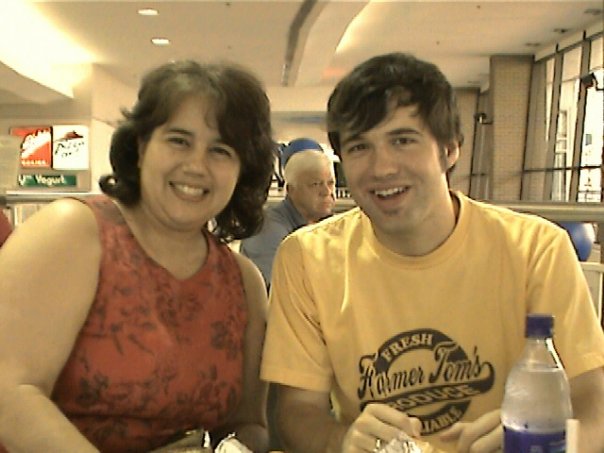
My mom and I in 2004

While I’m fully proud of my actual heritage, I feel more Jewish than I actually am. Thinking back on the last decade, the celebrities that people have said that I look like are all Jews: David Schwimmer, David Arquette, Paul Rudd, Zack Braff, and Ben Savage (from “Boy Meets World”). And I have played Jesus in more church skits and plays than any of my friends, because I always “looked the most Jewish.” I was the obvious choice.

And like the Genesis song “Turn It On Again” talks about, the characters I knew from the movies and TV shows (and even musicians) I watched growing up became like family to me, in a very cloudy, subconscious sort of way.  In particular, as I kid I thought I was Kevin Arnold (Fred Savage) from The Wonder Years.  And in talking to my sister in preparation for this post, I learned that she always thought that too.  We never knew that we both thought that until now.

The Three Stooges. Seinfeld. Friends. Pauly Shore. Bob Saget. Ben Stein. Howie Mandel. Dustin Diamond. Adam Sandler. Andy Samberg. Bob Dylan. Billy Joel. Just a few Jewish people who have surely influenced the culture of my life in some minutely tangible way.

Several years ago I stumbled across an obscure brand of wine that evidently has become my favorite.  The name caused me to think it was German.  But once I read the label carefully, I realized it is wine mainly used for Jewish services.  It’s Manischewitz brand, one of the nation’s leading brand of kosher products.

And this year I officially stopped eating pork and shellfish. Therefore the word “kosher” means something important to me. It means “hot dog I can eat”.

Some Jews actually have no Israeli blood, but they convert to the religion of Judaism. I sort of feel like that somehow. However, the only Jews that believe Jesus is the true son of God are the Messianic Jews.  Clearly put,  I feel like a Gentile (a person is not from the lineage of the nation of Israel) who has converted to Messianic Judaism. Yes, I’m a technical Messianic Jew.