What If Susan G. Komen’s Sponsors Actually Helped Cause Cancer Instead Of Find A Cure?

I’ve been saying this for years, but there is good reason to question why it is that so quickly so many major brands paint themselves pink in the name of finding a cure for breast cancer.
soyouhavetwochoices-lg

Sure, we all want to there to be an easy medical cure for breast cancer and we all personally know someone who has been affected by breast cancer.

It’s a deeply emotional subject. Therefore, it’s natural to want to show our support to find a cure for breast cancer.

However, what I want to point out about our society is that we’re much, much, much more concerned with finding a cure, having been throwing money at Susan G. Komen since 1984, than we are concerned with actually preventing breast cancer.

I subscribe to the philosophy of Albert Einstein: “Intellectuals solve problems, geniuses prevent them.”

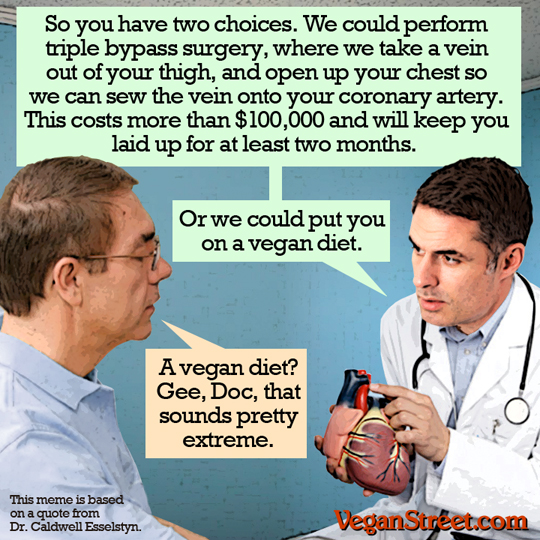
The thing is, the cure for cancer was discovered decades ago. Just watch the documentary Forks Over Knives on Netflix. You’ll see testimonials from women who diagnosed with terminal cancer back in the 1980s and 1990s.

You will be able to learn the reality that “the cancer switch can be turned on and off” through a plant based diet:

They switched to a plant-based lifestyle (they stopped eating animal products and artificial flavors and colors). Turns out, they are still alive and as of the taping of the documentary were still cancer free!

The overwhelming evidence is there.

However, this truth is annoying. It requires a person to change their lifestyle in order to not get cancer.

theusgovernmentsspends-lg

Our society instead places a higher value on fixing the preventable problem after it has already happened.

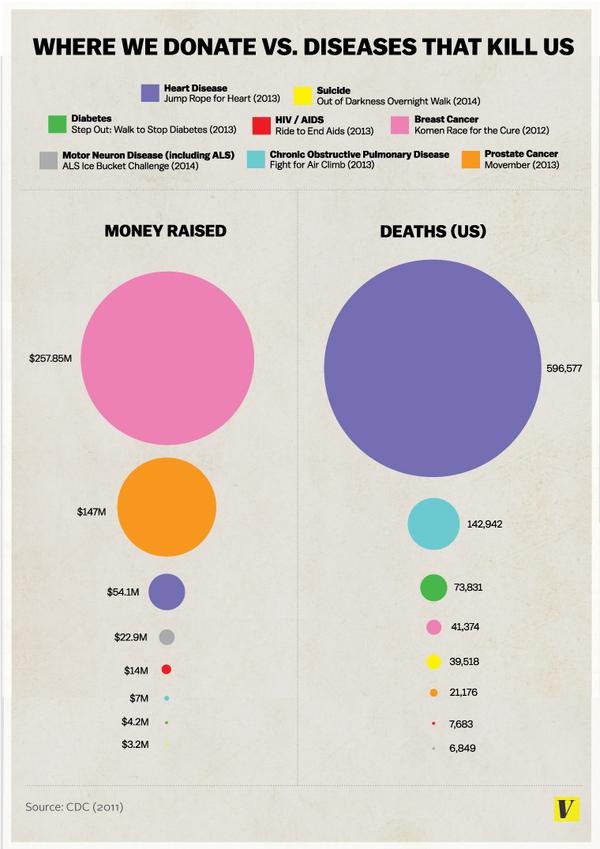
Just take a look at the infographic at the very bottom of this post, which illustrates which health issues we raise the most money to find a cure for, versus which health issues are actually killing us.

What you see is that the diseases that kill us the most are the most easily preventable; through proper diet and exercise; yet our passion is in “finding the cure” for the more disease that kills the lower number of us.

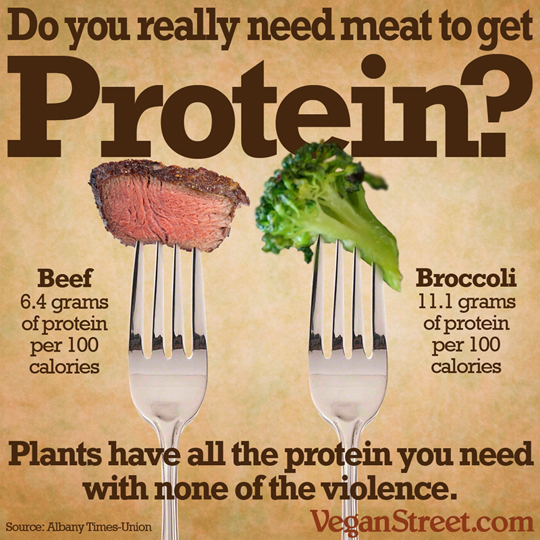
As for the Susan G. Komen “find a cure” movement, I’m apparently not the own one picking up on the fact that the marketable passion to find a cure is actually overshadowing the importance of actually finding a cure, and most importantly, it distracts from the fact cancer is largely preventable with a plant-based lifestyle.

Just check out this recent satirical Onion article: Susan G. Komen Foundation Launches Deep Space Probe To Bring Breast Cancer Awareness To Rest Of Galaxy

It points out the fact that lack of awareness, or raising money to find a cure for breast cancer, aren’t the problems. They are the symptoms of the problem.
doyouneedmeattogetprotein-lg

The actual problem is people are dying of a largely preventable cancer.

I think it’s important to consider the fact that countries that consume little to no dairy also happen to have the least occurrence of breast cancer.

So it seems the actual problem is the lack of awareness of how to eat in a way to prevent cancer from forming in the body in the first place.

There’s also this one featured on The Huggington Post, “Susan G. Komen Partners With Fracking Firm, Despite Possible Cancer Links“, which points out Susan G. Komen is turning a blind eye to the fact so many of brands that raise money for them (as a sales tactic, of course) actually have products that are known to cause cancer, not prevent it.

drinkingmilkiscompassionatebut-lg

But it’s not just with companies who wave the pink flag to increase profits, or with Susan G. Komen turning a blind eye to sponsored products actually being linked to cancer.

The annoying truth is that it’s also our society’s tendency to keep literally buying into the concept that “finding a cure” for cancer is more important or relevant than preventing it.

If you’re familiar with my blog and my life, you know that I’ve been a vegan for more than a year and a half, a vegetarian for 3 years, and kosher (no pork, shellfish, etc.) for 6 years.

I am happy to answer any questions you have about this “extreme” lifestyle. Just leave a comment below.

What If Susan Komen’s Sponsors Actually Cause Cancer Instead Of Find A Cure?

New Infographic: Where We Donate Vs. Diseases That Kill Us

I can’t tell you in confidence that it’s socially accectable to be disinterested in participating in the phenomenon of the ALS Ice Bucket Challenge. But I am willing to admit, when something is that amazingly popular, I’m the guy who asks questions.

To be honest, I highly considered just quietly publishing this without promoting it on Facebook. I figured it might be a fairly dangerous thing for a guy like me to do… to express any doubts about the ALS Ice Bucket Challenge.

Yes, it does appear that most of your friends, as well as relevant celebrities, are all particating. It’s dominating your Facebook feed.

As for me, I’ve simply been a spectator. And until now, I’m given no personal opinion on the subject.

But for years now, I have publically questioned where all the money really goes and what good it’s really doing when it’s donated to breast cancer research.


Turns out, I wasn’t the only one wondering this. They made a documentary called Pink Ribbons, Inc. that does a great job of asking and attempting to answer those same questions.

Could it be that we tend to donate more money to the causes that are killing us the least? Or that we’re donating money to the causes that have less of a global impact, but more of a regional one?

Could it be that perhaps the #1 disease in America is fairly preventable through proper exercise and diet? And if it wasn’t, shouldn’t we be donating the most money to that cause?

Let me direct your attention to an article by Julia Belluz, featuring on Vox: The Truth About The Ice Bucket Challenge: Viral Memes Shouldn’t Dictate Our Charitable Giving.

I highly recommend reading it. The article contains this eye-opening infographic, which I believe, clearly speaks for itself.

Sure, I’m sincerely happy for charities getting money donated to them. I wouldn’t want to get in the way. But I do think it’s important to see this infographic with an open mind. So here it is, for better or worse:

New Infographic: Differences Between Diseases We Donate To, And The Diseases That Kill Us


The Unimaginable Thought of Losing Your Child

November 12, 2011 at 8:47 am , by 

Eleven months.

Yesterday I had to leave work about an hour early to pick up my son Jack from KinderCare: He had a temperature of 103. I knew that because he was still playful, still eating, and not showing any other signs of distress, this would be a “give him fever reducer” solution and not a “take him to the doctor” kind of thing.

But still, there’s something about knowing your child is not well that is undeniably unnerving; the thought that saving your child is not immediately up to you.

Sure, I can protect him from certain things. Admittedly, perhaps I’m overprotective: I won’t let the little guy watch TV or even drink juice. (Yeah, I one of those kind of parents!)

I’ve tried to imagine what I would do if something ever happened to him. How would I psychologically deal with that? Would I be the kind of dad that literally loses his mind if he lost his son? I want to believe that my son will outlive me. It’s both morbid and realistic to think about these dark situations, but occasionally, when I catch myself off guard, I do.

However, the world is full of parents who literally have had to lose their child, including Ruthe and Michael Rosen, whose 14-year old daughter, Karla, was diagnosed with an inoperable brain tumor.

But they decided to turn their pain into purpose.

They transformed Karla’s courage and solid optimism into a legacy of community service when they founded The Let It Be Foundation. It’s a nonprofit organization that helps families with children who have been diagnosed with life-threatening illnesses.

The Let It Be Foundation provides services including opportunities for family recreation, housekeeping, grocery shopping and meals, and help in meeting the needs of the child’s siblings. This assistance enables the children and their families to maintain a sense of normalcy at home as they battle the most serious illnesses. So far, The Let It Be Foundation has brought comfort, hope, and joy to families throughout Southern California, and is now in the process of expanding its presence nationwide.

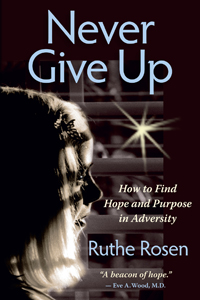
To pass on the meaningful lessons she learned from living with Karla’s cancer, Ruthe also wrote Never Give Up: How to Find Hope and Purpose in Adversity (Cypress House, Sept. 2011), a brave story of faith, hope, and joy in the face of the unimaginable. The book follows Karla’s cancer journey and her unwavering optimism, inspiring readers to turn pain into purpose. Proceeds will benefit families served by The Let It Be Foundation.


The Dadabase Healthy Parents: The Marketing Strategy of “Cancer Sells”

October 21, 2011 at 9:52 pm , by 

Eleven months.

Here at Parents.com, the motto is “Healthy Kids, Happy Families.” As the daddy blogger, I want to extend the “healthy” part to parents, too. Because our kids learn their dietary habits from us, the parents.

Two years ago, I was 25 pounds heavier, but I have drastically changed my lifestyle since then to get to where I am now. So for those who are interested in heading down the straight and narrow with me as a parent, with this post I am debuting the first post of my “Healthy Parents” series.

We live in a consumer culture where it is acceptable (yet not ironic) for junk foods to come labeled in packaging telling us they are donating a portion of the proceeds to cancer research. Granted, I’m not against the occasional sandwich cookie or chocolate candy, nor am I against finding a cure for cancer or other diseases.

But am I the only one who thinks there’s something obviously illegitimate about an organization doing an all-you-can-eat pancake breakfast benefiting research for Diabetes? (I actually saw that on Jay Leno’s “Headlines” one time.)

I am willing to go so far as to say that we are all fighting cancer in some way. For some of us, our parents or grandparents have been diagnosed by this serious disease and are actively fighting it.

For the rest of us who are younger, the risk may be further down the road. I want to help lead the fight through a lifestyle of prevention, alongside outspoken role models like Dr. Oz and celebrity chef, Jamie Oliver.

Why don’t brands of fresh produce (fruits and veggies) feel obligated to give a portion of the proceeds to help the fight against cancer? Interestingly, those are the foods that actually fight cancer in our bodies.

I feel in our culture, it’s taboo to address the issue that collectively we are gung ho about donating money for and raising awareness of, but don’t spend nearly the same effort to prevent those diseases as individuals by our own lifestyles.

But instead of complaining about that paradox, I’m simply going to write about ways we can focus some energy on having healthy families.

Ultimately, it’s about balance; that’s the message I’m trying to convey. It reminds me of what James, the half-brother of Jesus, said about religion: “Even so faith, if it has no works, is dead, being by itself.”

No one deserves to get cancer or any disease. But we all deserve to know how to prevent our lives from being further affected by it.

We should fight, we should hope, we should pray. We should also use our awareness of cancer (and other diseases) for being deliberate about what we feed our families; whether or not the proceeds of our groceries go to cancer research.

Passing the Mic:

Does our culture suffer a double standard of not focusing enough on healthy eating and living an active lifestyle, while over-emphasizing on researching for a cure?

The Importance of a Setting in Real Life, Not Just in Fiction

 This could be Heaven or this could be hell.

What makes old graveyards creepy, besides our sneaking suspension that the bearded ghost of a Confederate Army General will appear through the foggy mist and try to tell us a haunting story of he ended up with a hook for an arm?  (Pirates don’t have exclusive right to those things, you know…)  Take away the graves and all the preconceived ideas that human curiosity has handed down to us over the centuries, and chances are, the land itself is still not a beautiful piece of land to begin with.

I assume that the land used for graveyards and cemeteries often was the land that wasn’t aesthetically pleasing as the acres used for building homes, schools, and businesses.  Safe to say it wasn’t feng shui.

Instead it was the leftover, out of the way, dreary land that someone was just trying to get rid of.  So they sold it for less than they would have liked to an investor who saw its best potential and destiny was for it to become a graveyard.

We choose destinations for a reason.  Why do coffee shops serve as such a great pre-date and unofficial first date venue?  Because there are plenty of other people around in a coffee shop whose collected friendly conversations make for the perfect background murmur, so that while the two single people are surrounded by people, it’s intimate enough of a setting where they can, in a sense, feel alone- without the awkwardness of actually being alone when they don’t yet know each other that well.

If nothing else, the coffee itself serves as a convenient social crutch, as mentioned in Campfires.  A coffee shop is a setting of safety, comfortableness, and relaxation, as well a symbolic “garden of growth”.  I know this first hand:

Before I asked out my now-wife to the sure-to-get-a-second-date John Mayer concert, I primed our new friendship with several Sunday night meets at the local Starbucks.  It was the coffee shop that watered and fertilized our friendship into dating, then a little over a year later into marriage, and two years after that (present day), a baby.  A human life is scheduled to make its first out-of-the-womb appearance this November.  And it all started, in theory, by me choosing the right setting- which in this case was a coffee shop.

What if instead of asking her to coffee when we first met as strangers, I would have asked her to dinner?  It could have been awkward.  Eating with a stranger she just met the week before.  I could have ended up in a category of guys she had dated but it never really went anywhere- and I wasn’t willing to make that gamble.

I knew that if I built the relationship on true friendship first, it would be much more natural and relaxing to eventually eat a meal together at a restaurant.  But not before coffee at a Starbucks.

We can choose where either good or bad memories will take place.  Where does a guy propose to his fiancé?  Where do parents announce to their children that they are getting a divorce?  Because those places will never be the same again after that.

Where were you when you found out the cancer is in remission? Where were you when you heard about the two planes crashing into the Twin Towers?  Those places will always be associated with the big news, good or bad.

It’s why the phrase “may I speak with you for in a minute in my office, please?” is so epic.

Whether we choose the place, or it chooses us, the setting is everything; lasting an entire lifetime as it attaches itself to a memory of hope or a memory of damnation.