A Snapshot’s Worth a Thousand Words: At My Parents’ House in Alabama

Here are 17 snapshots.  Plus the 301 words in the body of this post, not including this heading.  You’re dealing with around 2001 words, my friends.

Today I’m taking a break from writing to share some random items in my parents’ house in Alabama, where my wife and I spent the weekend.  It’s true that every picture has a story.  And these little stories make up our lives- they make up who we are.  So by looking through these snapshots of the house I grew up in, you’re taking a look into my memory pool- the same one I use to write from.

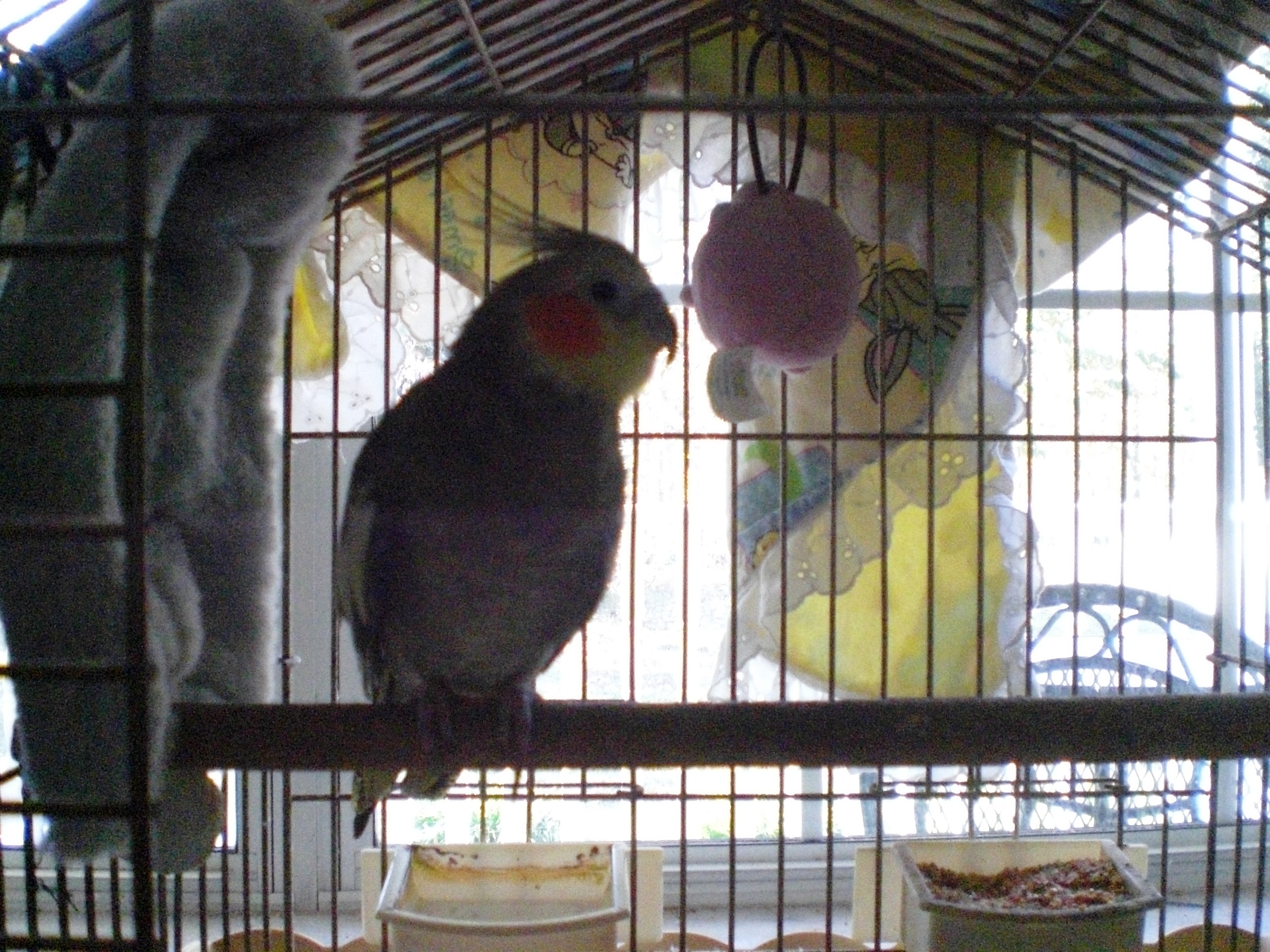
This is Samantha Shell.  In September, she turned 20 years old.  Samantha is a Cockatiel.

This is one of two windows in my bedroom.  My parents bought that little guitar for me when they went to The Philippines in 1995.

This is my sister’s bedroom, which has recently been transformed into a guest nursery for Baby Jack.

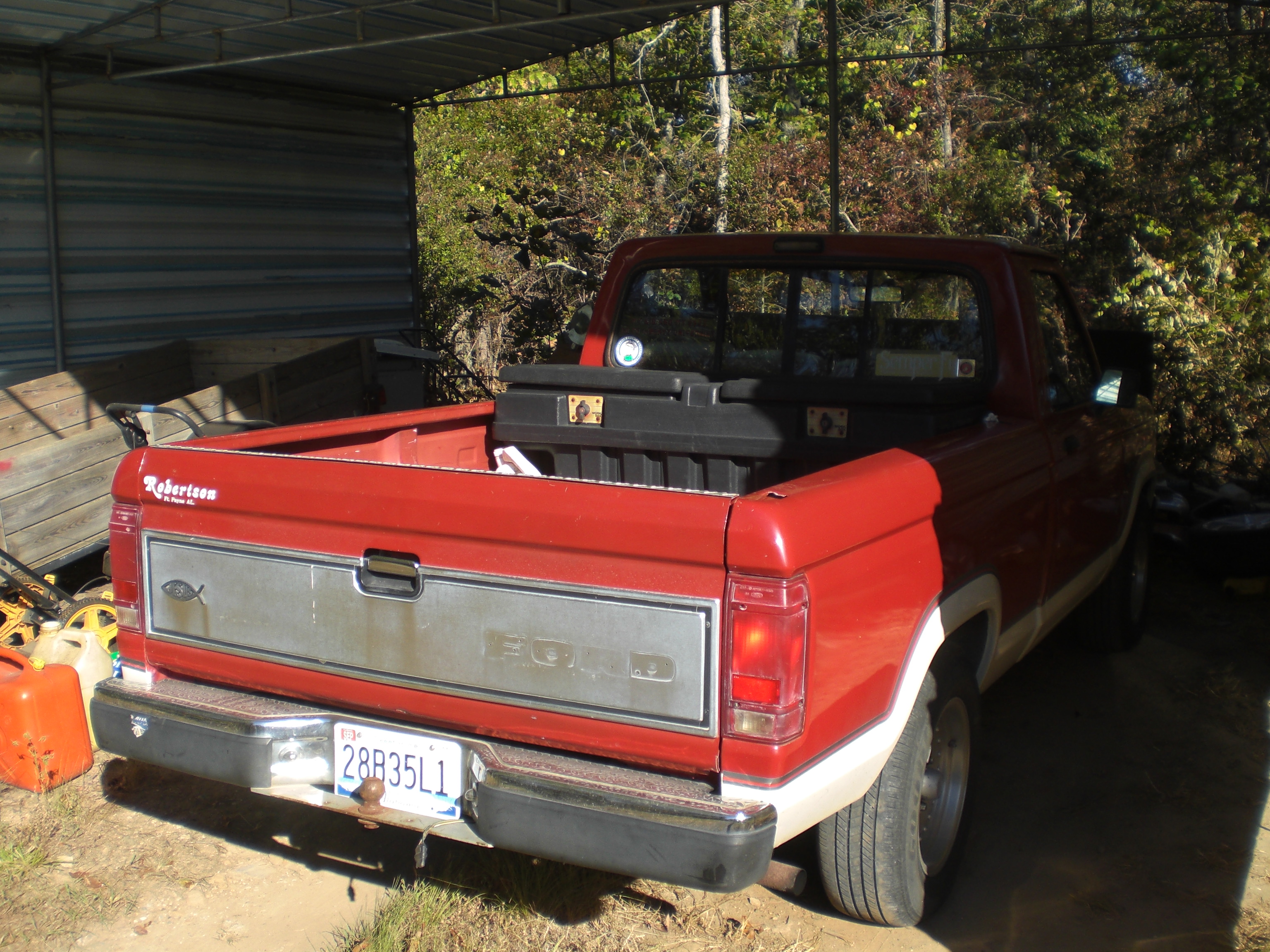
Here is my dad’s 1988 Ford Ranger he bought nearly new.  It’s still his main vehicle.

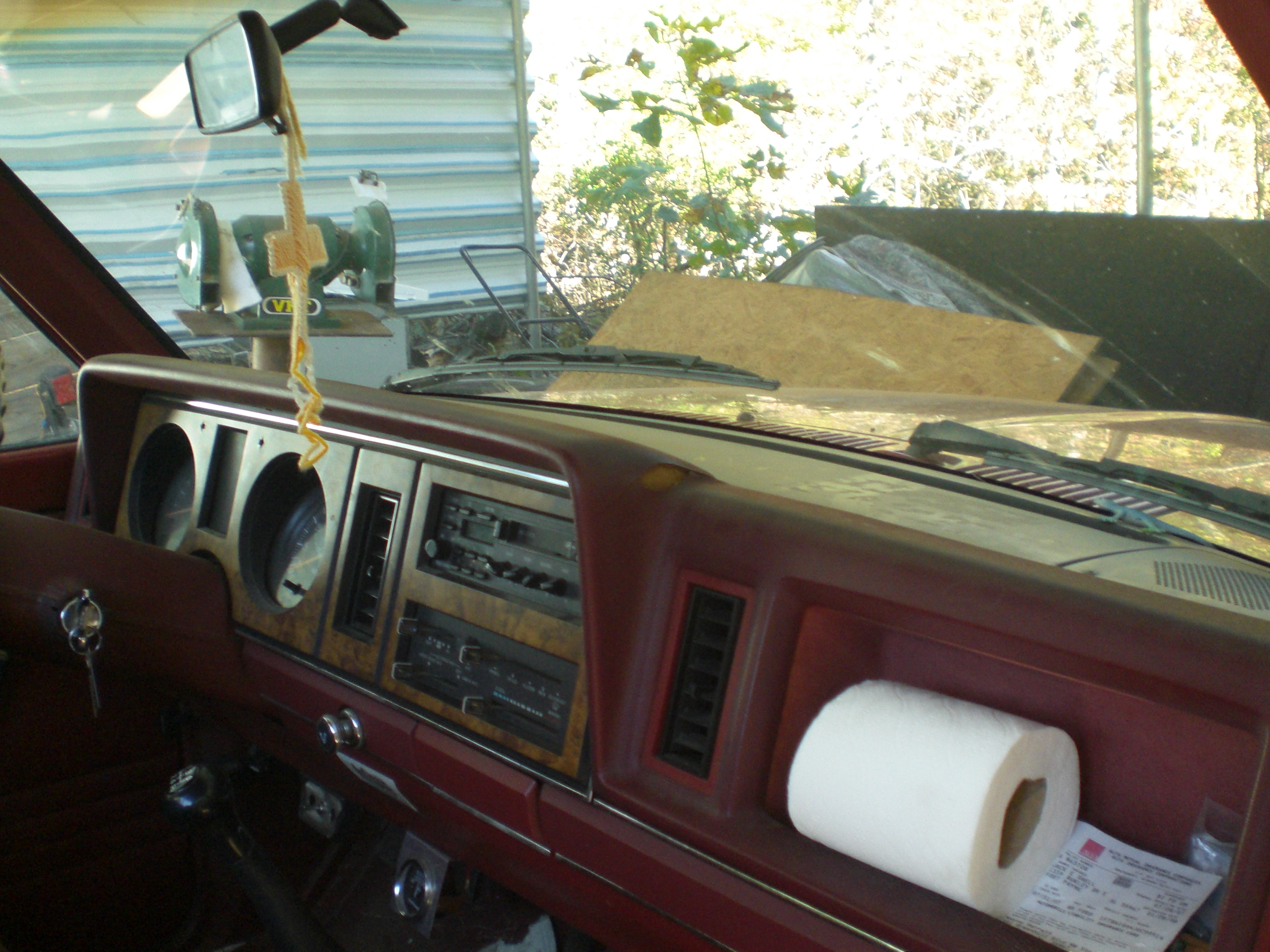
You never know when you might have to blow your nose while driving to work; less than a 10 minute drive for him.

He put these plastic lizard in the dashboard several years ago.  He says it successfully scares away flies.

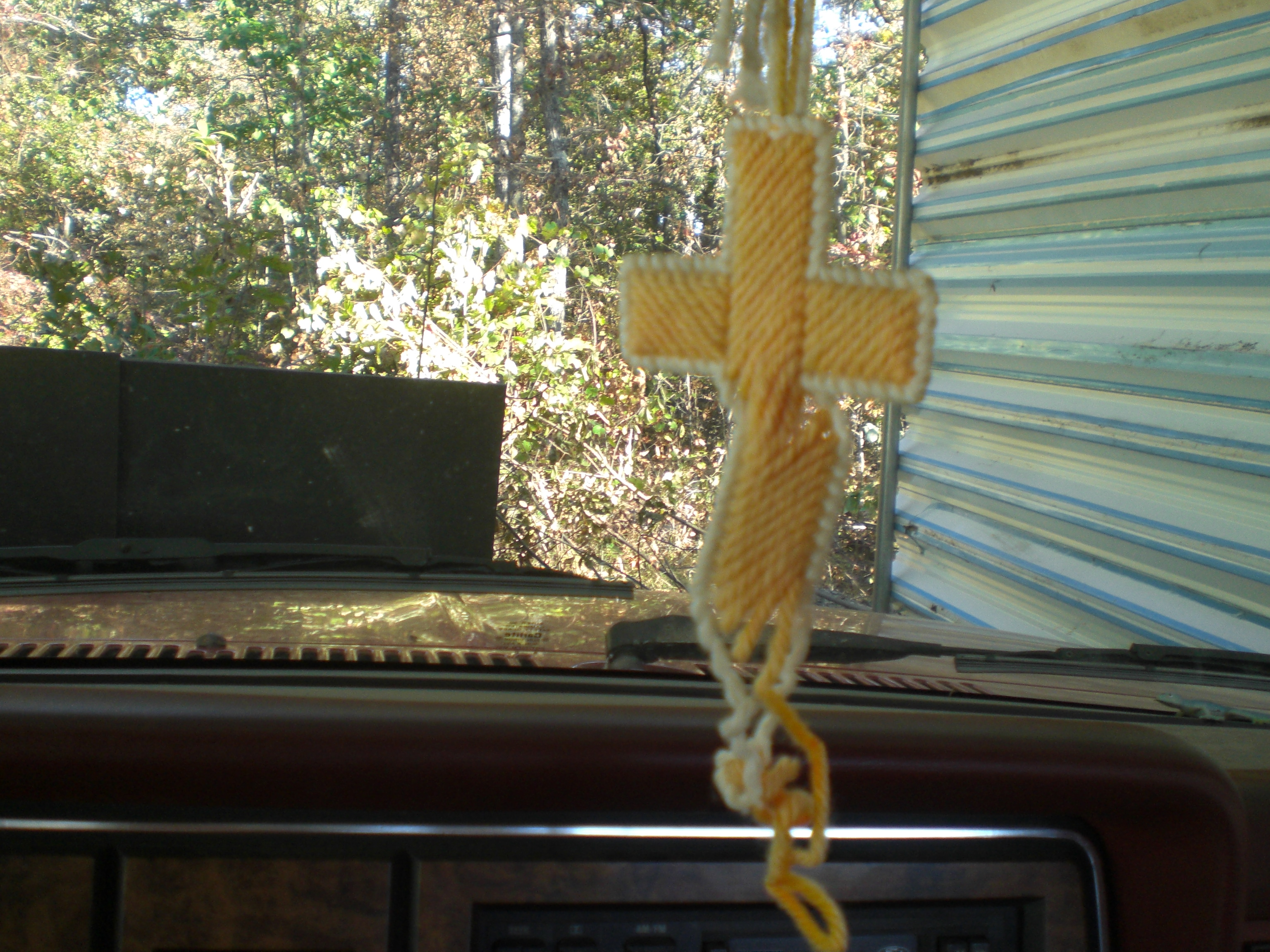
This cross used to be dark red and white.  It was crocheted circa 1993 and has been hanging on his mirror since then.

This cross is my Italian grandfather’s.

And it opens up, as my mom demonstrates.

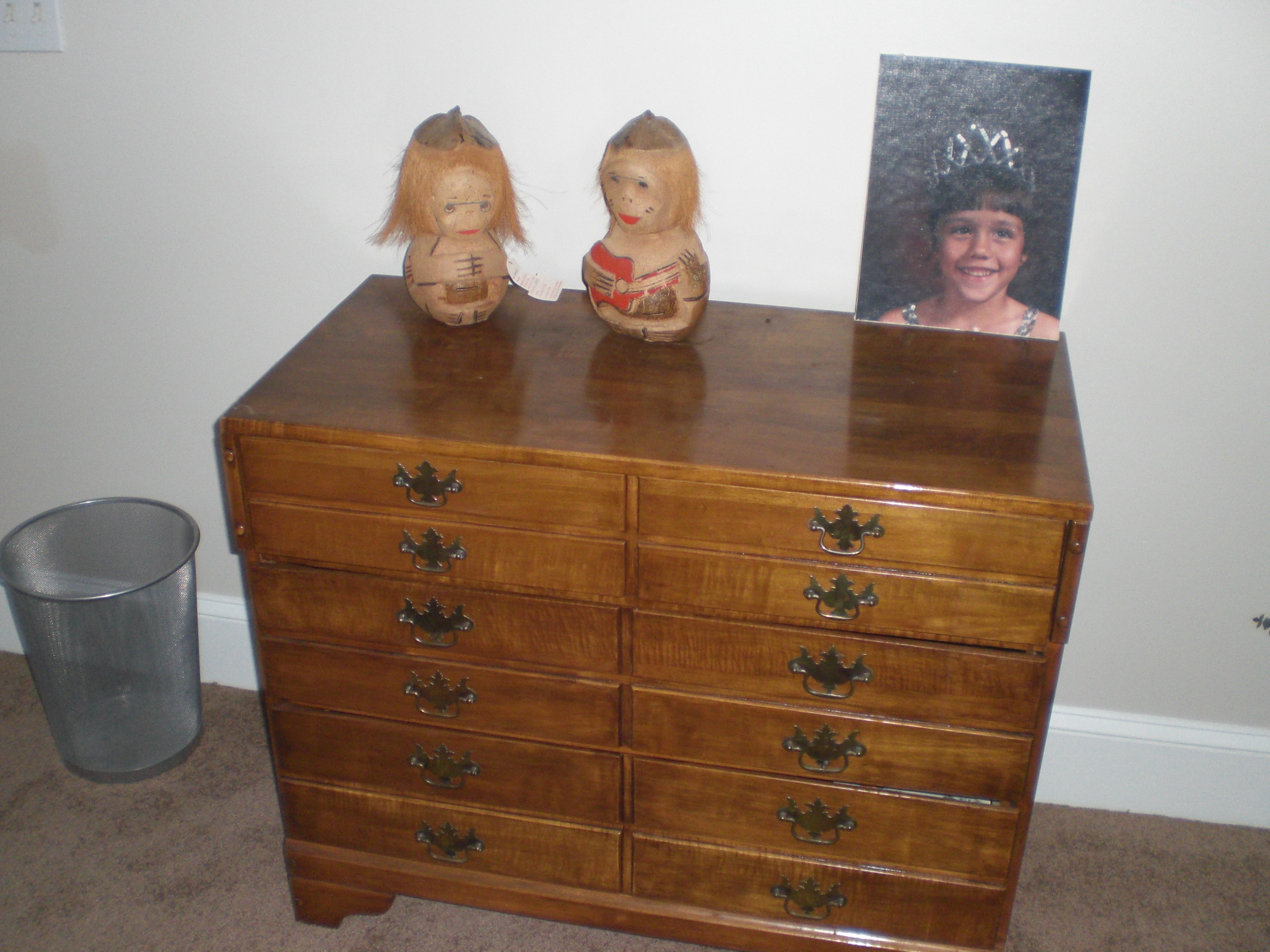
Two monkeys and my sister the ballerina.

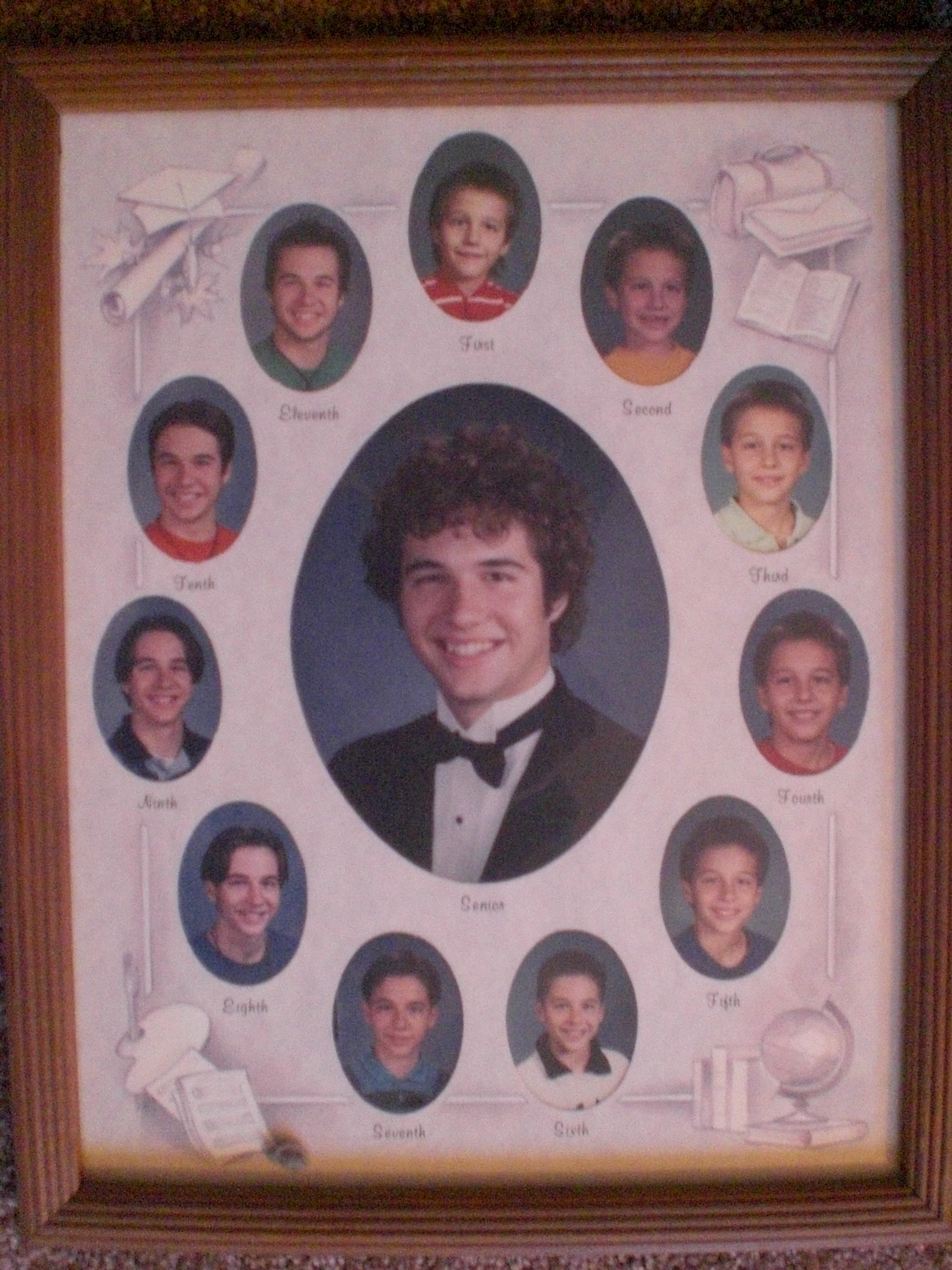
Yours truly, from 1986 to 1999.

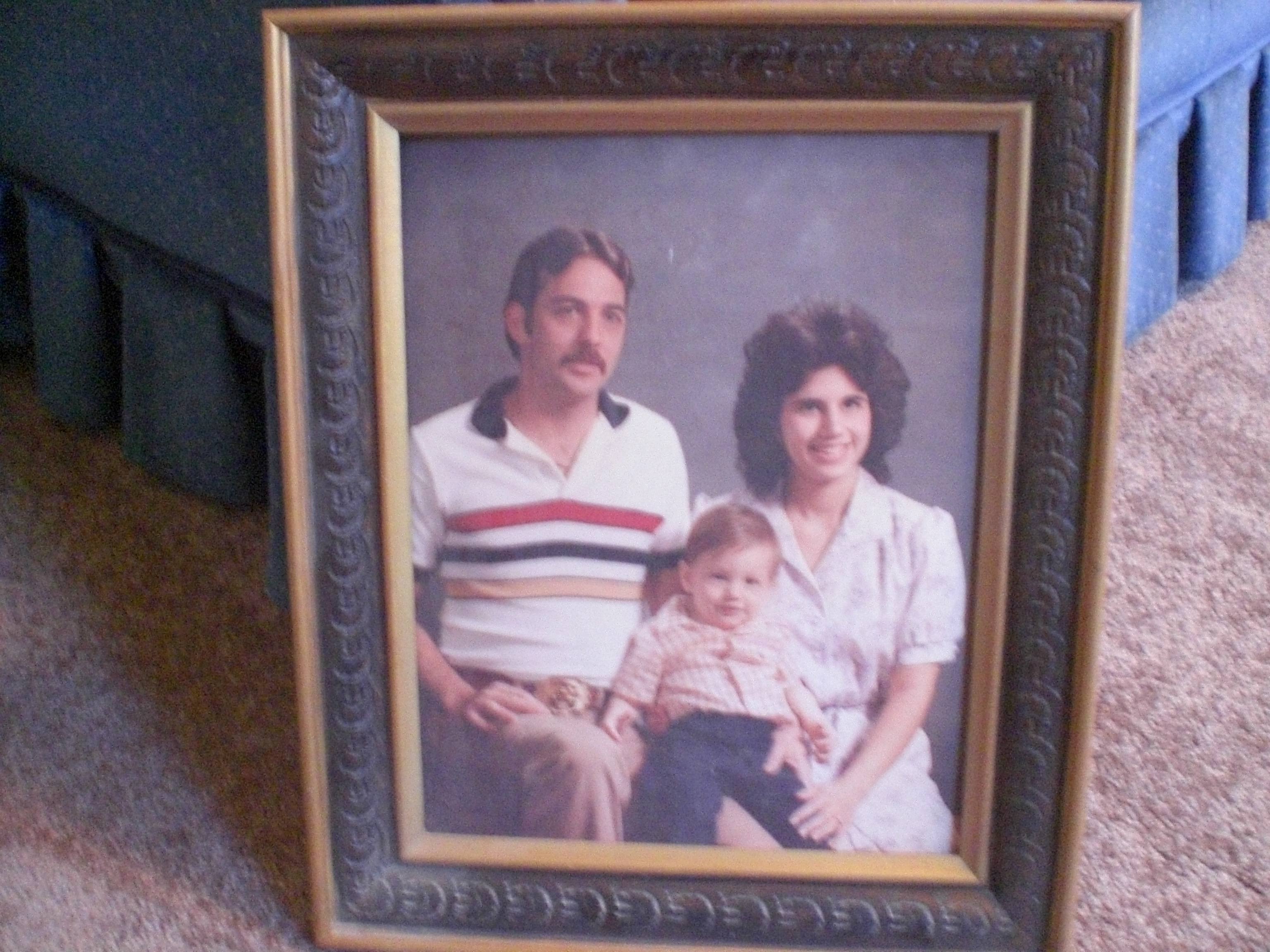
My parents and I in 1982.

My friend David Smith and I broke this Nashville mug that my dad bought for my mom when he went on a business trip.  We stayed up until after 1 AM to superglue it back together.  I’m not sure that it actually still holds liquid.

Classic frog and shroom.

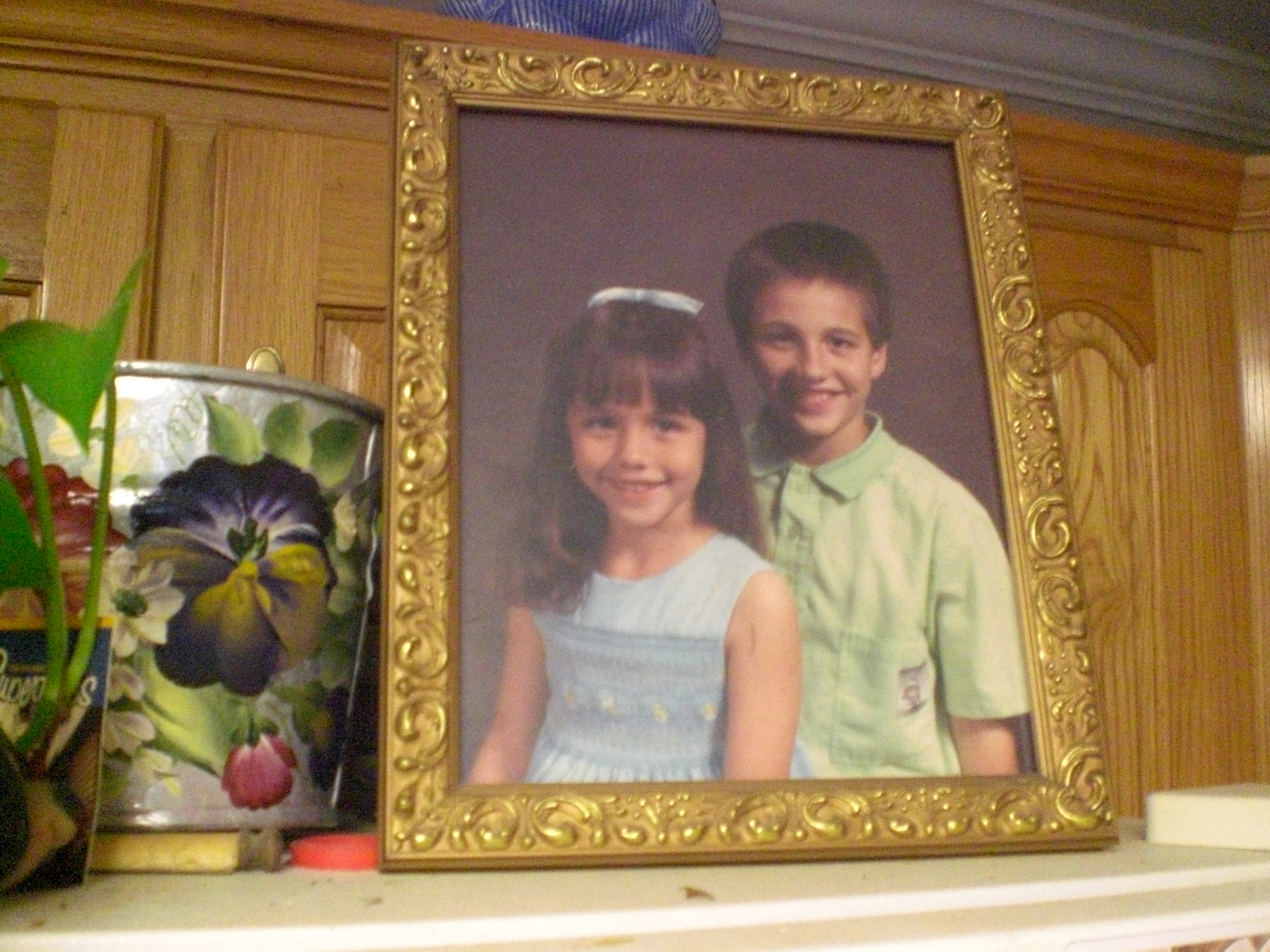
My sister and I in 1991.

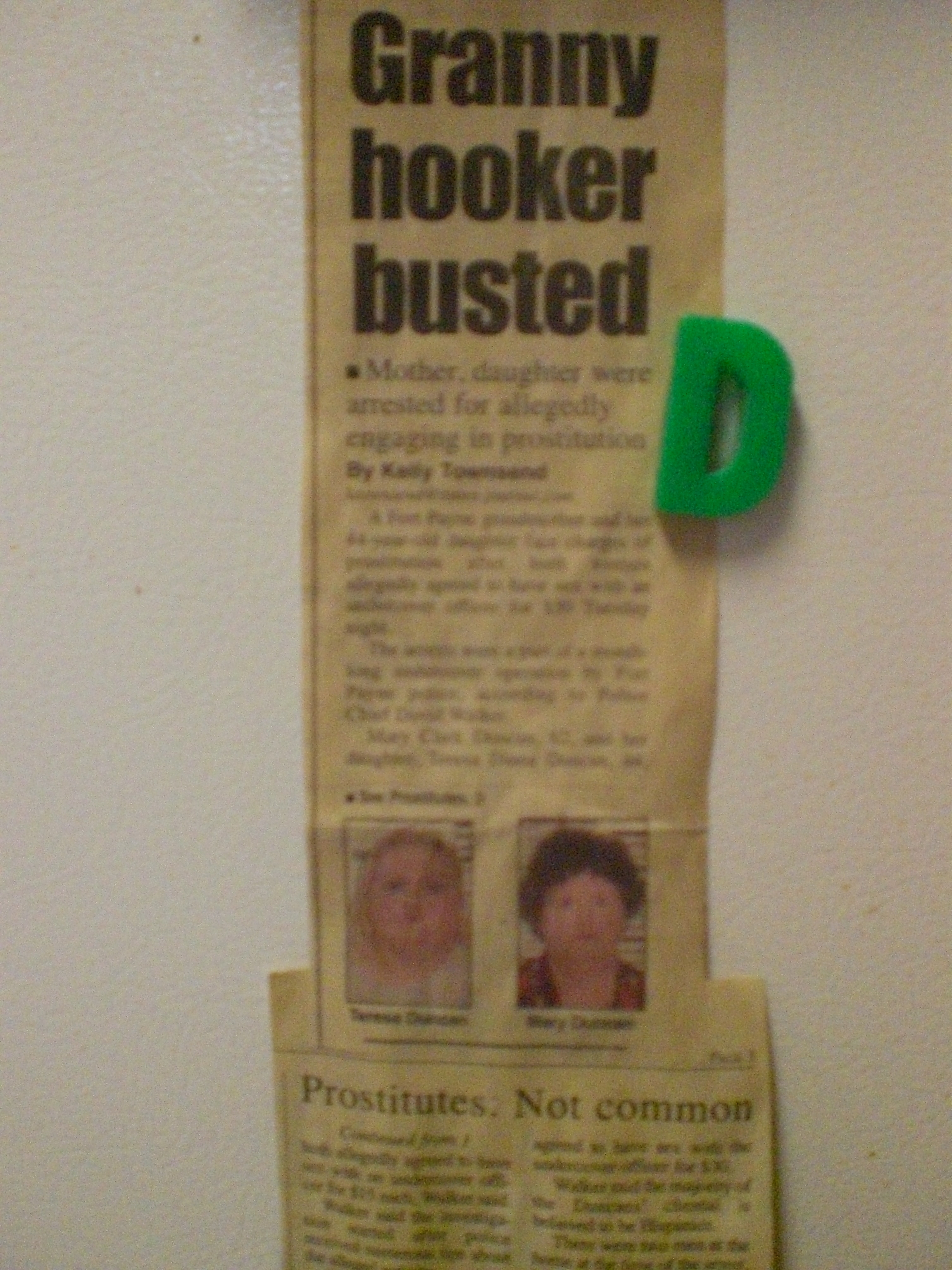
Local newspaper clips on the fridge. Busted!

Double busted!

The Real South: More Like Andy Griffith, Less Like The Beverly Hillbillies

Because I’m used to talking to hundreds of people every week at work calling from all across the country, I can usually correctly figure out what state the person is calling me from based on their accent over the phone. American accents fascinate me. Because everyone’s got one. Even if it’s simply the official “flat accent” (covers the area from Omaha, NE to Des Moines, IA to Peoria, IL) which is how news broadcasters are taught to speak. Since I am so keen to pick up on a person’s accent, I’ve noticed an odd thing about movies and TV shows. A major lack of Southern characters and the Southern accent.

First I thought it was no big deal. That maybe less people speak with a Southern accent than any other accent. Wrong. According US Census Bureau, more people live in the South than any other particular region of the country. To be exact: 36%.

It’s official: More people speak with a Southern accent in our country than any other accent, even those who have “no accent”.

Most TV shows take place in the Northeast and California. So I understand the lack of the Southern accent because of that. But if most people live in the South, why not simply make more shows that take place in the South? Is it because the other 64% of the country won’t be able to see past the stereotypes they have in their own minds? When a show does have Southern character or setting, it’s completely written into the script as a unique feature in of itself.

A few movie exceptions come to mind: Reality Bites takes place in the country’s 4th largest city: Houston, TX. And amazingly, no cliché Southern references to be found. They just made a good movie that just happens to take place in the South. And one of my favorite movies of the 2000’s is Big Fish. It takes place in Alabama, yet if the Southern accents were removed, the movie would still be the same movie. In other words, the fact it took place in the South didn’t add or take away from the movie. And that’s what I want to see more of. Just simply make more movies in the South, not movies about the South. Why not cater to the majority every once in a while?

With TV shows, this concept of “being Southern but not being blatant about it” is much rarer. The Andy Griffith Show (Mayberry, NC) and King of the Hill (Arlen, TX)l are rare examples. Take away the accents and they’re still a charming shows pointing out the quirks of life in a small town.

I will give credit to LOST. Sawyer is from Jasper, AL. He’s not portrayed as a “dumb Southerner”. In fact, his con artist lifestyle shows he’s actually a pretty clever guy.

While the Southern accent and its many unique features like “ya’ll” and “fixin’ to” may sound ignorant to others, if the Southern accent (and language) is the majority then why must it continue to be treating like the minority?

We Southerners breed the rocket scientists that send people to outer space and the moon. Florida, Alabama, and Texas contain the headquarters for our country’s space programs. We also have Atlanta which blesses the nation with fine networks including The Weather Channel, The Cartoon Network, CNN, TBS, and TNT. Plus, we don’t like unions, so we build foreign cars here providing jobs for our residents: Hyundai, Mercedes, Nissan, and BMW.

“White trash” societies are everywhere, as the Jerry Springer show proved well. But somewhere all the way because of our racist past and slower speech patterns the South has become a believable stereotype of lower class of people to many onlookers.

In my version of growing up in the South, the only racist tension I experienced was the fact that the illegal Mexicans were taking the jobs the rest of us didn’t want. And that’s everywhere. As for a different way of talking, it’s just as easy to pick on the accents of Midwesterners or New Englanders.

Beyond the branded ideas of Elvis, Dolly Parton, fried chicken, and beat-up old pick-up trucks, there lies the Real South. In closing, I have provided a tip of the iceberg list of non-stereotypical Southern people and companies:

Abraham Lincoln: born and raised in Hardin County, KY until age 21
Brad Pitt: born in Shawnee, OK; raised in Springfield, MO
Johnny Depp: Owensboro, KY
George Clooney: Lexington, KY
Dave Matthews: moved to Charlottesville, VA at age 19 (from Johannesburg, South Africa)
Jason Mraz: Mechanicsville, VA
Ed Helms and Brian Baumgartner (“Andy” and “Kevin” from The Office): Atlanta, GA
Stephen Colbert: Charleston, SC
Courtney Cox-Arquette (“Monica” from Friends): Mountain Brook, AL
Owen Wilson: Dallas, TX
Renee Zellweger: Katy, TX
Ben Folds: Winston-Salem, NC
Justin Timberlake: Memphis, TN
R.E.M.: Athens, GA
Better Than Ezra: New Orleans, LA

American Idol has been dominated by Southerners. Not only is host Ryan Seacrest from Dunwoody, GA, but for all except two seasons (the Season 9 winner was Lee DeWyze from Mount Prospect, IL, and the runner up was Crystal Bowersox from Elliston, OH), the winner and/or runner-up was from the South, and the one only who ended up during Country Music was Carrie Underwood:

Season 1: Kelly Clarkson (Fort Worth, TX)
2: Ruben Studdard (Birmingham, AL), Clay Aiken (Raleigh, NC)
3: Fantasia Barrino (High Point, NC); Diana Degarmo (Snellville, GA); Top 3 Finalist, Melinda Doolittle (Brentwood, TN)
4: Carrie Underwood (Muskogee, OK); Bo Bice (Huntsville, AL)
5: Taylor Hicks (Birmingham, AL); Top 6 Finalist, Kellie Pickler (Ablemarle, NC)
6: the exception- Jordin Sparks (Glendale, AZ)
7: David Cook (Tulsa, OK)
8: Kris Allen (Jacksonville, AR)

Coca-Cola: Atlanta, GA
Dr. Pepper: Waco, TX
Fed-Ex: Memphis, TN
UPS: Sandy Springs, GA
Wal-Mart: Rogers, AR
Disney World: Orlando, FL

Popular (Yet Subtle) Songs Dealing with Abortion

Pop music finds a way to safely put into words what we sometimes can’t easily speak.

Yesterday as I was driving home, a song came on the radio that I had never heard before- “Red Ragtop” by Tim McGraw.  I’m the kind of person who always listens carefully to the lyrics of a song; and part of the 2nd verse caught my attention: We were young and wild; we decided not to have a child. So we did what we did and we tried to forget and we swore up and down there would be no regrets.”

It’s important in songwriting to say something without actually coming out and saying it.  In Aerosmith’s 1989 hit, “Janie’s Got a Gun”, the words “rape” and “incest” are never used, but for anyone who has halfway listened to the song before, it’s pretty obvious it’s a story about a girl who is sexually abused by her father and eventually takes revenge by killing him.

Abortion is such a heavy and delicate topic; laced in political, moral, and religious factors.  It’s an extreme thing- typically people are either hard-core against or for it, while there are obviously some in the middle who believe abortion is excused from their opposition reasons in the event of rape, incest, certain death of the mother, etc.  But to never bring it up in the entertainment genre of music would be odd, given that it’s an event that happens every day- an event that has affected many people, most of whom I am not personally aware of who they are.

So I find it very interesting to see songs become hits that deal with abortion.  Aside from “Red Ragtop” which went to #5 on the Country charts, there are two particular songs I want to examine.  It was only a few years ago I found out that in these songs the protagonist’s girlfriend gets pregnant and has an abortion.    They were both performed by alternative rock artists and were popular while I was in high school.  And the songs both have a strong emotional tune to them while straightforwardly telling their stories with lyrics that evoke shame, sadness, and a sense of regret and guilt mixed with the realization of the need to move forward in life, despite their personal choices.

The first of these songs is “The Freshmen” by The Verve Pipe which rose to #5 in 1997.  While this song is officially about a guy dealing with guilt after his girlfriend commits suicide, I can’t deny the fact that some of the lyrics paint the picture of abortion as well- which according to Wikipedia, is the actual story behind the song: http://en.wikipedia.org/wiki/The_Freshmen_(song).  Here are some lyrics from “The Freshmen”.

When I was young I knew everything
And she a punk who rarely ever took advice
Now I’m guilt stricken, sobbing with my head on the floor
Stop a baby’s breath and a shoe full of rice

I can’t be held responsible
‘Cause she was touching her face
I won’t be held responsible
She fell in love in the first place

For the life of me I cannot remember
What made us think that we were wise and we’d never compromise
For the life of me I cannot believe we’d ever die for these sins
We were merely freshmen

We’ve tried to wash our hands of all of this
We never talk of our lacking relationships
And how we’re guilt stricken sobbing with our heads on the floor
We fell through the ice when we tried not to slip, we’d say

The other song, more surprising for me, is “Brick” by Ben Folds Five, which also was a hit in 1997: http://en.wikipedia.org/wiki/Brick_(song).  Below are lyrics from the 2nd and 3rd verses.  After reading them, the reality of this song becomes much clearer.  I had always thought of “Brick” as a decently happy song; at worst, a song about a happy guy and a depressed girlfriend.  But it’s obviously much more than that:

They call her name at 7:30
I pace around the parking lot
Then I walk down to buy her flowers
And sell some gifts that I got
Can’t you see?
It’s not me you’re dying for
Now she’s feeling more alone
Than she ever has before

As weeks went by
It showed that she was not fine
They told me son, it’s time to tell the truth
She broke down, and I broke down
Cause I was tired of lying
Driving home to her apartment
For a moment we’re alone
Yeah she’s alone
I’m alone
Now I know it

So beyond our own personal convictions on abortion, the songs mentioned here give us the gravity of it: Even dressed up in a catchy song, the truth is, the subject of abortion itself leaves a feeling of sadness and regret.  The narrators of these songs have been deeply affected by their decisions.  It appears they’ve learned to forgive themselves, even if under the guise of “we were young and irresponsible”, yet they aren’t able to forget; as consequences resurface.

The Return of the Small Town: Boom Days 2010 in Fort Payne, AL

A glimpse at the culture of Fort Payne, Alabama.

It can be common for people who grow up in a small town to want to move away as soon they graduate high school, as was the case for myself.  Since I graduated from Fort Payne High School in 1999, I have lived in Florida, Virginia, and for the last five years, Nashville.  That means for over 11 years, I have pretty much lived away from the hometown that molded me.  Now, I realize that a lot of this could be that I am married now and have a baby on the way, but I must admit, my old hometown suddenly seems really cool again.  Maybe it’s because the pace of my life is slowing down, compared to my single days and even my married-with-no-children days, and is now starting to match the speed of a small town and no longer a big city.  But I still think something special is happening in this small town, apart from my interference or commentary.

This past weekend my wife and I spent the weekend there with my parents, sister, and her husband.  My sister Dana had mentioned to me that there was this thing going on called “Boom Days” on Saturday in the city park.  She heard something about free pancakes and people dressed up like “old times”.  That’s all she knew.  I was way too curious about this possible Lord of the Rings picnic not to go.  So I went.

Turns out the pancakes weren’t free, but instead they were part of an all-you-can-eat-pancake-buffet for just five bucks, and the people dressed up were Civil War reenacters, not from Medieval times.  There was also a llama, a clown, a car show, a guy on a unicycle, horses, cool crafts exhibits, three concert stages, (four if you count two guys playing bluegrass on the sidewalk), a BBQ competition, and even a dog show.  I had originally only planned to check it out for a little while to say that I went, then leave.  But instead, I was there for over two and half hours and left with a slight sunburn.

In other words, I had a whole lot of fun.  It was a reunion of sorts: I caught up with some childhood classmates like Alex Igou and Tiffanie Baker Vincent, as well as our legendary elementary school librarian, Mrs. Jane Mauldin.  Boom Days 2010 was truly the kind of city wide event that had something for everybody.  I predict that like the days of June Jam (1982-1997), Boom Days will similarly help the culture of the town to resurface.

It wasn’t really until I was in college and started bringing friends home for the weekend that I realized that Fort Payne supersedes commercialized stereotypes of what a small Southern town is supposed to be like.  Fort Payne is not simply Country music, cows, and tractors- which are all good and necessary.  Being that when I was growing up I was constantly in plays and musicals, most of them written and directed by native Eddie McPherson, I was always aware of Fort Payne’s love of the arts.  It has to mean something when there are two theatres in downtown, on the same street, a block away from each other.

Fort Payne is also set apart from many towns in that half of the city is on a mountain and the other half is in a valley.  I grew up on the mountain side, sandwiched in between Little River Canyon, Little River Falls, De Soto State Park, and the artistic town of Mentone.  So while the valley half is where I learned to be social and outgoing, at school and at church, it was the outdoorsy mountain half that catered to my introspective and artistic side.  Simply put, Fort Payne is the perfect environment to yield well-rounded and level-headed people.

It takes a village.  Mine was Fort Payne.

All of the scenic route snapshots  used in this post were taken during Boom Days 2010, courtesy of Nick Shell.


Major Nerds and Super Geeks: We Become Specialists in What We are Naturally Good At and Love to Do Anyway

In order to be cool these days, you have to embrace your inner dork.

By a college student’s junior year at a large university, there is no denying what he or she is majoring in.  Because by that point, there are certain undeniable quirks which have been weaved into the way they speak, how they spend their free time, or most importantly, who their friends are.  So when I chose the term “Major Nerds” as part of the title for this, it’s a play on words with a dual meaning like the classic TV show “Family Matters”.  It seemed to me that while in I was in college, a student became a nerd or a geek for whatever their college major was.

For me, the easiest ones to spot were the drama majors.  When a drama major walked into a room, they basically sang everything they said.  Their private conversations were never private; instead, everyone else in the room was an audience member for their traveling play production.  Of course they were also some of the most sincere and friendliest I knew in college.  Or were they just acting?  I guess I’ll never know.

I earned my degree from Liberty University, the largest Christian university in the world.  So it’s no surprise that in addition to every typical degree you could think of, they had a few peculiar options as well.  In particular, I’m thinking about the Worship majors.  These were the students planning a career in leading worship music at large churches… I guess.  Because every time you saw them, they were carrying a guitar playing “Shout to the Lord”, somewhat successfully drawing in a crowd of people singing along.

And if they weren’t doing that, they were inviting people to their “Night of Praise”: As part of their graduation requirements, the Worship majors had to entice an audience to come to a worship service in which the Worship major ran the thing.  For me, it was the most random thing someone could major in at our college.  I just couldn’t understand why a person would be willing to limit or brand themselves with such a specific degree.

What if after a few years of leading worship at a church, they decide they’d rather work in a bank?  And during the job interview, the employer says to them, “So, I see you have a college degree in… worship?”  And too, it’s just a weird concept to me that a person has to learn to worship God or lead others in worshipping God.  It makes sense, but also, like I told my friend James Campbell, whom I recently lost contact with because he evidently “quit” facebook: “Is that really something that you have to be taught?  Isn’t that comparable to having to take a class on ‘how to make love’?”

Then again, I’m not the one who feels I was called by God to work in the ministry.  So of course I can’t relate.  As for me, as if it wasn’t blatantly obvious, I was an English major.  To caricature us, I would say we were a strange hybrid: Decently liberal and very artistic on the inside, yet pretty conservative and sophisticated on the outside.  In other words, baby Literature professors in training.

Our heads were in the clouds, yet our feet were on the ground.  We were trained to dissect and diagram every situation into literary components; we were the Grammar Police to our dorm mates (see I am the Human Spell Check).  We were the only students who actually enjoyed writing papers.  In fact, I didn’t start out as an English major- I became one my junior year when I realized that if I enjoyed writing term papers, and all my friends came to me to proofread theirs, that maybe I should stop looking at some big dream of a career and just to what came easy to begin with.

And though those last two paragraphs about English majors were written in past tense, I can’t say that any of those characteristics about me have changed, simply because I graduated.  In fact, they’ve only increased in intensity.  In my office, I’m still the guy people come to when they need a letter written or an important e-mail proofread.  Obviously, I still enjoy writing- you know, hence the website and everything.

And really, that’s the way it works.  Most people end up majoring in whatever comes most natural for them anyway, for however they are wired.  Is it true that Finance and Accounting majors love working with numbers?  Sure, but it also comes easier for them then it would for me.  We all still like being challenged in our particular field.  When we can succeed in the difficult tasks of our specialty, it furthers us in becoming a locally recognized expert, equipped with knowledge and experience that impresses and possibly intimidates those who in different fields than we are.

I can tell you why the “k” in knife is silent and I can spell any word correctly without thinking about it, but I can’t do numbers.  I can’t do science.  Nor am I a computer whiz.  There are so many things I’m not good at and that I know little to nothing about.  But when it comes to the English language, literature, creative writing, and any kind of written communication in general, I’m your guy.  In other words, I was an English major nerd.  And always will be.

I use the word “nerd”, but I could say “expert”, or “go-to-guy”, or “whiz”, or even “buff”.  It’s all the same.  We all like to be good at something.  And when we can, we like to THE person for our niche.  Which often means we all have a bit of quirkiness attached to us.  Everyone’s at least a little weird.   Even the people we think who are the most normal.