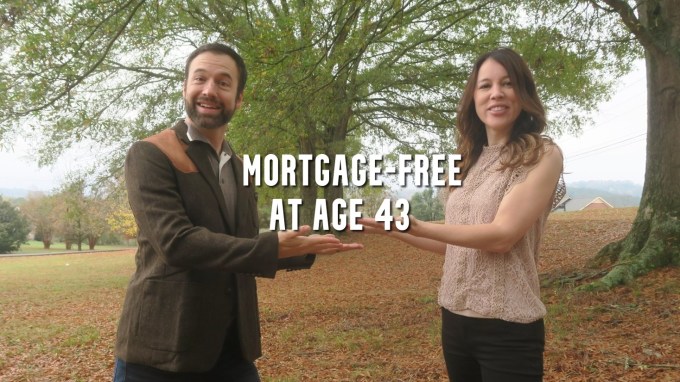
How We Paid Off Our Mortgage at Age 43

I will never forget this day in history: November 6th, 2024.

That’s the day my wife and I paid off our mortgage.

What you are about to read is the classic story of the underdog. We as a human civilization are naturally fascinated to see individuals overcome the odds placed against them and actually reach a seemingly impossible goal.

This is the story of how at age 43 (we were both born in 1981), my wife and I have now reached our goal of being not only debt-free, but also mortgage-free; despite the odds and despite remaining in the middle class.

To be clear, this is not a sexy story. We did not win the lottery. We did not inherit a million dollars. We did not invest in Bitcoin.

How we did it is the boring equivalent of someone you know losing 50 pounds and when they are asked how they lost the weight, they respond by saying they started exercising everyday, they reduced their daily calories, and increased their protein and fiber intake.

It’s not exciting to learn that people reached a challenging goal through hard work, dedication, and sacrifice… especially when it took years to get there.

Similarly, our underdog story is equally boring…

During my final year of college, my sister (who is 3 years younger than me) and I shared an apartment. The way our schedules lined up, when one of us was away at campus either in class or working, the other one would squeeze in an hour or two of playing Animal Crossings on the Nintendo GameCube back at our apartment.

In case you’re not familiar, the ultimate point of Animal Crossings is to work as efficiently as possible so that you pay off your mortgage.

(For the record, my sister ended up paying off hers before I did.)
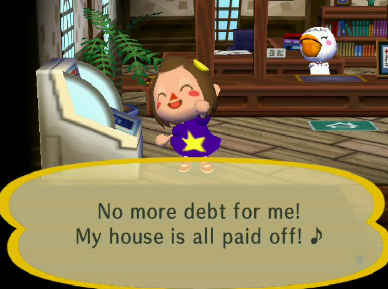
As silly as it is, playing that video game for the course of my senior year of college fundamentally inspired me for my actual “real life” ahead. I was determined: I will be part of the rare minority of Americans to pay off my mortgage “early”; well before it was time to retire. (The average age to pay it off is 62.)

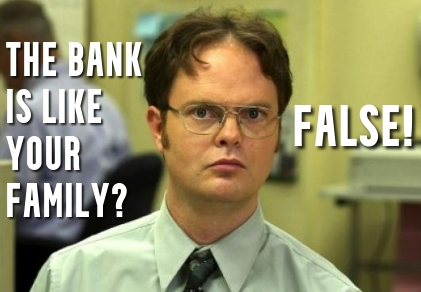
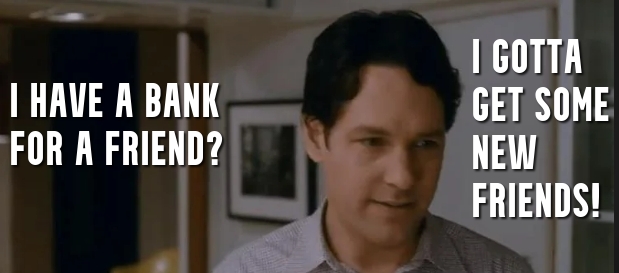
Despite the modern marketing attempts of banks and credit unions to convince me otherwise, the truth was obvious to me: “No. You are not like family and you are not my friend.”

But from the beginning, my strategy was not entangled with the idea of “getting rich first”. Instead, my plan would be to exploit the concept of maintaining a low overhead while finding ways to multiply my sources of income.

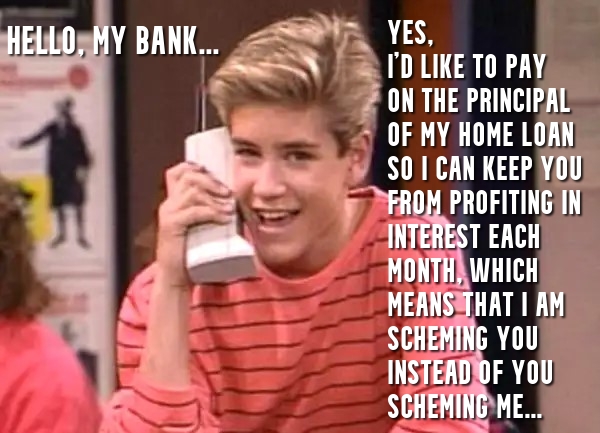
Fundamentally, the speedrunning aspect of paying off our mortgage early would focus on paying extra each month on the mortgage payments, so that it would pay off the principal of the loan quicker; preventing us from paying more in interest over the years.

Fortunately, I was naturally attracted to a woman who had the same intrinsic desire. As a team, we have worked together for many years to reach our goal; from the moment we got married. Because apparently, nothing is more romantic than mutually aspiring to be debt-free and mortgage free as a couple?

To be clear, our path to reach this goal was never easy. (Neither of us “came from money”.)  Instead, much of our 16 years of marriage has been riddled with financial setback after financial setback.

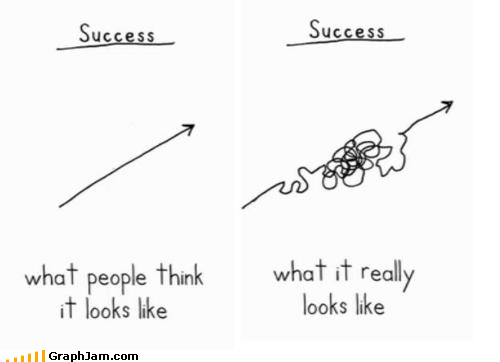
I remember years ago, seeing a meme that gave an honest visual of what the path to success actually looks like. It helped prepare my expectations.
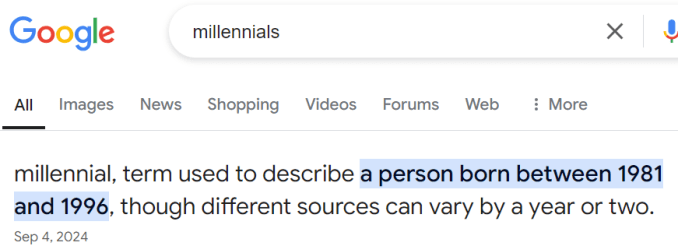
We had to face the typical obstacles of the American middle class who happened to be Millennials: Paying off thousands in student debt, pay off thousands in wedding debt, buying our first home during the Financial Crisis of 2008 (which happened to be the year we got married), not making much money for the first decade of our professional careers, having children and having to pay for childcare while we both worked, etc.
The lowest, most difficult point in my life occurred in 2010, when my wife and I chose to leave behind our steady jobs and stable lives in Tennessee, to move to Alabama after we had our first child. Our hearts were in the right place, but we ended up living off our savings as we tried to find steady work while raising a newborn. We lasted 9 months before running out of money and having to move back to Tennessee; asking for our old jobs back.
And of course, our car broke down halfway through the drive back; which resulted in us having to buy a different car.
You can imagine: I wasn’t able to walk away from that point in my life without being forever hard-wired to never end up in a situation like that again. It “broke” me. (Pun intended.) The years that followed were just as tough, as we rebuilt everything back from nothing.
But I imagine I needed that humiliating and sobering time in my life in order to land here in this situation now, to be able to pay off my mortgage at 43.
This year, Dave Ramsey conducted a study of the top professions of people who become millionaires, known as The National Study of Millionaires. To confirm, we are not millionaires. But I do see an overlap with our careers:
We both technically fall into the categories of “teacher” and “management”: My wife has a Master’s in Early Childhood Development (though she never actually had a career in education) and I have a Bachelor’s Degree in English (I had originally planned to be a teacher as a profession). As for our actual careers, my wife is Chief of Staff (management) at a health care company and I am an Account Manager (HR/Recruiting) for a transportation company.
I think it is interesting that she and I both desired in our hearts to be teachers, getting our education in those fields, but we then ultimately landed in management roles.
Dave Ramsey’s National Study of Millionaires found the the most common theme among engineers, accountants, teachers, managers, and attorneys is that they all are required to operate as part of a system; living by a strict set of principles. So I can see how the path to becoming a millionaire is similar to first paying off your debts and mortgage.
Similarly, it is clear that Malcom Gladwell’s 6 Unexpected Outliers to Success play into this as well:
  • Opportunity.
  • Timing.
  • Upbringing.
  • Effort.
  • Meaningful work.
  • Legacy.

One that stands out to me from this list is Upbringing. One set of my grandparents were 1st generation Americans; meaning their own parents immigrated here from other countries. Specifically, I grew up up curiously observing my Papaw Metallo, who ultimately grew up in an orphanage in Kenosha, Wisconsin.

I watched him work an average job, live in a decent-sized home on a few acres, never buy a new vehicle, and he always had money in the bank.

Undoubtedly, his habits were adopted by my parents, and passed on to my sister and me. (Not only did my younger sister pay off her mortgage in Animal Crossings before I did, but she also did in real life a year and a half ago.)

I also see how Opportunity and Timing played into our ability to pay off our mortgage at age 43. Had the Covid Crisis of 2020 not happened, my wife and I would not have been able to start working remotely, allowing us to “cash in” by selling our Tennessee home (which doubled in value over the 9 years we lived there) and then move to Alabama again where the cost of living is much lower.

So I suppose I shall quote the 2004 rom com starring Brittany Murphy, Little Black Book: “Perhaps luck exists somewhere between the world of planning, the world of chance, and the peace that comes from knowing that you just can’t know it all.”
Undeniably, my wife and I have been (imperfectly) following the teachings of Dave Ramsey since 2008 when we got married; which eventually led to us becoming debt-free (other than our mortgage) five years later in 2013.

That means it took us 11 years to pay off our mortgage after becoming debt-free. It was around that time that I consumed the book, Rich Dad Poor Dad, by Robert Kiyosaki. From there, I became obsessed with creating “passive incomes” on the side; what most people know as “side hustles”.

I started two different YouTube channels, creating content exploiting topics that people were already searching for (men’s hair loss and DNA test results) as opposed to what I actually wanted to talk about.

I began using my blog (Family Friendly Daddy Blog) as a SEO platform to implant Amazon links; which generate commission for me when readers click on them.

My work as a blogger led to me becoming the official daddy blogger of Parents Magazine. During those 4 years, I was sent new vehicles to “review” each week, which included a full tank of gas. (This was officially ironic because we have never actually owned a new vehicle.)

I used my accidental knowledge of SEO to become an independent contractor for other businesses, in addition to my full-time job.

All of these side hustles generated hundreds of dollars each month; which ultimately went towards paying the principle of our mortgage. Admittedly, I still generate passive income from my YouTube channels and Amazon links, though it is much less than it was back in the years I needed it so badly.

So yes, certainly Effort has been important; going back to Malcom Gladwell’s 6 Unexpected Outliers to Success.

Something possibly surprising about this journey, from the very beginning, we have been committed to tithing and charitable giving: Even during our lowest financial point.

This is consistently taught throughout the Bible, as well as being continually endorsed by Dave Ramsey and Robert Kiyosaki, author of Rich Dad, Poor Dad.
As for the future, we shall continue our lifestyle of keeping a low overhead. The income that used to go to our mortgage will now being going towards investments and savings.

I also recognize that when you overcome a major obstacle, it requires you to recalibrate your process; as a new obstacle will present itself to replace the last one.

Without the constant burden of “must pay off mortgage” hanging over my life, what will I do with that space in my brain?

I refuse to see “work” as a negative thing that I am suppose to graduate from. I find ways to make the challenge of work exciting and rewarding. Work means that I continue to create and contribute; whether or not it means I am an employee of a company.

The thought of retirement is not exciting to me. I’m convinced that I’m that guy who if I stopped “working”, I would die a few months later.

Keep working. Keep creating. Keep living.


2010 Jeep Wrangler JK Sport 4WD 6 Speed: Family Ride in Percy Warner Park in Nashville, Tennessee

It’s been two weeks now that I finally obtained my dream vehicle, a Jeep Wrangler. As part of the fun for Mother’s Day for my wife, I announced we would be going for our very first family leisurely drive through the not-so-faraway Jeep-friendly spot: Percy Warner Park in Nashville.

This weekend’s drive confirmed what I always believed about owning a Jeep Wrangler; that you don’t simply own a vehicle, you own a mobile amusement park.

Automatically, anywhere you drive is suddenly more exciting. The view is undeniably better. Whenever you see a road you want to go down, or go up, that you wouldn’t normally be able to… well, now you can.

And we did. Many times.

There is no fear of getting stuck in the mud, because now we have 4 wheel drive.

There is no fear of not being able to turn around if we get to the end of a narrow dead-end road, because the Jeep is so short.

There is no fear of boredom, because we are ultimately riding in a mini monster truck.

Something really crazy about my 7 and a half year journey to finally getting my Jeep Wrangler is that I never ever drove one until I had already bought mine!

That’s how much I knew I was destined to own one.

I can’t remember the last time I bought anything for myself that made me so happy.

When you’re the husband and the father, you just sort of go along with whatever is going on with your family. There was honestly nothing I needed or even wanted anyway.

Except for the Jeep, which I couldn’t afford until now; and was able to pay cash for. (My wife and I are very serious about Dave Ramsey!)

But this Jeep isn’t just for me: My whole family enjoys it.

It’s simply more fun to drive now; even in bumper to bumper commuter Nashville traffic.

That’s how good a Jeep Wrangler is.

A Paid-Off Car with High Miles, Not a Brand-New Car with Payments, is a New, Unspoken American Status Symbol

I noticed that back a few years ago, when I lived on the edge of Nashville, where income levels were lower than where I live now in my commuter town, that it was the norm to see so many fellow commuters driving luxury cars, on every side of me… which were obviously leased. Compare that to where I live now- people make more money, but drive older cars; not many Mercedes’ to be seen.

Owning a brand-new car is not worth celebrating, unless the person paid cash for it. Otherwise, the person is paying more money for something they couldn’t afford in the first place.

Imagine the irony: A person doesn’t have enough money to buy the product, so they agree to pay even more of the money they don’t have in the first place- in interest.

The Eighties and Nineties are long gone. No longer can we pretend we are doing financially well because of the false status symbols bought with credit. That mentality ended with the Financial Crisis of 2008; which happened to be the year I got married.

I believe our culture is now realizing that the new status symbol is being able to afford more, but choosing to save and invest that money instead.

If anything, the new status symbol is to be able to brag on how little money you paid for a product, not to allow others to believe you spent more. The new status symbol is being able to figure ways to save money and make money on the side, then share that info with everyone else. That has value.

We are living in the aftermath of the Financial Crisis of 2008. My generation is becoming the new version of those who lived through the Great Depression.

Being frugal and in full control of your finances is the ideal; not necessarily making a lot of money, only to continue to struggle to pay the bills and live in debt. Now it’s all about low overhead and living well within your means.

This month makes exactly 13 lucky years that I’ve owned my 2004 Honda Element, with 170,000 miles and a salvaged title; making it worth only about $500. Two years ago, it came within about $25 shy of being totaled, when an albino dear ran into my driver’s side door and wheel. (True story!)

But the way I see it, that car is worth a whole lot more than what I could sell it for.

It’s funny how typically, when a person “buys” a new car, the typical reaction is to be happy for them: “Oh wow! I like your new car! I wish I had something nice and shiny like that!”

When I overhear a conversation like that, I always privately think, “But yeah, now they have to be making monthly payments for the next few years, coupled with the insurance payments that accompany a new car…”

And it’s even worse if the car is leased, because there’s no chance of making any profit when the lease is done; in fact, you may end up having to pay more money if you drove too many miles or caused damage to the car.

So yeah, I am proud to drive my 2004 Honda Element. It’s a bit rusty and my kids complain about having to ride in it because, “It’s so old!”

But hey, it runs and it’s been paid off well over a decade.

Where I Ended Up Exactly One Year After Losing My Job: 6 Months In at a Fortune 500 Company, With a 62% Pay Increase

Today makes exactly one year since I lost my job in HR and Recruiting in the transportation industry, after working at the same place for over 11 years. The company essentially shut down an entire branch all at once, meaning that dozens of us left the office for the final time that day, with a 2 weeks’ severance pay on the way out.

For the next 6 months, I proudly adopted the title of “Stay at Home Dad”, as our daughter was only a year and a half. During that amount of time (and as I still continue to do now), I made a side income from managing my 2 YouTube channels along with this blog, as well as working as a contracted SEO Specialist for Vanderbilt University’s Biostatistics Department.

I also applied for 107 jobs, updated my LinkedIn, and prayed to God that I would find favor with the right people.

One of those jobs was for a Fortune 500 Company; right across the interstate from where I had worked all those years.

It’s funny because I had always dreamed of one day, being able to work in one of those half dozen identical 6 story buildings; not even knowing which employers were actually in them.

Exactly 6 months after losing my job, I received a call from that Fortune 500 company. I went in for the interview the day before my 37th birthday.

I didn’t realize what a big deal it was that I had more than a decade of recruiting experience specifically in the trucking industry and that I had even voluntarily took a course in HR a few years back; specializing in Emotional Intelligence.

But the manager did. And I was offered the job on the spot.

That was 6 months ago.

Since then, I have thoroughly enjoyed the challenge of applying everything I have learned over the years, here at my new job.

It’s pretty rewarding to think: There are a lot of things I’m not good at- but somehow, I am totally wired to be a recruiter; to handle the hiring side of HR.

I have a talent for managing chaos; which is ultimately what recruiting is, especially in the transportation industry. I am well qualified for a job that is well in demand these days.

Finally after all these years, I can feel that my English degree and my more than a decade of recruiting and retention experience has paid off… literally:

In a year’s time, I now make 62% more than I did at my old job, where I was actually in a management role.

Granted, my wife and I are Dave Ramsey followers. So we’re simply carrying over all our extra income into paying off the principal on our home mortgage, as well as savings.

And yes, that’s still the same old paid off 2004 Honda Element there in the picture behind me. (I’ve owned it since January 2006.)

Even though I could buy, in cash, the Jeep Wrangler that I have wanted all these years, it’s more important to me to manage this extra income wisely.

After joining the work force with thousands in student loans and getting married a few years later in 2008, during the recession, and learning to live off a lot less for so many years, it’s hard to imagine living any other way at this point.

So yeah… it’s been an interesting year for me.

The Crazy (Not So Crazy?) Idea to Downsize to a One Story Home in an Effort to Pay Off Our Mortgage Quicker

When our family moved into our brand-new construction home back in January 2015, we had somewhat of an idea that we were potentially getting the last great deal in our bedroom community outside of Nashville.

But we didn’t realize that would mean the value of our home would increase more than $25,000 each year following.

In our neighborhood, houses are constantly for sale, and often are sold before a “sold” sign can even be posted in the yard.

My wife has been keeping up with the growing selling prices of our neighbors’ homes. It’s no exaggeration: We would easily make $80,000 if we sold our home today.

Contrast this to a decade ago when we bought a town home the year we got married, which happened to be right in middle of the The Great Recession. The value of that town home began dropping almost immediately. When we finally sold it in 2014, we barely made $1,000 off of it.

My wife and I are mutually obsessed with paying off our mortgage as soon as possible; as we have been debt free for 5 years now: No student loans, no car payments, no interest to be paid- other than our mortgage.

Last weekend was consumed by the quest to find out it would make more sense to actually downsize to a 3 bedroom, 2 bathroom, one story home in our area; compared to the 4 bedroom (plus a bonus room), 2 and a half bathroom, 2 story home we have now.

Even with the cost of other homes rising in our town, the $80,000 profit from selling our current home would greatly minimize our monthly payment; which we’re already paying several hundred dollars extra on each month.

We learned that ultimately, the amount of money we owe the bank would remain the same, but with the monthly payment being several hundred dollars lower, we could increase the amount we pay on the principle by that much more. And therefore, we could pay off our home years sooner.

However, it’s still a gamble…

Because at the rate our home is increasing in value each year, this means that two years from now by 2020, our home would be worth $100,000 more than what we bought it for in January 2015.

So while we are still open to the idea of downsizing in order to have a paid off mortgage that much sooner, it might be smarter to wait a few more years as our home continues to increase in value at the rate it is.

Therefore, it looks like our plan is to be working on simple upgrades for our home in the meanwhile, so that not only we will be able to enjoy our current home that much more while we are actually living it, but so that it will also be that much enticing for future buyers.

The problem is, I’m no Chip Gaines when it comes to my handyman skills. That will prove to be the biggest challenge for now…