Guardians of the Galaxy, Vol. 2: Parental Review- Is It Kid Friendly? (No Spoilers)

Not all PG-13 rated movies are rated equally. While I had no reservations about my 6 year-old son seeing Jurassic World or Rogue One, I would not be okay with him seeing Suicide Squad or The Hunger Games or the Fast and Furious movies.

So where does Guardians of the Galaxy, Vol. 2 end up on this unpredictable gradient scale of PG-13 movies?

Ultimately, imagine combining the constant non-bloody fantasy violence of the Star Wars movies with the more mature plot lines of the Star Trek movies, mixed with the irreverence and casual profanity of the Shrek movies. Put that in a blender, and that’s the PG-13 essence of Guardians of the Galaxy, Vol. 2.

I say this because Guardians of the Galaxy, Vol. 2 is sprinkled with nearly every major “bad word” there is, except for those two classic biggies: “g.d.” and the “f-word.”

Perhaps there is a paradox in that if a child recognizes “bad words” when he or she hears them, and knows them to be “bad”, then the movie instantly becomes inappropriate, to a certain degree. But if a child doesn’t know the word, and doesn’t know it to be taboo, I would argue that ignorance might be bliss.

Likewise, the same could be said about the movie’s sci-fi plot line, which revolves around a god who makes his purpose to interbreed with one willing member of every other species he can, in an attempt to produce offspring who share his same powers.

Granted, this is a Disney movie- and I’ve noticed Disney specifically avoids any obvious sexual dialogue or situations in their Marvel movies.  I do feel it’s quite possible that this seemingly mature plot line could easily fly over the heads of many younger children.

It’s likely the language in this movie, which contains “guy humor” and poop jokes throughout, that would question most conservative parents about letting their child see this movie.

My job is not to be responsible for telling parents whether Guardians of the Galaxy, Vol. 2 is appropriate for their children to see.

Instead, I simply want to provide the basic information to guide you making this decision for your child.

Do what you feel is right, based on the information I have provided today. I don’t judge you either way.

Obviously.

 

This is 36: Our Living Room has become a Children’s Playroom… but It Doesn’t Matter because We Rarely Have Guests Over Anyway

It could just be my perception of reality, but I feel like it used to be that people would actually visit together at each other’s homes: “We’ve got company coming over this afternoon… time to clean up the house!”

These days, if you get invited over to someone’s house, you undeniably have to ask yourself a very important question, “What modern day pyramid scheme am I being invited to join?”

As far as inviting people over to our house, my wife and I both work full-time; both of us commute about 2 hours round trip Monday through Friday. Saturdays are consumed with buying groceries and going to birthday parties. And Sunday is for church, cleaning the house, and attempting to chill out as a family.

The thought of preparing our house for guests, on top of that? I’m sure my family is not alone in feeling this way.

I can say that because, for the friends who we do hang out with on a regular basis, we rarely visit at each other’s house. It’s easier just to meet up somewhere in the middle, where there’s something for all our kids to do.

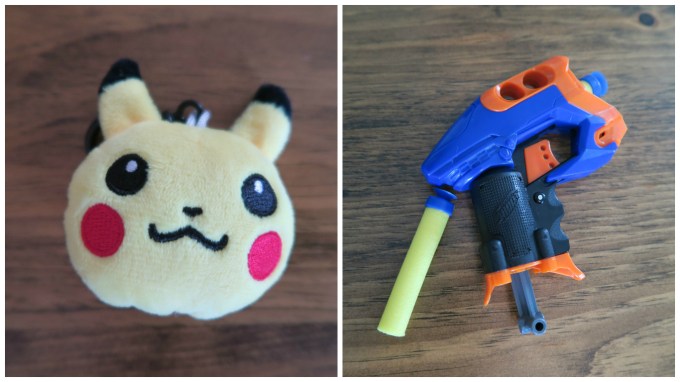
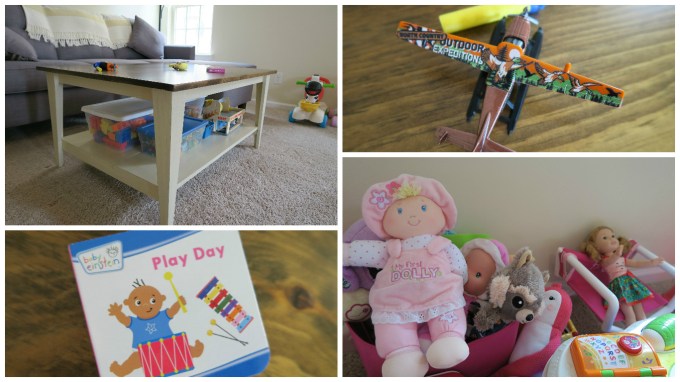
Therefore, it’s no bother that for the next several years, our classy living room will be occupied with pink strollers and American Girl dolls; as well as dinosaurs, Legos, and Pokemon paraphernalia; thanks to a 1 year-old little girl and a soon-to-be Kindergarten graduate.

The funny thing is, we have a bonus room upstairs that could easily be “the playroom”. But it’s not central to where the action is: The kitchen is the epicenter of our home and the kitchen is adjoined to the living room, which has now used as a playroom, more than a living room.

I guess playing equates with living when only half of the 4 members of the household are adults.

Even in the rare event we did have guests over, our living room converted into a playroom would simply be… expected. Because this is the norm.

This is 36.

Instead of Spanking, Answer the 5 “Distress Calls” of Your Child “Misbehaving”: Tired, Hungry, Bored, Lonely, or Sick

I am writing this blog post for any open-minded Millennial parents who want a new perspective on how to discipline their children, without using physical force. This is not designed to change the minds of anyone who defends spanking; nor do I judge parents who believe in spanking- if I did, I’d be judging 80% of American parents!

After all, I’m the strange one when it comes to child discipline: I represent the 20%, the minority, of American parents in that I don’t spank my children.

“Well I was spanked as a child and I turned out alright-

I’ve never killed anyone and I’ve never been to prison.”

That, by the way, is the cliché line you’ll typically hear from other parents who spank their children. But “not being a murderer” and “never spent time in prison” are not good selling point in defense of spanking a child.

In fact, that concept only reinforces that spanking is counterproductive, or ineffective, at best:

Look at the people who actually end up in prison and who actually are murderers. While spanking a child doesn’t mean they’ll end up in prison or murder someone, documented research shows that “spanked children are more likely to break the law.”

But beyond that, I say this isn’t even a question of, “Well then how do I discipline my child without spanking them?”

No, that’s the wrong thing to be asking.

The right question is this: “How can I proactively prevent my child from misbehaving to begin with, or at least care for their actual needs instead of physically striking them when they do misbehave?”

I am basing my logic from Albert Einstein, who said this:

“Intellectuals solve problems. Geniuses prevent them.”

You’re the parent. Your job is to provide for your child’s needs, not hit them because they have those needs in the first place.

Here’s a reminder that you, the adult, are more much emotionally intelligent than your child, who is not necessarily capable or likely to communicate what is wrong. Instead, they “act out” to get attention from you, as the emotionally intelligent adult, to figure out which of the following issues they need you to solve.

I see the word “misbehave” as the wrong word anyway. Instead, the child is sending the parent a “warning signal” that they need the parent’s help.

It’s this simple. As the parent, your job is to constantly ask yourself this question:

“Is my child tired, hungry, bored, lonely, or sick?”

If the answer is yes to any of those 5 things, then here’s what you do:

You facilitate your child taking a nap, you feed your child, you help your child find a constructive activity to do, you pay them attention, or you provide medical assistance.

Imagine an adult hitting a child’s butt because that child is too emotionally unintelligent to verbally communicate with the parent that they are tired, hungry, bored, lonely, or sick.

Now compare that to my solution.

My son was the first child to be chosen by his Kindergarten teacher this year to as the “Student of the Month” in his class, as his teacher saw that he is not only well-behaved, but also well-balanced and involved in class. He’s also in the Advanced Reader group.

Additionally, at his “before care” school, both his teacher and the director have individually approached me to tell me the same thing:

“I have watched your son day after day. He is the most polite and helpful boy here. Whatever you’re doing as a parent, just know… it’s working.”

Only 20% of American parents don’t spank their children. And I am one of them.

This is 36: Can I Just Eat My Garlic & Pepper Ramen Noodles in Peace?!

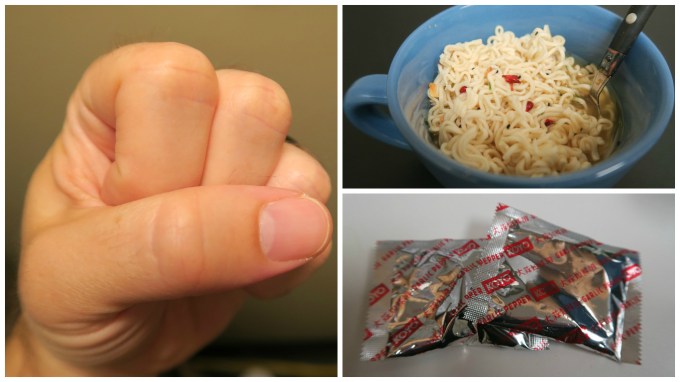
After we put our kids to bed last night, as my wife and I were finishing up doing the the dishes, we were discussing how apparently impossible it is just to eat lunch in peace while at work. Seriously, it’s difficult!

Though we work in offices about 20 miles apart from each other each day, my wife and I live by the same daily habits when he comes to our eating routines: We typically just eat snacks during the work day: I make a smoothie each morning, then have oatmeal during lunch. My wife takes cut up fruit and veggies and hummus.

Then after work, we come home and have a good, solid, healthy meal each night for dinner. That’s what our norm is.

So when we occasionally have a “fun day” and take Ramen Noodles to work, it freaks people out. They can’t handle it. Chaos always follows:

“What’cha eatin’ there? Ramen noodles?”

“Mmmm…. something smells good. Let me take a look in your bowl…”

“Oh, what’s that smell? It’s so strong. It smells like onions or something. Ugh…”

“You can eat Ramen noodles? I don’t know vegans could eat pasta!”

“I thought you ate healthy food. What are you doin’ eatin’ that?”

I think the solution is that I need to acquire some kind of secret military grade invisibility cloak.

That might be the only way to get people who are so easily entertained by the sight of another human being eating Ramen noodles to keep just walking by.

I’ve already lost my ability to listen to CDs in my car each day on my 2 hour round trip commute. I feel like I don’t ask for much at this point.

Ramen noodles. In solitude.

Don’t take this away from me. I need this.

No commentary. No questions. No fascination.

Just let me eat my Ramen noodles in peace.

This is 36.

This is 36: We’re Not Hypocrites for Using Facebook as a Highlight Reel from Our Lives

If we’re being honest, Facebook is an open mic, public stage in which we present the best parts of our lives to those in our social circle. I have no shame in admitting that.

Chances are, the most relevant thing you scroll your Facebook feed for is pictures of your friends’ and family members’ kids. And I would also predict that most of the “likes” and comments that you receive are based on pictures you post of your own kids.

Yeah, that magical red notification that alerts us of confirmation that some part of our life is being mutually acknowledged and appreciated…

But are we all somehow hypocrites for choosing to highlight the most exciting and interesting parts of our lives? Does that make us all fake? Would we all be better off if instead, we also included the mundane parts of our lives?

For example, should I update my status right now so everyone can know that it’s time to clip my fingernails? Is that something you would want to know about?

If so, then you are very easily amused… right? And if you “liked” status comment about me needing to clip my fingernails, I would assume that if you are not desperate for distraction from real life, that you were just give me a “courtesy like” to make me feel good about myself.

The thing is, we don’t want courtesy likes, do we?

Instead, we want to know and believe that the people in our social circles authentically “like” what we place in front of them.

So naturally, presenting our Facebook friends with our best material is what we all do. We certainly don’t want to use everyone else’s Facebook feed to advertise the most negative parts of our own lives; we would appear emotionally needy in that case.

We all want to be liked for good things about ourselves. We all want to be included by society. To a certain (and healthy) degree, we care about what people think about us. I say that’s a good thing.

I am not a hypocrite for using Facebook as my highlight reel. And neither are you.

So I will keep posting the highlights of my life on Facebook. So will you.

And that’s completely okay.

This is 36.