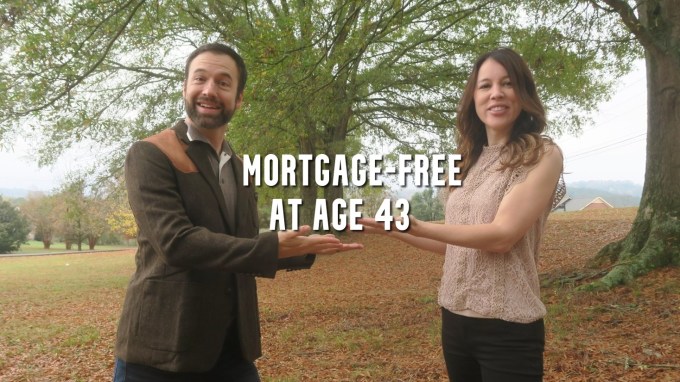
How We Paid Off Our Mortgage at Age 43

I will never forget this day in history: November 6th, 2024.

That’s the day my wife and I paid off our mortgage.

What you are about to read is the classic story of the underdog. We as a human civilization are naturally fascinated to see individuals overcome the odds placed against them and actually reach a seemingly impossible goal.

This is the story of how at age 43 (we were both born in 1981), my wife and I have now reached our goal of being not only debt-free, but also mortgage-free; despite the odds and despite remaining in the middle class.

To be clear, this is not a sexy story. We did not win the lottery. We did not inherit a million dollars. We did not invest in Bitcoin.

How we did it is the boring equivalent of someone you know losing 50 pounds and when they are asked how they lost the weight, they respond by saying they started exercising everyday, they reduced their daily calories, and increased their protein and fiber intake.

It’s not exciting to learn that people reached a challenging goal through hard work, dedication, and sacrifice… especially when it took years to get there.

Similarly, our underdog story is equally boring…

During my final year of college, my sister (who is 3 years younger than me) and I shared an apartment. The way our schedules lined up, when one of us was away at campus either in class or working, the other one would squeeze in an hour or two of playing Animal Crossings on the Nintendo GameCube back at our apartment.

In case you’re not familiar, the ultimate point of Animal Crossings is to work as efficiently as possible so that you pay off your mortgage.

(For the record, my sister ended up paying off hers before I did.)
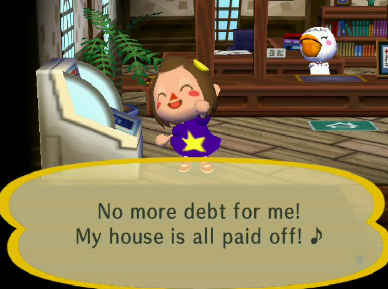
As silly as it is, playing that video game for the course of my senior year of college fundamentally inspired me for my actual “real life” ahead. I was determined: I will be part of the rare minority of Americans to pay off my mortgage “early”; well before it was time to retire. (The average age to pay it off is 62.)

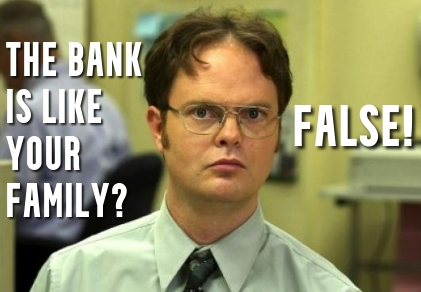
Despite the modern marketing attempts of banks and credit unions to convince me otherwise, the truth was obvious to me: “No. You are not like family and you are not my friend.”

But from the beginning, my strategy was not entangled with the idea of “getting rich first”. Instead, my plan would be to exploit the concept of maintaining a low overhead while finding ways to multiply my sources of income.

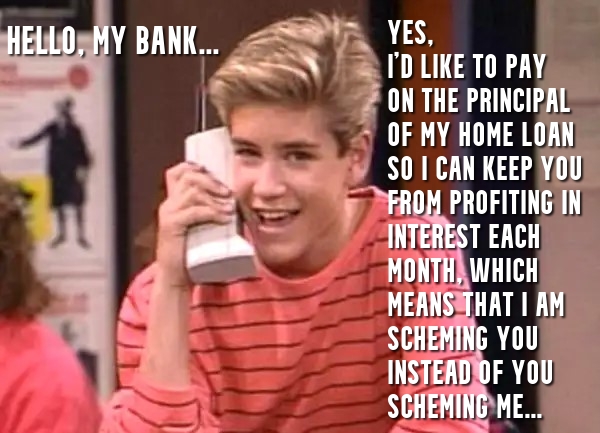
Fundamentally, the speedrunning aspect of paying off our mortgage early would focus on paying extra each month on the mortgage payments, so that it would pay off the principal of the loan quicker; preventing us from paying more in interest over the years.

Fortunately, I was naturally attracted to a woman who had the same intrinsic desire. As a team, we have worked together for many years to reach our goal; from the moment we got married. Because apparently, nothing is more romantic than mutually aspiring to be debt-free and mortgage free as a couple?

To be clear, our path to reach this goal was never easy. (Neither of us “came from money”.)  Instead, much of our 16 years of marriage has been riddled with financial setback after financial setback.

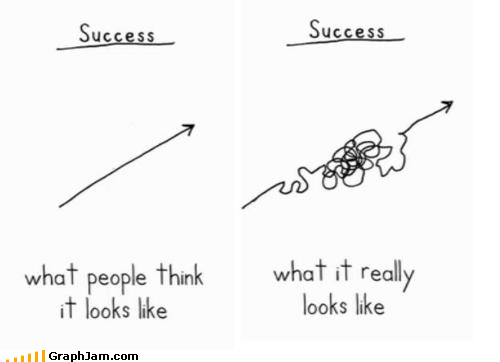
I remember years ago, seeing a meme that gave an honest visual of what the path to success actually looks like. It helped prepare my expectations.
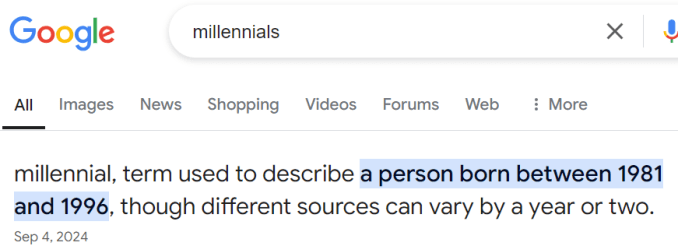
We had to face the typical obstacles of the American middle class who happened to be Millennials: Paying off thousands in student debt, pay off thousands in wedding debt, buying our first home during the Financial Crisis of 2008 (which happened to be the year we got married), not making much money for the first decade of our professional careers, having children and having to pay for childcare while we both worked, etc.
The lowest, most difficult point in my life occurred in 2010, when my wife and I chose to leave behind our steady jobs and stable lives in Tennessee, to move to Alabama after we had our first child. Our hearts were in the right place, but we ended up living off our savings as we tried to find steady work while raising a newborn. We lasted 9 months before running out of money and having to move back to Tennessee; asking for our old jobs back.
And of course, our car broke down halfway through the drive back; which resulted in us having to buy a different car.
You can imagine: I wasn’t able to walk away from that point in my life without being forever hard-wired to never end up in a situation like that again. It “broke” me. (Pun intended.) The years that followed were just as tough, as we rebuilt everything back from nothing.
But I imagine I needed that humiliating and sobering time in my life in order to land here in this situation now, to be able to pay off my mortgage at 43.
This year, Dave Ramsey conducted a study of the top professions of people who become millionaires, known as The National Study of Millionaires. To confirm, we are not millionaires. But I do see an overlap with our careers:
We both technically fall into the categories of “teacher” and “management”: My wife has a Master’s in Early Childhood Development (though she never actually had a career in education) and I have a Bachelor’s Degree in English (I had originally planned to be a teacher as a profession). As for our actual careers, my wife is Chief of Staff (management) at a health care company and I am an Account Manager (HR/Recruiting) for a transportation company.
I think it is interesting that she and I both desired in our hearts to be teachers, getting our education in those fields, but we then ultimately landed in management roles.
Dave Ramsey’s National Study of Millionaires found the the most common theme among engineers, accountants, teachers, managers, and attorneys is that they all are required to operate as part of a system; living by a strict set of principles. So I can see how the path to becoming a millionaire is similar to first paying off your debts and mortgage.
Similarly, it is clear that Malcom Gladwell’s 6 Unexpected Outliers to Success play into this as well:
  • Opportunity.
  • Timing.
  • Upbringing.
  • Effort.
  • Meaningful work.
  • Legacy.

One that stands out to me from this list is Upbringing. One set of my grandparents were 1st generation Americans; meaning their own parents immigrated here from other countries. Specifically, I grew up up curiously observing my Papaw Metallo, who ultimately grew up in an orphanage in Kenosha, Wisconsin.

I watched him work an average job, live in a decent-sized home on a few acres, never buy a new vehicle, and he always had money in the bank.

Undoubtedly, his habits were adopted by my parents, and passed on to my sister and me. (Not only did my younger sister pay off her mortgage in Animal Crossings before I did, but she also did in real life a year and a half ago.)

I also see how Opportunity and Timing played into our ability to pay off our mortgage at age 43. Had the Covid Crisis of 2020 not happened, my wife and I would not have been able to start working remotely, allowing us to “cash in” by selling our Tennessee home (which doubled in value over the 9 years we lived there) and then move to Alabama again where the cost of living is much lower.

So I suppose I shall quote the 2004 rom com starring Brittany Murphy, Little Black Book: “Perhaps luck exists somewhere between the world of planning, the world of chance, and the peace that comes from knowing that you just can’t know it all.”
Undeniably, my wife and I have been (imperfectly) following the teachings of Dave Ramsey since 2008 when we got married; which eventually led to us becoming debt-free (other than our mortgage) five years later in 2013.

That means it took us 11 years to pay off our mortgage after becoming debt-free. It was around that time that I consumed the book, Rich Dad Poor Dad, by Robert Kiyosaki. From there, I became obsessed with creating “passive incomes” on the side; what most people know as “side hustles”.

I started two different YouTube channels, creating content exploiting topics that people were already searching for (men’s hair loss and DNA test results) as opposed to what I actually wanted to talk about.

I began using my blog (Family Friendly Daddy Blog) as a SEO platform to implant Amazon links; which generate commission for me when readers click on them.

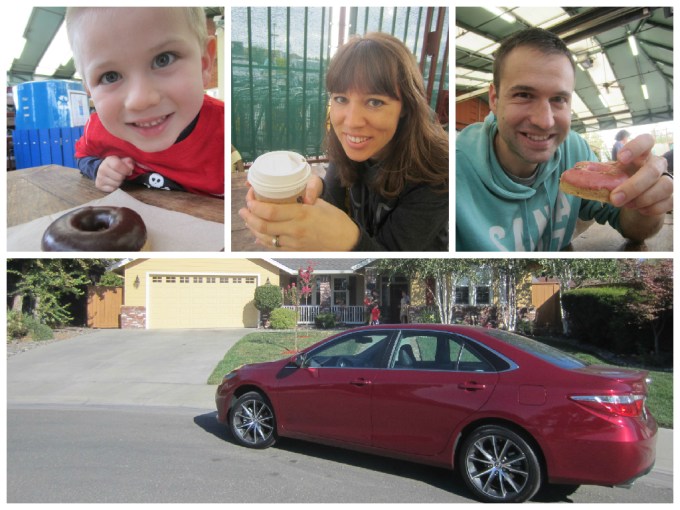
My work as a blogger led to me becoming the official daddy blogger of Parents Magazine. During those 4 years, I was sent new vehicles to “review” each week, which included a full tank of gas. (This was officially ironic because we have never actually owned a new vehicle.)
I used my accidental knowledge of SEO to become an independent contractor for other businesses, in addition to my full-time job.

All of these side hustles generated hundreds of dollars each month; which ultimately went towards paying the principle of our mortgage. Admittedly, I still generate passive income from my YouTube channels and Amazon links, though it is much less than it was back in the years I needed it so badly.

So yes, certainly Effort has been important; going back to Malcom Gladwell’s 6 Unexpected Outliers to Success.

Something possibly surprising about this journey, from the very beginning, we have been committed to tithing and charitable giving: Even during our lowest financial point.

This is consistently taught throughout the Bible, as well as being continually endorsed by Dave Ramsey and Robert Kiyosaki, author of Rich Dad, Poor Dad.

As for the future, we shall continue our lifestyle of keeping a low overhead. The income that used to go to our mortgage will now being going towards investments and savings.

I also recognize that when you overcome a major obstacle, it requires you to recalibrate your process; as a new obstacle will present itself to replace the last one.

Without the constant burden of “must pay off mortgage” hanging over my life, what will I do with that space in my brain?

I refuse to see “work” as a negative thing that I am suppose to graduate from. I find ways to make the challenge of work exciting and rewarding. Work means that I continue to create and contribute; whether or not it means I am an employee of a company.

The thought of retirement is not exciting to me. I’m convinced that I’m that guy who if I stopped “working”, I would die a few months later.

Keep working. Keep creating. Keep living.


Dear Holly: You Chose a Shopping Spree Over a Birthday Party!

7 years.

Dear Holly,

Mommy and I have always went all out for your birthday parties. However, this year, as we prepared the expenses of planning your 7th birthday party, we came up with a simple proposal for you:

What if we simply gave you cash for half of the expense that a birthday party with your friends would have cost us?

With no hesitation, you agreed to our deal.

So a trip to Walmart and Target, with a handful of 20 dollar bills, was your “birthday party” this year.

And you were so happy!

As you stated to Mommy and I a few months ago:

“Money is my BFF!”


Love,

Daddy

9 Things to Consider When Buying a Car 

Buying a car is very exciting, but there are many considerations to make. This guide lists 9 things to consider when buying a car.

Buying a car is extremely exciting. But being on the verge of excitement can always lead to making mistakes.

There are some things to consider when buying a car, things that will ensure that you make the right decision that will leave you satisfied.

In this article, we will cover 9 things you might want to consider.

So if that sounds interesting, keep reading to learn more.

  1. Your Need for the Car

A very necessary idea to consider is your need for the car. Needs and wants are far apart, and rarely crossover in the realm of common ground.

So think what you will be using the car for the daily commute, adventure, showing off, so on and so forth.

Has your family expanded and you require more room? Do you need a car that can go off-road, and have efficient mileage? Or maybe you’re a bachelor and you want a small car because you hate public transportation.

Think about your needs, or more so your problems, and then determine why the car is a solution to those issues. Thus, you will narrow down the options and make a better choice.

  1. Your Budget

Budget is very important, and if this is your first car, it’s critical to your success. Consider your entire monthly income and expenses, so that you can determine the amount you can spend on a car payment.

Looking for a new car is looking for a new loan. All loans are different, as some offer more money and some offer better interest than the others.

Understanding these changes in loan structure is crucial to understanding the realistic cost of your monthly payments. It’s also a good idea to have 20% as a down payment to cover the car’s price.

This will help you get out of term earlier, reduce the interest and make sure you don’t need excessive insurance.

  1. Used Vehicle

Buying a used car is a great opportunity to save money, and get a vehicle in optimal condition. A used car doesn’t have to be 20 years old, even cars that are 5 years old are depreciated but ultimately function as new.

Having an open mind about buying provides you with more opportunities. That means that you can look for vehicles from dealerships, individuals, online directories, so on and so forth.

Don’t limit yourself. You never know, your dream car might have already had an owner. Find out more about buying new vs used.

  1. Cost of Ownership

Another critical aspect of buying a car is cost of ownership. Ownership costs cover fuel, repairs, maintenance, insurance, and of course, depreciation. Out of all those aspects, depreciation is the most important, because at some point you might want to sell the car.

In general, your car expenses should not exceed 20% of your budget for the month. Obviously, the more expensive a car, the higher the insurance will be. If you are looking to buy an expensive car, you can work with a high net-worth insurance company, so that you get a great deal.

Besides all of that, you need to think about the availability and cost of spare car parts. Not to mention, the fuel economy is very important as well.

  1. Test Drive

No matter if you’re buying a new or used car, a test drive makes all the difference. Your car is your ship, and you are the crew, thus it’s important to get along.

If you don’t like driving that car, don’t buy it. Make sure everything feels comfortable and enjoyable. When driving, listen for odd sounds, and inspect if possible.

How’s the interior of the vehicle? Does it appeal to you? There’s a myriad of other questions that you can ask yourself to determine if the vehicle is right for you.

In any case, if you can’t decide between two vehicles, a test drive makes all the difference.

  1. Car Inspection

No matter if you’re buying from a dealership or a private person, you should always get an inspection by a specialized mechanic.

Even though it might cost you some money, it can save you lots of trouble from buying a vehicle that will fall apart in front of you in the future.

Also, the mechanic would be able to instantly assess any necessary servicing to the vehicle that will make sure you get the best possible driving experience.

  1. The Right Time

Getting the car at the right time can be very useful.

If you’re not in a rush, buying a car towards the end of the year will be cheaper then earlier in the year. Dealerships have quotas, and they need to move product. If they haven’t reached the number yet, they will be more eager to provide deep discounts on great vehicles.

You can also save money by taking advantage of holiday sales. But if you’re not up for waiting for a holiday or the end of the year, you should go car shopping early in the week.

Most people do their shopping on the weekend, thus a weekday will allow you to get better attention from a salesperson, which means you have a better negotiation advantage than somebody else.

  1. Things to Consider When Buying A Car: Incentives

If you’re looking for a specific vehicle from a specific dealer, you should show interest and sign-up for various newsletters and contact mechanisms, which will provide access to you for the salesperson. If you disappear for too long, they will contact you and see if you would like to buy at a lower price.

Ask about incentives and trade-in offers. If you have a vehicle that you would like to get rid of, offer it up as trade-in, and you might save substantially on your purchase.

  1. Insurance Quotes

Out of all the things to consider when buying a car, this is not as important, but valuable nonetheless.

Insurance agencies take car models and makes into consideration before they can provide you with a premium. One would think that insuring a new car will be less expensive than an older one, however, that’s not always the case.

There are many ways to reduce your insurance premiums, so keep your eyes peeled and do some research.

Buy Your Car

Now that you about the things to consider when buying a car, you can actually get to find the right car for purchase.

As long as you adhere to and consider these ideas, you will be way ahead of the rest, thus making you a better buyer, and dealerships love that.

If you’re interested in learning more about vehicles, check out our categorical page on the left handlebar on the website.

Is the Write off Worth It? How to Donate a Car (And If You Should)

Is it more worth it to donate a car or sell it for cash? Learn about the tax write offs for donating a car, here.

You’ve seen the signs that say you can donate a car to a good cause.

Would they even want your car? Whether it’s the salvation army car donation you’re looking into or another organization that wants you to donate your car, you might not be sure it is even worth the hassle.

Continue reading this article to learn more about car donation and what you need to know.

Look Out for the Tax Man & Scams 

While it might seem like a good idea to help a good cause by donating your car to a charity — be careful. If you don’t work with a good charity, you might find yourself mixed up in a scam or other problematic situation.

Before you decide you want to donate your vehicle, make sure you speak with a professional like a CPA  to see what their advice is on the specific charity you’re considering. If you claim more than what you’re supposed to for your car donation this can get you into trouble with the IRS.

Helping out a charity and getting rid of a car at the same time might seem like an attractive way to help out a charity and get help yourself. While there are some organizations that are on the up and up, you do have to do some extra work to make sure.

Considering Selling Your Car and Donating the Proceeds 

Instead of trusting someone else to give the charity of your choice the money from the sale, why not sell your car and donate the proceeds instead? When you do this, you’ll know where the money is going and you’ll still get the write-off on your taxes.

The good news is the write-off on your taxes won’t be anything to worry about since you’ll be able to prove a specific monetary amount.

While that might sound like a good idea, you might be wondering, “Who buys cars that don’t run?” You should know that there are companies that specialize in buying cars that don’t run. You can look around for some in your area and you’re sure to find companies that will have use for your car.

Doing a Good Deed 

Wanting to do a good deed is great but you need to make sure to protect yourself from any legal matters. Selling your car and donating the proceeds will allow you to have the pleasure of doing a good deed without worrying you’re getting scammed or doing something you’ll be in trouble for.

Making Sense of When to Donate a Car 

Now you can make an informed decision on whether to donate a car or not. You might decide that you want to get some cash out of it instead.

Now that you’ve learned this information, why stop there? Our site is filled with more articles that can help you as you’re increasing your knowledge of cars, donations and more.

Browse our site to find more great articles you’ll love.

2010 Jeep Wrangler Date Night: Seeing Sara Evans and Fairground Saints at The City Winery in Nashville, Tennessee

This past Saturday, my wife and I did something we have only done once before in our 8 and a half years of being parents: We hired a babysitter!

And if you know us in real life, you know how strange that truly is. Because when it comes to money, we are extremely conservative. We never leave the house without the kids unless our parents are visiting from out of state.

But yes, we not only paid a babysitter for the night but we also paid full price for tickets to see Sara Evans and Fairground Saints perform at The City Winery in Nashville; which is about 40 miles away from the bedroom community we live in.

And on top of all that, we got to take our new Jeep (it’s a 2010 with 60K miles, but we paid cash for it, thanks to being faithful followers of Dave Ramsey) to Nashville for the first time.

I’ve said it before and I’ll say it again: Everywhere we go is automatically more fun when we go in the Jeep!

It’s always seemed a bit ironic that though I was born and raised in Fort Payne, Alabama, while my wife was born and raised outside of Sacramento, California, yet she is the big country music fan.

With that being said, Fairground Saints (pictured above) are actually from Santa Barbara, California.

We stopped halfway there to have a glorious dinner at Local Taco in Brentwood. When you and your spouse have spent the greater half of this past decade being a vegan and vegetarian, you can try to imagine how awesome eating “normal food” is again…

It was so good, I’m already plotting the next time we can go back so I can have the Korean BBQ Braised Beef, as well as the Nashville Hot Chicken tacos again!

As for the show, this makes our 2nd time to see a performance at The City Winery in Nashville. I’m convinced at this point, it’s undeniably my favorite place to see musicians perform in the entire Nashville area.

The place is classy, intimidate, and a lot of fun.

So this is what it’s like to hire a babysitter and drive out to Nashville for a date night?

We really should do this more often!