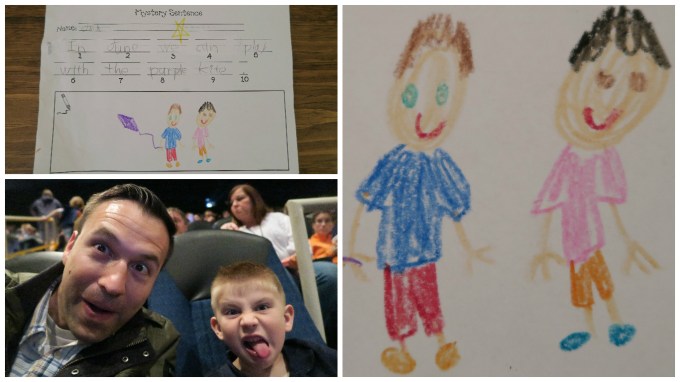
This is 36: The Face of a Dad Whose Family was All Asleep by 9 O’Clock Last Night

Bragging rights! Over here, everybody look at me…

Last night, my whole family was in bed and asleep by 9 o’clock. Seriously, are you not getting jealous reading this right now?

The dishes were done by 8:23 PM, by which time our son had fallen asleep. By that point, our daughter had been asleep for nearly an hour.

Forget Netflix. 

The parents just went straight to bed and instantly blacked out.

Glory!

No cries in the middle of the night from the baby. Since turning a year-old, our daughter has been doing a great job sleeping through the night without even waking up for a “shifting gears” cry around 10:50 PM; which is the time I am more likely to finally get to bed.

Perhaps her diet of more solid foods, and no more formula, is helping with that.

I say it’s a status symbol, as a parent at age 36, with a Kindergartner son and a 1 year-old daughter, to be able to fall asleep at 9 o’clock.

Contrast that to a year ago, when our daughter was too young for me to start applying my cruel and evil (yet extremely effective!) Cry It Out method.

Being able to sleep for over 8 hours, on a week night, is such a prize.

Because it’s not like my wife and I catch a break on the weekends. There’s no such thing as “sleeping in” for us. And once we’re up, we’re working all day long…

Between running errands, getting housework done, feeding the kids, entertaining the kids, and getting them to sleep for naps; plus feeding ourselves and cleaning the dishes… I would argue that we work at least equally as hard all day, as we do for our full-time jobs during the work week.

So yeah, it’s a pretty big deal for the whole family to be asleep by 9 o’clock on a Tuesday night.

This is 36.

“Does My Teenager Have Anxiety?” (Guest Post By Noah Smith with Wellness Voyager)

Photo By: Pixabay

It is normal for your teenager to feel a little apprehensive about making a speech in class or learning a new school schedule, but sometimes these feelings cross the line into an anxiety disorder. Put simply, anxiety is “the body’s reaction to stressful, dangerous, or unfamiliar situations.” However, for some children, the anxiety they feel is debilitating, and could affect their sleep, concentration, ability to talk to others, school performance, and enjoyment of activities. According to the National Institute of Mental Health, adolescent anxiety has a lifetime prevalence of 25.1 percent in children 13 to 18 years old. What’s worse, if it’s not properly addressed and treated in childhood, anxiety could lead to other mental health issues like depression or addiction down the road. It is important that you and your child are able to differentiate normal worries from anxiety.


Recognize the Signs

Anxiety disorders will vary from teenager to teenager, but symptoms typically include excessive fears and worries, a feeling of inner restlessness, and a tendency to be extremely wary and vigilant. Even if there is no reason for your child to feel anxious and they are in a safe, calm environment, they may still experience continued feelings of nervousness, stress, and restlessness. Anxiety can cause physical symptoms as well, such as muscle tension and cramps, stomachaches, headaches, trembling, hyperventilation, nausea, dizziness, shortness of breath, heart palpitations, and sweating.


Anxiety Has Types

Anxiety describes the body’s reaction to a particular situation, but anxiety can be broken down into six different types of anxiety disorders: generalized anxiety disorder (GAD), separation anxiety disorder, panic disorder, phobias, obsessive-compulsive disorder (OCD), and post-traumatic stress disorder (PTSD).

GAD is categorized by excessive worry about events or activities, with the feelings being present almost constantly and floating from one situation to the next, such as fear of poor school performance or worries about what others think of them. Separation anxiety is worry about being away from the child’s parents, with fears often situated around parents not returning as promised or fear that the parent will be harmed. Although this type of disorder is most common in young children, it may be experienced by adolescents in response to stressful life events such as a divorce or deployment. If your child experiences sudden and intense periods of anxiety that come on unexpectedly, they likely have panic disorder, and may experience intense symptoms such as trouble breathing or feeling boxed in.

Fears or anxieties that result from something specific such as bugs, heights, or public speaking are referred to as phobias, and won’t affect your child unless they are directly confronted with the fear. OCD is a condition involving recurrent thoughts, impulses, or images that are hard to control. Compulsions are the behaviors the child partakes in as a means of distressing, such as hand washing or redoing an action or activity over and over again. The last category of anxiety disorder, PTSD, is the re-experiencing of a traumatic event via recollections, dreams, or associations.


Ways to Help

If your child is willing to talk about his or her fears and anxieties, be sure to listen carefully and be respectful of the way your child is feeling. Try to help your child trace their anxiety to a specific situation, experience, or fear in order to help reduce the anxious feelings. Keep reminding them of times when they were initially anxious, such as when they attended their first overnight camp or took their first high school exam, and help them to recall how everything worked out and their anxious feelings subsided.

It is important to recognize that sometimes outside help will be necessary. If the anxiety and fears last over six months, the American Academy of Child and Adolescent Psychiatry (AACAP) recommends seeking professional advice via a doctor or teacher, who can then suggest an adolescent psychiatrist or other professional who specializes in the treatment of adolescent anxiety disorders. Continue encouraging your child to be open with you about their feelings, while simultaneously seeking treatment to help reduce the symptoms of anxiety and the effect it has on your child’s daily life.

Anxiety is a common phenomenon that most children experience at some point in their life, but be attentive to feelings and fears that become intense and affect your child detrimentally. Keep the lines of communication open with your child, and if you notice a change in your child’s behavior, talk with them about it or seek the help of a professional.


-This guest post was written by Noah Smith with Wellness Voyager

Dear Jack: Your Specific Decision to Draw Us Both the Same Size, What It Symbolizes

6 years, 5 months.

Dear Jack,

You brought home a drawing last week from school that shows two boys who are the same size; one with brown hair and the other with darker hair.

After I saw the drawing, you explained, “Daddy, that’s you and me in the picture.”

Obviously, that make my heart smile.

The weekend before, you and I had went exploring together, making the most of the couple hours of it wasn’t raining on that Sunday afternoon. So I imagine how our recent quality time together might have had some influence on you choosing to draw a picture of the two of us.

Then I noticed something peculiar about the drawing: You drew us both the same size.

You’re a very good artist. You know detail. You knew that to make the drawing true to scale, that I should have been bigger than you.

This is something you have proven in every other single drawing you have ever done: Mommy and I are typically drawn as about the same size as each other, and you are always draw yourself much smaller than us.

But instead, you made an artistic decision to deliberately draw you and me the same size.

I believe that is your subtle way of revealing how you process our relationship…

Sure, I’m the parent. I provide for your physical, psychological, and spiritual needs. I ultimately guide you and discipline you on a daily basis.

Yet still, you see us me as a friend, too. You know that I’m 29 and a half years older than you.

But when we’re hanging out and having fun together, I seem more to you like a 6 and a half year-old friend.

It wasn’t a careless mistake that you drew us the same size. That’s what I believe, at least.

Love,

Daddy

Dear Holly: You Live Up to Your Middle Name, Joy

1 year.

Dear Holly,

Saturday morning our family drove a few miles down the street to Ms. Aimee’s place, for her to take your official 1 year-old photos. She was your brother’s preschool teacher when he was 4 years-old. It just so happens that her roommate, Ms. Michelle, was his teacher when he was 3 years-old. But neither of them had met you yet.

Actually, it was Ms. Aimee who helped us find the American Girl doll, which was your main birthday gift from us.

During the couple of hours we were there, both Ms. Aimee and Ms. Michelle couldn’t help but keep bringing up what a doll you are; that you literally look like a doll that has come to life; especially when someone sees you in person, as opposed to seeing a picture of you.

They also noticed how content and happy you are. You’re also expecting the best out of people and the best out of the situation. You go along with whatever we’re doing with a big smile on your face as if to say, “Oh, I’ve never done this before. This is going to be fun!”

Mommy and I didn’t give you the middle name Joy simply because we thought it was a cute name for a little girl. We chose it specifically because, as Mommy explains it, “When you think of a little girl with Joy in her name, how could she not be a delight to everyone around her?

For sure, nothing about your middle name is ironic. You are truly a joy to be around.

I love to spend time with you and take care of you, because I know you are a source of light and life.

Yeah, I have to admit: Mommy and I did a great job naming you Holly Joy.

Love,

Daddy

This is 36: I Am Raising a Son who is a Different Boy than I Was

In hindsight, I now realize in some ways, I was a late bloomer. Back when I was a young boy, I was quiet. I lived in fear of anything outside my comfort zone. I didn’t have any self-esteem issues as a kid, but I really just didn’t care to peek outside of the box of what I already knew.

I remember how at the end of each school year that would pass, my teacher for that grade would tell my parents, “Nick has really come out of his shell this year…”

(And yes, that’s funny because my last name is Shell.)

Finally, by the time I got to 8th grade, I was out of my shell. When I graduated high school, I chose to go to college in Virginia, which was 8 hours away from where I grew up. And during those years, I chose to spend two summers on the other side of the world, teaching English in Thailand.

The way I see it, I was starting to make up for lost time. What things did I miss out on as a child because I was too… comfortable?

But now, I’m fundamentally attracted to what is outside of that same box I used to fear to peak out of. Like I recently said, I want to die as the most open-minded old man you know.

As for my son, he will not experience that same kind of character arc from his childhood to his adulthood. Because, he’s already there, when it comes to being eager to explore the world.

He’s not shy. He’s not quiet. He loves to experience and try new things.

I can easily spot some of the reasons he’s so much more mature than I was at his age.

For every year of his life, he’s traveled to California with my wife and me, to visit my wife’s side of the family. He “grew up in daycare” so he was socialized starting at 7 months old. Not to mention, he’s grown up in a major city. He’s used to the fast pace of Nashville.

I think what might help me understand why he and I are so much alike, despite the 29 and a half year age difference, is this:

He’s not the boy I was. He’s the boy I am now.

This is 36.