Exactly One Year After My National TV Debut on Lifetime’s “This Time Next Year”, How is My Life Different? SEO Vs. TV

On February 27th, 2018, my secret was finally made public, when my year-long quest to find my doppelganger from a package of Campbell’s Soup debuted on a new TV show on the Lifetime Network, called This Time Next Year.

My episode was entitled, “Dudes from Different Latitudes”, which was based on the song I wrote and performed in front of the studio audience; near the end of the episode.

A year ago when the episode finally premiered, I was prepared for a huge jump in the number of visitors on my blog and viewers on my two YouTube channels. I was even anticipating the possibility of getting more opportunities to be on TV in the future.

Instead, my blog readers and YouTube viewers only knew about my TV debut after I brought it up. Even then, they had trouble even finding a way to watch my episode of This Time Next Year.

So how is my life different because of the show? I can’t say that it is.

But being on a nationally aired TV show did teach me this truth: TV is mostly irrelevant.

It is true that since the airing of my episode of This Time Next Year, that my viewership on this blog and my YouTube channels have dramatically increased; along with the revenue I make from these side hustles.

However, that had completely nothing to do with people seeing me on TV. Instead, people are discovering me, in growing numbers every day, thanks to the content that I as an individual am constantly producing.

In other words, the Internet is mightier than the TV show.

And that’s because the Internet is much more relevant than television.

So while it was fun to be on TV, I never needed to be on TV to find an audience; or to make money on the side.

I was not paid anything to be on TV. Meanwhile, I make money in my sleep from the thousands of videos that I have published on YouTube. Everyday, I receive emails from people across the world who offer to pay me money just to be featured as a guest blogger here on my site, so that they can include a link back to their website’s business.

When your audience is the Internet, they find you; despite who you are; not because of who you are.

It’s sort of like the opposite of being famous. They accidentally discover your content through a Google search without ever needing to know your name first.

I definitely wouldn’t turn down another opportunity to be on TV, but I no longer see it as the next big step for my creative career.

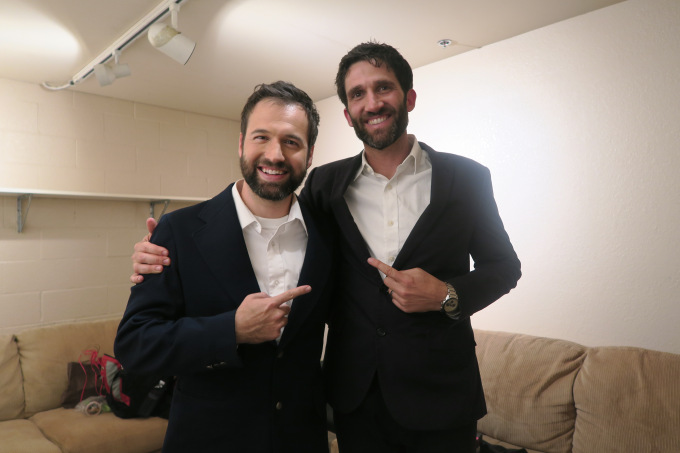
For me, though, the best part of being on TV was getting to meet my doppelganger, Steve. He was such a cool guy to hang out with and get to know.

If we lived in the same city, I know we would be friends. He was the best part about being on TV.

And Steve, if you’re reading this, just know I still feel you are the brother I never had.

My Favorite Facebook Trend of 2010: Getting People to “Like” Your Fan Page

Getting “liked” on facebook is always authentic, right?  I guess I should just ask all 800 of my authentic facebook “friends”.

One of the popular online trends of 2010 has been to try to convince/bribe people on facebook to “like” your fan page.  I hope it’s okay to think that concept is hilarious, because it cracks me up every time.  Sure, having thousands of people “like” Conan O’Brien’s fan page on facebook had to have helped him, but the difference with him was that he nor his crew had anything to do with it.  True fans began and empowered the Coco movement on their own.  But I know that all entertainment and business entrepreneurs are being told by the experts to get people to “like” them on facebook and think up clever sayings for Twitter because this is the age of networking and doing those things helps ensure prosperity or at least survival.  And they’re probably right.

But still, it reminds me of being in the 1st grade and some kid you barely know asks for your slice of pizza during lunch and attaches this promise to his request: “I’ll be your best friend…”  As a young child, even then I always knew there was no authenticity there.  But then again, we are all well aware that at least a quarter of our facebook friends are not actually our friends- in fact, I have no clue who a quarter of them even are, and I bet they would say the same thing about me.

I’m currently (and slowly) reading a book called Microtrends, which explains the power of 1 percent of the population liking anything.  In the introduction of the book, author Mark J. Penn explains, “By the time a trend hits 1 percent, it is ready to spawn a hit movie, best-selling book, or new political movement.” According to the book, that 1 percent of the American population he is referring to literally means 300,000 people; not even a third of a million people.  In essence, the idea behind being “liked” on facebook is an effort to show the marketing executives that one’s cause has a following close to or reaching 300,000 people.

I’m all about other people being successful and even helping them to get there in big meaningful ways, but being asked to be “like” anything ultimately just reminds me of the fact that if everyone was rich, that no one would actually be rich- in the same way, only a limited amount of people can be famous.  And if you try to manipulate the true Invisible Hand of Coolness and Popularity in a room full of thousands of other people also metaphorically yelling to each other, “Hey, look at me!”, the noise just cancels out most of the room, while the actual trend leaders are in a different room down the hall.

I would rather know that a person authentically “likes” me, not by creating my own fan page and asking people to publicly acknowledge my awesomeness in a predictable facebook gesture.  But then again, I’m not cool enough to think up clever Twitter posts either.  I’m so out of touch- I’m such a bitter, old, stubborn man.  Now get off my property!