Senior Care Centre’s Guide to Stress and Care Giving 

According to studies, over half of caregivers have depression, with a majority of them experiencing what is commonly called “caregiver stress” according to Senior Care Center.

This isn’t surprising when you consider how many people who are caring for a parent have multiple other responsibilities that they are juggling as well.  Full-time jobs, raising their children, along with household responsibilities all add to levels of stress that are already high. As part of this process, it is very common for caregivers to put aside their own well-being, feelings, and health. This can be very damaging and lead to a wide range of physical conditions including guilt, sadness, and anxiety. If you need help caring for a loved one, or some advice contact Senior Care Center.

So, if you are caring for an aging parent, Senior Care Center  advised us that you should recognize the following warning signs, and then immediately deal with your stress.

  • Feelings of depression, hopelessness, and dread
  • Unexplained irritability
  • Difficulties with focusing on other aspects of your life, and potentially resulting in reduced work performance
  • Recurrent colds, stomach aches, and headaches
  • Weight gain or loss, and changed eating habits
  • Exhaustion, fatigue, and difficulties with sleeping, either too little or too much
  • Social withdrawal from friends and activities
  • Unusual anger, moodiness, or sadness

When you are caring for other people, it is also critical that you make your own health a top priority. Here are some suggestions for you to consider:

Make lists, and get a daily routine established. Track all of the tasks that need to get done, and then prioritize, balance, and delegate responsibilities. Most important of all, change your schedule in order to avoid exhaustion and anxiety.

Whenever you need it, make sure you ask for help. Getting support from loved ones and friends is a sign of strength and not of weakness. It is critically important that you take good care for yourself so that you can provide your parent with quality care. Beyond immediately family members, many cities have adult care and other types of services available for the elderly. There are also many churches that provide senior programs. With friendly and safe environments and lots of activities offered, make use of outside care in order to give your parent and you a well-deserved break.

Take good care of both your mind and body. In addition to exercising on a regular basis, you should also follow a balanced diet as well, and take the time to get together with friends, enjoy a hobby, and simply to relax. Although it can be hard to leave the care of your parent in somebody else’s hands, it is critical for you to have a break, for at least a couple of hours. If you neglect your own emotional and physical health, you will be left vulnerable to exhaustion and disease.

Get help if you are feeling depressed. Caregivers are at very high risk for depression, however, many people do not even realize they are depressed. Those feelings develop over time and if they are not treated will grow progressively worse. Instead of just hoping the condition will disappear, seek medical help instead. That can make a significant difference.

Talk with a close friend, support group, or counselor on a regular basis. Although you might not want to talk about your frustrations and feelings, it can be beneficial to have an outlet for these emotions. A parent might have behavioral problems – wandering away from home, hitting, yelling – that may stir up painful and unfamiliar emotions. A sympathetic listener can provide the perspective, comfort, and support that you need to get through your day.

It is well worth noting that it can be very challenging to care for an elderly parent but also can have positive effects on your entire family. It provides you with a strong sense of purpose, the opportunity to nurture and strengthen an intergenerational bond, and that positive feeling of knowing you are making a big difference in your parent’s life.
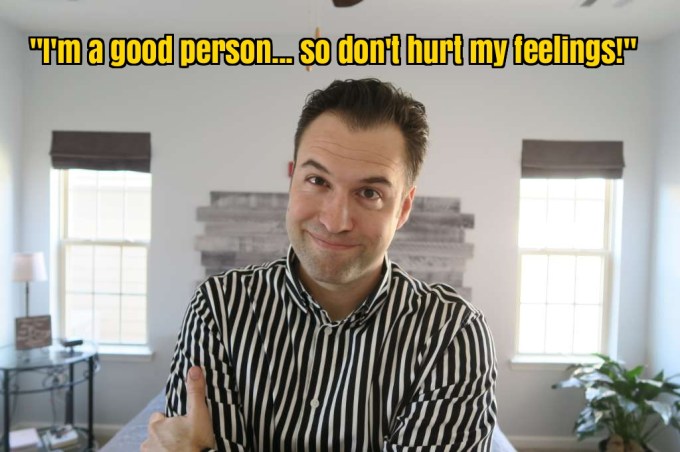

Most People, By Default, Choose to Focus on What They Can’t Control (The Illusion of Karma), Instead of What They Can (Their Own Emotions)

It was about three years ago, when I turned 35, that I taught myself one of the most life-changing lessons (and secrets) about the human experience:

That 100% of the time, no matter what anyone else says to me or about me, I always get to decide whether or not I will allow that person to hurt my feelings, insult me, or disrespect me. Similarly, it’s always a choice as to whether I will forgive another person, regardless of what they have done.

Imagine the freedom that I have been able to appreciate these past few years knowing this unspoken nugget of wisdom: That I alone control how I feel in relation to other people… unless I allow them to control me.

That bit of information is one of the greatest gifts I have received in my life so far. If only I could have known this all along!

Contrast that to the illusion that most people live in: Most people, by default, believe this about themselves:

“I’m a good person. Well, I may not be a saint, but at least I’m not an ax murderer.”

This mindset is generically based on the ideologies of Buddhism and Hinduism. Ultimately, people rely on the flaky concept of karma to determine what good things they do deserve in life and what bad things they don’t deserve in life.

Here’s the problem: Karma, in this understanding, doesn’t actually exist.

Children have terminal cancer. Meanwhile, white collar criminals go unpunished their entire lives because they have the luxury of being called politicians.

Most people make themselves constant easy targets to be offended or disrespected because they believe they are moral people who “deserve better”, while they ironically deny the fact that only they alone decide whether another person offends or disrespects them.

Here’s where I’m at in life:

I don’t see myself as a good person or a bad person. I am a person.

I make good decisions and I make bad decisions.

I don’t deserve good and I don’t deserve to escape bad. I ultimately can’t control those things as much as I would like to.

Instead, I can control my own emotions; especially in regards to how I react to other people.

As goofy as it sounds, being a YouTuber and a blogger for the past several years has taught me this:

People in the comments section are constantly hoping to label me as one of the following:

Wrong, ignorant, and/or immoral.

I feel that in the real world, it’s the same way. People are insecure within themselves and haven’t fully figured out their own identity, so they look for people who will get offended, insulted, or allow their feelings to be hurt when it is applied they are wrong, ignorant, and/or immoral.

So imagine the power you have when you are instantly ready to agree with a person like that:

“You’re right: I’m wrong. I’m ignorant. I’m immoral.”

Man, I wish somebody would have taught me this stuff about 30 years ago!

Dear Holly: You Taught Yourself the Motions to the Songs in Your Brother’s Play

2 years, 10 months.

Dear Holly,

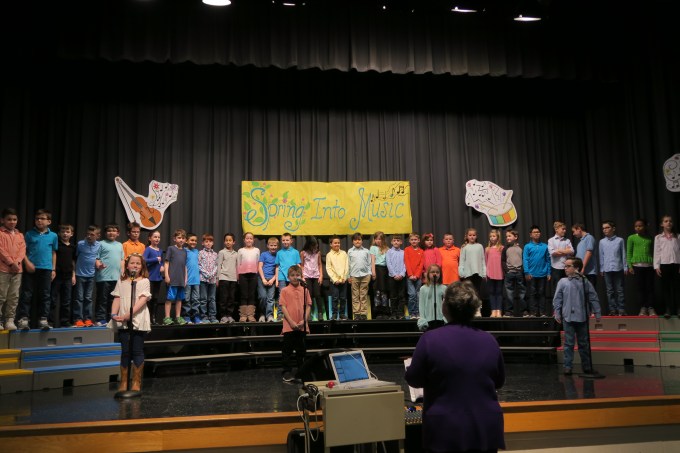
You loved every single minute of your brother’s play last week. While Mommy and I were most excited about his speaking part, your favorite part was the music.

Since we arrived early enough to get 2nd row seats (1st row was reserved for teachers), we were able to spot your brother the whole time.

So after his speaking part, which occurred in first few minutes of the play, he went to join the rest of his classmates who served as the choir.

You quickly noticed that the students had motions to do for each line of the song.

I looked over at you to see that you were actually teaching yourself the motions to each song by watching Jack and his classmates. Actually, I had to remind myself that you had never heard of these songs before when I saw you doing it.

I am sure you would have joined your brother on stage if you would been allowed… then you could have taught the audience the song motions yourself!

Love,

Daddy

Dear Jack: You Did an Amazing Job on Your 1st Speaking Part in a Play!

8 years, 3 months.

Dear Jack,

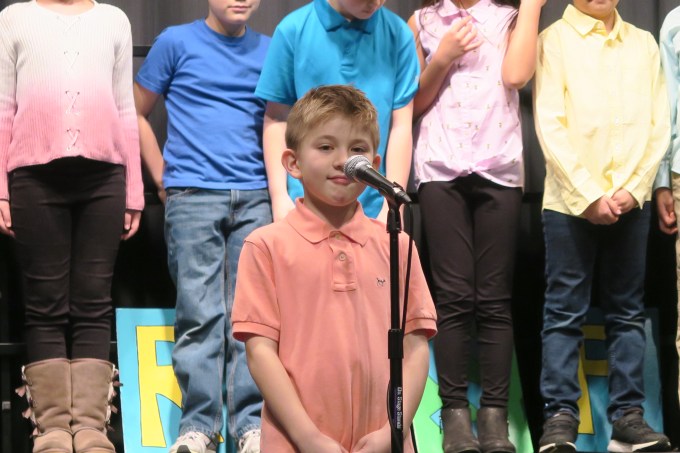
As if I weren’t already proud of you for applying my “life lessons” advice by being the one to volunteer for a speaking part in a play any chance you get, I am even prouder now that you perfectly executed your lines in your 2nd grade’s “Spring Into Music” performance.

I didn’t realize until the actual performance, that you were one of only a few other 2nd graders with a speaking part.

Mommy and I were both right in our reasoning for why we both had been separately encouraging you all year to volunteer to have a speaking part in a play:

My reasoning was that by default, boys typically don’t naturally want to volunteer for a speaking part. Therefore, those who volunteer, get chosen.

Mommy’s reasoning was that it would help you build confidence in yourself and cause you to gain new skills.

Our predictions came true.

I have a feeling you are going to be eager to volunteer to speak in a play the next chance you get!

Love,

Daddy

Dear Holly: You Successfully Crashed Your Brother’s Classmate’s Birthday Party

2 years, 10 months.

Dear Holly,

Your brother was invited to one of his girl classmate’s birthday party at a fun gymnasium.

It happened to be the weekend where Nonna and Papa were in town to watch you and your brother.

I suggested that you just “crash” the birthday party.

Fortunately, that plan came together. Even though you were noticeably younger and smaller than all the other “party friends”, that didn’t stop you from trying everything you brother did.

Granted, there were times your brother had to help you.

But you loved it! Good thing you decided to be a party crasher!

Love,

Daddy