Healthy Parents: 5 Steps to Planning Vegetarian Meals

December 20, 2011 at 6:26 am , by 

13 months.

What is the proper size portion of meat to eat in a meal? In the documentary Super Size Me, Lisa Young, PhD, RD, CDN and the Professor of Nutrition at New York University explains that the federal government defines 3 ounces of meat as a sensible portion.

I knew a guy who got an app on his iPhone that kept up with exactly how many calories he ate each day, as he wanted to only consume the appropriate amount for his age, weight, and height.

Despite being very careful about his food choices, he reported back to me after a week that he was coming up too high on his sodium count each day. I suggested he only eat meat in one of his daily meals, and that he make sure the portion was no larger than a deck of cards.

He did, and that was the only way for him to consume the proper amount of sodium.

To be clear, I am suggesting that eating meat for more than one meal a day (and/or consuming more than a deck-of-cards-sized portion of meat in that one meal) is adding too much meat (and sodium) into one’s diet. So for those who are crazy enough to follow my logic on this and actually believe that information is true and relevant, I want to explain how vegetarians plan their meals; at least how my wife and I do it.

So for the meals you don’t eat meat, you can remember what you learned here today to build a satisfying and fulfilling meal, sans the meat.

1) Half-veggie, half-whole grains, seasoned with cheese. That is the formula for how we plan our meals. No vegetarian should ever finish eating a meal and still be hungry. That’s why whole grain pasta, bread, and rice (along with beans) are crucial  for making a hearty vegetarian meal. Don’t even bother with “white bread,” which  leaves you longing for more substance unless you pair it with meat. It’s like eating a Kleenex; virtually no nutrition.

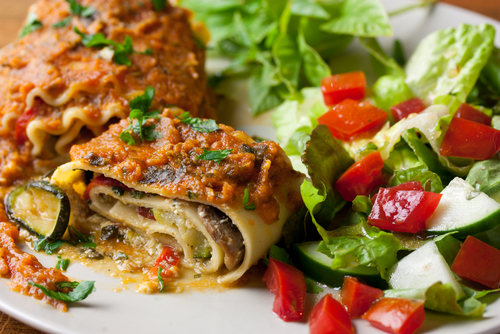
2) Think of your favorite meals that do contain meat, but remove the meat. My wife and I both love lasagna, pasta, and pizza. So we make the healthy version of these foods with whole grain pasta and whole wheat dough. We pack these meals full of veggies, like spinach and zucchini, held together with a little bit of cheese. What’s interesting is that when you use whole grain instead of white noodles or dough, you get fuller quicker on less food.

3) Put together a list of your “heavy rotation” vegetables to serve as your staples. Our list is basically this: spinach, zucchini, tomatoes, onions, garlic, carrots, cucumbers, avocados, romaine lettuce, green beans, green peppers, celery, okra, and basil (which is actually an herb.) We keep all these veggies stocked every week in our fridge to serve as the “flavor” of our meals, whereas the whole grains are the “substance.” Cheese is the “fun part.”

4) Make a distinction between your main dish and your side dish(es). Much of the time, our side dish is a salad consisting of romaine lettuce, cucumbers, carrots, and Italian dressing (full of good fats from oils.) Sometimes it’s sauteed spinach with garlic and a little bit of butter. (As you can see, we’re not opposed to a bit of dairy to make things interesting.) Meanwhile, the main dish may be veggie lasagna or bean and rice burritos stuffed with veggies and avocados in a whole wheat wrap.

5) Make sure your meal has some fat in it. If you end up making a meal that doesn’t have cheese in it, make sure you throw in a whole avocado or at least some almonds. At least for me, I got to have some fat in my meal to be full. Again, vegetarian meals shouldn’t leave you hungry. Otherwise, you’re doing something wrong.

Image: Vegan lasagna rolls via Shutterstock.
 

7 Steps to This Dad Becoming a Vegetarian

December 11, 2011 at 7:28 pm , by 

One year.

I guess, honestly, I’ve known this about myself for nearly three years now. But it took this long to work up the courage to come out of the closet. Plus, I didn’t want to deal with the label of it and the usual assumptions based on stereotypes.

However, it would be pretty hypocritical of me to deny who I am as a person based on my own preconceived ideas of people who are just like me.

So here at the very end of 2011, I am ready to show the world my true colors. For the most part, they’re green:

I am a practicing vegetarian.

This is 7 Steps to This Dad Becoming a Vegetarian, not 7 Reasons Why You Should Become a Vegetarian. This is simply the story of my journey to “meatlessness.” By all means, this has been a slippery slope of a process. Perhaps an alternative title to this should be 7 Things Not to Do If You Want to Continue Eating Meat for the Rest of Your Life.

Here’s how it happened:

1. I watched the documentary Super Size Me. It didn’t make me immediately stop eating fast food, but it did cause me to question the quality of food I was putting in my body and realize the connection of America’s obesity and our Western eating habits.

2. I married a health nut. My wife, who is from northern California, hadn’t eaten fast food since 1999 when she got an ice cream cone from the drive-thru at McDonald’s. Call it love or call it intimidation, but I stopped regularly eating fast food. It helped that she was making us healthy meals which I could have the next day for lunch instead of going to Subway or Wendy’s like I had been.

3. I stopped eating processed foods. The reason for this is that I developed eczema on my hands. My skin disease got to the point where I could barely type, which is unthinkable for a blogger! I learned that whenever there is “no medical cure” for something, it means to change your diet. So I stopped eating processed foods; anything in which sugar is added. I even stopped drinking fruit juice; and for the first time in my life, actually started eating real fruit instead on a daily basis.

4. I watched the documentary Food Inc. Though I knew that meat came from living animals, I never considered the actual process of slaughter or even worse, factory farming.

5. I went kosher. Many people thought I converted to Judaism when I cut out pork and shellfish from my diet; but a kosher diet, along with cutting out processed foods with added sugar, caused my my eczema to finally disappear!

6. I stopped buying meat to cook with. By the time my wife and I had gotten used to the no pork and shellfish thing, not to mention only eating whole grain pasta and bread (no more “white”), our bodies didn’t crave meat as much. So we only ate meat when we went out to eat over the weekend. In essence, we were “weekday vegetarians” by this point. After about a month of this routine, the only meat I even wanted anymore was fish.

7. I read the book Eating Animals. During my very first book giveaway here on The Dadabase, one of the winners was a cool guy named Mike Mitchell. I’m not exactly sure why, but he went through the trouble of mailing me a copy of Eating Animals. It is my opinion that reading this entire book is the point of no return. By the time I was halfway through, I had already made up my mind.

Will I ever eat meat again? Sure. If I it were my only source of nutrition and there was no other option in order to survive, yes I would. I would even eat a pig, which isn’t kosher.

If I was stranded from a plane crash in the Andes Mountains and had to eat the corpses of fallen human beings, I would, if it meant I stayed alive to see my family again. (This is a reference to the actual events portrayed in the 1993 movie, Alive.)

I guess the real question is whether, like a lot of vegetarians, I eventually will become vegan.

But an even more important question is how my wife and I will raise our son, concerning the consumption of meat. As for now, he doesn’t like meat anyway. I seriously wonder though, if I will let the pressure of social expectations cause us to allow our son to eat meat when we won’t eat it ourselves.

I’m still sorting that part out right now. I don’t want to be labeled as the wacko guy on Parents.com who deprives his kid of hormone-injected, factory farmed meat from animals who are so physically weak and unnatural that they can’t even reproduce sexually.

Fun Bonus Thought!

If nothing else, becoming a vegetarian this year has answered one of my life-long questions: What are Vienna sausages made out of?

After learning that most pigs are castrated because Americans don’t like the taste of pork with that much testosterone, I know of at least one ingredient not found in Vienna sausages.

Thanksgiving in July: Tofurky Style

August 1, 2011 at 12:15 am , by 

Eight months.

Every year for Thanksgiving, Vanderbilt University gives a free turkey to all of its employees; unless you’re a vegetarian.  To be clear, my wife and I are not full vegetarians; though the majority of our meals are indeed meatless.

If this makes any sense, our diet reflects a kosher version of the Mediterranean food pyramid.  Needless to say, last November right as our son was about to be born, my wife received her free Tofurky, instead of a regular turkey. However, because he was born so close to Thanksgiving last year, we never cooked our Tofurky.

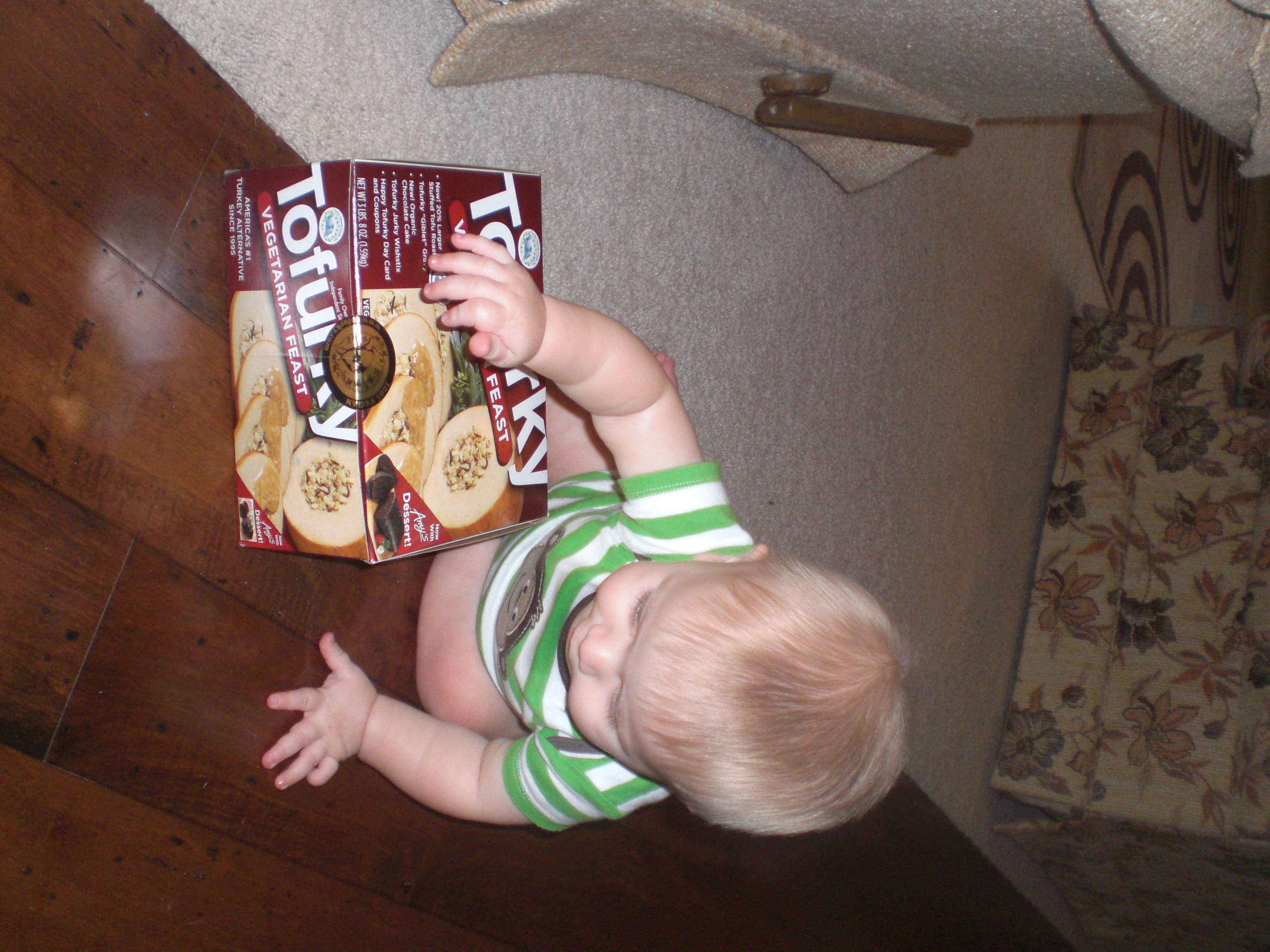
It has remained in a friend’s freezer for nearly nine months, until this past weekend.  We decided to have a very belated Thanksgiving dinner… with a “turkey” made of tofu.  But that’s not all.  A Tofurky comes with stuffing, gravy, a “jerky wishbone,” and even a chocolate cake dessert.

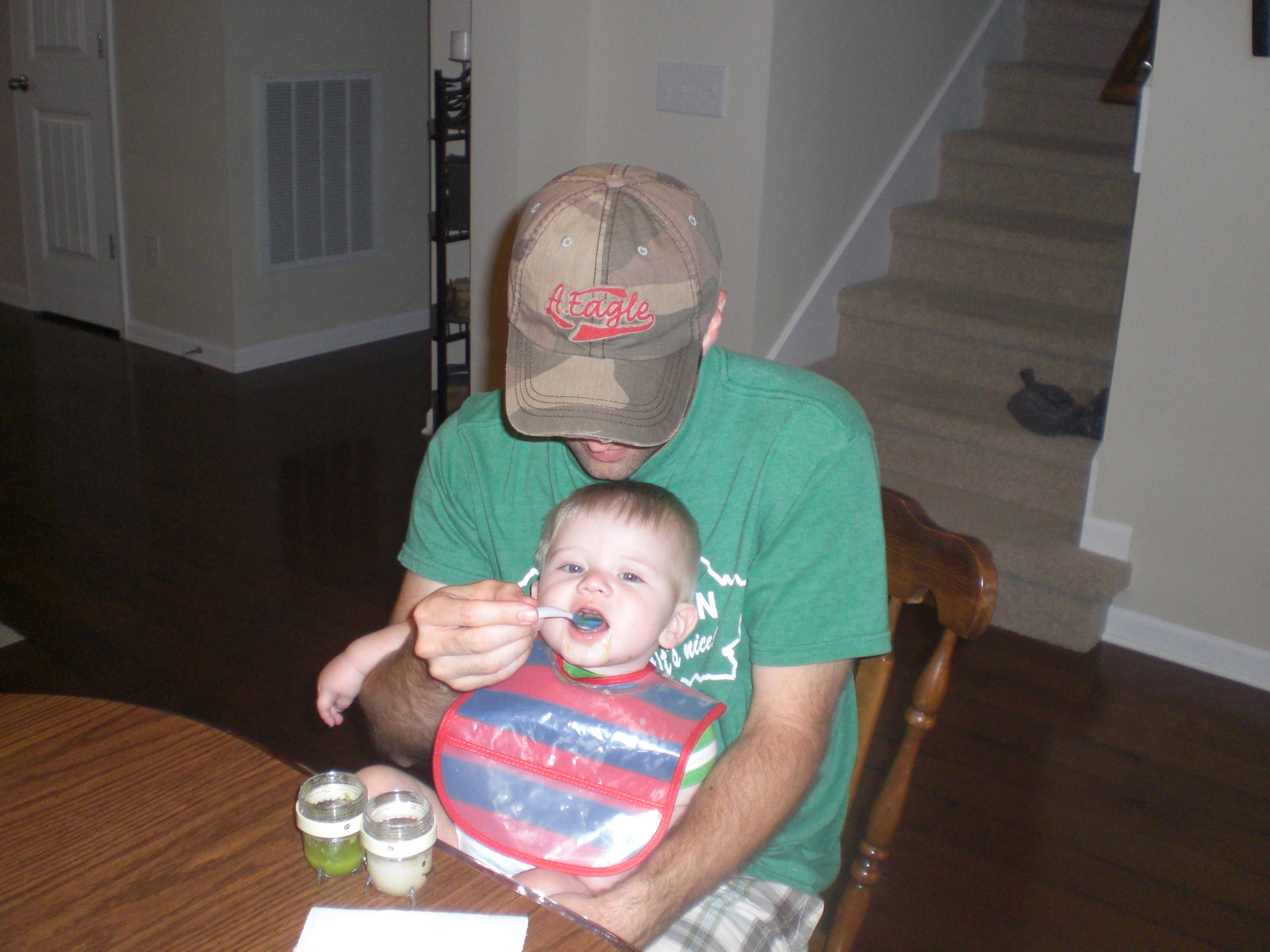
Since Jack’s 7 o’clock bedtime prevented him from joining the festivities, he instead had some zucchini and pears that my wife prepared for him with our Baby Bullet.  Jack will turn one a few weeks before Thanksgiving, so maybe he will get to try some of the real bird… or some of the fake bird, I should say.

So what was I thankful to God for during our Thanksgiving in July this past weekend?

That both my wife and I were able to return to our employers here in Nashville after an eight month sabbatical which we thought was a permanent move.  Not only that, but the fact that both of us are truly enjoying our jobs with a newfound appreciation.

That we were able to get Jack into a really good daycare which is right down the block from where I work.

That despite my wife’s car breaking down for the 14th time, we didn’t get totally stranded in the process; and that my parents are letting us borrow a car from them until we can get my wife’s car fixed.

I am thankful for friends who are gracious enough to allow my family of three to stay with them for the next couple of months until our renters move out of our condo.

And of course, I am thankful for my wife and son whom I can share a July Thanksgiving meal which includes an eight month old Tofurky.  Thank God for them and all that God has taught me through them so far.

Now that July has passed, I need to get ready for Christmas in August…

healthnutshell: The Extremes of Being a Meat Head Vs. Being a Vegetarian

What kind of meat did Jesus eat?

In 1990 as a skinny 9 year-old boy weighing well under 100 pounds, I was so proud of the fact that I could eat an entire Double Whopper combo meal at Burger King.  I impressed my parents and Italian grandfather every Friday night when, by tradition, we either went there for dinner, or the now extinct Quincy’s- “Home of the Big Fat Yeast Roll”, and I ate more than any of them.

In fact, one of my childhood catch phrases was “I need more meat.  If there’s no meat, it’s just like eating air”.  I was one extreme carnivore.

Much has changed since then.  As I’ve slowly slipped down the slippery slope of eating organically, it only seemed natural that I would eventually become a vegetarian, or at least go through a vegetarian phase.

Oddly enough, the deciding factor in whether or not I should attempt vegetarianism was based a question derived from a tacky 1998 bracelet craze: “What would Jesus do?”  I asked myself, “What did Jesus eat?”

Jesus ate meat.  He absolutely ate fish- he was a fisherman and even performed miracles which involved multiplying fish to feed thousands of his followers.  In fact, every time I’ve read about Jesus eating any kind of meat in the Bible, it’s always been fish.  Of course, knowing that Jesus was Jewish meant that by religious tradition he also ate some lamb and beef.

It’s safe to assume that Jesus ate a lot of fish and just a little red meat.  (But of course, he didn’t eat pork, being a law observing Jew.)   And that’s the basis of the standard I go by: The less legs, the better.

Zero legs: Fish have no legs, meaning they’re the healthiest kind of meat to eat.  Except predator fish (like sharks), bottom feeders (like catfish, shrimp, crawfish), and shellfish (scallops, clams).

Two legs: Chickens and turkeys.  They eat seeds, worms, and sometimes small mice.  They aren’t as healthy eaters as salmon and tuna and tilapia, but they’re better four-legged animals.

Four legs: Cows.  They should be fed grass, because feeding them corn causes health problems for them.  But even when we eat organic, grass-fed beef, our intestines aren’t long enough to fully digest the meat.  On the other hand, a true carnivore, like a wolf, has long enough intestines to properly digest the meat for all its nutrients.  As for pigs, they are scavengers, just like a possum or a vulture, so that’s why I am so adamant on not eating pork whatsoever (healthnutshell: No Pork on My Fork).

The less legs, the better.  Except for predators, carnivores, bottom feeders, and shellfish, which all feed on other animals they killed and ate, or the remains of dead animals they found along the way.

I am not a vegetarian, but I only eat animals that are.  Eating animals that are carnivores and scavengers is the problem.  Meat is not a bad thing or unhealthy at all as long as it’s the right kind of meat.  And the right amount of it.

Recently, studies have been popping up that show that Seventh Day Adventists live longer than the rest of us: Their men live 9.5 years longer and their women live 6 years longer.  Aside of limiting alcohol intake, exercising regularly, eating a health amount of good fats (nuts), most Seventh Day Adventists are either vegetarians or near-vegetarians.

http://lifetwo.com/production/node/20070107-longevity-seventh-day-adventists-life-expectancy

http://www.islandpacket.com/2009/05/16/846639/study-finds-seventh-day-adventists.html

While I will not convert my faith, I have converted to the Seventh Day Adventist  lifestyle of limited meat consumption.  Typically, only one of the meals I eat in any given day actually has meat in it.  And even then, it’s tuna, salmon, tilapia, chicken, turkey, and a few times a month, beef.

But that’s only so good.  Because what good is it to only eat meat once a day if the portion size is too big?  I look at my hand and visualize the size of my hand without fingers.  That’s around 4 ounces of meat, a quarter of a pound.  That is the proper portion size of meat that I will allow myself to eat per day.  Not per meal.

Because if nothing else, by eating more than a fingerless hand’s worth of meat in a day, I am consuming too much sodium.  Because meat equals sodium.  And too much sodium equals heart disease and high blood pressure, which equals heart attack.

Was it easy to become this way? No.  But not because I go around hungry.  Because it takes more deliberate planning of my meals to make a health meal without meat.  But I’m getting it figured out.

I only eat meat at dinner.  For lunch, sometimes I pack a salad, or a rice and been burrito, or even some homemade, whole wheat English muffin pizzas with low-fat cheese.  All with a generous portion of fruit on the side (which I’ll be writing more about soon: Fruit by the Foot.)

For several months now, I’ve been doing this.  And I’m not hungry in between meals because I eat fruit.  And then of course at dinner, I eat meat with green vegetables.

If I can add 9.5 healthy years onto my life by not being a meat head, it’s worth it to me.

Here’s a post from one of my writer friends that she just posted this morning, which I highly endorse:  http://www.meetmissjones.com/2010/04/real-food-wednesday-journey-to-real-food/

Capital Punishment, In Theory: Do You Support the Death Penalty Enough to Do It Yourself?

To ensure that capital punishment was followed through with, would you yourself be willing to take the life of a convicted, guilty criminal?

Back in November, I wrote a post asking the question, “If the only way you could eat any meat was by actually killing the animal yourself, would you still be a carnivore?” (click here to read it http://wp.me/pxqBU-ef). I ended up saying that I am a hypocrite- I couldn’t bring myself to killing animals as regularly as I eat them. (Though since then, I have begun trying only eating meat with dinner, and having vegetarian lunches.)

Recently, thanks to Netflix’s instant streaming, I have found a new series to satisfy me until LOST comes back in February. It’s a Showtime original called Dexter. He is a “blood splatter analyst” for the Miami Metro Police Department. He has unique insight and information regarding criminals who he knows are guilty but can not be convicted because of lack of evidence proven in court.

Interestingly, Dexter himself learned as a young teenage that he had a desire to kill people. His foster dad saw this and guided him into the possibilities working in the police force. So in addition to his day job as a blood splatter analyst, he also hunts down the criminals and kills them himself.


Dexter is a serial killer. He kills murderers on his own time, without the acknowledgement of the Miami police department. And has the know-how to get away with it. So other than breaking the law by killing the criminals, is what he is doing really so bad? He’s killing serial killers. Though he is one himself. He doesn’t kill innocent people, though.  Just the killers.

I am thoroughly entertained by this TV show, yet I can’t go unaffected: It forces me to sort out how I feel about capital punishment. I have always believed that without a doubt murderers and rapists should be killed. That’s what I am sure of.

But who pulls the trigger? Who turns on the electric chair? Who holds the responsibility of killing another human being? Of sending them into eternity? Like Dexter, does it take a certain kind of person to execute this kind of justice?

For those who don’t believe in capital punishment, there’s no need to continue reading. This is for those who are like me- those who do support capital punishment, but haven’t necessarily been able to sort it through. This is my way of sorting it out.

So the question is this: To ensure that capital punishment was followed through with, would you yourself be willing to take the life of a convicted, guilty criminal?

I’ve thought it through. I say yes, I would be willing to do it. Because if I say no, then like my earlier question about only eating the animals I killed myself, I make myself a hypocrite.

Aside from the fact I would be taking the life of murderer or rapist, what would hold me back? Knowing that I am in a way playing God. Why am I okay with that? Am I somewhat deranged for admitted I could do it if I had to?

Is there justification in executing a murderer or rapist? I looked it up. From everything I found in the Bible in old Jewish law, murderers are to be put to death. Along with people who commit adultery. But not rapists.


And that’s annoying because that doesn’t add up to where I stand. I want it to say that murderers AND rapists should be executed. But it doesn’t. And I definitely don’t believe that a person who cheated on their spouse should die for it. That seems quite harsh.

Why is it so common for murderers and rapists to repeat the crime once they are released from prison? Because they can’t “learn their lesson”. Something traumatic happened in their earliest years of childhood which corrupted the way they think. While they were at one time an innocent child who may have been a victim of violent abuse or rape, they are now an adult who has chosen to continue that pattern. I don’t see how giving a person like that a second chance is an option.

It’s not a question of revenge. I want no part in revenge. But I do support justice.

This scenario was played out in Season 5 of LOST. Sayid travels back in time and shoots Ben as a child. An adult tries to kill a future serial killer. The ethics of Kate prevented Ben from dying. She took him to get help and his life was saved.

I would say that few people would be willing to do what Sayid did- to try to kill a future serial killer. Because that’s altering the life of an innocent child.

But once that corrupted child has grown up and proven that are corrupted by murdering or raping another person, I don’t see how anything can change them. They can be forgiven by God and people, yes. But not excused from the law of man.

The thing is, there’s no way around the fact that executing wrongdoers is a necessary part of life. War is a great example. Our country fights the bad guys. The other nations who are out to get us and/or other countries. They are the ones who attack. We must defend ourselves.  Self-defense.


But even then, who are we fighting? A lot of the soldiers in the armies we fight against are fighting us because they don’t have another option. Their own corrupt government is often the one forcing them to fight us.

If they don’t fight for their country, they may be executed by their own army. If they do fight for their country, our country may execute them in war. They lose either way. But if we don’t kill them, they will kill us. We can’t avoid the situation.

But going back to capital punishment for our own criminals, why can’t we keep them in prison for life? Aside from the millions of dollars in cost us in taxes every year, we have a justice system that often lets them back on streets eventually. And as mentioned before, they often repeat the crime when they are freed.

The biggest issue I have in sorting all this out has less to do with whether or not I could execute a guilty person and more in deciding what crimes are worth of death. I say murderers and rapists. But where are the lines drawn? I’ll leave that to the courts to decide.

I don’t see capital punishment as a political or even a religious issue. Because in all I’ve researched, political and religious groups are split on the issue across the board. It’s one of those issues that isn’t cut and dry. It has to be pondered and discussed and seen from many perspectives.  But it can’t go ignored.  Someone has to answer the call.

But if we say really support capital punishment, in theory we should be willing to be the one who executes the criminal. If not, we are saying it’s wrong to murder a convicted criminal. Or that we’ll let a person who is more fit for the job take care of it.  And do we think that the person who is willing to execute the criminal is less moral than else? Do we fear God will judge us for carrying out what we perceive as justice?

By agreeing that certain criminals should be put to death, we are already making that decision in our mind that it’s justified. But there is something scary about the thought of carrying out that action ourselves. Ironic.