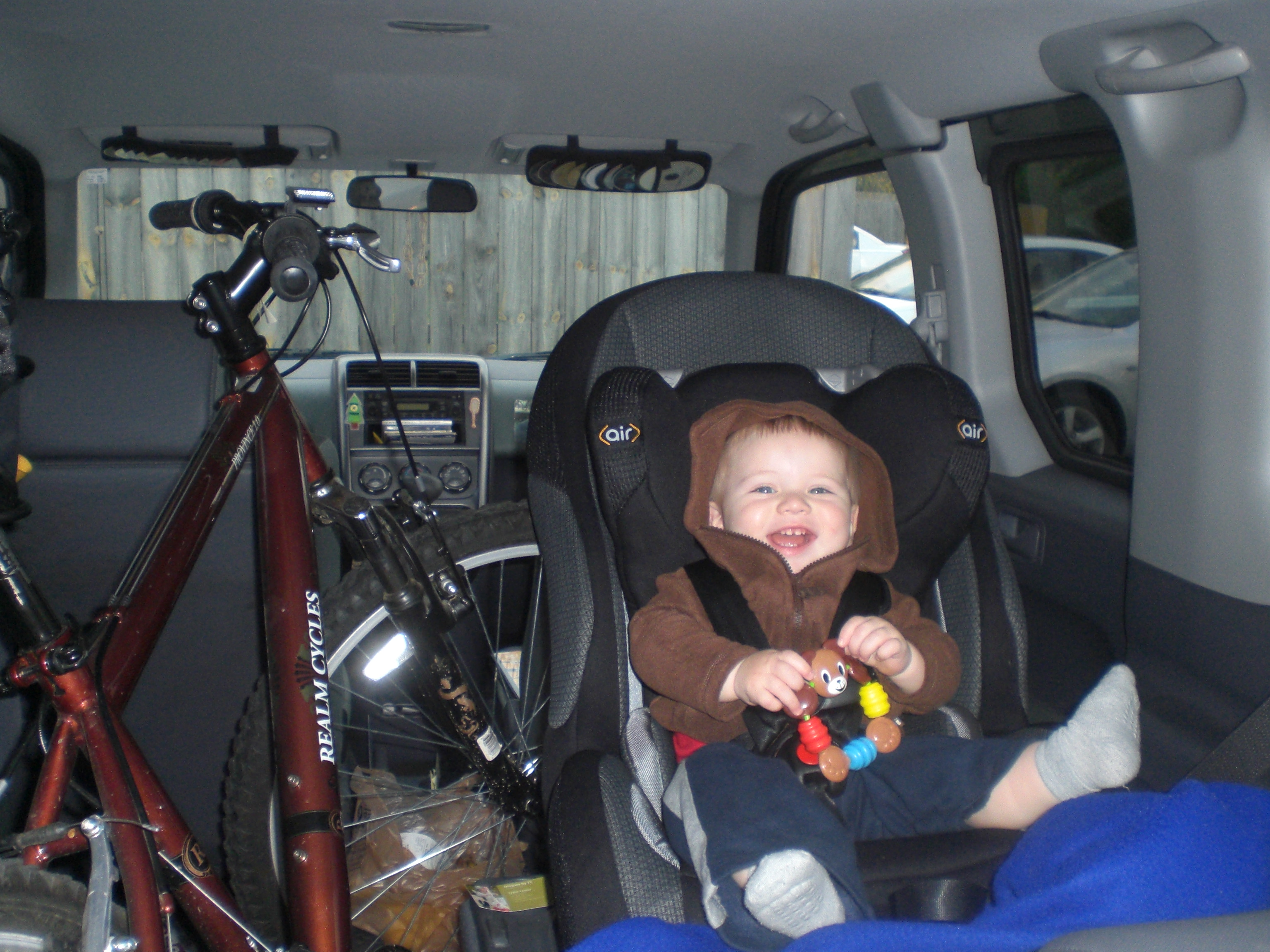
Dear Jack: Webisode 19 of Jack-Man- “Chinese Field Trip”

4 years, 9 months.

Dear Jack: Webisode 19- “Chinese Field Trip”

Dear Jack,

Two weeks ago when our family was on vacation in Sacramento, you and I shot a webisode of Jack-Man.

Right across the Sacramento River from Grandma’s house is a little village called Locke, which was populated by Chinese immigrants about a hundred years ago.

Dear Jack: Webisode 19- “Chinese Field Trip”

I decided it would make a fun locale for us, so I wrote the webisode around it, also tying it in to the 2015 Camry our family was given that week to review. (I’ll have plenty more pictures and videos of all the other cool stuff we did, too.)

In “Chinese Field Trip,” things are shaken up when Jack-Man and Green Meanie have to work together in order to find their way back from China to Sacramento; when they both mysteriously end up in a geographical loop hole, or portal, that transports them both, along with the 2015 Camry, to the other side of the globe.

Dear Jack: Webisode 19- “Chinese Field Trip”

Basically, I just wanted to explore the tiny Chinese village with you, but I figured it would cool if we captured it on camera while wearing our funny costumes.

I also custom wrote this little song for the Webisode 19:

“Keys to the Camry”

The keys to the Camry, I gotta find

This puts me in a bind, not gonna lie

China’s quite lovely this time of year

But I’m not supposed to be here

The only way back to Sacramento’s in that Toyota

If we don’t make it back to California I’d settle for a

Place just a little closer even if it’s Minnesota

I do appreciate this field trip

The culture and the ambience is so hip

Right about now I could really use a selfie stick

I’d impress my Facebook friends

And here it is!

Be on the look-out for several more fun videos and stories coming up, based on our family’s adventures in Sacramento; including a trip to the Monterey Aquarium and the Santa Cruz boardwalk.

Also, here’s the walk around video of the 2015 Toyota Camera that is referenced in “Chinese Field Trip.”

Love,

Daddy

c2 c3

Red Hot Chili Peppers for Babies?

November 8, 2011 at 9:38 pm , by 

Eleven months.

After listening to nothing but the Red Hot Chili Peppers’ newest album in the car for the past two weeks straight, I switched to the mellow, non-consumerism theology of Jack Johnson. But my son didn’t like that very much.

You might think that I am 43 and my son is 13. Actually, I’m only 30 and he’s just eleven months old.

Something funny about my son is that he has never been able to chill out and go to sleep when confronted with appropriate lullabies and soft music. As a newborn, it took Taylor Swift’s upbeat and rockin’ album, Speak Now, to soothe him into Slumberland.

Several months later as I began driving him to daycare, he needed any given Weezer album playing in the car. And it’s been that way since July.

But a couple of weeks ago, I found the Red Hot Chili Peppers newest album, I’m With You, at Best Buy for 10 bucks. Since then, my son Jack has to have it playing on the stereo speakers.

If I try to trick him and switch to something like Jason Mraz, he wakes up and starts crying. So Red Hot Chili Peppers it is; for a total of 80 minutes a day as I chauffeur him to and from KinderCare; I work just down the block from his daycare.

Jack is such a laid-back little boy. But he makes up for it in his refusal to easily fall asleep when he needs to. It’s a struggle- always has been.

In fact, I depend on those daily naps he gets during the car ride. So if it takes a funk rock or punk rock, or even ’80′s rock to get the job done, I’m all for it.

I guess there’s just something about steady bass lines and up-tempo drum beats that help him relax enough to forget about the fact he would rather be exploring the world; especially now that he can toddle. (He turns a year old a week from today and will officially become a toddler.)

So if you’re looking to catch a ride with Jack and I, you better believe we’ll be jammin’ to the beat of “The Adventures of Rain Dance Maggie.”

Why Bruce Springsteen’s “Born in the USA” is the Most Anti-Patriotic Song to Ever Be Loved by America as a Nationalistic Anthem

Like many Americans in my generation, I’m confused by what it means to be “patriotic.”

It’s interesting to sit back and watch while half of America cheers after hearing about the execution of Osama bin Laden then the rest of America chastises them for cheering the death of an enemy, as they misquote Martin Luther King, Jr.  The concept of being a patriotic American is surely much different than it was my for grandparents and their parents.  Being completely honest, I think a lot of us are actually confused about what it actually means to be “patriotic.”  Is it possible to be a proud American and to be proud of our military, yet to be ashamed of some of our nation’s foreign policies?

In May of 1984, country artist Lee Greenwood released “God Bless the USA”, the song many of us think is titled “Proud to Be an American.” The song truly embodied traditional patriotism; no doubt about it. Then just five months later on the day before Halloween, Bruce Springsteen released the song “Born the USA.” Maybe it was because radio listeners were still in a truly patriotic mood thanks to Mr. Greenwood, or maybe they were just blinded by the catchy, rockin’ beat of Mr. Springsteen’s song.  Either way, “Born in the USA” became a legendary hit;  though largely for the wrong reasons.

President Ronald Reagan even referred to Springsteen’s song in one of his speeches, believing “Born in the USA” embodied the message of the American theme of making dreams come true. However, Bruce Springsteen’s song was actually about the effects of the Vietnam War;  including the fact that often the American soldiers who came back from the war were not welcomed when they returned, not being seen as heroes like the war veterans from decades before.  In fact, I can’t help but wonder if some of the song’s lyrics would disqualify it from being played on the radio today, being that they are too “politically incorrect.”

I believe that 27 years later, “Born in the USA” perfectly captures the confusion of people like me, who want to be patriotic in the same way as my grandparents were, yet are so sick of the politics of politics.  I don’t want to be left to choose between traditional Republican or Democratic agendas.  I want another choice- one with a different policy on our economy, our constitutional rights, and how we handle international war as well as “the war on drugs”.

Like this Springsteen shirt below? Clear here to find the price for it on Amazon!


Every Breath You Take of the Air Tonight

What were Phil Collins and Sting really singing about?

It happened just a few weeks after I was born, then again exactly two years later in May of 1983. A man living out the final months of a dying marriage releases a song that goes on to become one of the biggest hits of the ‘80’s and most replayed songs on syndicated radio stations like Jack FM. Both of these men’s songs were destined to be misinterpreted and misunderstood. Songs that were sad realizations from a man watching the love of his life slip away from him, though she shared his bed every night. I’m referring to Phil Collins’ “In the Air Tonight” and Sting of The Police’s “Every Breath You Take”.

Known for its memorable drum introduction over two minutes into the recording, its ghostly atmosphere, and its refrain of “oh Lord” that allows the song to exist not only has a premonition of his soon divorce and confrontation with his then-wife, but also as a desperate acknowledgement that God is overwatching the nightmare unfold, “In the Air Tonight” remains the perfect song for a drive on the interstate on an overcast day in October.

However, to many fans of the song (who wouldn’t be?), the meaning has always been vague and abstract.  Obviously some mysterious big event is about to happen and the accusing tone reveals anger, distrust, and sadness. So it only makes sense that a believable urban legend was born: A man watched Phil Collins’ brother drown and didn’t try to save him. Phil Collins years later invited the man to his concert and gave him a front row seat and sang the song to the man to drench him in guilt. The man later died of a heart attack. I believed this story for three years, until I did some research myself (on Wikipedia) to find out the truth. The Drowning Man Theory makes sense and it’s easy to want to believe it. But once I found out it’s a song about Phil Collins’ fading first marriage, the depth and weight of the song became so much clearer to me.

In a strange parallel, Sting woke up in the middle of the night and wrote “Every Breath You Take” as he watched his first marriage disintegrate. It went on to become the #1 single of 1983, surprisingly beating out all of Michael Jackson’s mega-hits that year (Thriller, Billy Jean, Beat It, P.Y.T., Human Nature, The Girl is Mine, Wanna Be Startin’ Somethin’). While the song comes across as a vow of undying love to many, with its promise to keep watch over his object of affection, it’s actually the opposite. It actually described Sting’s feeling of deep loss, knowing he would never fully get over losing his first wife. He didn’t want to let her go, but the marriage was ended regardless. Therefore, the “stalkerish” feel of the song is completely intentional.

Two British men who fronted successful pop rock bands in the 1980’s both wrote a song at the end of their marriage that went on to be a classic and unforgettable hit. And many people will never know the truth about the background of the writing other than what is written here. That’s often the case though: Some of the biggest legendary things in life are surrounded by mystery, only adding to the intrigue.

Predetermined and Preconceived Expectations (My Take on Encores, Bartering, and Who Pays for Dinner)

Yes, the title is redundant.  But there isn’t a more appropriate way to describe how ridiculous some of our modern traditions are.

Since the 7th grade, I have been to more concerts than I can count; starting from  when Christian rock music was still awesome (from 1992 to 1998) with now defunct bands like dc talk and Audio Adrenaline, to current favorites like Guster and John Mayer, to class acts like Michael Buble.  I love music and I love concerts.  (Yes, there are people who don’t actually like music at all.  They are the ones who say they like all music, including both rap and Country equally.)

After you’ve been to a few concerts, you become overaware of how virtually every concert will end:  After the “last song” is finished, the band hurries off the stage while saying “Good night (enter name of city where the concert is), you’ve been great!”  But the lights stay off in the auditorium or arena.  This gives the necessary opportunity for the audience to cheer “Encore!” or “We want more!” until the band predictably returns to the stage to perform a few more songs- where they typically include at least one acoustic version of one of their songs and also one of the band’s most notable songs they conveniently left out of the main set.

Fact: Encores are lame.  I say either [crap] or got off the pot.

In my mind, this concept clearly relates to the mostly un-American tradition of bartering.  During my first summer teaching English in Thailand, I paid full price for souvenirs.  If a price tag had said that an imposter Hard Rock Café: Bangkok t-shirt would cost me 7 or even 10 bucks, I paid it.  Because that sounded pretty reasonable to me.  But by the end of that first summer, as Thai friends starting accompanying me, I learned that the asking price was not meant to be taken seriously.  If the asking price was $10, the after-barter price was typically as low as $5 or even $3.50.

As an American, I had been used to finding my own way to negotiate prices in America: With coupons or Internet specials, or simply just “price shopping” until I found the store with the cheapest price.  I pride myself in never paying full price for anything if I can help it.  But in Thailand and in so many Third World and developing countries, there are no coupons or Internet specials.  Instead, you barter with the merchant.  Otherwise, you get hosed.

Granted, bartering does indeed exist in America.  Like when you buy a car, go to a garage sale, or buy something off of Craig’s List.  But typically it’s not worth my time to do business that way.  I’d rather spend my time finding the product somewhere else where the price is firm and already low.  Otherwise, I will not be an active consumer.

Fact: Bartering is lame.  Instead of getting involved with the predictable “buyer asks too low a price, seller asks too high a price” banter, I will simply find another way to buy the product.

Lastly in my trilogy of examples is the awkward game of “who’s paying for dinner?”  If I am going to buy someone’s dinner, I am very clear with them up front before we arrive at the restaurant: “I am taking you to dinner.  I really appreciate how you (I name the reason I am buying their meal, even if it’s as simple as thanking them for their general kindness and friendship).”  There is no guessing to be done.  I am buying their meal.

That means when the waiter comes by the table when it’s time to pay up and asks, “Will this be together or separate?” there is no grabbing for the bill by both me and the other person.  I don’t like the feeling that I owe someone for anything unless there’s a good reason for it.  So this whole idea that “you bought my meal this time, so I’ll buy yours next time”, it doesn’t work for me.  Because then I have that “IOU” hanging over my head.  Let’s make it simple.  If you want to buy my meal, tell me up front.  As I will do the same.  Otherwise, it’s assumed that we’re paying separately and the only bill anyone grabs for at the end is their own.

Fact: I can’t truly enjoy a meal if I think there’s a chance that I am expected in the least to grab the other person’s bill.

I live a simple life where clear-cut expectations make me happy.  This is my version of reality.