The Surprising Reason I’m Happiest about Sea World Ending Their Killer Whale Shows

The Surprising Reason I’m Happiest about Sea World Removing Orcas from Their Shows

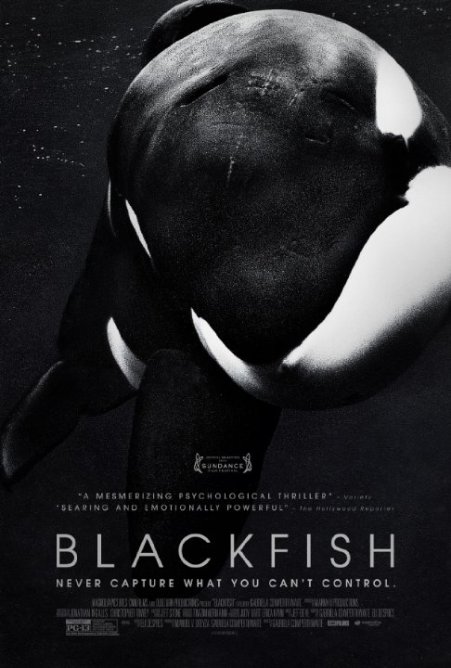
I am not an animal rights activist. I’m not a tree hugger. But watching Blackfish a couple of years ago forever changed my view of orcas.

Yesterday I couldn’t help but notice that in addition to “Non-Christmas Starbucks cups” making the news this week, another headline grabbing attention is the fact that Sea World has officially surrendered:

Sea World will soon be ending its theatrical killer whale show.

They are still able to continue breeding orcas in captivity, but at least this news is a major step in the right direction.

Each day on my Facebook feed, I’ve kept up with Blackfish; ever since I watched the documentary when it first came out 3 years ago in 2013.  I’ve watched how sponsors of Sea World have dropped out due to the controversy, I’ve learned how attendance continues to diminish, and now, I’ve seen how in a last ditch effort to please stockholders, I know now that Sea World has decided to make their killer whale show a thing of the past.

Ultimately, this all happened because of a documentary that people watched on Netflix (not movie theaters), and then from there, word began spreading online about Sea World’s history with orcas.

The surprising reason I’m happiest about Sea World removing orcas from their shows is this:

It’s proof that when enough of the free market becomes enlightened on an issue, positive changes can take place… even without the assistance of the government, ridiculous bans from far-right or far-left groups, or violent protests from the people.

Sea World isn’t dropping their orca show due to our government passing a law saying they can’t… or because certain groups officially “banned” them like Starbucks coffee, or because some lunatic bombed Sea World.

Instead, this happened because the free market collectively became educated on the subject and the free market decided it would not continue to support Sea World’s killer whale shows like it used to.

That is much different that an official “ban” against Sea World.
http://www.sandiegouniontribune.com/news/2015/nov/09/seaworld-san-diego-phase-out-killer-whale-show/

I am happy about this because it is another phenomenon in which documentaries on Netflix influence casual watchers like us to actually consider changing our views, and possibly, the way we live our lives.

Though it’s never been more popular to throw money at causes to help “raise awareness and find a cure” for cancers and diseases, there have also never been more people who are more concerned with actually preventing those cancers and diseases.

I ultimately became a vegan (and therefore finally rid myself of dyshidrosis eczema, severe sinus issues, and allergies to animals) after watching casually watching documentaries on Netflix; like Forks Over Knives, and Vegucated.

It makes me wonder other ways the world can become better thanks to documentaries on Netflix.
Parenting is the Most Controversial Thing I Do, Apparently

July 9, 2011 at 4:07 pm , by 

Seven months.

I find it fascinating that as parents, we are often quick to point out the perceived flaws of other parents, as if it’s some game to “out” who the “bad parents” really  are in our society.

After 48 hours of being published, my post “Positively Communicating with My Seven Month Old Son” received over 1,300 “likes” on Facebook.  Interestingly, during that same short period of time, on Parents Magazine’s Facebook page my article received 167 comments; most of them vehemently criticizing me, while some passionately supported and defended me.

I’m learning just how polarizing my perspective on parenting can be.  When I published that post, I had no idea that it would ever become so popular, as well as, so infamous.  I just thought it was another post like any other day.  It didn’t stand out as particularly special to me.  Boy, was I wrong- because it hit a sweet spot for so many readers and struck a nerve with the rest.  People either completely loved it, or hated it as much as I despise the TV show 16 and Pregnant.

Some of the best entertainment I’ve had in a while was reading through all the comments on the Facebook wall for Parents Magazine.  While I felt so encouraged from those who supported me, the majority of the people who opposed my viewpoint said some really angry and/or hilarious stuff.  (One of my favorite comments involves a unicorn.)

A common occurrence from several readers was the feeling that my tone was snobbish.  This was implied because I stated I don’t like to see parents sarcastically joke about giving their kids away to strangers in public. (What about parents who can’t have children? How do they feel when they witness this same event?)

Sure, it regularly crosses my mind that having a child is tough; especially when he is not behaving as I would like. But I’m his dad and I’m suppose to be his number one supporter, not his number one critic.

Am I naïve and inexperienced when it comes to being a parent?  Of course I am. I’ve only been a dad for seven months.

I have to speculate that that has something to do with why Parents.com chose me as their official daddy blogger, instead of a seasoned veteran who actually knew what they were doing.  My lack of experience is one of the reasons The Dadabaseis interesting- because I am a newbie.  I am learning something new as a parent everyday.  I am wet behind the ears; that’s sort of my specialty here.

However, I was additionally perceived as a snob because some readers felt that I do not yet have the authority to write about communicating with my child because he is so young. But like I said in the article, I’m setting up the patterns now for how I will speak to him as he gets older.  After all, it’s a gradual process and this is my way of preparing for it.

Another reoccurring (and I believe, caricatured) perception of me from those who disagreed with my viewpoint  is that I am a hippie living in La La Land. That I am just so easygoing that my son is going to walk all over my wife and me as he gets older.  That I am so preoccupied with not speaking sarcastically to my son that I will completely neglect the need for discipline.

Ironically, just a couple of days ago I did Dadabase post about I how endorse and practice the “cry it out” method to get my son to sleep at night, prompting one reader to post this comment: “Actually, what you have done is not teach him to sleep well, but teach him that, no matter how hard he cries, how scared and alone he feels, or what his needs may be, you will not be there for him… Congratulations!”

The truth is, I actually worship the importance of creating structure for my son, setting realistic expectations for him, and when the time eventually comes, following through with discipline; not just threatening it.

It’s interesting to me that  I am paradoxically both a snob and a hippie. What a weird combo.

Side note: Thanks to the Facebook wall comments, I was made aware of the fact that there was a typo in the article.  I said “my wife and I” when I should have said “my wife and me.”  My college degree is in English, of all things.  So that’s one embarrassing faux pas.  I went back and fixed it.

To some,  I came across as a snob who thinks I am better than other parents and that my parenting style is superior to theirs.  Similarly, these same readers jumped at the chance to criticize me for disagreeing with their own parenting technique.  Is it safe to assume that these readers who so passionately disagree think that their parenting style is superior to mine?

As parents, we all do what works best for us and what we believe will be best for our children.  We all have controversial parenting styles compared to other parents out there.

But while it may appear that I am clueless or fanatical to be so darn positive, just know this: My head may be in the clouds, but my feet are planted firmly on solid ground.

Intentional symbolism.

New Infographic: “The Science Facts About Autism And Vaccines”

I feel that one of the ways I “matured in social media” while serving as the daddy blogger of Parents.com for the past 3 years was to actually stop writing from such a polarized perspective. I have no desire to make people argue with each other in the comments section.

Instead, I enjoy starting open-minded conversations. I like to bring people together, not divide them.

CNN and Fox News are both ridiculous. I seek truth without a right or a left spin.

That’s why you’ll probably never see me endorse a Presidential candidate again. Because I’ve learned that basically half of America is die hard Republican while the other half is die hard Democrat. Our election process is set up in a way to where politicians are rewarded for not compromising, but instead, sticking 100% to the predetermined agendas and ideals of their party affiliation.

By refusing to consider the other side’s point of view, politicians (and voters) can keep themselves from being open-minded because of it.

Similarly, it seems the same way with other polarizing topics; like abortion, gay marriage, or the deity of Christ.

And don’t forget, of course, the controversy of whether or not vaccinations are harmful; particularly, whether they cause Autism.

So with that being said, I want to share this new infographic called “The Science Facts About Autism And Vaccines”.

I believe it contains some interesting information that is worth at least considering.

When it comes to vaccinations, I have always remained… indifferent. What I mean that is I personally refuse to get a flu shot, but I have never been opposed to children receiving vaccinations, because I think there is a lack of evidence proving that it is harmful; especially that there is a link between Autism and vaccinations.

And that’s exactly what this infographic shows…

Don’t get me wrong. I definitely have solid opinions on certain topics, but for certain polarizing one like this one, that get people “shouting” at each other online (in ALL CAPS), I prefer just to hear more facts before making a decision, if I don’t already have one.

But as for me personally, regarding Autism, I still think there’s a good chance that exposing children to too much TV and media devices at too early of an age is linked to Autism.

I guess I’ll have to wait for someone to make on infograph on that…

vaccines-and-autism

Source: Healthcare-Management-Degree.net

The Science Facts about Autism and Vaccines

What started the rumors?

1998: Lancet published a paper by Dr. Andrew Wakefield it was a dramatic study that found a connection between autism and vaccines

The Study Had Some Problems:

  • Not based on statistics
  • No control group
  • It relied on people’s memories
  • Made vague conclusions that weren’t statistically valid

No Link was Found, so people started investigating his claims


Following Dr. Wakefield’s study, here’s what other more rigorous studies found:

      • 1999: A study of 500 children no connection was found
      • 2001: A study of 10,000 children still found no connection
      • 2002: A study from Denmark of 537,000 children found no connection
      • 2002: A study from Finland of 535,000 children. Guess what? No connection

“They had conducted invasive investigations on the children without obtaining the necessary ethical clearances… picked and chose data that suited their case; they falsified facts.”

    • 2004: Lancet released a statement refuting the original findings
      “They had conducted invasive investigations on the children without obtaining the necessary ethical clearances… picked and chose data that suited their case; they falsified facts.”
    • 2005: A review of 31 studies covering more than 10,000,000 children, also found no connection
    • 2012: A review of 27 cohort studies, 17 case control studies, 6 self- controlled case series studies, 5 time series trials, 2 ecological studies, 1 case cross-over trial covering over 14,700,000 children

No link to autism was found in ANY case, in all of the studies.

Vaccine Vilification Survives

  • 1/4 of U.S. parents U.S. parents believe some vaccines cause autism in healthy children
  • 1.8% of parents opt out of vaccines for religious or philosophical reasons
  • There have been 0 credible studies linking vaccines to autism
  • Recently an anti-vaccine religious community has seen measles outbreaks

Although Declared Eradicated in 2000…

  • France reported a massive measles outbreak with nearly 15,000 cases in 2011
  • The U.K. reported more than 2,000 measles cases in 2012

Before Widespread Vaccinations of Babies

  • in 1980, 2.6 million deaths from measles
  • in 2000 562,400 deaths 72% of babies vaccinated
  • in 2012, 122,000 deaths 84% of babies vaccinated

In the United States, Whooping Cough Shot Up in 2012 to Nearly 50,000 Cases

A new study concluded thatvaccine refusals were largely to blame for a 2010 outbreak of whooping cough in California.

A new study concluded that vaccine refusals were largely to blame for a 2010 outbreak of whooping cough in California.

It is clear that immunization protects children from disease and saves lives. Outbreaks of many deadly diseases are on the decline globally, thanks to vaccinations. Immunizations can help eradicate many dangerous childhood diseases. Just like Smallpox, they too can be wiped off the face of the Earth. In the U.S., we almost had Whooping Cough beat in the 80s — then Dr. Wakefield’s fabulously flawed paper was published:

  • 1960s – 150,000 cases of whooping cough
  • 1960s – Widespread vaccinations introduced
  • 1970s – 5,000 cases of whooping cough
  • 1980s – 2,900 cases of whooping cough
  • 1998 – Dr. Wakefield’s paper published
  • 2004 – 26,000 cases of whooping cough
  • 2012 – 50,000 cases of whooping cough

Common Vaccine Myths

  • Vaccines are ridden with toxic chemicals that can harm children
    Thimersol, the chemical being referenced, does contain mercury. However, thimersol has been removed from scheduled vaccines and only resides in the seasonal flu vaccine.
  • The decision to not vaccinate my child only affects my child
    Un-vaccinated children who contract a disease can infect infants yet to be inoculated, the small percentage of people whose vaccines did not take, and people with compromised immune systems.
  • Receiving too many vaccines at once can override a baby’s immune system
    Baby’s immune systems are strong enough to defend from the day to day viruses and bacteria with which they come in contact; they can also handle the vaccines. Remember, vaccines use deactivated viruses in their ingredients.
  • Drug companies just do it to make profits
    According to the WHO, estimated 2013 global revenues for all vaccines is around $24 billion, which only accounts for approximately 2 – 3% of the total pharmaceuticals market.

Vaccines Work!

Positive effects of vaccines:

  • Helped eradicate Smallpox
  • Save about 8 million lives every year
  • Significantly reduce disease in the world
  • New and underutilized vaccines could avert nearly 4 million deaths of children under the age 5 by 2015