The Amazingly Obnoxious Sound of the Baby Buzzer!

June 2, 2011 at 10:03 pm , by 

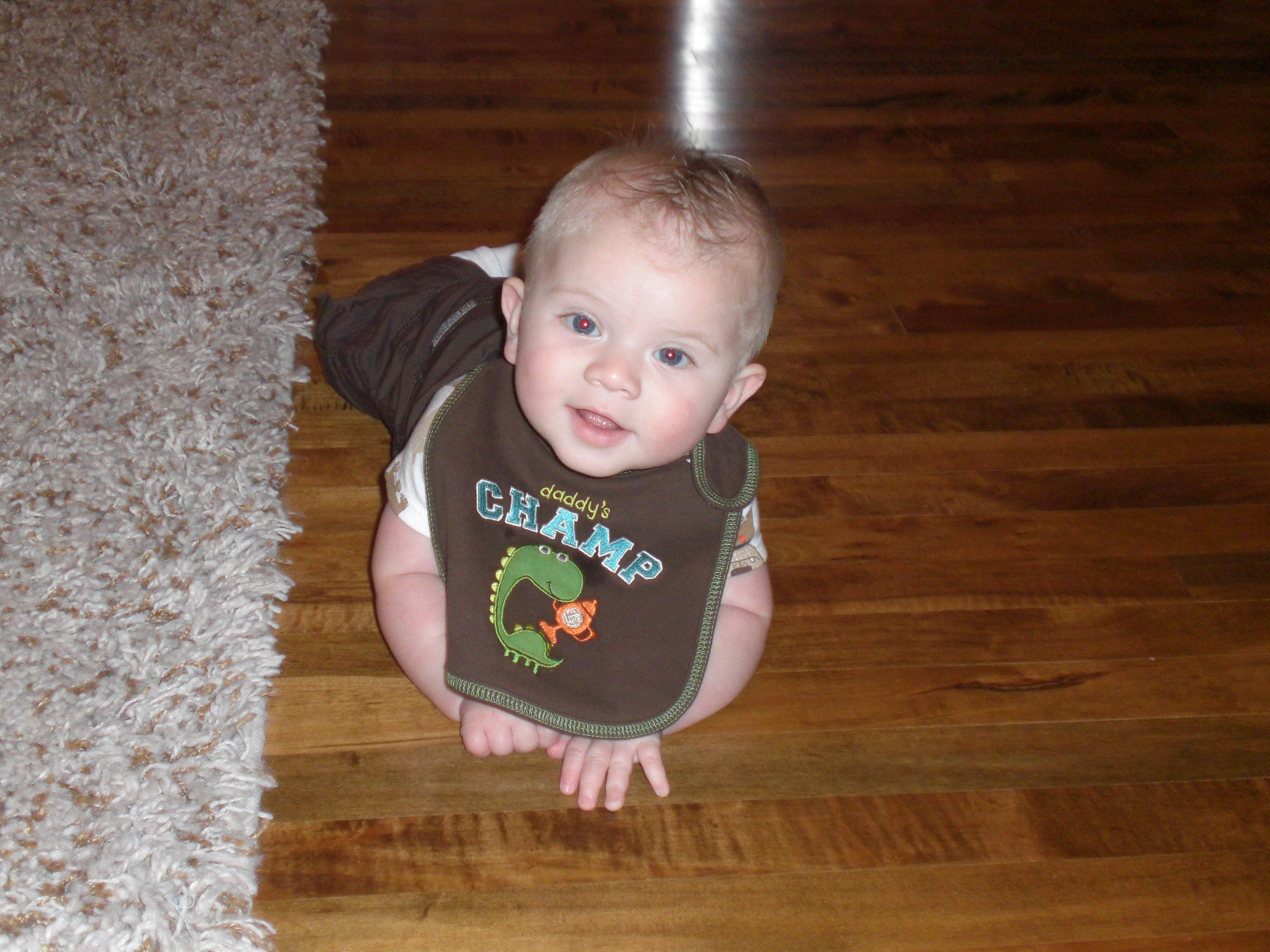
Six months.

The Dadabase

Want to hear the most annoying sound in the world?  No, it’s not that weird mutant sheep sound that Jim Carey makes in the classic comedy, Dumb and Dumber. Instead, the noise that rattles my cage and ruffles my feathers every time is the cry of my son.

Yes, he is an easy going little guy.  But he is human.  So when he cries for lack of sleep or food, everyone in the room becomes aware of it.

It’s a high frequency, shrill, scratchy, siren that makes me turn my head a little sideways whenever I hear it.  There is no way to ignore him when he cries.

His cry is motivating; that’s for sure.  It instantly motivates me to rush to fix whatever the problem is; mainly so the noise will stop wrecking my inner ears. But also because he’s a little baby who can’t communicate the way we adults can. All he can do is cry, at this point in his development.

So I have to respect that process, despite the fact that his crying is downright offensive to listen to.  He doesn’t ask nicely.  He doesn’t give me a minute to finish up whatever I’m in the middle of.  Hearing that cry is the worst sound to be interrupted by.
The Dadabase

But God knew what He was doing when He designed babies to cry like they do. Imagine a world where you could actually ignore a baby when they need something.  I can’t.  A baby’s cry is part of the necessary breaking-down phase of parenthood.

My son’s cry is the height of what I call “the baby buzzer.”  If his cry is a “10″ (on a scale of 1 to 10), then down at “1″ is his gentle correcting sound he makes when I am rocking him to sleep, but not holding his head at the right angle.

I hear, “mrrrraghttk…” It’s like his way of saying, “Nice try, but no cigar.”  That sound makes me think of a cross between Frankenstein and the sound effect when you touch the tweezers to the metal in the board game Operation.

It can be challenging for me to deal with a baby who can’t communicate the same way as I do.  Because I am a guy who is obsessed with open, clear, positive communication. But with a baby, a lot gets lost in translation.  Somewhere between my “Why are you crying?!” and his “I’m laying down on my pacifier and it’s hurting my back!”

I’ll be glad when he and I speak the same language.

Yes.  I know, that’s a whole other ball game: A kid that can say “no.”
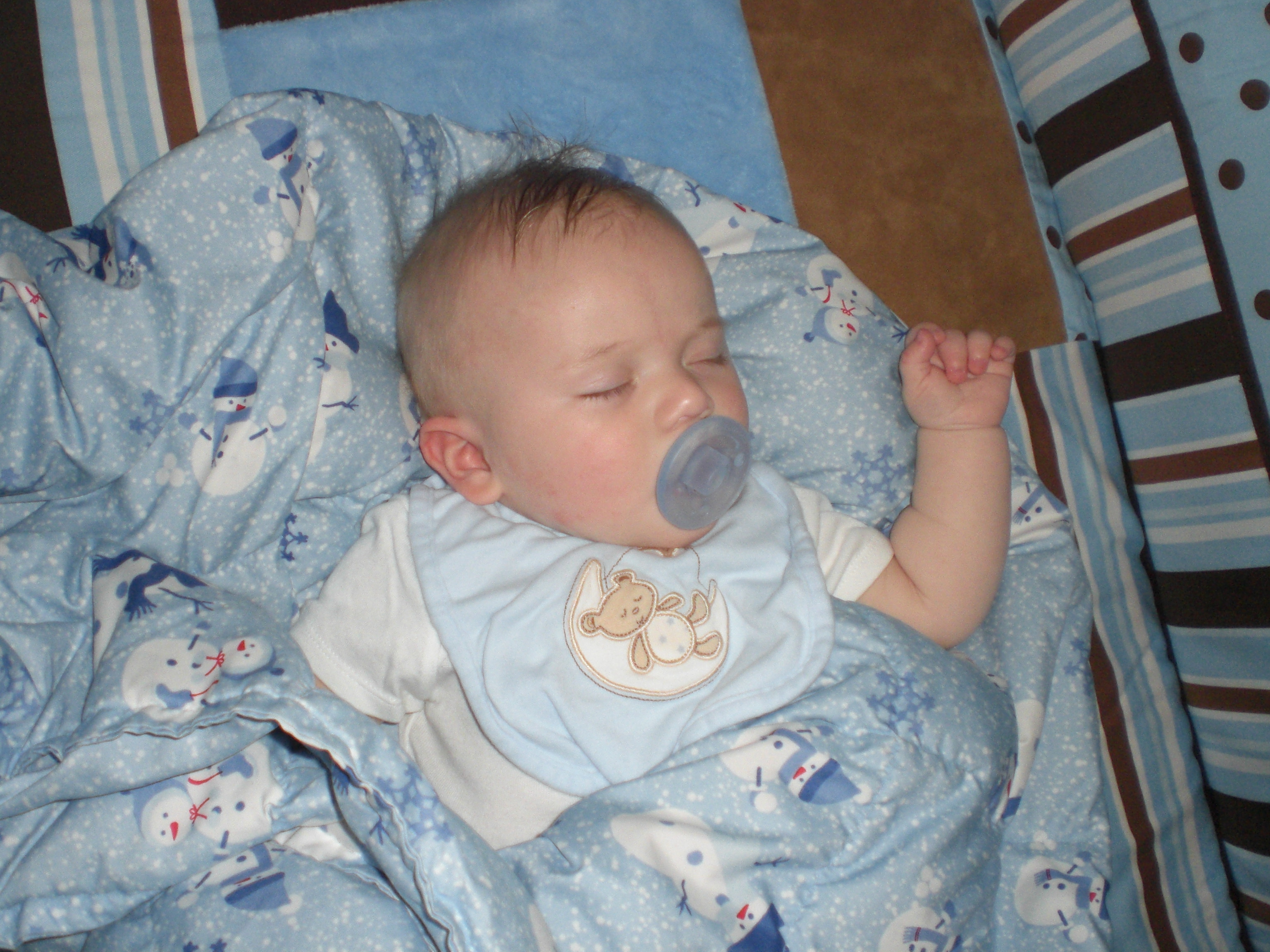
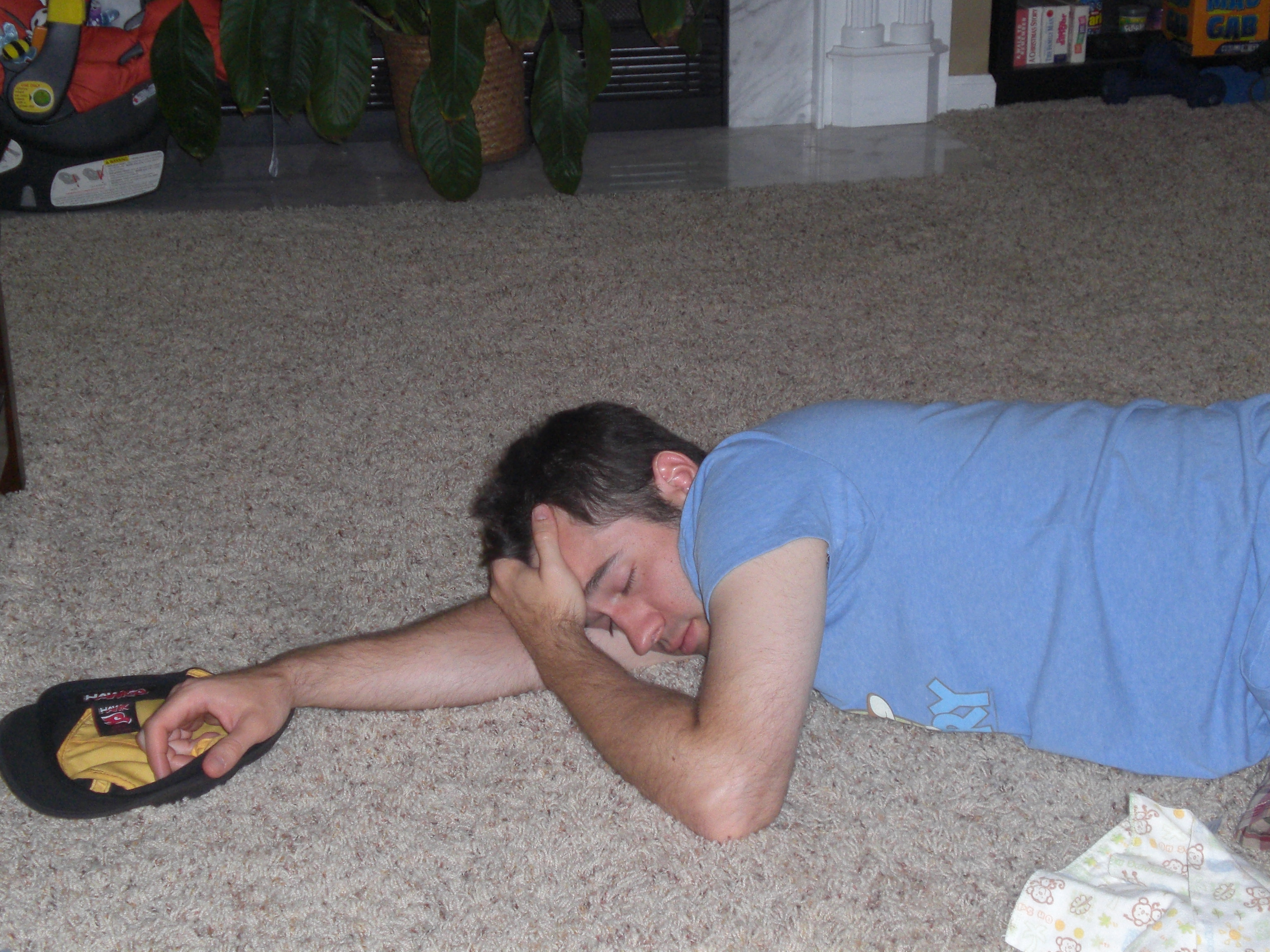
baby sleeping

The Positive Re-branding of Fatherhood

June 1, 2011 at 10:48 pm , by 

Six months.

The Dadabase

Dads need better PR; that’s where I come in…

In popular American culture we are definitely familiar with hearing the term “Supermom;” a phrase which is typically followed by a brief description of itself when it is used in conversation: “She’s Supermom.  She does it all- takes care of the kids, the cleaning, the cooking…”.  But honestly, have you ever heard anyone use the phrase “Superdad”?  My guess is, not until just now.

Why is that?  Well, that’s not a tough question to answer.  But I will answer it by quoting one of my favorite authors, Michael Chabon, from the first chapter of his book, Manhood for Amateurs: “The handy thing about being a father is that the historic standard is set so pitifully low.”  In other words, simply by showing up and “being there,” a man can meet the positive social expectations of being a dad.

Evidently our society is so accustomed to the relatable lyrics of man-bashing songs sung by beautiful young pop singers that part of us begins to believe that most men really are the losers that inspire hopelessly victimized females to post “Men are jerks!” as their Facebook status update.

What I’m not concerned with is what percentage of America’s men really are like the previously mentioned stereotyped villains.  Instead, what is worth focusing our attention on are the real life husbands and fathers who are doing it right. When I think of the men in my own life whom I look up to, including friends, family members, co-workers, and even acquaintances, it’s the unsung heroes of fatherhood who come to mind.  It’s the men who aren’t insane, selfish, abusive, cruel, idiotic, buffoonish, lazy, cheaters, and/or addicts.

The Dadabase

A few weeks ago I was back in Nashville visiting my friend Joe Hendricks, who is expecting his first child with his wife, Rhonda.  As we talked about how our lives are changing by becoming dads, he confirmed one of my preconceived ideas when he said, “I really think dads are making a comeback.  They’re becoming more actively involved in their kids’ lives than they used to be.”

I believe it.  We are reaching a point in history where as a dad, you’re either a hero or a zero- you’re either “all in” or you’re “all out.”  Men are learning to find their identity and their purpose in fatherhood, not despite it.  In fact, it’s actually cool to be an actively involved dad these days.  There are actual social undertones of respect that men receive when it is apparent they sacrifice their own wants and desires for their family.

Is it a coincidence that you are reading a “daddy blog” right now?  Why did Parents.com deem it necessary for a normal dad like myself who holds no impressive psychology degree or dozens of years of counseling experience to craft his paternal thoughts before an enormous audience on a daily basis? Because there is value in positive, relevant, everyday (not mediocre) fatherhood. There is a need for the voice of good dads to be heard.

The Dadabase

If this so called re-branding of fatherhood is to take place, how can we go about making it happen on a large scale?  Do we need to tell men to be better husbands and fathers?  Nope, because that would be A) nagging the ones who need to hear it most and B) preaching to the choir for the rest of the men, who already are good fathers and husbands.

That makes me think of a blog post by Jon Acuff of, Stuff Christians Like, who recounts how most Mother’s Day sermons he’s heard throughout his lifetime do nothing but praise mothers, while Father’s Day sermons typically, in contrast, preach to men to step up to the plate and stop being so selfish.

How do you inspire a man?  Encouragement.  Positive reinforcement.  By positively confirming with him what he is doing right, he will become eager to repeat his good behavior.  No man wants to be a failure, nor does he want to feel nagged.  Especially not a good or decent man.

So as the author of The Dadabase, my focus on deliberately proclaiming this positive re-branding of fatherhood is for the men who are already leading the way.  As for the rest, if they’re cool enough, they’ll catch on and join us.

The Dadabase

Learning to Crawl and Working Out the Kinks

May 31, 2011 at 9:02 pm , by 

Six months.

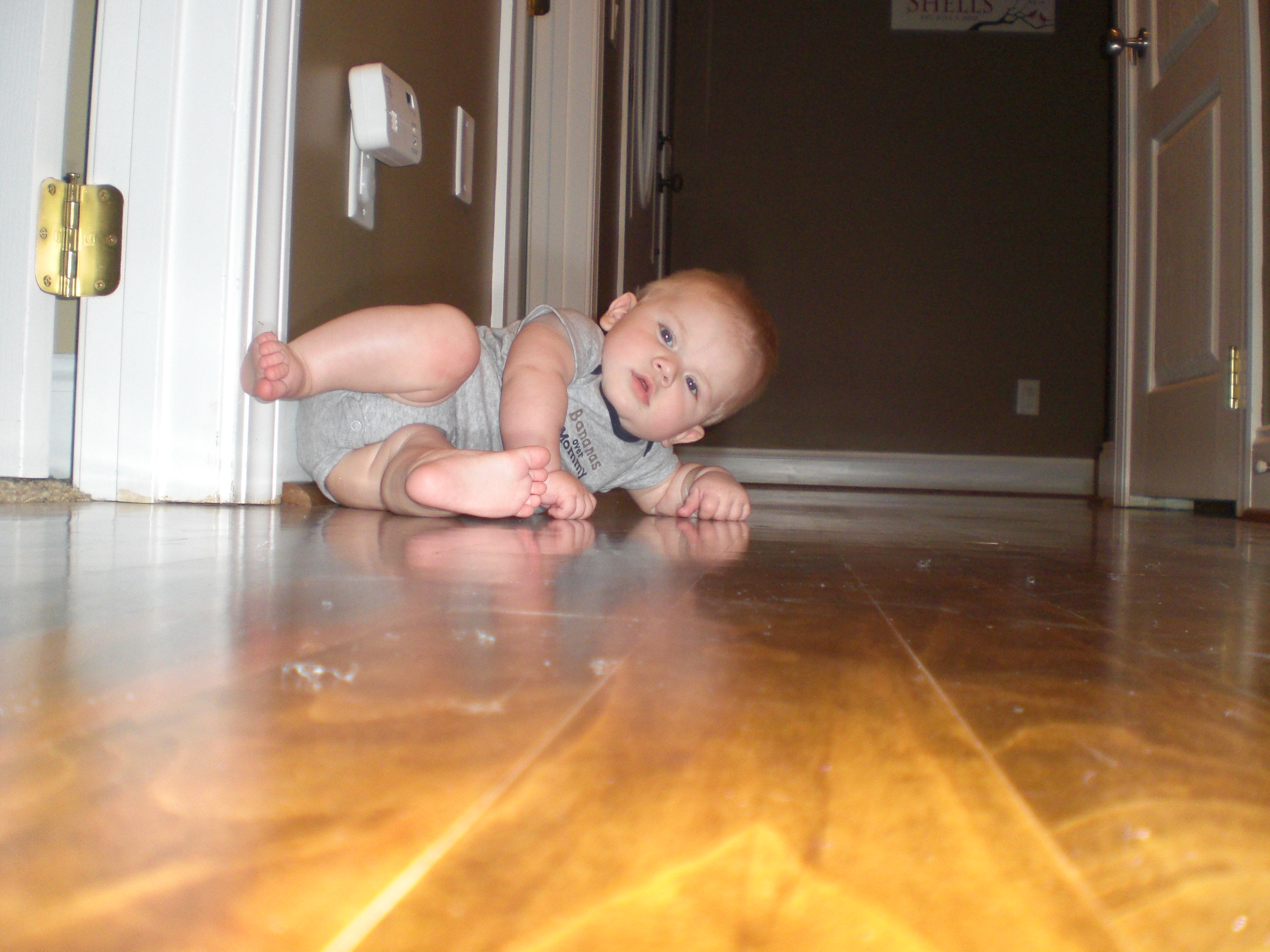
baby crawling

We are on the brink of that epic moment, when Jack’s upcoming freedom of mobility becomes his parents’ newest responsibility.  At six months old, Jack is figuring out how to crawl.

Last Monday in between commercial breaks of The Bachelorette premiere, my wife Jill had just left the room and I was hanging out with Jack on his play rug. Having just muted the TV, I tossed the remote control aside.  It landed a few in front of Jack.

He got that intuitive look in his eyes.  Jack focused all his strength and energy on that piece of modern technology.  And then he went for it.  A few seconds later: mission accomplished- TV remote in mouth.

In a classic ’80′s sitcom tone, I called out to my wife: “Uh, Jill… you’re gonna want to see this…”.  I removed the remote control from Jack’s slimy hands (it was like taking candy from a baby), gave it another toss a few feet away from him, and again our son crawled towards the new location on the rug.

The Dadabase

Once Jack realized he could crawl, he didn’t stop until his bed time.  We learned that other great motivational tools include cell phones and cameras.  If it’s an electronic device, it’s worth the crawl.  Of course, at this point, his crawl isn’t perfected.

Instead, it reminds me of what Alex Pate got me for my 10th birthday at the local bowling alley on April 20th, 1991.  (More on that event in an upcoming post potentially entitled “Don’t Drop the Baby!”)…  I’m referring to a wind-up Ninja Turtles action figure called Creepy Crawling Splinter, because Jack’s crawl is so low to the ground and his legs sort of get lost in the shuffle.  It’s amazing, yet sort of hilarious.

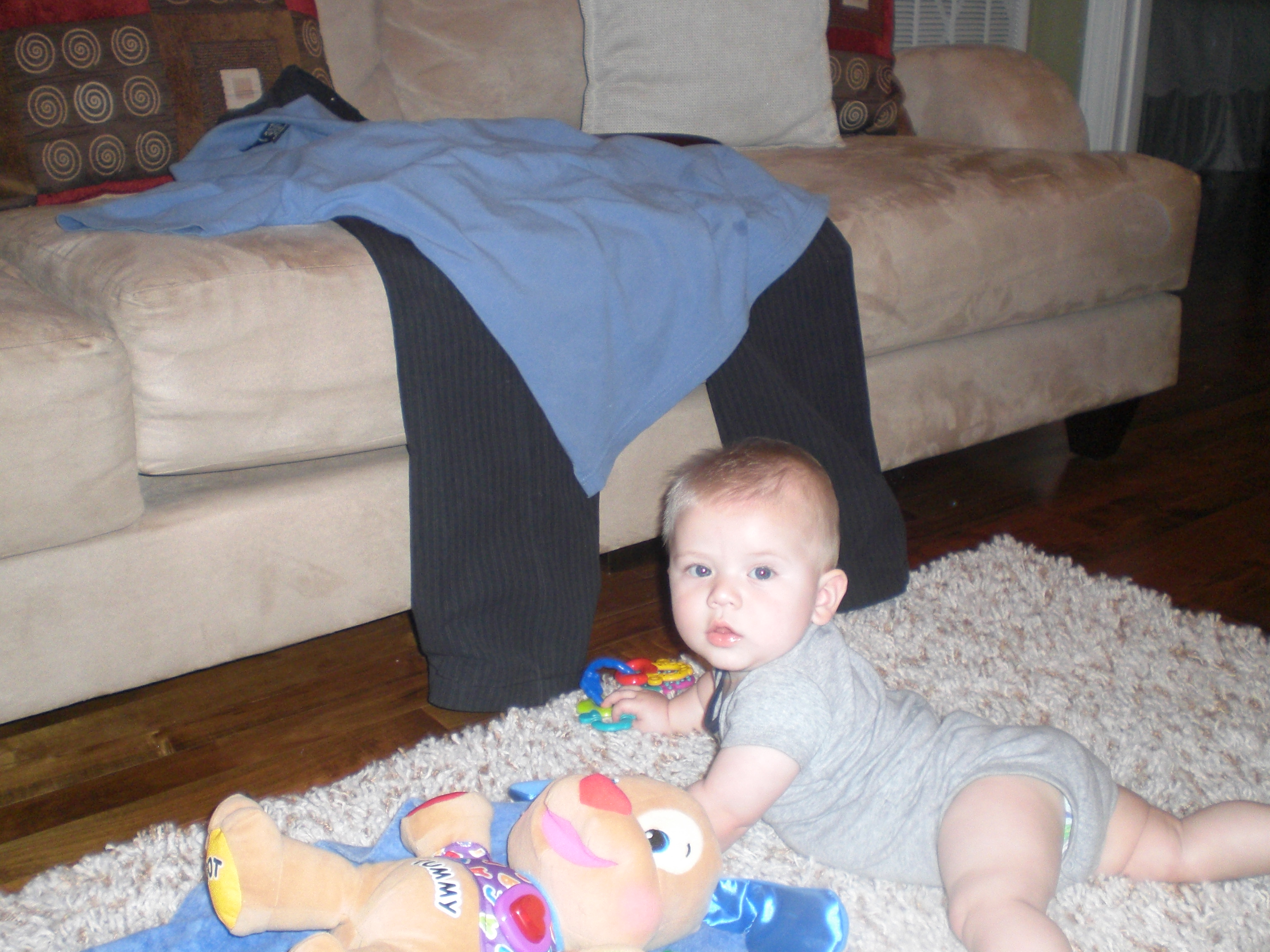
My favorite crawling moment so far is when I came home from work recently, I took off my “work clothes” and placed them on the couch as I walked to the bedroom to grab a pair of shorts and a t-shirt.  In the seconds that I was gone, Jack had looked up from his play rug and saw what he thought was his daddy.

babySo he crawled up to my pants’ leg, then made a sad crying noise when I didn’t respond. Yes, he saw my clothes and thought I was sitting there on the couch.  So he was really surprised when I walked up to him from the other room.

But as much weird stuff that goes on in our house in efforts to entertain Jack on a daily basis, I’m sure he won’t be questioning why he has two dads.  He’s more concerned with improving his mode of transportation.

baby

Add a Comment

The White Sheep of the Family

May 31, 2011 at 6:16 am , by 

Six months.

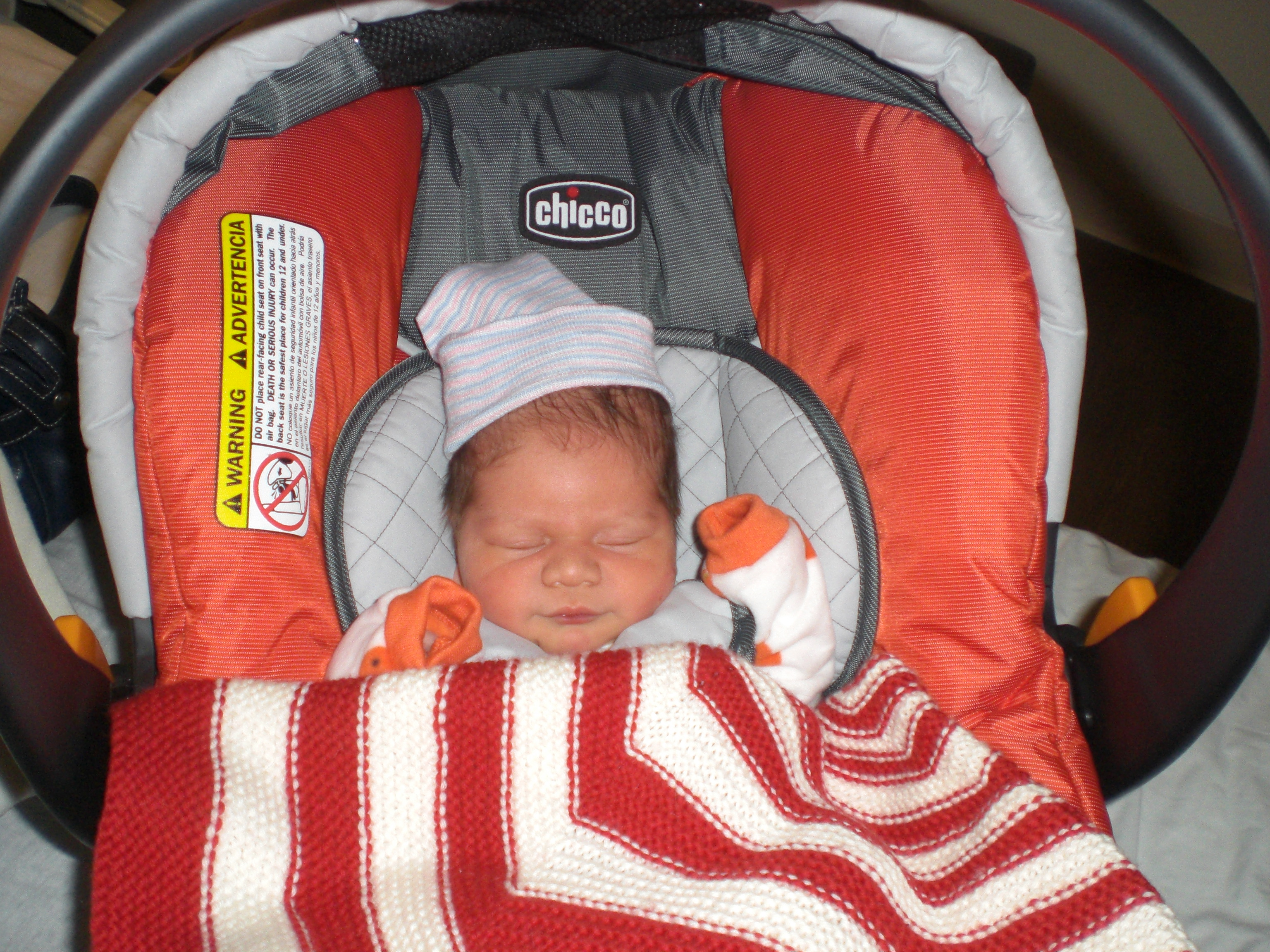
Jack may have been born as a Mexican baby, but he has gradually morphed into a little Norwegian boy.  The supreme irony is that when Jack was born, he almost looked too dark to be my son.  Six months later, it’s the opposite situation.

If you grew up in the late 1980′s and early 1990′s, then by default one of your favorite sitcoms was Full House.  And whenever you think of Uncle Jesse, you think of his awesome video for “Forever” where he is wearing a black leather vest while in a bathtub surrounded by candles.  Also featured in the music video were Jesse and Rebecca’s twin sons, Nicky and Alex.

For me, I was always distracted by the fact that a dark featured Greek guy and a normal complected woman with reddish brown hair would have sons that had blonde hair, blue eyes, and light skin.  I already had enough trouble believing that Danny Tanner would have three daughters with blondish hair when he himself had black hair (Bob Saget is Jewish in real life) with their mother who was also Greek; she was Jesse’s sister.  But light featured kids don’t come from dark featured parents, especially when there is a Mediterranean bloodline… I thought to myself for 20 years.

When Jack was born, and in the month or so to follow, he was a Mexican.  His skin was darker than mine, his hair was jet black, and his general features just simply looked Hispanic, or at least Italian. That’s because my maternal grandmother, Delores “Lola” Mendez is a dark-featured Mexican from Buffalo, New York and my Italian grandfather, Albert Metallo, was a dark featured Italian from Kenosha, Wisconsin.

In fact, when you climb both sides of the family tree (both my wife’s and mine) you continually find dark haired people with dark eyes. But there is the fact that my wife’s paternal grandfather was a Norwegian orphan adopted by an American family, who married an indentured servant from Ireland.  In other words, despite the influx of “dark genes”, Jack evidently adopted the underdog “lighter” genes.

My wife and I have a blonde haired, blue eyed son with porcelain skin.  He’s sort of the “white sheep” in the family. And now that he’s officially six months old, the age at which a baby’s eye color remains permanent (based on what I’ve read), we now know it’s official.  Granted, I realize there’s a good chance that the older Jack gets, the darker his hair will get.  He may not always be blonde, but he will always have lighter skin than his parents who have a subtle olive complexion (skin with yellow and green undertones).  And people will always ask us, “Where’d that boy of yours get those pretty, deep blue eyes?”

Knowing me, I’ll probably reference Nicky and Alex from Full House every time I answer that question.

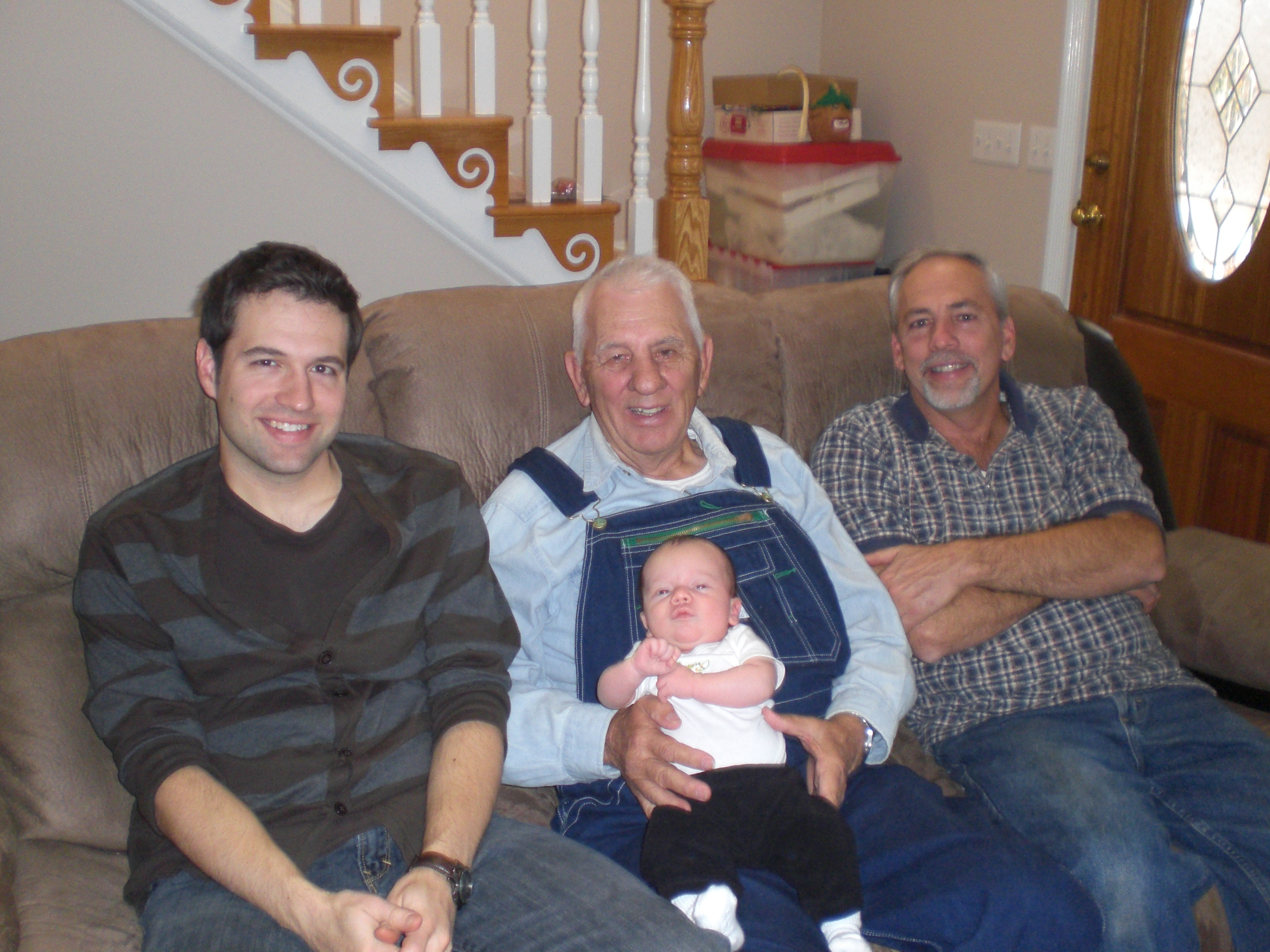
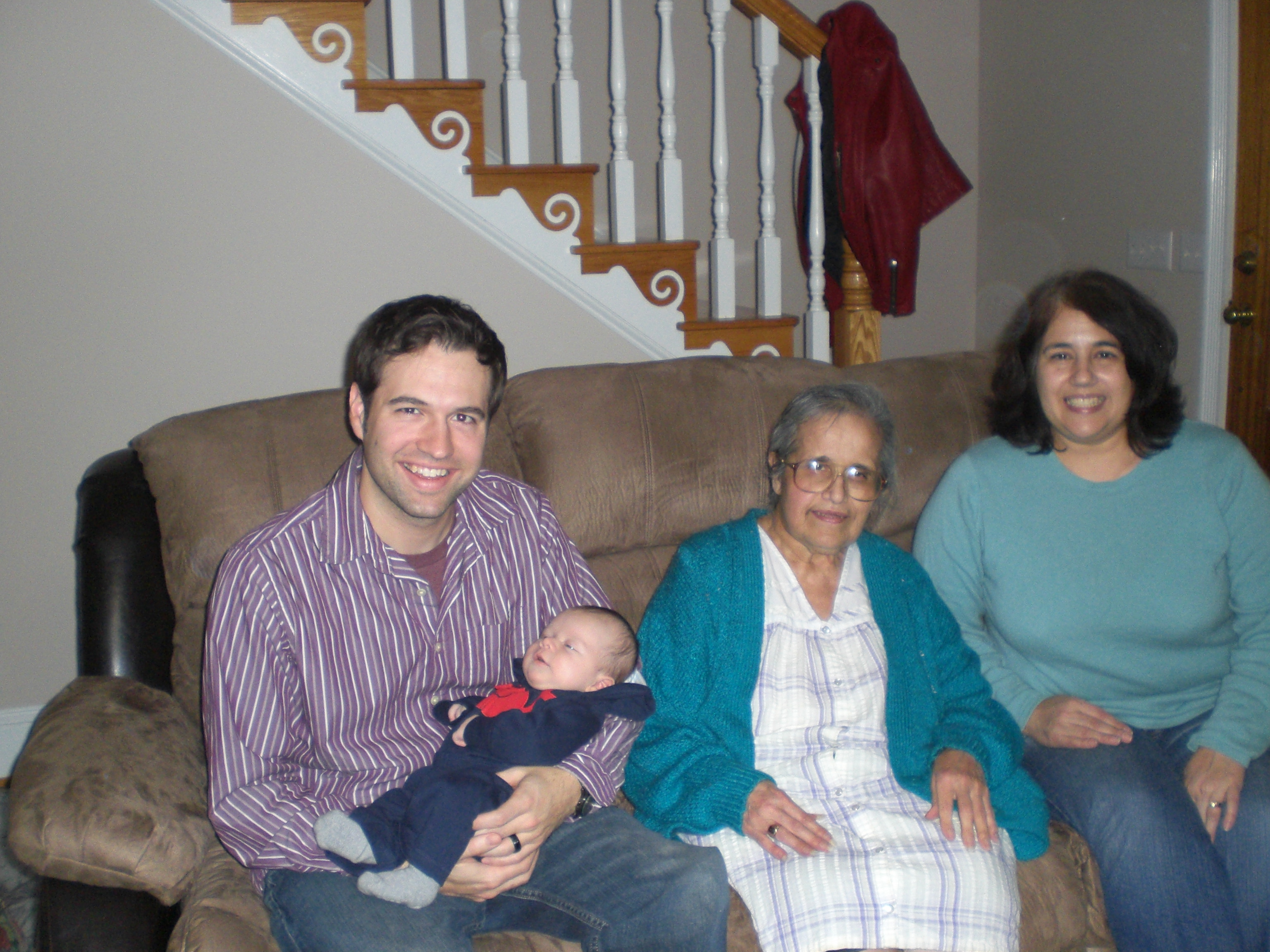
Pictured below:

1) The Four Generations of Shell in December 2010; my grandfather Shell is sitting in the middle, holding my son Jack, in between my dad and me.

2) The Four Generations of Metallo/Mendez in January 2011; my grandmother Metallo is sitting in the middle, in between my mom and me.

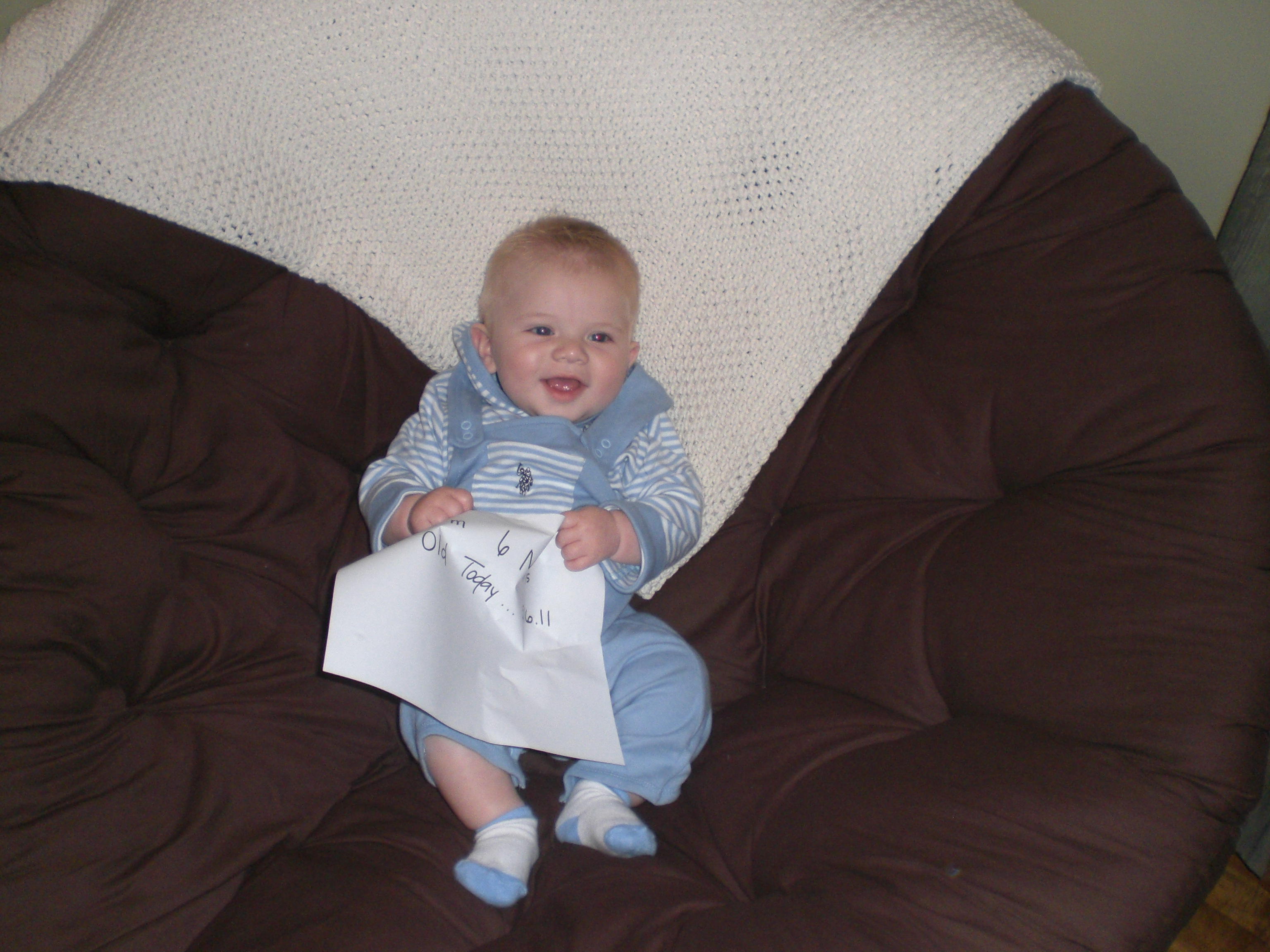
3) In May 2011, Jack is holding a sign that reads, “I am 6 months old today.”

*To get a better idea of just how different Jack used to look, look on the right side of the screen and click on the archives.  Start at November 2010, the month he was born.

God Only Knows What I’d Be Without You

May 29, 2011 at 10:36 pm , by 

Six months.

There is a reason why the sentimental song “God Only Knows” by The Beach Boys  is always playing in the back of this dad and husband’s subconscious. Truthfully, I have to acknowledge that the days of my life are ultimately numbered; as are my wife’s and son’s.  And that’s why I just can’t take one single day for granted.

If I’m being really honest, I might have to admit the song has at least made my eyes water more than once or a few dozen times, but only because of the deep and heavy subject matter that it always makes me think about. And I may or may not be the only person who has the same kinds of thoughts when I hear the song; I don’t know.

It ranked #25 on Rolling Stone‘s list of the 500 greatest songs of all time. Released in 1966, the song was one of the very first pop songs to reference God in its title, though it was not necessarily a religious song.  No doubt about it: “God Only Knows“ by The Beach Boys has remained one of my favorite songs, ever since I first heard it twenty years ago on the 1991 episode of The Wonder Years, entitled “Heartbreak.”

While its nostalgic mood and melancholy emotion are what have always grabbed me, it wasn’t until a few months ago when my wife and I decided to watch the entire series of HBO’s Big Love (via Netflix) that I began to consider the value of the lyrics.  The show features “God Only Knows” as its theme song, so a few times everyday for a few months, I was exposed to the powerful song.

It’s very possible to love “God Only Knows” without actually understanding the meaning of the lyrics.  Admittedly, the lyrics do seem to be a bit confusing and conflicting. For example, the first line is, “I may not always love you but long as there are stars above you, you never need to doubt it-I’ll make you so sure about it.”  Up until recently, I just assumed the speaker was doubting the future of his relationship with the woman he loved at that point in his life.

But the only conditional phrase in the sentence is “as long as there are stars above you.” The reference is to the love of his life still being alive.  If the stars are above you, you are on Earth. If the stars are below you, you are in Heaven.

So as long as the two of them are still alive together on Earth, he will always love her. Because despite the grandiose idea that two people can romantically love each other forever and be married eternally, the popular rabbi Jesus taught his followers that “in the resurrection they neither marry nor are given in marriage, but are like angels of God in heaven.” Though it’s difficult for me to grasp and to deal with, I realize I will only romantically love my wife in this life, not the afterlife as well.

So much hangs on that phrase “as long as there are stars above you,” when looked at from an eternal (and Christianized) viewpoint.  I want to be married to my wife forever, not until one or both of us dies.  So when I think about how my romantic love for her is limited to this life and this Earth, it makes me sad.  And the song “God Only Knows” always points that out to me.

There is one other particular line in the song that I thought was peculiar: “If you should ever leave me, though life would still go on believe me, the world could show nothing to me so what good would living do me?”

My interpretation is that the lyricist is saying suicide would not be an option for him if she died before he did, but in essence, life would lose its flavor and he would have to essentially find a new purpose in life.  Because she ishis life.

I think about that concept; probably nearly everyday.  Yes, I have been blessed with my ideal wife and one magical son, but for how long?  I don’t sit around and worry myself sick about them, knowing that any of us could encounter an accident or random freak medical condition or unseen poisonous spider bite.  But in the deepest of subconscious ways, there is a part of me that does always worry about something happening to them, or myself.

I just can’t imagine my life without my wife and my son.  Yes, my eyes are watering as I type these words.  So what can I do?  I can make sure through my actions, communication, time, and presence, that they know how much I love them. That they are truly, literally the world to me.  With or without the stars being above us.

The Dadabase