I Am Jack’s Nostalgic Narrator

September 14, 2011 at 10:19 pm , by 

Nine months.

Am I a gifted writer? I don’t really think so. My blogging abilities do not necessarily mean that I am halfway decent at crafting a professional, structured, magazine quality article.

Instead, I see myself as a modern day philosopher who happens to be an engaging storyteller. In other words, if I’m good at anything when it comes to writing, it’s knowing how to be a captivating narrator.

Fortunately for me, I’m never short on material. I’m a dad; therefore, something new and exciting (and exhausting!) is always going on in my life. I laugh at the foreign concept of “writer’s block.” My journal is full of blog titles just waiting to be written. My only threat is battling “time block.”

I would say my love for narrating life has something to do with the second best TV show ever, The Wonder Years. (The best show ever is Lost.) I sort of grew up thinking that I was Kevin Arnold. As a kid, I looked like him and had the same mannerisms as him. Even today, there’s still a strong resemblance. I easily related to his sentimental and awkward life stories. And man, the soundtrack- Bob Dylan, The Byrds, Nick Drake…

But the strongest connection I always felt to the show was actually the narration, as performed by Daniel Stern. (Yes, Marv the Burglar from the movie Home Alone.)

The narration of each episode of The Wonder Years perfectly built on the idea yearning for the past. Unsurprisingly, the word “nostalgia” loosely translates from a Swiss word meaning “homesickness.” Another favorite TV show of mine that contains flawless narration is Scrubs, as done by Zach Braff, playing the character of J.D. Dorian.

In both of these sitcoms, there was always some understated lesson to be learned from life, as it pertained to the particular story being told. That is the exact format I keep in mind with every Dadabase post: Every story is ultimately summed up by some sort of paradox, revelation, or moral.

Since high school, I have been known as a guy who is “stuck in the past.” I guess it’s a necessary trait for me so that I can be engaging in my writing; it helps create a universal sense of familiarity.

Sure, I’m stuck in the past. But I’m forced to live in the present. And the present instantly becomes the past. So it all works out.

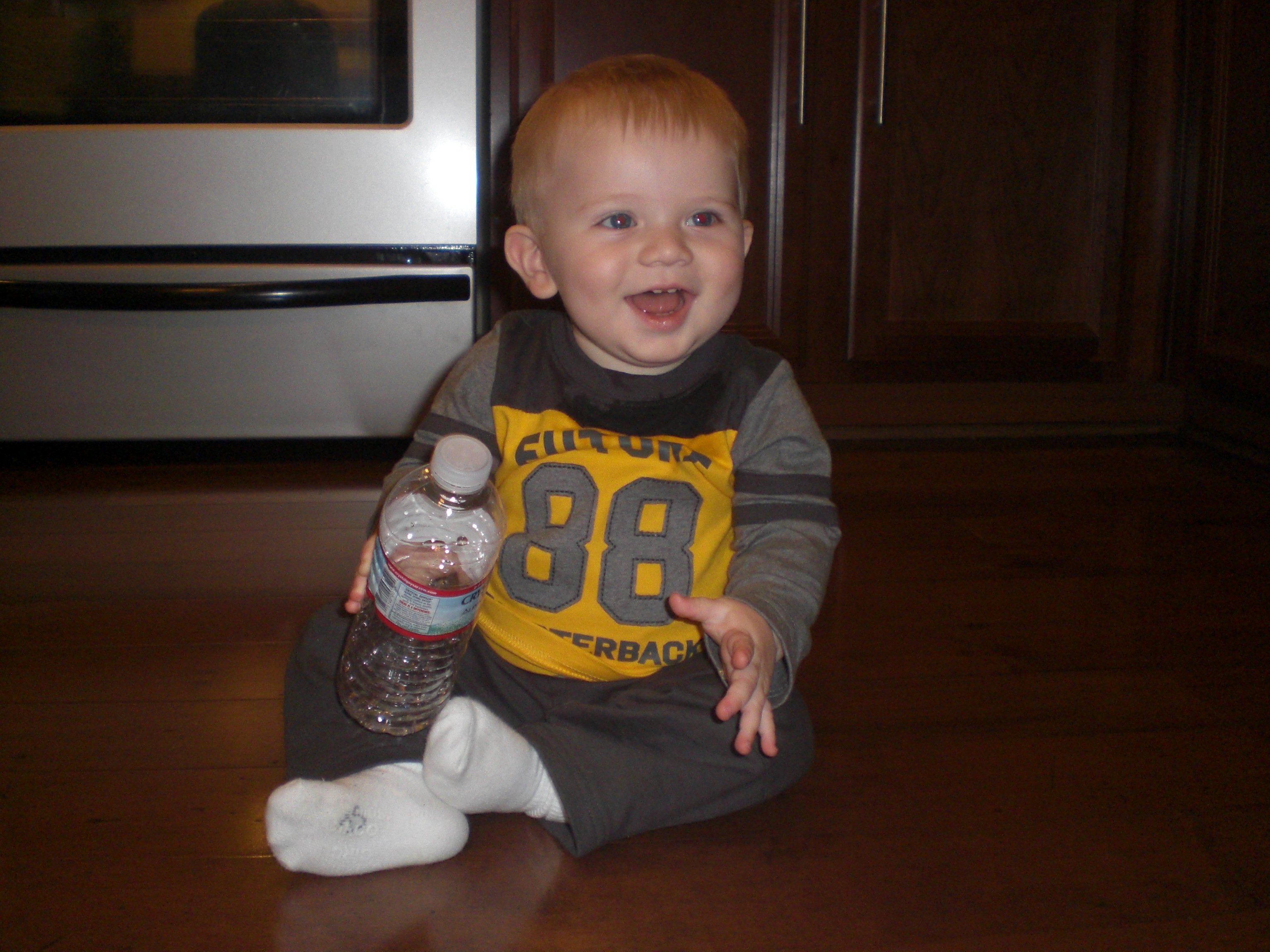
Right now, the most complicated phrase that my son, Jack, can regularly speak is “to-gaht, to-ghat, to-ghat, to-ghat, to-ghat…”. Therefore, I must do his talking for him, by telling his stories through my “grown up” perspective.

I am Jack’s life witness and adult voice.

I am Jack’s nostalgic narrator.

The Invention of Name Calling

September 13, 2011 at 9:48 pm , by 

Nine months.

I would love to believe that I am not at all judgmental of other people; that I don’t think or act as if I am “better” than any other person in this world. Because to my conscious knowledge, I firmly am convinced that is the case. In fact, I don’t want the responsibility of having to judge others- even down to a performance review of a coworker. If it’s up to me, I just want to stay out of any situation where critiquing someone’s value and worth in society is left up to me.

But it’s obviously not that easy. To think I am so not judgmental is, if anything, conceited: I’m no exception to human nature. Saying that I am not judgmental is almost as much of a paradox as a person bragging about how humble they are.

If I knew I was shaking the hand of a convicted child molester who just got out of prison, despite believing that God’s grace and forgiveness is more powerful than any wrong a person can commit, and despite that because of God’s grace and forgiveness I myself have been forgiven of “much lesser” sins, there would still be something in my subconscious that would judge that man even though I wouldn’t want to.

The reason? Like everyone in this world, I have what’s called “judge of character,” which is a very important and necessary trait to live by.

In general, I try to give people the benefit of the doubt, but when my instincts warn me about a person, I follow them. And I need to instill those particular instincts in my son to serve as a guide in his decision-making processes throughout life.

What I don’t want to teach my son is to think, however, is that he is ever cooler, more physically attractive, richer, or simply “better” than any other kid.

So really, the question is this: What’s the difference between being judgmental and having a good judge of character?

I believe it has a lot to do with whether or not we generalize another person as “good” or “bad,” or if they are “better” or “worse” than we are, in an overall sense.

Recently, as I was pulling my car out out from where I work onto a road with a 35 mile per hour speed limit, I saw that there was another car coming. But based on my learned perception, I wouldn’t have slowed down the other driver at all; if they were going anywhere near the speed limit.

Turns out, the person in the other car was driving somewhere around 55 miles per hour and had to cross a double line to pass me to keep from running in to me. Then the driver did the same thing to the car which was in front of me, which was also going the speed limit. By the time this speedy driver passed that second car, they had to immediately stop; there was a red light.

Whether or not I said it out loud, I know I at least thought it: “What an idiot! This person is so stupid!”.

Right through the red light, just about one block away from where I pulled out from my employer’s parking lot is KinderCare, the exact place I was going to pick up my son. Interestingly enough, the speedy driver had pulled into KinderCare right before me. She got out of the car and walked in. I followed only feet behind, then stood there waiting on her so that I could “clock out” my son on the computer.

I think it was more awkward for her than it was for me, but she mustered up a hello along with a smile, as if her daredevil driving stunt hadn’t just happened.

This same “idiotic” and “stupid” person who had without a doubt put herself and others in some serious danger, only to be stopped by a red light and ultimately only beat me by 7 seconds to KinderCare, is also a wife and mother. The truth is, I’m sure her abilities to raise her child are nothing like her ridiculous driving habits. I’m sure she’s a very decent woman and a wonderful mother.

Yet I labeled her as a stupid and idiotic person, based on just one of her actions.

For a guy who doesn’t want to teach my son to be judgmental of others, I’m sure there are plenty of other examples where I negatively label a person overall because of only one thing I see. Who else do I think is a stupid idiot, and for what reasons am I superior in some minimal way?

I am not ashamed of my “judge of character,” but starting now, I am attempting to make a habit of not generalizing people as good or bad, based on a solitary trait. I want to make a conscious effort to refrain from calling people names; because after all, it’s pretty juvenile. If through my speech habits I teach my son to call other people names, then I want them to be good names.

If I want to set out to be less judgmental of others both consciously and subconsciouly, this is my starting point.

Granted, I’ll never be completely successful at this new “no name calling” campaign. But surely I can improve. I just need to be careful not to begin thinking that I am better than all the people who still call others names.(Insert laugh tracks here.)

The Trifecta of Hard Work, Consistency, and Creativity

September 12, 2011 at 6:57 pm , by 

Nine months.

As a husband and dad, it’s important to me that I am inspiring and engaging to my wife and son. So I have adopted an assumed business model to do just that: to be not only hardworking and consistent, but also creative.

A lot of people in this world are hard working and consistent, but many of them lack that third element of the trifecta: creativity. A man can work hard and consistent his whole life but never really break a certain point in his career because of a lack of it.

Hard work and consistency are what keep the conveyer belts going. But being creative is what puts new products on that conveyor belt, maybe even replacing the conveyor belt itself with something better.

New ideas are what advance the world; new ideas are born out of creativity.

So how does this business model of the “creativity, hard work, consistency” trifecta have anything to do with marriage and parenting? For me, a whole lot.

As a husband, it’s important that I take the initiative to think of fresh ideas to make my wife feel special and loved. And as a dad, I’ve  learned the necessity of inventing all kinds of weird voices and games to entertain my son in an effort to keep him engaged, or at least distracted when he’s being really clingy with my wife while she’s trying to get dinner cooked.

This week I happen to be reading the book Parenting with Fire, by Rabbi Shmuley Boteach, who explains the importance of creativity in his family:

“The answer is for us to start thinking of ourselves as camp counselors, and our homes as bunks, and for us to fill family free time with activities that captivate and entertain all its members.”

Ultimately, I think as a parent it can be easy to find myself in a mindset where I am so focused on figuring out how to be a “normal” parent, that I forget part of being normal is being weird; in other words, being creative.

Jack the Handyman, Athlete, and Everything I’m Not

September 11, 2011 at 5:27 pm , by 

Nine months.

I’ve made mention before that one of my many weaknesses is that I’m horrible/inexperienced when it comes to anything mechanical. My deficiencies in this department aren’t for a lack of interest or a lack of trying, though. A couple of weeks ago I attempted to change the back tire on my mountain bike, since the tube in the tire exploded from the summer heat.

Fast forward a few paragraphs into this story and it turns out I went to the bike repair shop and was told that the cost of repairing the bike would be more than the cost of the bike itself. I evidently am that bad at fixing even the simplest of things!

Fortunately, the girl at the repair shop was wrong and they were able to fix what I messed up for only $27. (It would have only cost me $10 to let them repair the flat tire in the first place.)

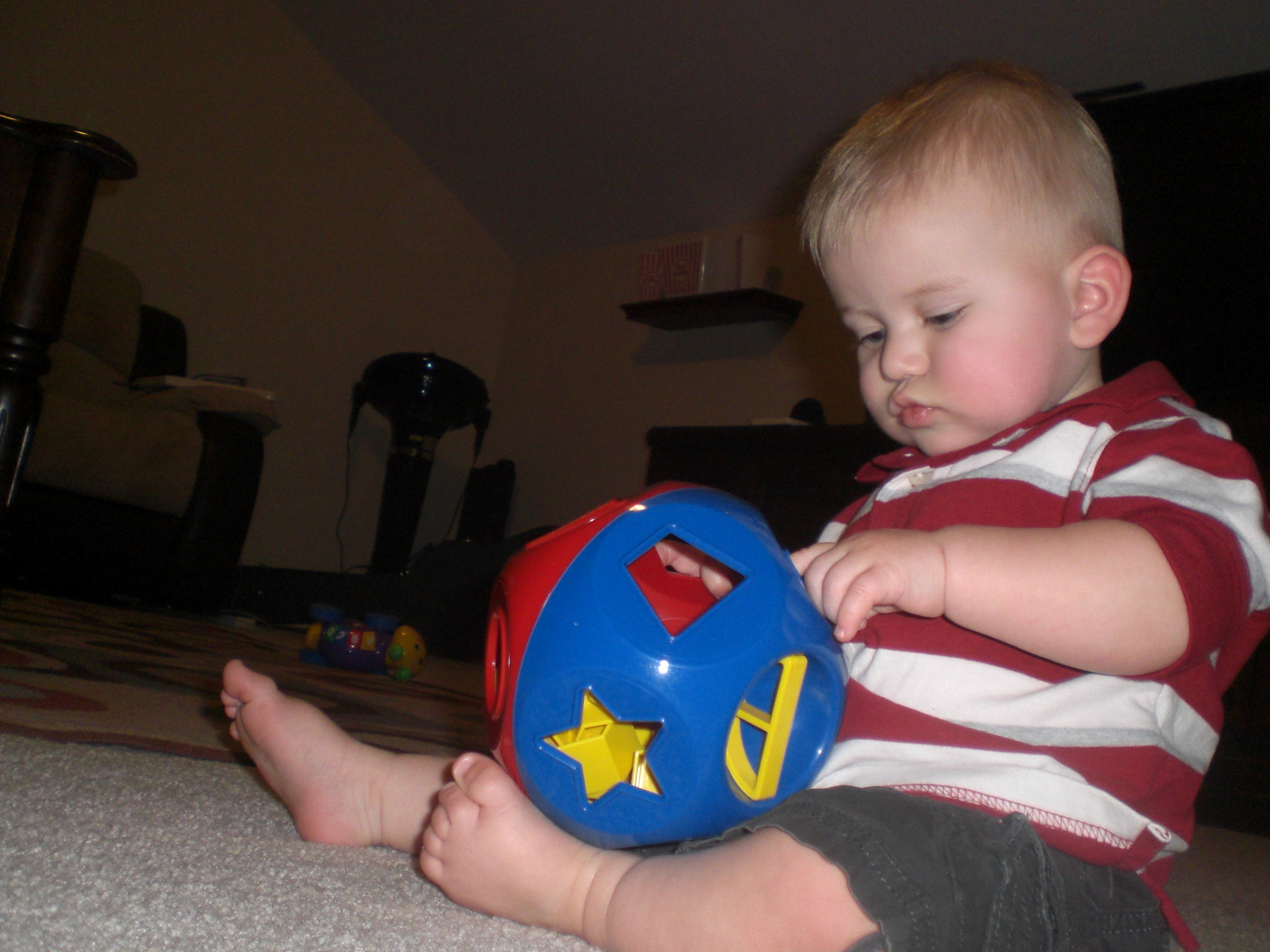
My son, Jack, on the other hand, will most likely not suffer from his old man’s bad luck with understanding mechanics. He currently is sort of obsessed with trying to figure out how mechanical stuff works. Jack loves taking things apart.

I can just tell already his brain is working in ways that mine never has.

Another thing about Jack that I can’t help but be aware of is that he will likely end up being an athlete; something I tried to be a few times as a kid, then eventually turned to art, music, and writing- activities that were more my speed. Even today, the physical activities I involve myself with, mainly running and mountain biking, are noncompetitive hobbies.

But Jack is simply built like an athlete. He’s a tank. He’s a 1940′s wrestler.

A few weeks ago at his 9 month check-up, we learned that he is in the 90th percentile for height and 75th for weight. Maybe as he gets older he’ll end up adopting the skinny, bow-legged Italian body style that his dad had. However, I think he will grow up to be the opposite: a tall, large-framed, coordinated boy who is picked first on teams in gym class.

It’s safe to say I’ll eventually become a sports fan and learn a lot more about doing home repairs, thanks to my son.

How did this athletically-built, mechanically-minded boy come from me? All I can say is that it figures. I’m still laughing at the irony that a fair complected, blue eyed kid could ever be the offspring of dark-featured, olive complected parents like his mom and me.

I wonder in what other ways Jack will be the opposite of me . . . I’m sure he’ll be a whiz in math and science.


I Don’t Want to Die Right Now

September 8, 2011 at 10:59 pm , by 

Nine months.

I’ve only got about 50 years left to live, if that.

Most nights as I fall asleep, I can’t help but think how sleeping through the night is sort of like checking out of reality, reminding me of the lyrics to Tom Petty’s classic song, “Freefalling”: “I want to leave this world for a while.”

Though I’m overly aware that at any given second I could die of any random cause, like instantly turning into a pillar of salt, I’m never more aware of the inevitability of death than when I am fading and falling into the dream world.

Sleeping is the closest thing I know to having an understanding of what it’s like to be dead. It’s the closest concept I have of understanding what it’s not like to live in this world, confined to rules of practicality and common sense.

Sure, it’s an understatement to admit that I don’t want to die right now. But I’ve never been more caught up in life than I am at this very moment, so it’s really on my mind.

After all, I have made a covenant before God to love my wife for as long as we both shall live. Then the two of us brought another life into this world. That’s pretty dang epic. That’s deep.

So now that I have involved myself this drastically in the course of history (and therefore, the future), I’m just dying to stick around. It’s not simply that I want to see what happens next; not simply that I want to see how the story unfolds with my wife and son. But I want to literally be here, as part of their story.

Without a doubt, it’s sad to think that the story could go on without me. It’s sad to think that has been reality for so many people who “died before their time.”

I’m not afraid of death. I couldn’t be any more confident of what happens to me the second after I die. But while I’m not afraid of death, I am pretty fascinated by it.

It amazes me that millions of people alive today in this world could take life (and therefore, death) so nonchalantly: That despite all the miracles in their lives, they never see a need to think past this life, and to consider how the people they interact with each day can be affected eternally by their words and actions.

How can a person not think about eternity, or convince themselves it doesn’t exist? The irony: that life itself distracts a person from thinking about death.

I can’t imagine not taking enough time to pause and wonder about what happens when the lights finally go out for good and what this life was for. I do it on a daily basis.

So it’s not that I ever wanted to die, or wouldn’t mind dying, but now more than ever, if I have any say in the matter, it’s as simple as this:

I don’t want to die right now.

And if I shall continue waking up alive each day, as I have done for 30 years so far, then I shall continue to live to the best of my ability. I’m the kind of guy who takes life way too seriously, but in a good way, I would like to think.