My Toddler’s Dependency on Drugs (And Why I’m His Enabler)

February 22, 2012 at 7:52 pm , by 

15 months.

I’m not comfortable with the fact my son is quite regularly under the influence of either Children’s Advil or Amoxicillin. But it’s not like I have a choice.

Being at daycare, he  is constantly exposed to germs which often cause him to get a fever, resulting in him being sent home for that day and the next.

Additionally, the fever tends to be the product of an ear infection or pneumonia or something of that nature which requires a prescription for Amoxicillin.

So I’m constantly praying each day while I’m at work that he doesn’t get a fever or I’m wondering if I should have given him fever reducer that morning to prevent him from being sent home.

I feel horrible about keeping my son drugged up on such a reoccurring basis.

Ultimately, I feel like a hypocrite because I’m so adamant on not feeding him foods in which I don’t know what the ingredients are, yet I don’t truly know the long-term effects all these drugs have on my toddler son.

In the ideal world, which is evidently America in the 1950′s, my wife could just stay home with our son all the time and I’d actually make enough money to support the three of us.

That way, we wouldn’t have to put our son in a position to be exposed to so many germs or have to be given fever reducer to avoid being sent home, causing either my wife or me to miss work.

But in reality, my wife actually makes more money than I do and has the more stable job. We both have to work and our son has to go to daycare.

Yet again, what option do I have to allow him to live a more natural, yet healthy, life? How can I possibly avoid this path for him, as his parent?

Should I just assume that going through two bottles of Children’s Advil per month is normal and justified?

Several times now I have written about my distrust of the FDA; how they approvered food dye made from crushed bugs and petroleum, which has shown side effects in children, such as myself in the Eighties.

And how I hate the fact that not even Snopes.com can confirm or deny that “natural” vanilla flavoring in ice cream and cookies is made from the anal glands of beavers.

With all that the FDA says is okay for us to eat, how can I know that these over-the-counter and prescription medicines are truly safe for my son?

I wish we could just say no to drugs, even over-the-counter ones.

Image Credit: Signe Wilkinson, Drug-Free America.

5 Ways Your Family Can Avoid Processed Foods

February 8, 2012 at 6:26 am , by 

14 months.

I have to admit. Part of me is trying to figure out if I’m some kind of prophet or something…

On January 15th I published an article here about why I despise red food dye. Then a week later, on the 21st, I did one questioning where chicken nuggets come fromreferencing that now infamous “pink slime” picture we all recognize and attribute to McDonald’s.

Turns out, last week on February 1st, Yahoo News published a very popular article entitled, “McDonald’s confirms that it’s no longer using ‘pink slime’ chemical in hamburgers.” The author, Eric Pfeiffer, covered the topic of the mystery of processed meat and even mentioned red food dye, just as I did in my articles.

What does this mean? It means we as Americans, and we as parents of children, are officially questioning where our food comes from. We care now. The Eighties are over, sadly.

But it’s not just about questioning where our meat and food dye comes from. It’s about where all of our food comes from. And the real reason we’re having to ask this question to begin with is because, according to the documentary Fat, Sick, and Nearly Dead, over 60% of the average American’s diet consists of processed foods.

In other words, the majority of the food we eat has been… messed with. And it only makes sense that the more processed a food becomes, the less nutritional value it can have.

So while it’s important to ask what’s in our food, it’s even more crucial to find out how to avoid processed foods as much as possible.

Fortunately, this “food prophet” is willing to part the red sea of processed foods (receiving its color thanks to Red 40 and Crimson Lake) which maintains its perfect consistency thanks to sodium lauryl sulfate.

Today I bring to you the 5 commandments of avoiding processed foods:

1. Nix fast food. Fast food is nothing but processed food. From mysterious meats to white bread buns to soda to wash it down, fast food restaurants are the epitome of what processed food is.

2. Only eat foods with 7 ingredients or less. The higher the number of ingredients it takes to make a food, the better chance you’re going to see ingredients you can’t pronounce; meaning you have no idea what they are. Should we really be eating something with mysterious ingredients? The FDA doesn’t care, but I do.

3. Recognize high fructose corn syrup as the most obvious dead-giveaway. When genetically modified corn is turned into sweetener for ketchup, hot dogs, and the buns we put them on, we begin to question whether or not our meal really needs to be that sweet and so likely to give us Diabetes.

4. Avoid buying any food that comes with “microwave instructions.” I think subconsciously, we realize that cooking food alongside radiation is something we should avoid. So what does it say about a food that was designed to be prepared this way? Probably not something to make a habit of.

5. Prepare as much of each meal as possible yourself. The idea is to use the freshest ingredients possible. After all, the healthiest foods you can eat don’t even have a nutritional label on them at all; nor are they as convenient as the canned, microwavable version.

Image: An opened can of bite sized sausage, via Shutterstock.


What We Can Learn (and Disregard) From French Parents

February 7, 2012 at 9:30 pm , by 

14 months.

There is a lot of buzz going on right now about a book called Bringing Up Bebe, by Pamela Druckerman, insinuating that the French are better than us Americans at being parents.

My question isn’t whether or not the French are better at raising kids, because not only is “better” a relative term, but it is also pretty generic.

So instead, I’m willing to learn, in what ways the French are perceived as better than we are at parenting. On the flip side, how are Americans better at it?

To educate myself on the subject, I read a blog post written by Paige Bradley Frost, an American woman raising her children in Paris. She shares:

“We therefore define ‘good parenting’ in vastly different ways. A ‘good mother’ in the U.S. (a virtually unattainable state of grace) is, by definition, a deeply involved and engaged mother. A sit-on-the-floor, clap your hands, dig in the sandbox, finger painting kind of gal.”

She goes on to explain that our self-sacrificing, American version of parenting is considered to be “absurd” by the French, who are more structured and less hands-on in raising their children.

From what I am gathering, it appears we as Americans would view the French as cold, militant parents whose children are well-behaved yet practically unloved. Meanwhile, the French view American parents as overly involved to the point our kids don’t respect our authority as they should.

This excerpt is taken from the book description for Bringing Up Bebe:

“…The French children Druckerman knows sleep through the night at two or three months old while those of her American friends take a year or more. French kids eat well-rounded meals that are more likely to include braised leeks than chicken nuggets. And while her American friends spend their visits resolving spats between their kids, her French friends sip coffee while the kids play.”

Based on my experience as an American dad who is extremely observant of what other parents say on Facebook and in parenting blog comments, I would say that most American parents truly desire a balance between the two stereotypes.

We don’t want to be “that parent” who lets their kid run around crazy inside a TJ Maxx, tossing out empty threats of discipline but never following through.

Nor do we want to be uninvolved and apathetic in our children’s personal interests, forcing them to take piano lessons and making all their decisions for them.

I don’t want to be a stereotypical parent, whether it’s French or American. But I do want the best of both worlds in parenting: structured and disciplined yet affectionate and open to my child’s individuality.

As a stereotypical young American who believes I can do anything I put my heart in, I believe I can live in this mythical middle ground.

Why This Dad Despises Red 40 And Crimson Lake Food Dyes

January 15, 2012 at 10:05 pm , by 

13 months.

Would you eat petroleum? What if it made your food more physically more appealing?

What about insects? Are you cool with eating ground-up bugs?

The funny thing is, you and your kids already do. And the FDA approves it.

In 5th and 6th grade, I was a pretty sick kid. I had so many stomach issues back then that today I still owe my ability to unclog any toilet back to 20 years ago when I had to carry around TUMS Extra at all times.

What made it worse was that I suffered anxiety attacks, which helped keep a vicious circle going: I was always nervous that my extreme digestion issues would flare up at any moment, especially in public places where I couldn’t escape to a restroom. And when they did, it only fueled my anxieties.

Keeping in mind that this was during a time when there was no such thing as “looking it up on the Internet,” fortunately my mom heard from another mom that I should stay away from any foods with red food dye: namely “Red 40″ and “Crimson Lake.” There was no way for us to know what was in those food dyes, but whatever it was, I stopped consuming it.

No more red Kool-Aid. No more Twizzlers. No more red anything unless it came that way naturally.

As you can imagine because of this article’s title, both my extreme indigestion and my anxiety attacks went away. But it wouldn’t be until the glorious arrival of Wikipedia that I would know exactly what was in those red food dyes:

Red 40: Made mostly from petroleum, this red dye can easily be found in sodas, cotton candy, and children’s medications. It has been linked to cases of ADHD and hyperactivity in children. Red 40 is also known as Allura Red AC.

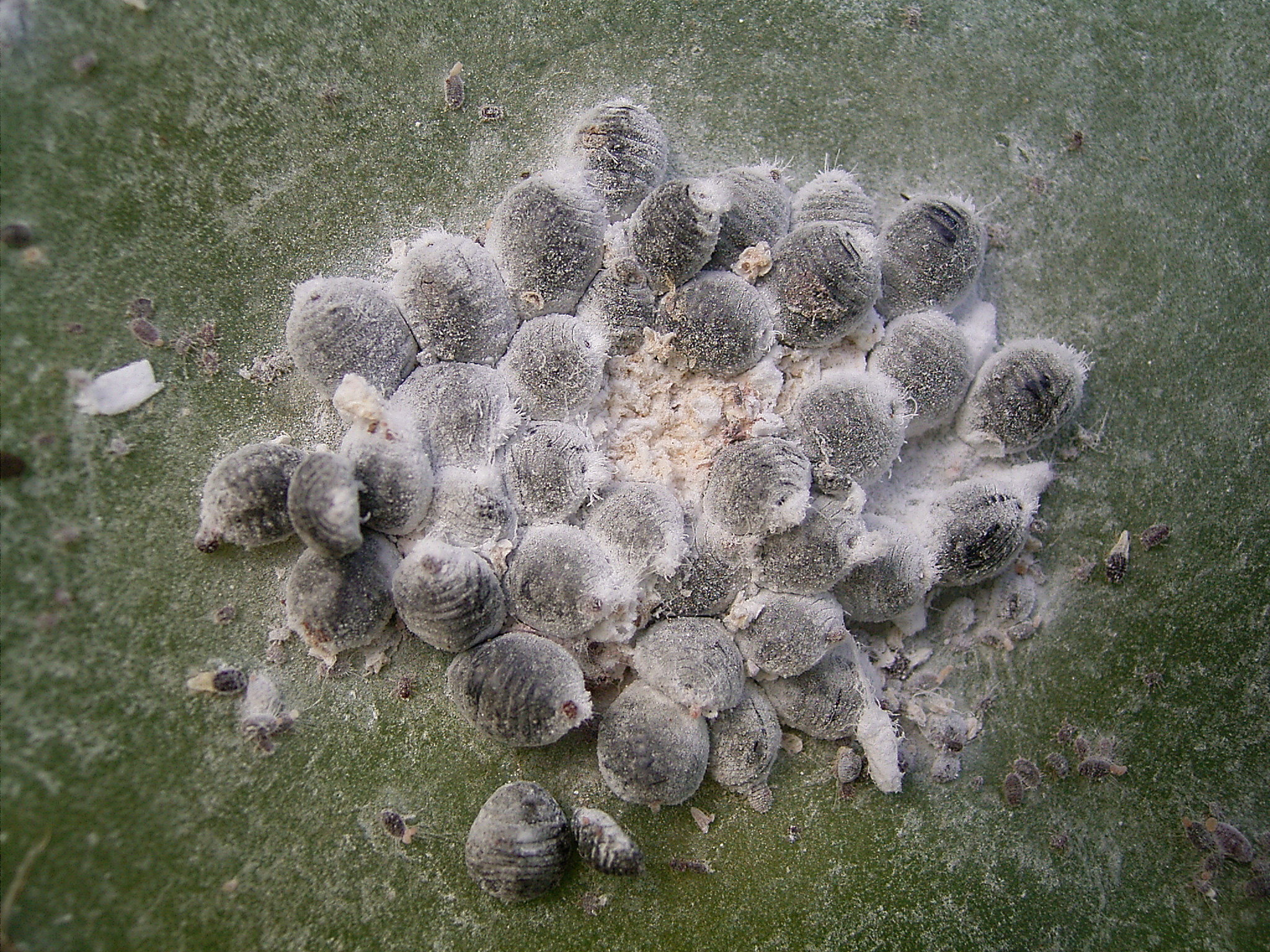
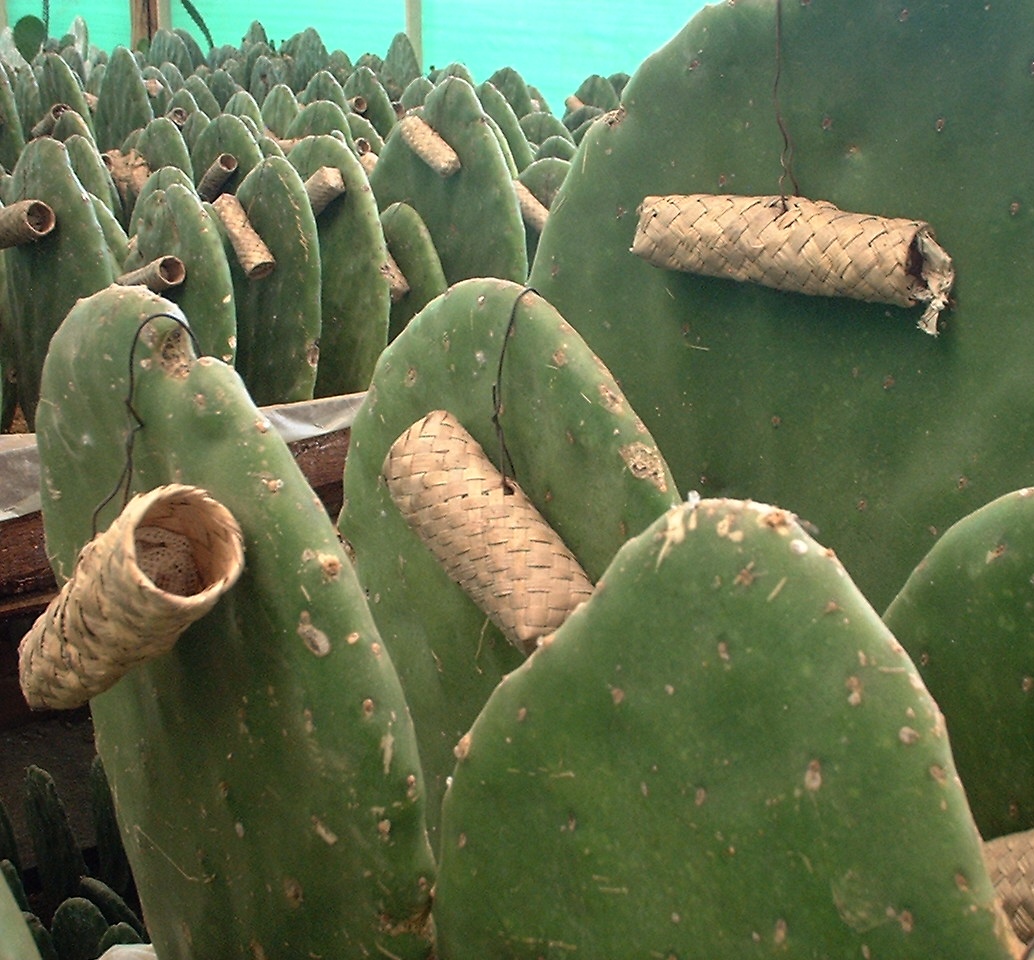
Crimson Lake: Made from the powdered and boiled bodies of scale insects (parasites of plants) this dye is commonly found in yogurt, juice drinks, ice cream, and candy. Though I am a vegetarian, I still abide by kosher law, which prohibits the consumption of any insect other than the locust. Crimson Lake is also known as Carmine.

Fun fact: The closing scene of the movie The Wedding Planner makes a reference to these dyes as the “added chemicals” in red M&M’s that Jennifer Lopez’s character throws out.

Can you blame me from not trusting the FDA? It should common sense that people shouldn’t eat petroleum or parasites. So you know what? I am my own FDA. I decide what weird stuff my family does and does not eat.

And I’ll tell ya… bugs and oil are not on our menu.

Top image of scale insects, courtesy of Frank Vincentz. 

Bottom image of scale insect nests, courtesy of Oscar Carrizosa.

Prunes Are Now A “Regular” Part of My Son’s Diet

January 15, 2012 at 7:42 pm , by 

13 months.

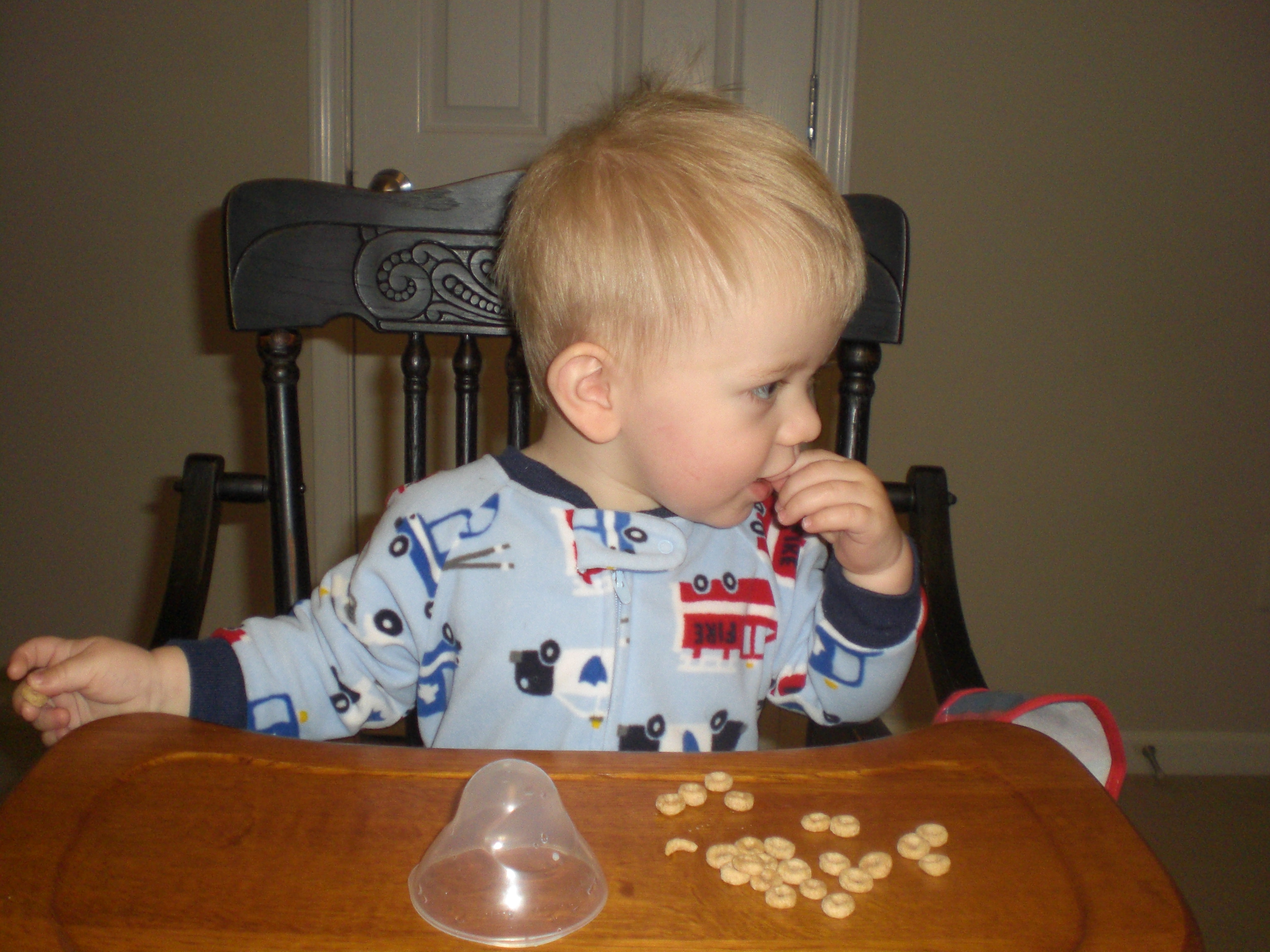
It turns out, there is a downside to having a toddler who only wants to eat Cheerios, bananas, and wheat bread: a lack of digestive movement, which causes for one uncomfortable and cranky little boy while a swollen stomach.

The solution was simple: feed him prunes. But seriously, what toddler would  willingly eat prunes? I don’t even know that I’ve ever had a prune. My expectations were low; exactly where they should have been.

Simply because it was a new food, my son Jack swiped at the incoming spoon of pureed prunes. So I held down his arms as my wife delivered the stuff straight into his mouth- which was conveniently open because he was crying.

We looked for his reaction and were actually surprised. He didn’t not like it. Though there would be several days to follow of Jack pretending to fight prunes, now that he’s a week into it, he hardly ever refues the purple stuff.

Not that he really understands most of what I’m saying anyway, but instead of calling prunes by their actual name, I say, “Jack, it’s time for two bites of chocolate pudding.”

And that doesn’t even make much sense, because he’s never eaten chocolate pudding before. But either way, my kid willingly and joyfully eats pureed prunes. More importantly, “the train is now moving.”

So why resort to prunes only when he needs them? You know what they say:

A prune a day keeps the constipation away.